
Reviewed · ROMAN RUINS AND ANCIENT SITES
From Seville: Italica Roman City Tour
Roman ruins outside Seville hit different. This half-day tour takes you to Italica, the first authentically Roman city in Spain, with real ruins and big-stage drama. I love how the storytelling ties the site to famous names like Trajan and Hadrian while you walk the streets that were laid out more than 2,000 years ago.
You’ll also get hands-on highlights like the mosaics and Roman public baths, the kind of details that make daily life feel close. The one drawback to plan for is that this is a guided format with limited free time, so if you like to roam alone, you may wish for more independent wandering.
In This Review
- Key Italica From Seville Takeaways
- Why Italica Feels Real, Not Like a Photo Stop
- Pickup in Seville, Timing, and How the 4 Hours Work
- The Italica Amphitheater: 25,000 Seats and a Tunnel Surprise
- Mosaics, Traianeum, Statues, and the Roman City You Actually Lived In
- Trajan and Hadrian, Plus Why the Name Matters While You Walk
- The Santiponce Roman Theater: Partially Reconstructed, Still Worth It
- The Second Half Bonus: Monastery Stop and Modern Connections
- Guides, Group Size, and How to Get the Most Out of 3 Hours
- Price and Value: What $51 Really Buys You
- Who This Tour Is Best For, and Who Might Skip It
- Should You Book the Italica Tour from Seville?
- FAQ
- How long is the Italica Roman City Tour from Seville?
- Where do pickup times and locations start in Seville?
- How is the time split during the tour?
- What is included in the tour price?
- Do I skip the ticket line?
- What languages are available on the tour?
- What major ancient sites are visited during the tour?
- Is lunch included?
- What is special about the amphitheater?
- Can I cancel or pay later?
Key Italica From Seville Takeaways
- First authentic Roman city in Spain, founded in 206 B.C. by Publius Cornelius Scipio Africanus
- Amphitheater scale you can feel, built for 25,000 spectators, and described as the third largest in the Roman Empire
- Mosaics plus major civic spots, including the Traianeum, public baths, and statues of Diana, Venus, and Trajan
- See the Roman theater too, with a partially reconstructed theater visit in Santiponce
- Seville pickup is built in, with three pickup points and about 30 minutes each way by coach
- Guides matter here, and many guests praise guides such as Jose Luis, Jesus, Alberto, Nieves, and Miguel
Why Italica Feels Real, Not Like a Photo Stop
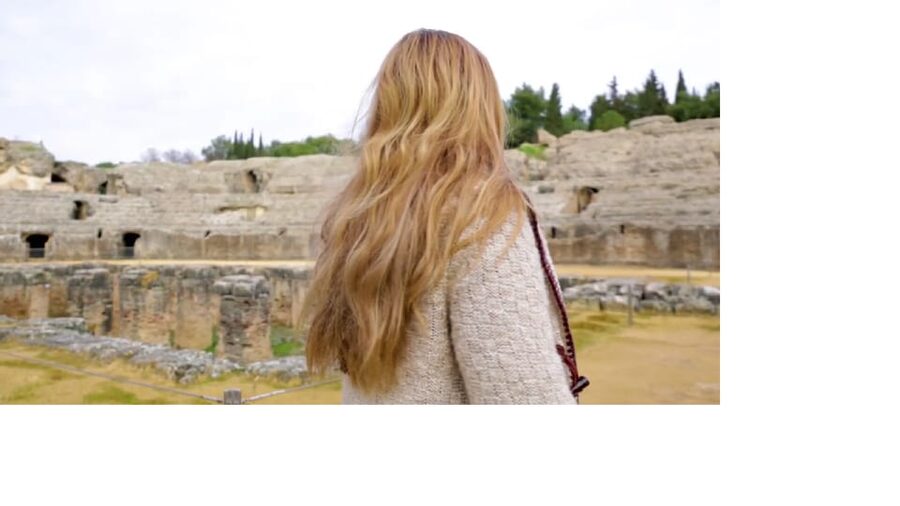
Italica is one of those rare day trips where the size of the place matches the stories. This Roman city was founded in 206 B.C., long before most people think about when Rome set roots in Spain. You are not just looking at columns, you are walking through a whole urban plan, from public buildings to private homes.
What makes it especially worthwhile is how the tour focuses on recognizable “anchor” spots: the amphitheater first, then the everyday city details that bring the place to life. You’ll leave with a clearer sense of what Roman entertainment and Roman domestic life looked like in Hispania.
Pickup in Seville, Timing, and How the 4 Hours Work
This is a true half-day schedule built around a coach ride and a concentrated guided walk. Transportation is included, and the transfers are about 30 minutes each way, so you are not spending the whole day in transit.
Pickup times and locations are clearly set:
- 09:45, Calle Rastro 12A
- 09:50, Hotel Don Paco (Plaza Padre Jerónimo de Córdoba nº4)
- 10:00, Calle Trajano 6
Once you reach Italica, the guided portion is about 3 hours. That structure is ideal if you want a clear route and a guide to explain what you are seeing, without having to plan every stop yourself.
One practical note: the visit order can change due to unexpected circumstances, and the tour may be done in two languages to help manage changes. That usually means you should stay flexible about exact timing of each site.
Same idea, different operator. Our other Roman Ruins and Ancient Sites

The Italica Amphitheater: 25,000 Seats and a Tunnel Surprise
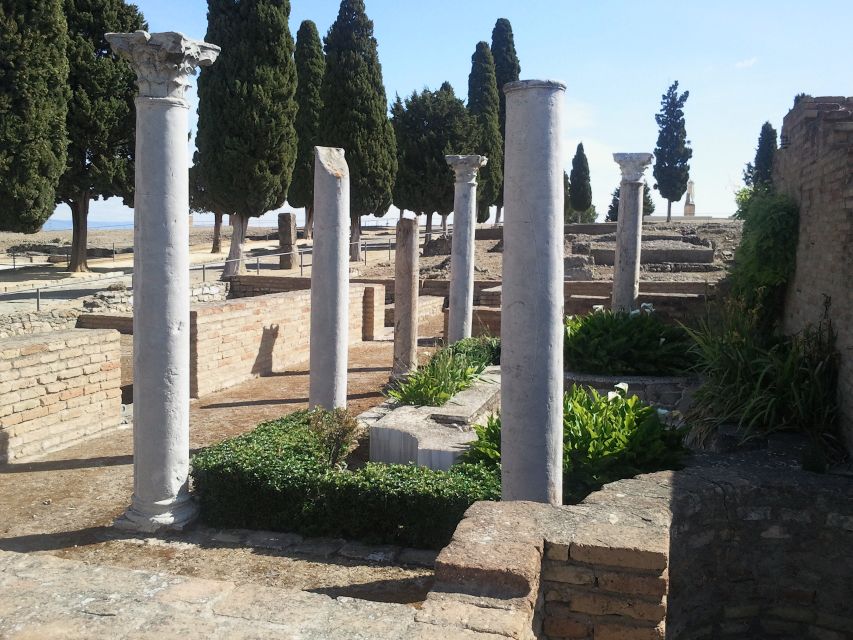
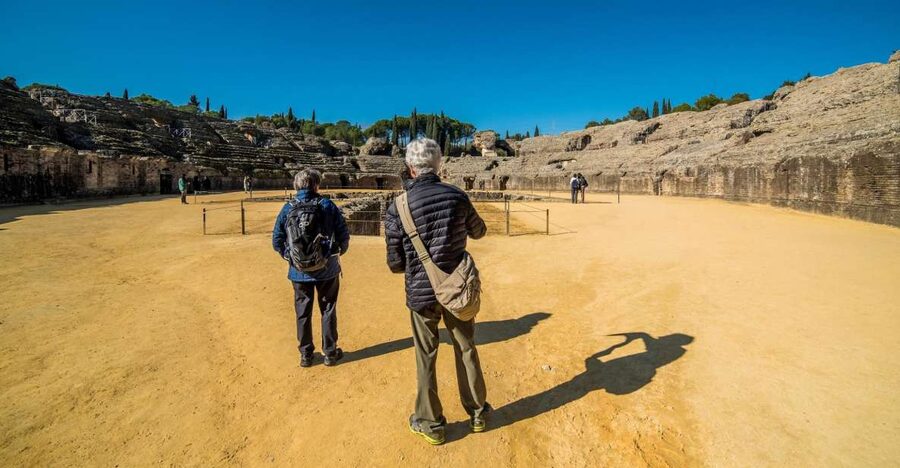
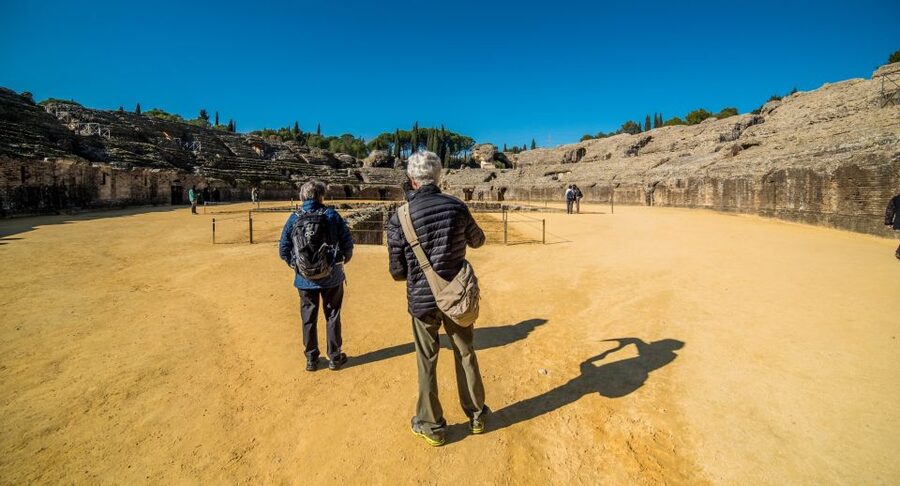
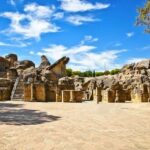
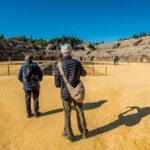
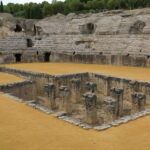
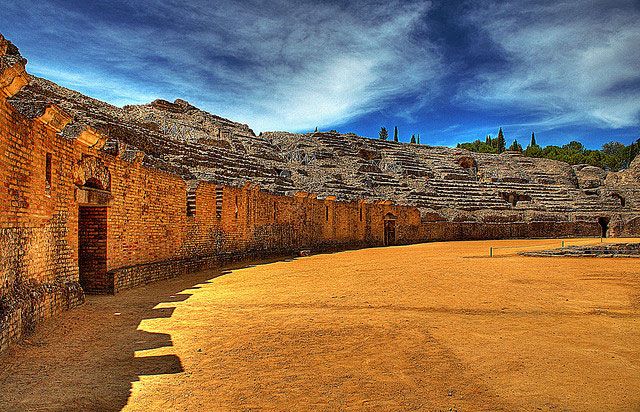
The amphitheater is the big headline for a reason. It held around 25,000 people, and it is described as the third largest amphitheater in the Roman Empire. Even if you know nothing about Roman architecture, the scale helps you understand why this was the entertainment hub of the area.
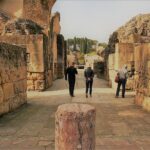
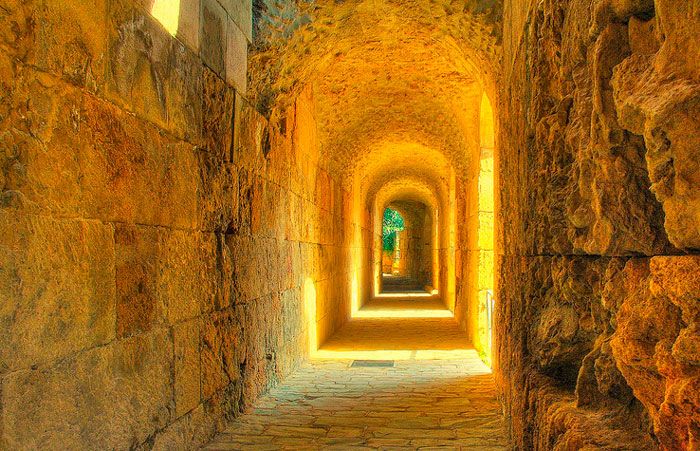
One of the most memorable details mentioned in feedback is the chance to experience the tunnels under the seating. That kind of access makes a huge difference because you see the site from the perspective of people entering the arena, not just tourists staring up at stone.
You’ll also get context for how gladiatorial and spectacle-style events would have worked in a venue like this. The amphitheater is not only about the building, it is also about crowd movement, sound, and visibility, which a good guide will connect back to the physical design you can still trace.
Mosaics, Traianeum, Statues, and the Roman City You Actually Lived In
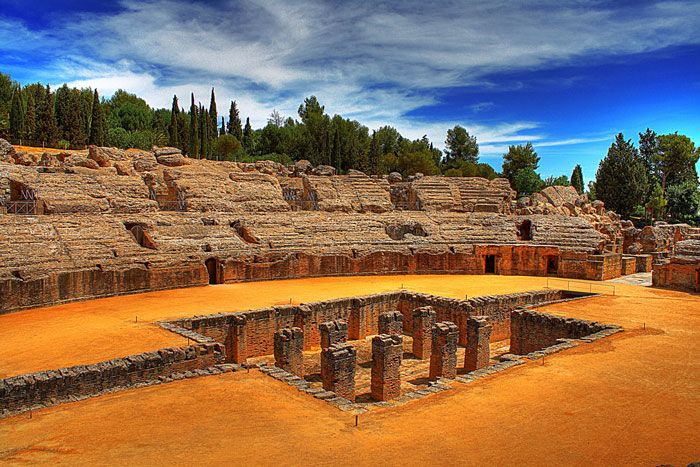
After the amphitheater, the tour shifts into the parts of Italica that help you picture real life. You’ll walk along old streets in the Archaeological Ensemble of Itálica and explore ruins of houses and public buildings.
This is where the tour delivers a lot of “wow” without needing extra stops. You’ll see:
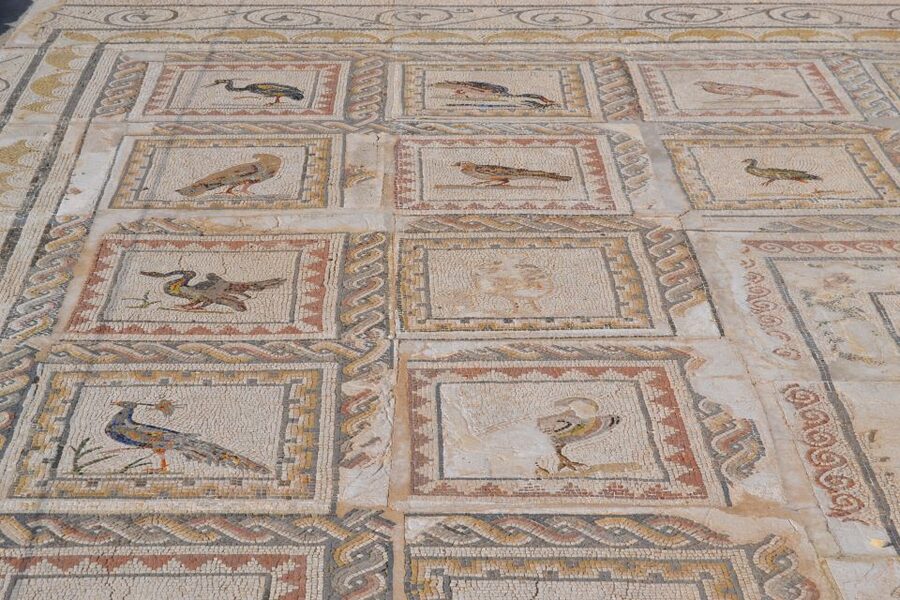
- mosaic floors
- the Traianeum
- statues of Diana, Venus, and Trajan
- public baths
The public baths deserve special attention. Roman baths were social spaces, exercise spaces, and daily routine all at once, so when you stand near the remains, you start understanding Rome as a lived system, not just a military empire.
Mosaic floors are often the show-stealer, and they are consistently called out as a highlight. If you like visual details, take your time looking at patterns and scenes, then listen to how the guide connects them to the people who used the rooms they decorated.
Also, a heads-up: this is a guided walk through major zones, so you are less likely to get long stretches where you can wander completely on your own. If you’re the type who loves to linger for photos, you may wish the pace allowed more free exploring.
Trajan and Hadrian, Plus Why the Name Matters While You Walk
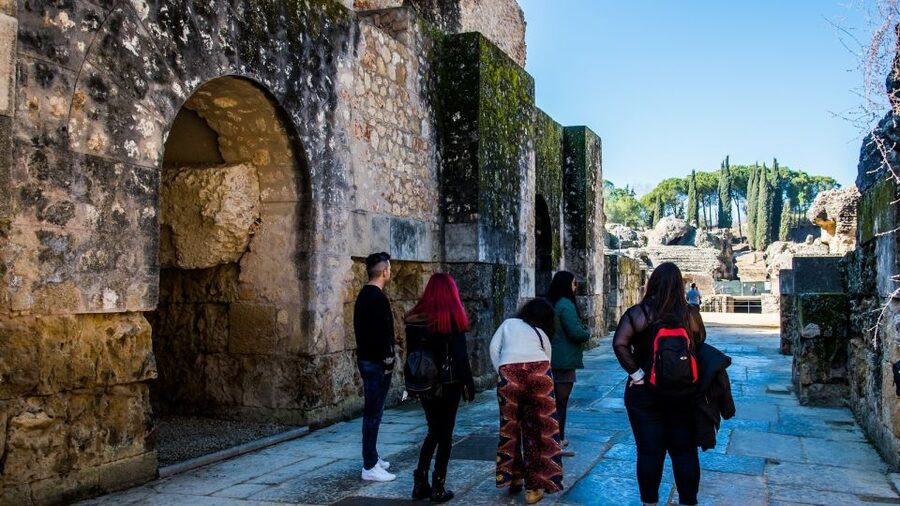
The tour’s big “names” are not random trivia. Italica is described as the birthplace of emperors Trajan and Hadrian, and the city was founded by Roman General Publius Cornelius Scipio Africanus.
When a guide connects those names to what you are seeing, it changes how the ruins feel. You start noticing how public monuments and civic spaces fit together, and you can better imagine who benefited from the city’s investment and influence.
This is one reason many guests rate this tour so highly. People often mention guides who tell stories with enough detail that the site stops feeling like disconnected fragments. You might hear anecdotes and practical explanations that make the stones feel organized in your mind.
The Santiponce Roman Theater: Partially Reconstructed, Still Worth It
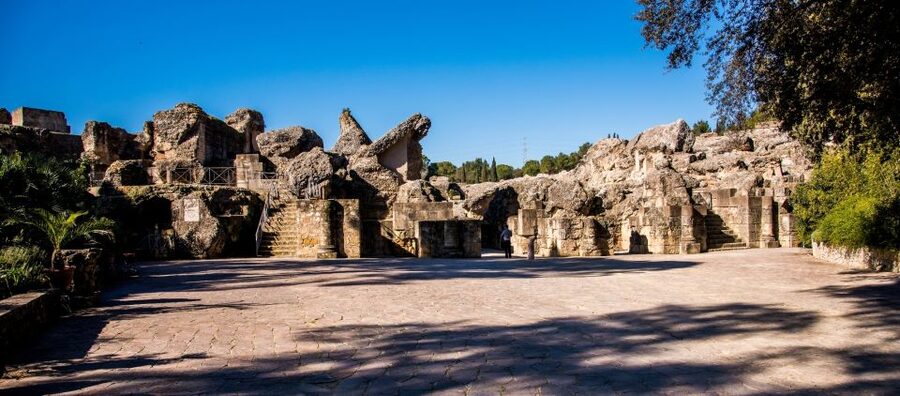
You also visit the Roman theater in Santiponce. The tour includes a partially reconstructed theater, which means you can still learn from what survives and also see enough reconstruction to understand how it worked.
A reconstructed segment can be useful because it gives you a visual framework. Even when parts are incomplete, a guide can show you the logic of seating angles, stage placement, and the theater’s relationship to the surrounding settlement.
This stop pairs well with the amphitheater because you start seeing the Roman entertainment “system” as two different tools for two different types of events. One venue is built for crowd spectacle, the other for performance storytelling, and the design choices follow those goals.
The Second Half Bonus: Monastery Stop and Modern Connections
Several guides add a monastery visit as part of the later portion of the day. Guests describe it as a beautiful bonus, and at least one guide also connected the area to modern Sacromonte while explaining the region around the ancient city.
This is not just a detour. It can help you compare what Rome left behind and how the surrounding area developed later. If you like travel days that add one unexpected layer beyond ruins, you will probably appreciate this added context.
If you personally prefer a pure ruins-only itinerary, you may decide this part is optional rather than essential. In other words, it can be a good add-on, but it is not the core of the Italica experience.
Same idea, different operator. Our other City Tours in Seville
- Seville: City Sightseeing Hop-On Hop-Off Bus Tour
- Seville: Highlights City Bike Tour
- City Sightseeing Seville Hop-On Hop-Off Bus Tour
- Seville: Relaxing City Bike Tour with a Tour Guide
- Seville: City Sightseeing and Local Culture Bike Tour
- From Seville: Italica Roman City & Medieval Monastery Tour
- Seville: Private City Tour by Eco Tuk Tuk
- Seville City Tour 2 Hour Monumental Segway Tour
Guides, Group Size, and How to Get the Most Out of 3 Hours
The guiding is a major part of the value here. Many people praise specific guides by name, including Jose Luis, Jesus, Alberto, Nieves, Miguel, Sergio, and Montse. The common theme is that the explanations include both historical context and site-specific details.
That said, group dynamics matter. One guest noted that in a big group it was sometimes hard to hear, which is realistic on outdoor ruins where sound carries unevenly. If you are sensitive to that, arrive early at the meeting point and choose a spot where you can see the guide clearly.
Also pay attention to the tour’s pace. Some feedback mentions you do not get much time to explore on your own, and a couple of guests wished for more room to linger. If you like to soak things in quietly, keep your expectations aligned with a guided route.
If you travel with kids, the tour can still work. There’s specific advice that a stroller helps, but you might not use it the entire time due to walking conditions.
Price and Value: What $51 Really Buys You
At about $51 per person, the headline value is that you are not paying extra for the big logistics. The price includes:
- round-trip transportation between Seville and Italica
- entrance fees to Italica
- an official tourist guide
- skip the ticket line
For many first-time visitors, that bundle matters more than people expect. You save time on planning, and you start the day focused on sites instead of ticket logistics.
You do need to decide whether the tour format matches your style. If you want a guided structure that covers amphitheater, mosaics, and the Santiponce theater within four hours, you’ll likely feel the price is fair. If you only want one highlight and prefer free-roaming, you might compare this to independent entry and self-guided time.
Lunch is optional for €18. So if you like to travel light, treat meals as your flexible choice rather than an automatic part of the package.
Who This Tour Is Best For, and Who Might Skip It
This tour fits best if you:
- want a guided route that covers the amphitheater, mosaics, and the theater in one outing
- care about how Roman cities functioned, not just how they looked
- enjoy guides who add anecdotes and connect big names to physical sites
It might be less ideal if you:
- prefer lots of independent exploration at ruins
- dislike guided pacing and want slower, self-directed wandering
- specifically want lots of indoor museum time, since this day focuses on exterior ruins and guided walking
Families can make it work too, with the stroller note being the main practical consideration. Plan for a walking day, and bring what you need for comfort in outdoor conditions.
Should You Book the Italica Tour from Seville?
If you want the best Roman “starter kit” outside Seville, I think this is an easy yes. You get the scale of the amphitheater, the detail of mosaics and civic spaces, and the added theater stop in Santiponce, all with transportation and entrance fees handled. The guide experience also seems to be a strong point, with many named guides getting praise for clarity and energy.
Book it if you like structured sightseeing and want to understand what you are seeing. Skip it if your priority is long free time or if you only care about one monument and would rather piece together your own route. For a four-hour Roman fix that feels organized and worth the money, this one makes a lot of sense.
FAQ
How long is the Italica Roman City Tour from Seville?
The tour lasts 4 hours.
Where do pickup times and locations start in Seville?
Pickup options include 09:45 Calle Rastro 12A, 09:50 Hotel Don Paco (Plaza Padre Jerónimo de Córdoba nº4), and 10:00 Calle Trajano 6.
How is the time split during the tour?
The schedule includes about 30 minutes of bus or coach travel to reach Italica, about 3 hours on the guided tour at the ruins, and about 30 minutes back.
What is included in the tour price?
Included are round-trip transportation between Seville and Italica, entrance fees to Italica, and an official tourist guide.
Do I skip the ticket line?
Yes, skip the ticket line is included.
What languages are available on the tour?
The tour is available in Spanish and English. French, German, and Italian are available on request.
What major ancient sites are visited during the tour?
You visit Italica, including the amphitheater and the Roman ruins, and you also see the partially reconstructed Roman theater in Santiponce.
Is lunch included?
Lunch is not included, but an optional lunch is available for €18.
What is special about the amphitheater?
It is described as the third largest amphitheater in the world, with a seating capacity of 25,000.
Can I cancel or pay later?
Yes. You can cancel up to 24 hours in advance for a full refund, and you can reserve now and pay later.
Keep browsing City Tours in Seville
- Seville: City Sightseeing Hop-On Hop-Off Bus Tour
★ 4.0 · 4,633 reviews - Seville: Highlights City Bike Tour
★ 4.8 · 2,168 reviews - City Sightseeing Seville Hop-On Hop-Off Bus Tour
★ 4.0 · 1,782 reviews - Seville: Relaxing City Bike Tour with a Tour Guide
★ 4.8 · 1,588 reviews - Seville: Small-Group City Highlights Walking Tour
★ 5.0 · 1,204 reviews
Tours: the rest of our Seville write-ups
- Seville: Cathedral, Giralda, and Royal Alcázar Guided Tour
★ 4.7 · 9,165 reviews - Seville: Cathedral, Giralda & Alcazar Entry With Guided Tour
★ 4.6 · 8,560 reviews - Seville: Priority Access Cathedral, Giralda & Alcázar Tour
★ 4.8 · 7,563 reviews - Seville: Alcázar and Cathedral Entry Ticket and Guided Tour
★ 4.6 · 5,056 reviews - Seville: City Sightseeing Hop-On Hop-Off Bus Tour
★ 4.0 · 4,633 reviews
Keep browsing Roman Ruins and Ancient Sites
- From Seville: Italica Roman City & Medieval Monastery Tour
★ 4.5 · 1,051 reviews - Historical Italica: Half-Day Guided Tour from Seville
★ 4.5 · 416 reviews - Seville: Game of Thrones and Roman Empire Italica Tour
★ 4.3 · 372 reviews - Visit to Italica Roman Ruins Tour tickets included
★ 4.5 · 285 reviews - Seville: Italica Roman Ruins City Tour
★ 4.2 · 147 reviews
Fresh off the desk: recent Seville experiences we have written up







Roman Ruins and Ancient Sites, side by side.
 ★ 4.8Málaga: Alcazaba and Roman Theatre Guided Tour With EntryFrom $145,792 reviews
 ★ 4.5From Seville: Italica Roman City & Medieval Monastery TourFrom $461,051 reviews
 ★ 4.6Córdoba: Medina Azahara 3-Hour Guided TourFrom $19969 reviews
 ★ 4.4Cartagena: Roman Theater, Forum, Castle and Panoramic LiftFrom $24710 reviews
 ★ 4.9From Málaga: Caminito del Rey & Antequera: Dolmens and free timeFrom $64605 reviews
 ★ 4.5Malaga Tour with Cathedral, Alcazaba and Roman TheatreFrom $45548 reviews
 ★ 4.4Cartagena : Roman Theatre Museum Entry TicketFrom $8481 reviews
★ 4.7Cordoba: Medina Azahara 3–Hour Guided TourFrom $18472 reviews
This tour also sits in