
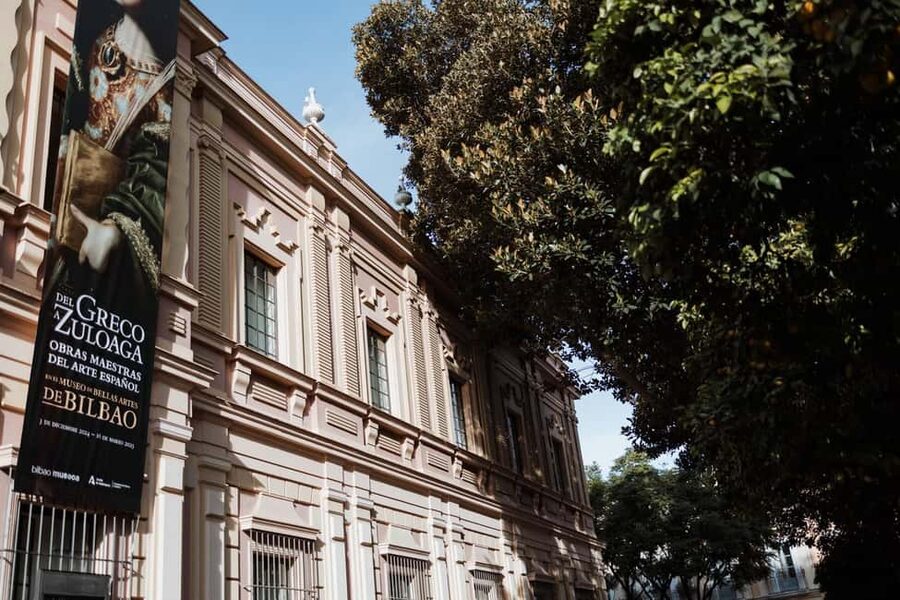
Reviewed · MUSEUMS
Seville: Museum of Fine Arts Guided Tour
A two-hour art hit in Seville’s finest setting. You get La Merced convent architecture plus paintings and sculptures explained in plain, usable context. I love how the tour also gives you a small-group pace, so the art feels less like homework and more like a guided walk through time.
One thing I especially like is the way the tour connects Sevillian Gothic, Renaissance, and Baroque styles to what was happening in Spain. If your guide is Julio, you’ll see why so many people rave about him, including how he links symbolism and period background to specific works like Bartolomé Esteban Murillo’s paintings.
The main drawback to consider is simple: two hours moves fast, so you’ll come away with smart highlights, not an all-day museum marathon.
In This Review
- Key highlights you should care about
- Seville’s Museum of Fine Arts: why a guided tour actually helps
- Where you meet and how the first 10 minutes work
- The La Merced Convent experience: architecture you can feel
- Claustro de los Bojes and Claustro Mayor: a walk through “how the museum thinks”
- From Sevillian Gothic to Renaissance: what you’re really learning
- Murillo’s room: why that focus time matters
- What the rest of the museum adds (and what it won’t)
- The guide makes the difference: Julio, Lorraine, and the art-story method
- Price and value at about $23 for 2 hours
- Practical planning: what to bring, what to skip
- Should you book the Seville Museum of Fine Arts guided tour?
- FAQ
- How long is the Seville Museum of Fine Arts guided tour?
- Where do I meet the guide?
- How many people are in the group?
- Are the guides available in English or Spanish?
- What is included in the tour price?
- Is transportation to the meeting point included?
- Can I skip the security line?
- Is the tour wheelchair accessible, and are pets allowed?
Key highlights you should care about
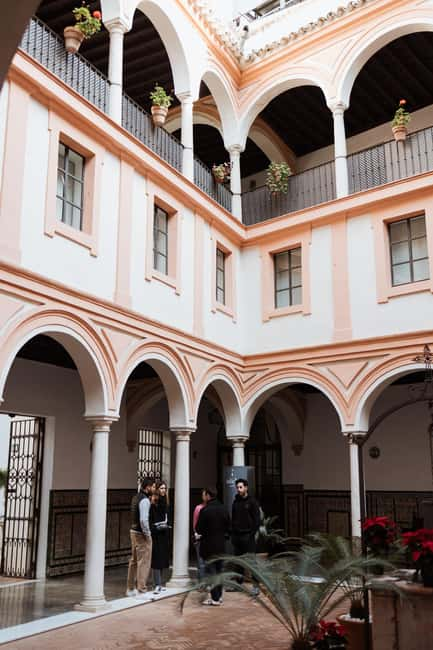
- La Merced convent building: Renaissance and Baroque architecture inside the museum complex.
- Cloisters that frame the art: Claustro de los Bojes and Claustro Mayor turn the visit into a walk through space, not just walls.
- Paintings with stories, not guesses: you’ll hear the meaning behind iconic works as you look.
- Big names across eras: you’ll see the evolution from Sevillian Gothic to Renaissance works like Saint Jerome Penitent by Torrigiano.
- Murillo focus time: the tour includes a dedicated room on Bartolomé Esteban Murillo.
- Small group cap of 8: this keeps questions from getting lost in a crowd.
Seville’s Museum of Fine Arts: why a guided tour actually helps
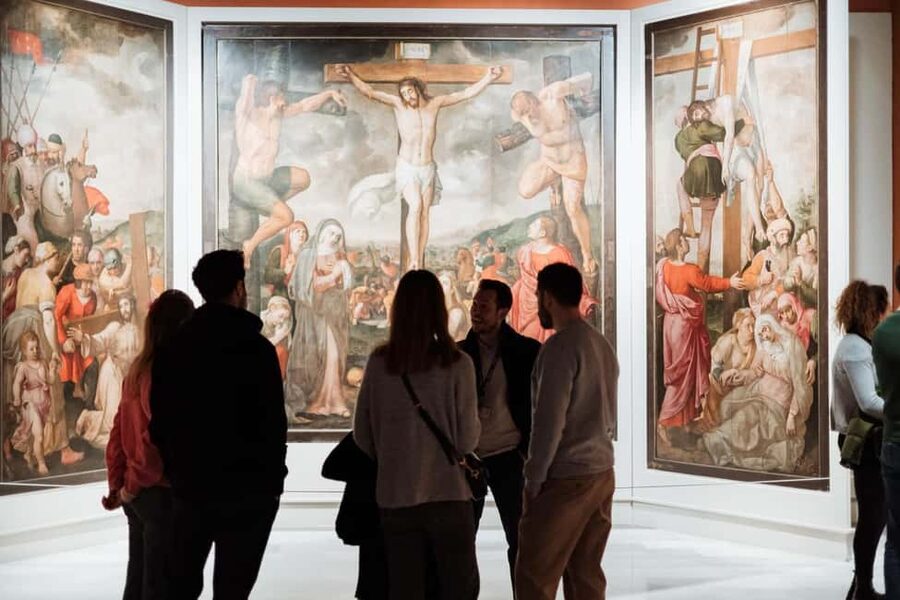
The Museo de Bellas Artes de Sevilla is not just famous for art, it’s famous for being a museum in a former convent complex. That matters, because the building changes how you see everything. You’re not only looking at canvases. You’re walking through cloisters and monumental spaces that shape light, movement, and mood.
A guided tour is a smart move here because this museum is Spain-by-way-of-Seville. It spans multiple eras and styles, and it can be easy to wander for an hour without realizing what you’re actually looking at. With a licensed local guide, the tour becomes a map for meaning. You get context for why artists painted what they painted, and how Sevillian style fits into the wider European timeline.
And it’s good value for the time. At $23 per person for a 2-hour tour that includes museum admission, express security, and a licensed guide, you’re paying for focus. You’re not paying for a long lecture or a generic “look at this painting” routine.
Where you meet and how the first 10 minutes work
You’ll start at the neighborhood level, near the museum area. The tour meeting point is Plaza del Museo, next to the statue of Murillo. Look for your guide with a blue umbrella or a name tag that says Sevilla Guías & Tours.
This is one of those details that can save your trip. Plaza del Museo is a clear, public landmark, and you’ll find the statue reference helpful once you’re nearby. If you’re arriving on foot, I’d give yourself a little buffer to find the group, especially if you plan to stop for coffee beforehand.
From there, you head into the museum with a small group. The tour includes an express security check, which is useful if you hate museum lines as much as I do. After about two hours, you’ll return to the same meeting area.
Reviewed and rated alongside this one, further Museums in Seville



The La Merced Convent experience: architecture you can feel
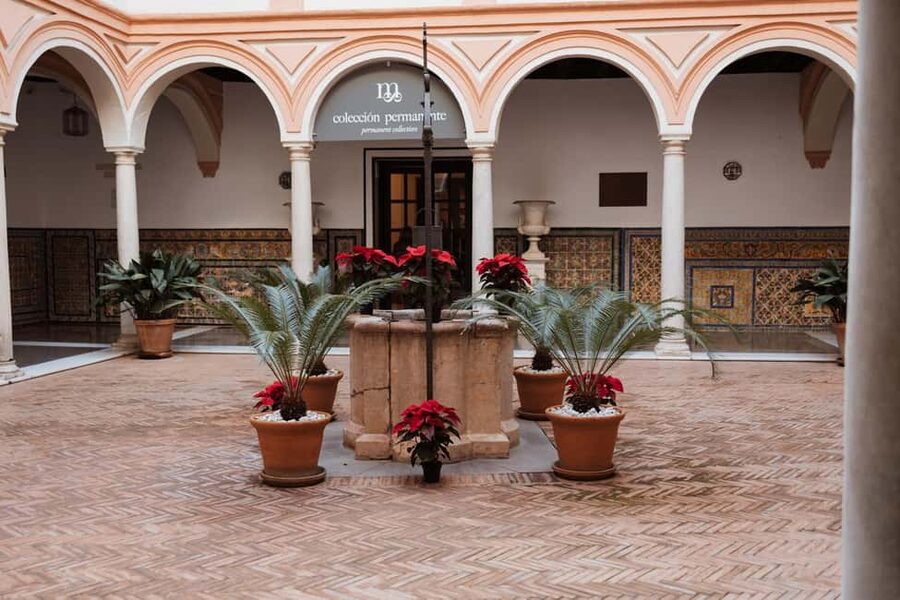
A big part of why this tour works is that it begins in the building itself. You’re in the historic Convent of La Merced, and the museum is housed in spaces shaped by Renaissance and Baroque design. Instead of treating the convent as background, the guide uses it as a framework.
Here’s what you’ll notice as you move:
- The cloisters are peaceful and spacious, so your eyes slow down in the best way.
- Claustro Mayor and Claustro de los Bojes help you see how museum spaces were designed for contemplation.
- The architecture creates a transition between eras of art, which makes the later galleries easier to follow.
If you’re the type who likes art but also likes settings with atmosphere, this is where you’ll get the most “this feels like Seville” payoff. It’s not only about what’s on the walls. It’s about where you stand while you look.
Claustro de los Bojes and Claustro Mayor: a walk through “how the museum thinks”
The cloisters are included in the experience, and they’re not just quick photo stops. They’re the connective tissue of the visit. Renaissance and Baroque masterpieces aren’t confined to one room. They’re part of the overall museum rhythm.
I like this approach because it prevents the common museum problem: staring at artworks without the ability to reset your attention. The cloisters give you a natural break. Your guide can point out how artistic style shifts over time, then you physically move to another space where that shift becomes easier to “read.”
Also, these courtyards can be visually forgiving. If you arrive on a bright day, walking between enclosed cloister space and open galleries helps your eyes adjust, and that makes the paintings feel more vivid once you re-enter the main rooms.
From Sevillian Gothic to Renaissance: what you’re really learning
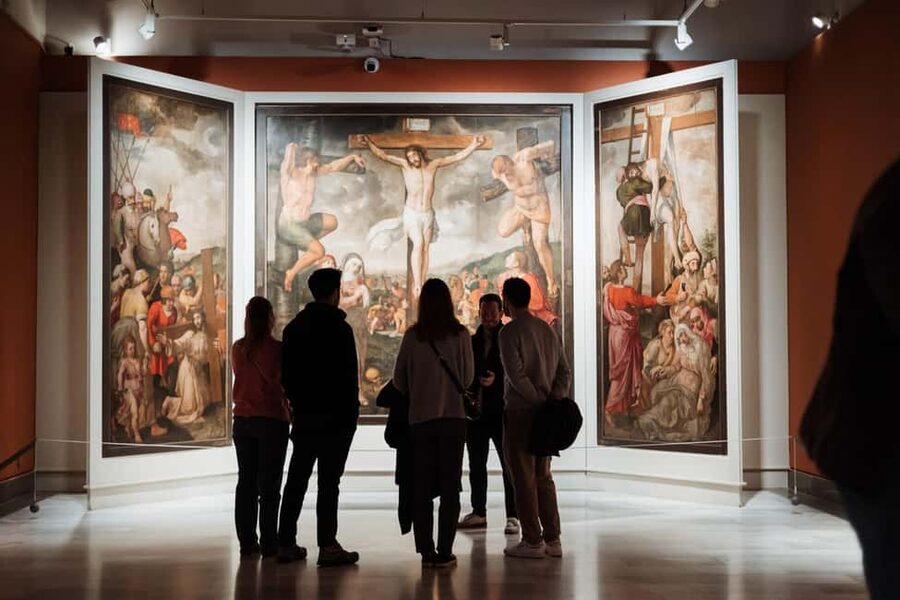
One of the tour’s best promises is the artistic evolution. You’ll move from Sevillian Gothic pieces across to Renaissance works like Saint Jerome Penitent by Torrigiano. That sounds broad, but with a guide it becomes concrete.
What you should pay attention to during this part:
- How figures, posture, and facial expression change from era to era.
- How symbolism works differently in Gothic versus Renaissance art.
- How local Sevillian style blends with broader European trends.
Even if you’re not an art person, the structure helps. You’re not trying to memorize styles. You’re seeing how artists solved different problems across centuries, from realism and emotion to religious storytelling.
This is also where the best guides do their real work. Julio is repeatedly mentioned for connecting paintings and sculptures to the historical period, including iconography and symbolism. That’s what turns “I see a painting” into “I understand why someone made this in Seville.”
Murillo’s room: why that focus time matters
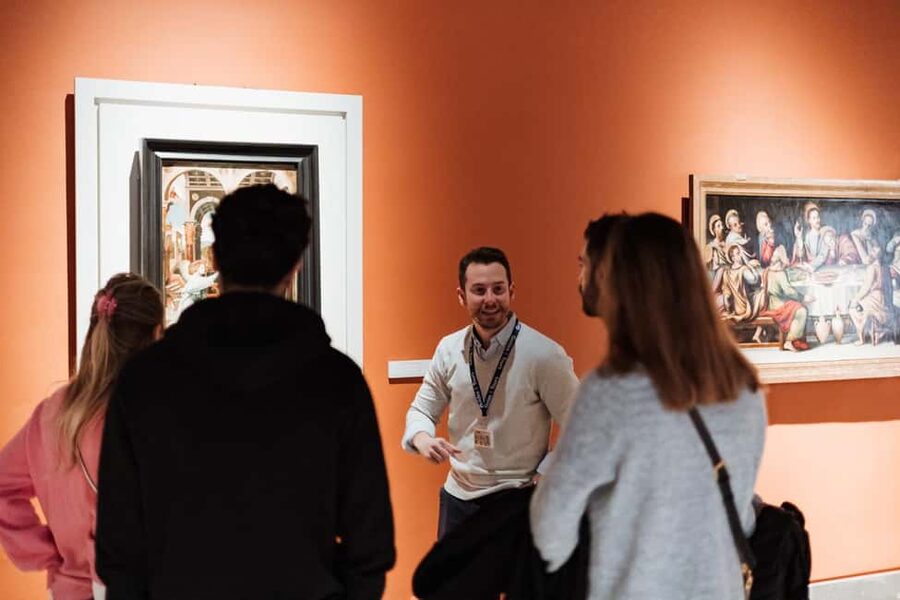
The tour includes a dedicated room for Bartolomé Esteban Murillo, a cornerstone of Sevillian painting. Rather than scattering Murillo references across the museum, you get time built around his work and the world that produced it.
Why it’s valuable: a devoted room gives your brain a chance to sort. You’ll start noticing recurring themes and artistic habits. You can also compare mood and style without constantly switching context.
The best part is that the guide doesn’t treat Murillo like a name on a wall label. The tour’s approach emphasizes the stories and inspirations behind the works, so the room becomes more like a guided conversation than a checklist.
If you’re into Baroque art, this is likely to be your favorite block of time. If you’re new to Spanish art, it’s still a strong entry point, because Murillo is approachable without being simplistic.
What the rest of the museum adds (and what it won’t)
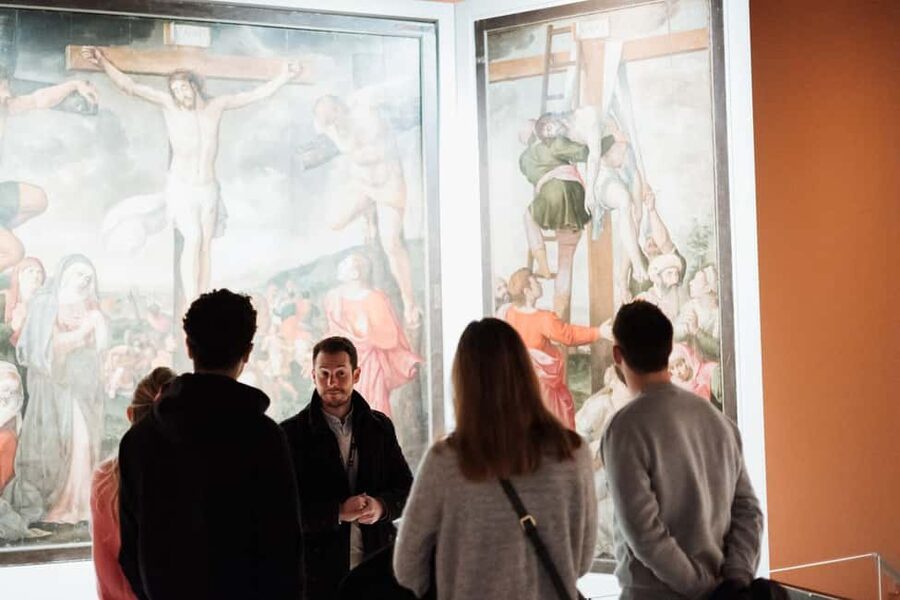
You’ll see selected works across key categories: Sevillian Gothic, Renaissance, Baroque, and references to Sevillian Costumbrismo. But you should understand the trade-off of a 2-hour guided tour. It’s designed to give you a guided hit of highlights, not to cover every corner.
That’s not a failure. It’s the point. The tour is built for people who want strong context without giving up a half day. It’s also why the group stays small, limited to 8 participants. Your guide can keep explanations in sync with what you’re looking at, and you can ask questions without feeling rushed.
One nice extra, mentioned in booking experiences, is that after the tour ends, you can usually stay inside the museum longer if you want to keep exploring on your own. That’s perfect for striking your own balance. Do the guided part for orientation, then follow your curiosity for the rest of the visit.
Reviewed and rated alongside this one, further Guided in Seville
- Seville: Cathedral, Giralda, and Royal Alcázar Guided Tour
- Seville: Cathedral, Giralda & Alcazar Entry With Guided Tour
- Seville: Alcázar and Cathedral Entry Ticket and Guided Tour
- Alcázar of Seville Skip-the-Line Tickets and Guided Tour
- Seville: Alcázar Guided Tour
- Seville Cathedral and Giralda Tower Guided Tour and Tickets
- Seville: Cathedral Guided Tour with Priority Access
- Seville: Alcazar Skip-the-Line Guided Tour with Tickets
The guide makes the difference: Julio, Lorraine, and the art-story method
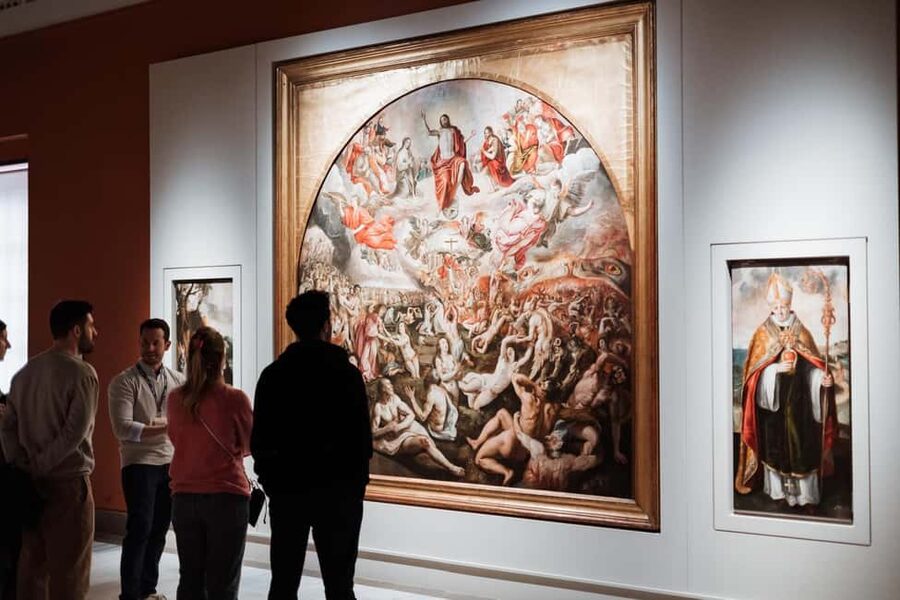
This tour is built around a professional licensed guide, available in English or Spanish. Many bookings specifically mention Julio, including Julio Dean Del Junco, for being friendly and engaging and for answering questions well. The pattern in the comments is consistent: strong historical context delivered at a pace that works for both art beginners and people who already know the basics.
Some bookings also mention Lorraine, praised for humor, engaging delivery, and making sure people could hear the guide clearly with the use of an ear piece. If you’re sensitive to loud group tours, that detail matters.
Here’s what you’re buying with the guide fee:
- You learn how to look, not just what to look at.
- Symbolism and historical background become part of the viewing experience.
- You leave with a sense of the larger “why” behind the artworks.
If you prefer to learn by listening while walking, this format is a good fit. If you hate being guided, you might find any tour slightly limiting. But based on the repeated feedback style, the explanations are meant to be digestible and flexible.
Price and value at about $23 for 2 hours
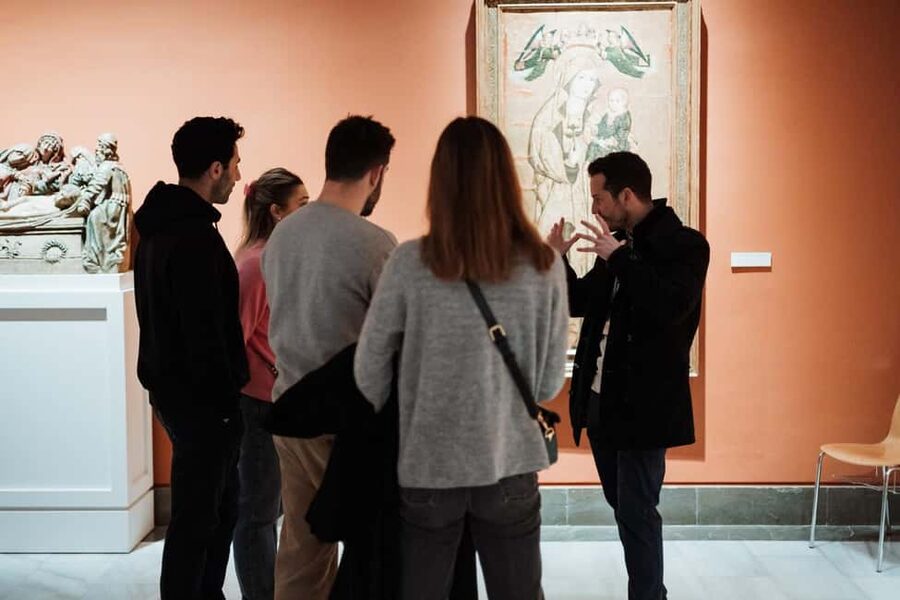
At $23 per person, you’re paying for a focused package:
- Museum entrance included
- A licensed guide in English or Spanish
- Small group size (max 8)
- Express security check
When you do the math on time, it’s reasonable. Two hours inside a museum is enough for a tour that gives you context, plus enough time to decide what you want to see afterward. If you tried to do this alone, you’d either spend time figuring out what to prioritize, or you’d rely on quick labels that do not explain symbolism and historical context.
Also, you get the benefit of skipping some waiting. If the security line is slow, that can eat your energy fast. Express entry helps you keep the day moving.
Practical planning: what to bring, what to skip
This is a “show up and go into art” kind of tour. Transportation to the meeting point is not included, and food and drinks are not included, so plan accordingly.
A few practical notes based on the tour rules:
- Pets are not allowed.
- The tour is wheelchair accessible.
- The pace is a 2-hour structured visit, so wear comfortable shoes. Cloisters plus gallery floors add up.
If you’re traveling with family, this can work well because the guide approach tends to connect the art to everyday human stories and historical context. If you’re traveling solo, the small group nature keeps you from feeling like you’re alone, but you still get personal attention.
Should you book the Seville Museum of Fine Arts guided tour?
If you want the museum experience without getting lost in details, I think you should book this. It’s especially worthwhile if:
- You want context for Spanish art, not just museum photos.
- You care about how Renaissance, Baroque, and Sevillian Gothic connect.
- You like the idea of starting with La Merced’s convent spaces, then moving into major works like those associated with Murillo.
Skip it if:
- You plan to spend most of your day reading slowly and seeing everything, room by room.
- You dislike guided tours and prefer to wander without listening to explanations.
If you’re doing Seville for the first time and want your day to feel organized, this is a solid choice. It gives you a strong framework fast, then lets you take control after the guided portion ends.
FAQ
How long is the Seville Museum of Fine Arts guided tour?
It lasts 2 hours.
Where do I meet the guide?
Meet at Plaza del Museo, next to the statue of Murillo. The guide will wait with a blue umbrella or a name tag that says Sevilla Guías & Tours.
How many people are in the group?
It is a small group limited to 8 participants.
Are the guides available in English or Spanish?
Yes. The live tour guide is available in English or Spanish.
What is included in the tour price?
The tour includes entrance to the Museum of Fine Arts of Seville and an expert licensed guide.
Is transportation to the meeting point included?
No. Transportation to the meeting point is not included.
Can I skip the security line?
Yes. There is an express security check included.
Is the tour wheelchair accessible, and are pets allowed?
The tour is wheelchair accessible. Pets are not allowed.
Guided: the rest of our Seville write-ups
- Seville: Cathedral, Giralda, and Royal Alcázar Guided Tour
★ 4.7 · 9,165 reviews - Seville: Cathedral, Giralda & Alcazar Entry With Guided Tour
★ 4.6 · 8,560 reviews - Seville: Alcázar and Cathedral Entry Ticket and Guided Tour
★ 4.6 · 5,056 reviews - Alcázar of Seville Skip-the-Line Tickets and Guided Tour
★ 4.6 · 3,941 reviews - Seville: Alcázar Guided Tour
★ 4.5 · 3,371 reviews
Museums: the rest of our Seville write-ups
- Seville: Puro Flamenco Show with Optional Museum Ticket
★ 4.8 · 6,088 reviews - Seville: Museum of Illusions Entry Ticket
★ 4.2 · 1,196 reviews - A Fantastic Visit To The Museum Of Illusions Seville
★ 4.5 · 390 reviews - Seville: Museum of Flamenco Dance Admission Ticket
★ 4.4 · 197 reviews - Combined ticket: Puro Flamenco Show + Flamenco Museum visit
★ 4.5 · 132 reviews
Tours: the rest of our Seville write-ups
- Seville: Cathedral, Giralda, and Royal Alcázar Guided Tour
★ 4.7 · 9,165 reviews - Seville: Cathedral, Giralda & Alcazar Entry With Guided Tour
★ 4.6 · 8,560 reviews - Seville: Priority Access Cathedral, Giralda & Alcázar Tour
★ 4.8 · 7,563 reviews - Seville: Alcázar and Cathedral Entry Ticket and Guided Tour
★ 4.6 · 5,056 reviews - Seville: City Sightseeing Hop-On Hop-Off Bus Tour
★ 4.0 · 4,633 reviews
Fresh off the desk: recent Seville experiences we have written up




Museums, side by side.
 ★ 4.6Madrid: Prado Museum Entry TicketFrom $2117,509 reviews
 ★ 4.4Barcelona: FC Barcelona Museum “Barça Immersive Tour” TicketFrom $3510,944 reviews
 ★ 4.5Madrid: Reina Sofía Museum Entrance TicketFrom $146,889 reviews
 ★ 4.5Barcelona: Park Güell and Gaudí House Museum Entry TicketFrom $336,326 reviews
 ★ 4.8Seville: Puro Flamenco Show with Optional Museum TicketFrom $346,088 reviews
 ★ 4.5Barcelona: Picasso Museum Skip-the-Line Guided TourFrom $443,355 reviews
 ★ 5.0Girona & Dali Museum Small Group Tour with Pick-up from BarcelonaFrom $1202,965 reviews
 ★ 4.4Valencia: Oceanogràfic, Hemisfèric & Science Museum ComboFrom $542,959 reviews
This tour also sits in