
Reviewed · MURCIA AND CARTAGENA
Cartagena : Roman Theatre Museum Entry Ticket
A Roman theater, right under your feet. Cartagena’s Roman Theatre Museum turns an ancient find into a walkable story. You get one of Spain’s biggest Roman theaters, plus a museum built around the archaeology and the dramatic moment the site was uncovered again.
I especially love the way this ticket mixes museum floors with an outdoor walk to the theater itself. I also like that the experience is self-paced, so you can spend extra time on the details like mosaics and the burial story without being rushed. One practical downside to know: the outdoor areas include steps, and some parts may feel tricky if you are not steady on your feet.
In This Review
- Key things to know before you go
- Roman Theatre Museum at a glance, a 7,000-seat time machine
- How the visit runs, museum floors then the outdoor theater
- The Passageway of History, from 1st century B.C. to rediscovery
- Roman plays were not just entertainment, they carried messages
- The mosaics and the cost of building, what got destroyed
- Seeing Rafael Moneo’s museum design with your own eyes
- Timing and heat tips, when to go and how long to plan
- Ticket value, what $8 gets you, and how to use it well
- Getting there and the entrance maze, plus mobility considerations
- Who this suits best, and who might feel it is too short
- My bottom-line take, a compact ticket with real payoff
- Should you book this Roman Theatre Museum ticket?
- FAQ
- What is included with the Cartagena Roman Theatre Museum ticket?
- How long does the experience take?
- Is there an audio guide, and what languages are available?
- When does the Roman Theatre Museum close on Sundays?
- Do I need a voucher to enter?
- Are food, drinks, and pets allowed inside?
Key things to know before you go
- Museum first, theater second for an easy flow from artifacts to the seating area
- Rafael Moneo design makes the archaeology feel modern, not dusty
- Passageway of History explains how the theater was buried and later rediscovered
- Big scale, 7,000-seat capacity helps you picture Roman performances
- Audio guide helps if you want more context while you wander
Roman Theatre Museum at a glance, a 7,000-seat time machine
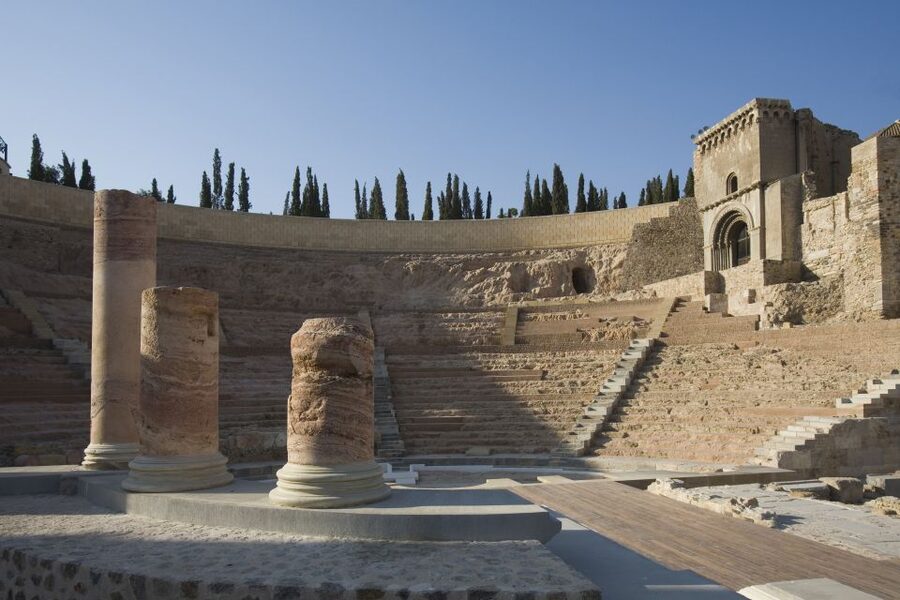
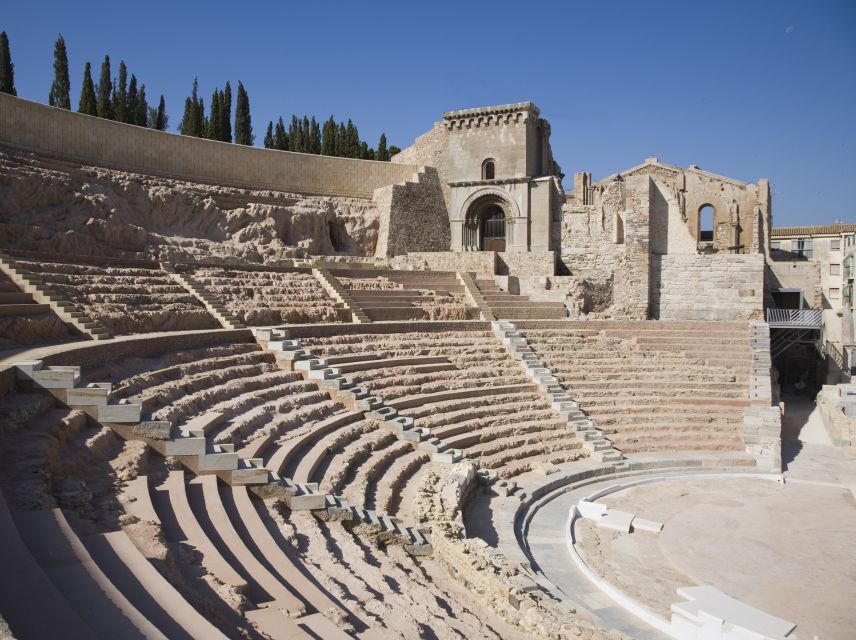
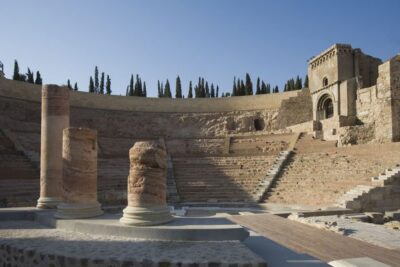
This is the kind of place that makes you pause mid-city walk and ask, how is this here? Cartagena’s Roman Theatre Museum gives you entry to one of the largest Ancient Roman theaters in Spain, built for around 7,000 spectators. The museum adds an extra layer, designed by the famous architect Rafael Moneo, so you are not just looking at ruins, you are learning how the site was understood and presented.
What makes it interesting is the full story arc. You start with the archaeological remains and the rediscovery process, then you move to the outdoor theater space and can mentally place yourself where Roman audiences stood to watch plays. It is Roman history, but told in a way that actually works for real visiting time, about one day.
At $8 per person, it is also a value-friendly stop. You are paying for both the museum and the theater site, so you do not feel like you are buying a quick look at stones. Still, plan for a bit of walking inside and outside, and keep an eye on the stairs in the open areas.
How the visit runs, museum floors then the outdoor theater
The visit generally follows a simple sequence: you enter through the museum, move through the exhibition levels, then you exit to the theater area. That matters because the site is set up as one linked experience, and it is easy to miss the theater access if you only focus on where you think the theater entrance should be.
Inside, you can expect multiple floors connected by lift and escalators. That is a good setup if you want options besides stairs. Once you get outside, you can walk around the theater area and take in the shape of the space, which is where it really clicks why an audience size like 7,000 mattered.
This is also a good place to bring kids if they are curious about old stuff and not just running. One family experience described it as an excellent way to see the city with children. The self-paced setup helps, because you can slow down when the questions start.
Same idea, different operator. Our other Roman Ruins and Ancient Sites
The Passageway of History, from 1st century B.C. to rediscovery
The highlight is the story route through the Passageway of History. This is where the theater stops being just a cool ancient shell and becomes a timeline you can follow. You learn about the processes that buried the Roman theater over time, then about how it was rediscovered.
You also get context for how the theater site developed starting in the 1st century B.C. That date anchor is useful, because it gives you a sense of how long Rome’s influence shaped this part of Cartagena. Instead of randomly seeing artifacts, you are placing them into a sequence, including what happened before the theater existed, how it functioned in Roman times, and how later layers changed the site.
If you choose the audio guide option, this portion can feel even smoother. The audio guide is available in multiple languages, and it helps you connect what you see to what you are hearing while you walk at your own speed. Even if you skip the audio, the museum layout is built so you can keep moving and still feel oriented.
Roman plays were not just entertainment, they carried messages
This museum does not treat the theater as a silent monument. You learn how plays were performed during Roman times and what that meant socially and politically. That political angle is especially interesting because it reframes the theater as a communications tool, not only a stage.
Roman art culture and politics were tied together in how public events shaped reputation and power. When you understand that, you start reading the theater space differently. You can picture staging, audience visibility, and the role of performance in a public life that cared about status.
I like this approach because it avoids the trap of turning Roman ruins into only a photo stop. The space becomes meaningful. And when a place makes you think beyond the stone, it tends to stick with you longer after you leave.
The mosaics and the cost of building, what got destroyed
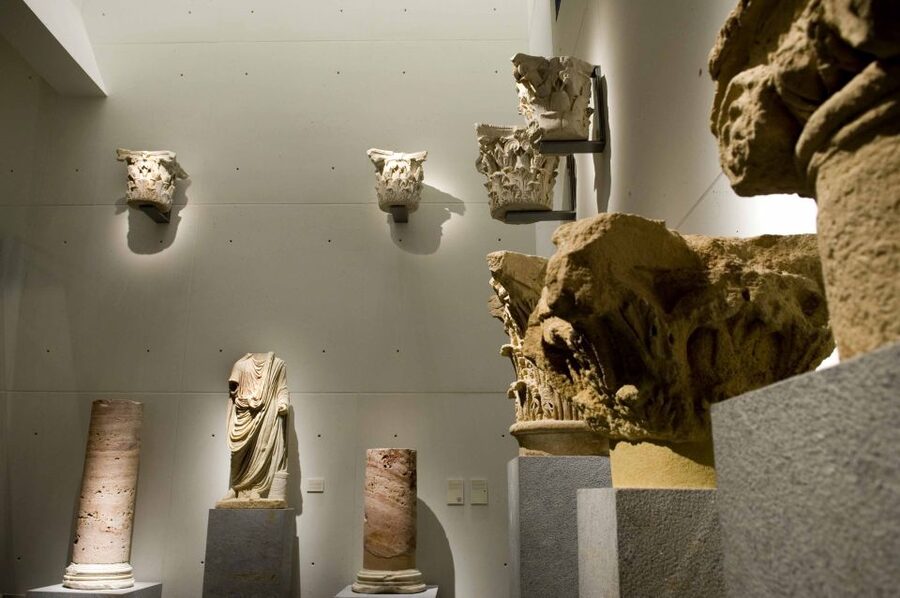
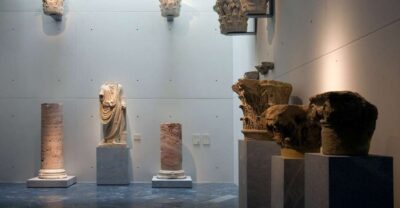
One of the most human parts of the story is what happened behind the scenes of construction. You can see remains of a Roman house with mosaic tiles, and the exhibit explains that this house was destroyed during the theater’s construction.
That detail changes your mindset in a good way. It is not just that Rome built something big. It is also that building something big required taking other spaces apart. You can see evidence of both worlds, the domestic Roman home represented by mosaics, and the theater representing public life and spectacle.
For architecture or history lovers, this section is a strong reason to book ahead. You get the feeling that the museum is not only protecting ruins, it is showing cause and effect. If you enjoy archaeology that explains change over time, you will likely appreciate this part more than you expect.
Seeing Rafael Moneo’s museum design with your own eyes
The Roman Theatre Museum is designed by Rafael Moneo, and that design shows up in the way the site is organized for walking. The museum architecture helps you move through the story and then transition to the outdoor theater space. In plain terms, the building makes the ancient site easier to understand.
A lot of visitors describe the experience as informative and well organized, especially when they use the audio guide. Even if you only understand bits of Roman context, the flow from exhibits to the theater helps you build the picture. Think of it like a guided path, without the pressure of a scheduled tour group pace.
The museum also gives you a chance to see artifacts before you step outside. One helpful visiting detail is that you walk around the theater only after you have looked at what is inside, so you get more out of it than a quick exterior glance.
Timing and heat tips, when to go and how long to plan
The museum is on its own schedule. The Roman Theatre Museum closes at 2:00 PM on Sundays, so plan your visit on a Sunday earlier than you would for a normal museum day. If you arrive later, you might end up short on the museum portion, and the outdoor theater is the part that really helps the story click.
Also, try to avoid arriving when you are already tired. This place is best when you have time to walk back and forth a bit between floors and then take your time in the theater area. People describe it as self-paced with plenty to look at before walking outside into the theater.
Finally, go prepared for heat. One review mentioned a really hot day experience with kids who were sweating. The site does not allow food and drinks, and that matters because it limits your ability to manage heat with your own snacks or water. You might not want to wait until mid-afternoon in peak sun.
Reviewed and rated alongside this one, further Murcia and Cartagena
Ticket value, what $8 gets you, and how to use it well
At about $8 per person, this ticket is priced like a small add-on stop, but it functions like a full experience. You are paying for the museum and the Roman Theatre site entrance. That combination is the value part. Many paid stops offer either museum context or a site visit. Here you get both in one go.
If you add the optional audio guide, you are effectively buying extra clarity for your time on site. Reviews with audio guides describe it as helpful for understanding the history of the Roman Theatre, and that is exactly what you want to hear for an archaeology museum. When you know what you are looking at, your photos and memories get better.
One practical tip that comes up: get your tickets before you arrive. Lines can be long if you try to buy on the spot. It is a small move that saves time when your day is already packed with walking.
Getting there and the entrance maze, plus mobility considerations
Finding the entrance can be a real mini-adventure. One tip is that the entrance is difficult to find, and if you rely on Google directions, you might end up at the exit of the museum instead of the entrance. Another helpful detail is that you need to go through the museum to reach the theater, not straight to the outdoor area.
Once you are on site, you should also think about access. There are open steps and some areas may not have handrails. If you are less steady or traveling with someone who needs extra support, that could limit how much you can explore, especially if there are routes down toward stage areas. Reviews also note that if you have prams or wheelchairs, they have to stay at the top.
Wheelchair accessibility is listed for the overall experience, so the museum part and routes should be manageable. Still, plan for the reality that this is an ancient site presented as it is, not a fully modern smooth walkway. If you want to make the day easy, bring your walking stick or supportive shoes, and give yourself extra time to route around the stairs safely.
Who this suits best, and who might feel it is too short
This is a strong pick if you like archaeology you can understand. The museum focuses on burial, rediscovery, Roman-era life, and how performance connected to politics. It is also a good match for architecture fans, since you are seeing a major site through a well-known modern museum designer.
Families can enjoy it too. Reviews mention kids liking it, and the self-paced format is useful when children want to move at their own speed. If your family likes structure, the museum story path does the job.
On the flip side, if you prefer outdoor ruins only and want maximum time in the open air with fewer floors, you might wish there was more outdoor space or extra amenities. One review wished for a drinks and refreshment stand because the visit on a hot day felt tough with kids. Also, one visitor felt there was not too much to see. That can happen if you are quick-moving, or if you skip the audio context.
My bottom-line take, a compact ticket with real payoff
I like Roman Theatre Museum tickets because they deliver context, not just a view. The combination of the Passageway of History, mosaic remains, and the theater space makes the place feel like a story you can walk through. And at $8, it is hard to argue with the value.
Go earlier when you can. Use the audio guide if you want the political and performance angle explained while you’re standing there. And give yourself a little patience for wayfinding, since the entrance can catch you off guard.
If you are building a Cartagena day around authentic, not manufactured, history, this is one of the stops that earns its time.
Should you book this Roman Theatre Museum ticket?
Yes, book it if you want a short, high-value history stop that connects artifacts to the actual theater setting. The self-paced flow, Rafael Moneo museum design, and the capacity scale make it more than a quick glance.
Skip it only if you hate stairs and rough access, or if your ideal visit is purely outdoor ruins with minimal museum walking. If mobility or heat stress is a concern, plan your timing carefully and wear shoes you trust.
FAQ
What is included with the Cartagena Roman Theatre Museum ticket?
The ticket includes museum and Roman Theatre site entrance. An audioguide is included only if you select the option.
How long does the experience take?
It is listed as valid for 1 day.
Is there an audio guide, and what languages are available?
An audio guide is available if option selected, and languages include Spanish, English, French, German, and Russian.
When does the Roman Theatre Museum close on Sundays?
It closes at 2:00 PM on Sundays.
Do I need a voucher to enter?
Yes, a voucher is mandatory. It is not valid as a voucher or QR screenshot.
Are food, drinks, and pets allowed inside?
Food and drinks are not allowed, and pets are not allowed (assistance dogs are allowed). Alcohol and drugs are also not allowed.
Murcia and Cartagena: the rest of our write-ups
- Cartagena: Roman Theater, Forum, Castle and Panoramic Lift
★ 4.4 · 710 reviews - Cartagena, Spain: Panoramic Double-Decker Bus Tour
★ 4.1 · 526 reviews - Cartagena: Panoramic Lift & Conception Castle Ticket
★ 4.3 · 272 reviews - Cartagena: Guided Walking Tour with Tapas and Drinks
★ 4.6 · 116 reviews
Keep browsing Roman Ruins and Ancient Sites
- Cartagena: Roman Theater, Forum, Castle and Panoramic Lift
★ 4.4 · 710 reviews
Fresh off the desk: recent Cartagena Spain experiences we have written up
Murcia and Cartagena, side by side.
 ★ 4.4Cartagena: Roman Theater, Forum, Castle and Panoramic LiftFrom $24710 reviews
 ★ 4.7Calasparra: Almadenes Canyon Rafting with Caves and Rock ArtFrom $34558 reviews
 ★ 4.1Cartagena, Spain: Panoramic Double-Decker Bus TourFrom $9526 reviews
 ★ 5.0Murcia: Canyon of Almadenes Rafting, Caves & PhotosFrom $35417 reviews
 ★ 4.6Rafting Adventure in MurciaFrom $29312 reviews
 ★ 4.3Cartagena: Panoramic Lift & Conception Castle TicketFrom $7272 reviews
 ★ 4.7Calasparra: Cueva del Puerto Entry Ticket with Guided TourFrom $22228 reviews
 ★ 4.3Murcia: Terra Natura Murcia Ticket EntryFrom $10211 reviews
This tour also sits in