
Reviewed · SANTIAGO DE COMPOSTELA AND GALICIA
Santiago de Compostela: Finisterre, Muxia & Costa da Morte
The coast of legends starts just outside Santiago. This full-day coach tour through Galicia’s Costa da Morte mixes pilgrim stops, myth, and big ocean views, from Ponte Maceira to the lighthouse at Cape Finisterre. I love the medieval stop at Ponte Maceira over the Tambre, and I especially like the gut-punch scenery of Ézaro, where the Xallas river falls straight into the sea, followed by Muxía’s sanctuary and sacred stones.
A possible drawback: it’s a 9-hour day, so the drive adds up, and you may wish you had a bit longer at Cape Finisterre depending on how much time you want to linger by the Atlantic.
In This Review
- Key Highlights You Should Know Before You Go
- Costa da Morte in One Day: Pilgrims, Myths, And Salt Air
- Meeting Point, Coach Comfort, And How The Day Moves
- Ponte Maceira And Muros: The First Pilgrim Chapter
- From The Estuary To Carnota: Scenic Pass-By Moments That Matter
- Ézaro Waterfall (Fervenza do Xallas): The Drop Where River Meets Sea
- Cape Finisterre: Lighthouse, Kilometer Zero, And How To Use Your Time
- Fisterra Lunch And Free Time: Fishing-Port Reality Check
- Muxía: Sanctuary, Sacred Stones, And Atlantic Wind In Your Face
- The Extra Stops You Might Blink Past: What They Add
- Guides And Drivers: The Human Difference On This Route
- Price And Value At About $58: What You’re Really Paying For
- Who This Day Trip Fits Best (And Who Might Want Plan B)
- Should You Book It From Santiago? My Clear Call
- FAQ
- How long is the Santiago de Compostela to Finisterre, Muxía, and Costa da Morte day trip?
- Where do I meet for the tour?
- What’s included in the price?
- Is food included, or should I budget for lunch and snacks?
- What language options are available on the tour?
- What stops are part of the itinerary?
- Do I need to bring anything specific?
- Is there a way to cancel if my plans change?
- Is there an express process to make check-in quicker?
Key Highlights You Should Know Before You Go
- Tambre River crossing at Ponte Maceira: A 14th-century bridge stop that pilgrims see as part of the journey toward the end of the world.
- Ézaro waterfall (Fervenza do Xallas): The river Xallas drops into the sea, and the tour frames it as one of Galicia’s best-known falls.
- Cape Finisterre, aka the End of the World: Lighthouse time plus the Camino de Santiago kilometer zero marker.
- Muxía Sanctuary and sacred stones: You get the story, then time to wander around the Atlantic-facing site.
- Coffee and quick coastal breaks: A small stop in Muros includes a coffee tasting, plus scenic viewpoints along the way.
- Multiple languages, live guide included: Live narration in Spanish, English, and Galician, with audio options in French, Korean, and German.
Costa da Morte in One Day: Pilgrims, Myths, And Salt Air
If you’re in Santiago and you want the coast to feel like part of the Camino story, this is a strong one-day format. The route takes you from inland river crossings to the Atlantic edge, with enough stops to break up the drive and enough explanation to connect the sites into a single theme.
I like that it’s not just photo stops. The day is set up around meaning: pilgrims cross bridges like Ponte Maceira on their way toward Finisterre, and Muxía’s sanctuary and sacred stones come with local legend. Even if you only catch the highlights on a tight day, you still leave with a clearer sense of why this coast earned its reputation.
The main tradeoff is time. You’re cramming several distinct places into one day, so the experience is designed for viewing, listening, and walking short stretches, not for deep, slow exploring.
Meeting Point, Coach Comfort, And How The Day Moves
You’ll meet at Toxo Travel and the starting location listed is Rúa dos Bautizados, 12. From there, you’re in an air-conditioned vehicle for the day, with a live guide onboard.
This matters more than it sounds. On a coast day, weather can swing fast, and being on a comfortable coach means you can still enjoy the route even when the sky is gray. More than one guide and driver experience comes through in the feedback people leave, especially around keeping the group together and making sure everyone returns on time.
Language setup is solid for mixed groups. The live guide runs in Spanish, English, and Galician, and you’ll also have audio guidance available in French, Korean, and German. One small practical note from feedback: audio quality can be a bit uneven at times, so don’t rely on it alone. If you’re the type who wants the full story, sit where you can hear the guide clearly.
Other Santiago de Compostela and Galicia we sat down and reviewed
Ponte Maceira And Muros: The First Pilgrim Chapter
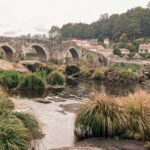
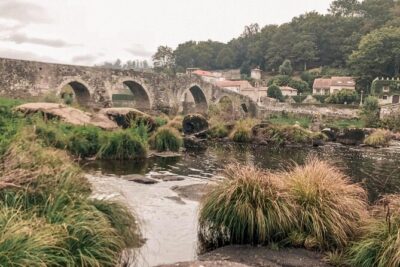
The day starts with Ponte Maceira, including a stop in a small town area set up for pilgrims headed to the end of the world. You get to admire the 14th-century bridge over the Tambre river, plus the nearby medieval mills. It’s one of those stops that feels simple until you realize how central river crossings were for travel and faith routes.
Then you’ll head toward the Muros e Noia estuary region and arrive in Muros. Here the itinerary includes free time and scenic views, plus a coffee tasting (about 30 minutes). Muros isn’t just a detour. It’s a good reality check before you reach the bigger, more dramatic coastal points: you see how coastal towns function, and you get a chance to reset before the ocean becomes the main event.
A practical approach for Muros: use the free time for a quick stroll and a few photos, then refuel with the coffee tasting. Since lunch is later at Finisterre, this mid-morning snack can make the day feel easier.
From The Estuary To Carnota: Scenic Pass-By Moments That Matter
One thing this tour does well is building anticipation. Between the town stops, you drive along the coast and pass by landmarks connected to the route’s big visual payoff.
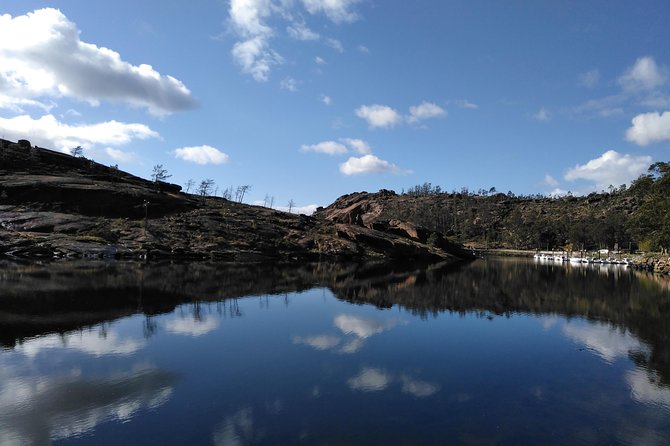
You’ll enjoy views around Carnota, with sights that can include Lira, Carnota Beach, Boca do Río, and major coastline markers like Mount Pindo and the approach to Cape Fisterra. These aren’t just random roadside points. They’re the “you are getting close” section of the itinerary, where the coast starts looking wilder and more open.
This is also where a coach tour shines. If you tried to DIY this route on public transport, you might spend more time transferring than admiring. On the bus, you watch the coastline change and you save your energy for the actual walking stops.
Ézaro Waterfall (Fervenza do Xallas): The Drop Where River Meets Sea
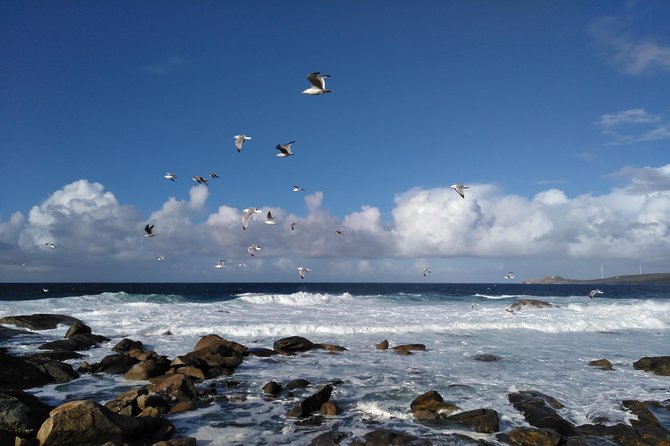
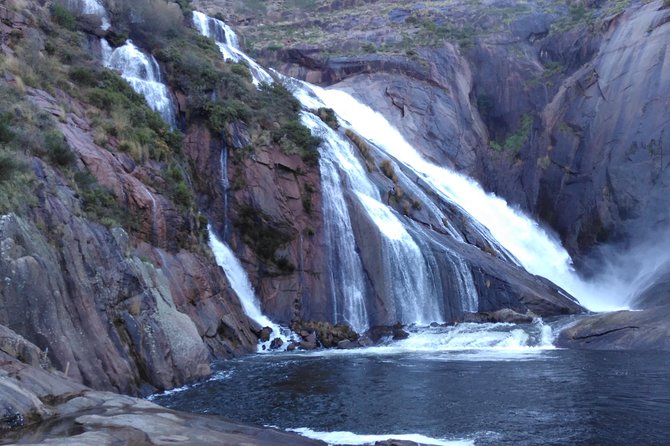
Next up is Ézaro, specifically Fervenza do Xallas. The focus here is clear: the river Xallas falls into the sea, forming the Ézaro waterfall. The tour positions it as one of Galicia’s most famous waterfalls, and that’s easy to understand once you see the contrast between moving water and open Atlantic horizon.
You’ll have around 35 minutes for visit and free time. That’s enough for photos, a quick look around, and walking to a few viewpoints if conditions allow. If it’s misty or windy, this is also the spot where you’ll feel the Atlantic influence most strongly.
What to watch for: bring comfortable shoes. Coastal paths and viewpoints often mean uneven ground, and a waterfall stop gets slippery fast if there’s damp rock. Keep it simple: layers help because the coast can swing from cool to breezy to raw, even in a short span.
Cape Finisterre: Lighthouse, Kilometer Zero, And How To Use Your Time
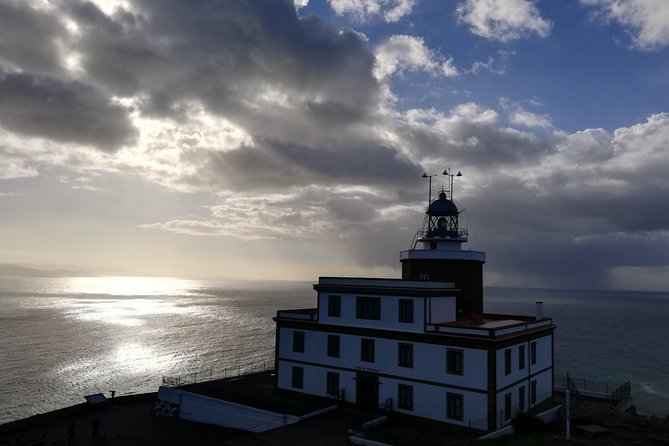
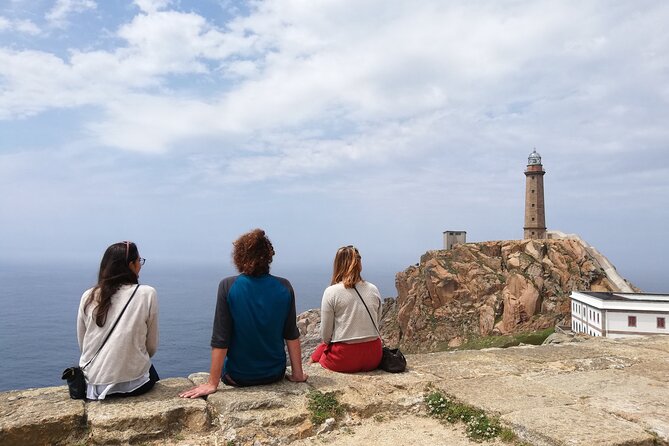
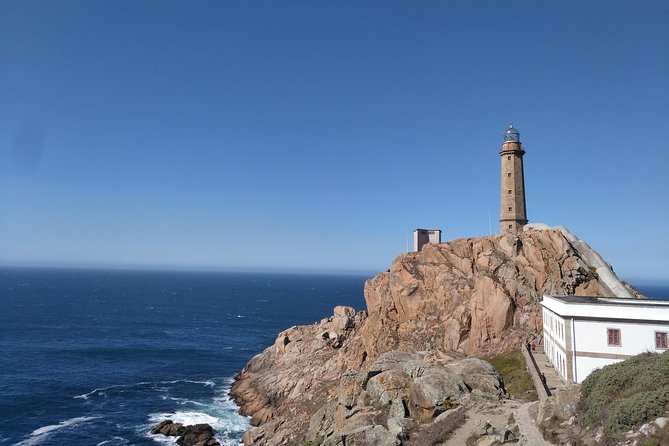
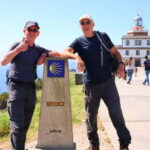
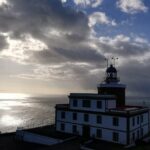
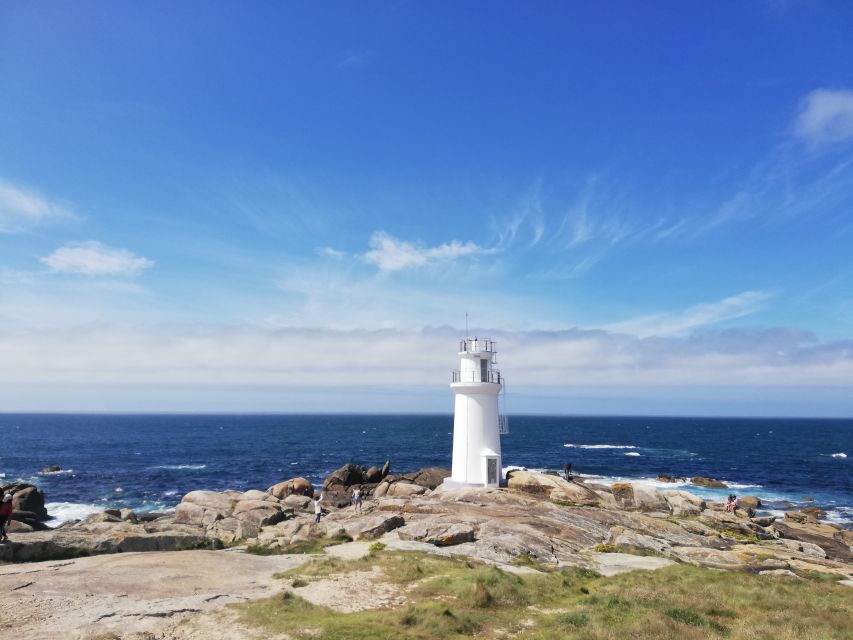
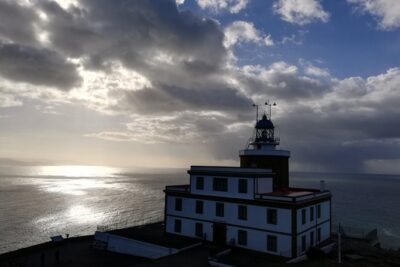
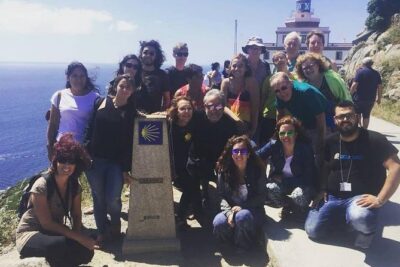
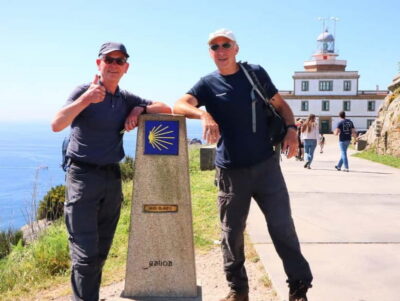
Then comes the headline: Cape Finisterre (Finisterre), sometimes framed as the westernmost point in Europe in older ideas. Here you’ll find the lighthouse and the kilometer zero marker of the Camino de Santiago.
The allocated time is about 45 minutes for visit and scenic views. This is where I’d be honest with you in planning your expectations. Forty-five minutes is enough to see the lighthouse area, find the kilometer zero marker, snap some photos, and do a short wandering loop. But if you want long contemplative time or a lot of walking beyond the main points, you’ll feel the clock.
This isn’t a deal breaker. It just helps to come with a plan. Decide what you care about most:
- Lighthouse and the official marker first
- Then views and photos
- Then any longer strolling if the weather cooperates
Also, if you’re doing this after the Camino, you might find Cape Finisterre hits harder emotionally than you expect. Even with limited time, the meaning of the marker can do most of the work for you.
Fisterra Lunch And Free Time: Fishing-Port Reality Check
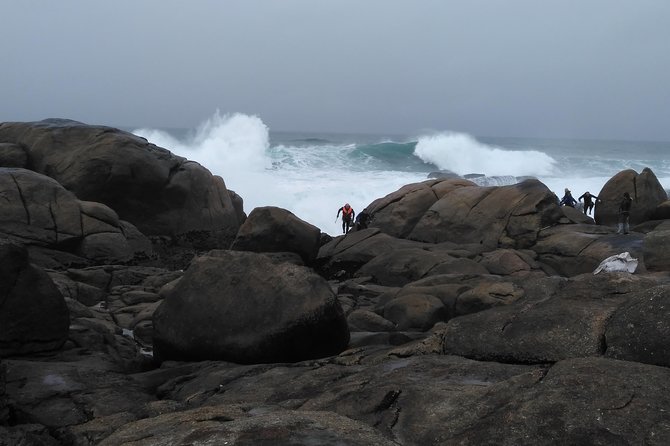
After Cape Finisterre, the itinerary takes you to Fisterra (also spelled Fisterra on the schedule) for a lunch stop and about 1.5 hours of time total, including free time for sightseeing.
Important detail: the tour includes lunch time, but food and drinks are not included. You’ll likely be choosing from local options, and this is a chance to slow down and let the salt air and big views fade a bit.
Fisterra also gives you a different angle on the story. Cape Finisterre is the symbolic end point. Fisterra is where people live and work, with a fishing port vibe that makes the whole Camino-to-ocean narrative feel grounded.
If you want the best value, treat this as your meal break and use the rest of the free time for a short, focused walk. Look for a spot that offers a simple Galician meal and then rejoin the group without stress.
- Santiago: Cathedral & Museum Tour + Pórtico of Glory Option
- From Santiago: Tour to Rias Baixas with Boat Trip and Winery
- Santiago de Compostela: Cathedral, Museum, and Old Town Tour
- Excursion to Rias Baixas with Winery – Optional mussel boat
- Masaje del Peregrino
- Santiago de Compostela: Finisterre, Muxía & Costa da Morte
- Santiago de Compostela: Finisterre, Costa da Morte, Ézaro, Muros & Carnota
- From Santiago: Rías Baixas Galicia Seafood & Wine Day Tour
Muxía: Sanctuary, Sacred Stones, And Atlantic Wind In Your Face
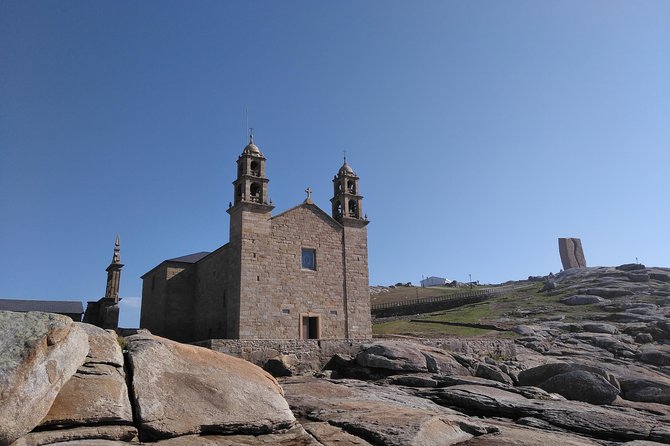
After lunch, the route continues to Muxía, with a guided visit plus free time. The itinerary notes a guided tour of about 40 minutes, then time to explore.
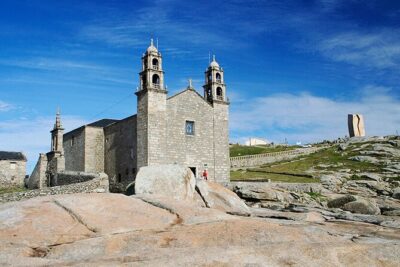
The key experience here is the Sanctuary at the foot of the Atlantic and the three stones considered sacred by Galicians. The tour explanation gives context for the legend, then you get enough time to stand there and take it in yourself.
I like this stop because it balances drama with symbolism. Finisterre can feel like a cliffside finale. Muxía can feel more like a ritual pause, where the stories are tied to the physical place.
Practical tip: don’t underestimate wind. If you’re at the sanctuary area when the Atlantic is pushing in, expect colder air and stronger gusts than you felt inland. Plan for that with a light jacket.
The Extra Stops You Might Blink Past: What They Add
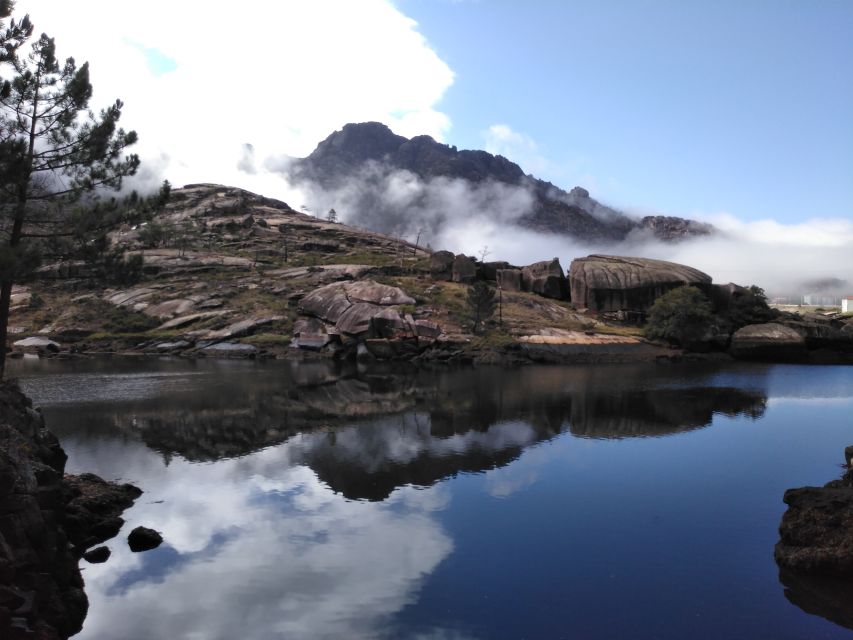
Besides the big-name attractions, the day includes smaller stops that keep the route from feeling like a nonstop highway run.
One earlier touchpoint is Ponte Maceira, which combines bridge and medieval mills. Another is coffee tasting in Muros, a small but useful perk on a long day. The itinerary also includes a coastal viewpoint approach with pass-by landmarks, which helps you understand how the coast unfolds rather than seeing disconnected postcard corners.
There are also time tradeoffs that show up in feedback. Some people wish they had more time at Cape Finisterre or a tighter schedule overall. Others appreciate the varied pacing because it breaks up the long drive and keeps the day moving.
My take: the itinerary is built to cover the essentials plus a few connective stops. If you’re someone who loves maximum time at one place, you might prefer a different plan. But if you want to hit the big emotional and iconic points in a single day, the pacing is made for you.
Guides And Drivers: The Human Difference On This Route
On a day like this, you can visit the same places on your own, but you get a different experience with a guide who can connect dots. The guides named in feedback include Andrea, Pablo, Christian, Ruben, and Dani Lati Valinho. Across the comments, the consistent thread is clear communication, keeping the group moving, and answering questions.
There are small details that matter on a long coach day. One example that came up in feedback is the guide making sure everyone is back onboard, including helping manage a prolonged bathroom break. Another is a guide keeping the energy up in a misty day, even adding a bit of humor.
That kind of on-the-ground care helps you relax. You focus on the sights, not on logistics.
Price And Value At About $58: What You’re Really Paying For
The price listed is $58 per person, and that’s worth thinking about in terms of the full package.
Included:
- Transportation by air-conditioned vehicle
- Professional guide
Not included:
- Food or drinks
So you’re paying for the ride plus the interpretation plus the time management that holds several distant stops together. If you’re comparing against DIY plans, the hidden value is reduced stress. You avoid route planning, timed transfers, and figuring out how to connect the coast points efficiently.
Also, the tour gives you language support in multiple formats. A multilingual day trip can cost more when you’re matching transport with commentary. Here, the setup is part of what you buy.
The real question for value is your style. If you’re the type who wants to see multiple must-do coastal icons in one day, the $58 price is reasonable. If you want more lingering time and less coach time, you might prefer an overnight plan or split-day approach.
Who This Day Trip Fits Best (And Who Might Want Plan B)
This is a strong choice for:
- Camino walkers who want an organized way to reach Finisterre and Muxía after finishing the main trek
- First-timers in Galicia who want iconic coastal points without planning headaches
- People who like a guided narrative with quick photo and walking time at each stop
- Anyone who appreciates seeing bridge crossings, sanctuaries, and kilometer markers with explanation, not just sights
It may be less ideal if:
- You hate long bus rides and prefer minimal time in transit
- You want lots of time at Cape Finisterre specifically, not a fixed stop window
- You’re picky about audio and need perfect sound everywhere, since audio can be a bit uneven at times
If you’re unsure, ask yourself one question: do you want this coast as a guided hits list, or do you want slow exploration? This tour is clearly the hits list, done with care.
Should You Book It From Santiago? My Clear Call
I’d book this tour if your goal is a single-day, high-impact coast experience that connects pilgrim meaning with Atlantic scenery. The combination of Ponte Maceira, Ézaro waterfall, Cape Finisterre’s lighthouse and kilometer zero, and Muxía’s sanctuary and sacred stones is exactly the kind of route that’s hard to coordinate solo without losing time.
The decision hinge is your tolerance for schedule compression. If you’re fine with walking short stretches, listening to a guide, and using free time for photos and a quick wander, you’ll likely love the flow. If you crave lots of unhurried time at one location, you might feel the limits, especially around Cape Finisterre.
FAQ
How long is the Santiago de Compostela to Finisterre, Muxía, and Costa da Morte day trip?
It runs for about 9 hours.
Where do I meet for the tour?
Meet at the TOXO TRAVEL office, located at Rúa dos Bautizados, 12.
What’s included in the price?
Transportation by air-conditioned vehicle and a live guide are included.
Is food included, or should I budget for lunch and snacks?
Food or drinks are not included. The itinerary includes a lunch stop in Fisterra, but you pay for your own meal.
What language options are available on the tour?
The live guide speaks Spanish, English, and Galician. Audio guide options are available in French, Korean, and German.
What stops are part of the itinerary?
You’ll visit places including Ponte Maceira, Muros, Ézaro (Fervenza do Xallas), Cape Finisterre, Fisterra, and Muxía.
Do I need to bring anything specific?
You should bring comfortable shoes.
Is there a way to cancel if my plans change?
Yes. You can cancel up to 24 hours in advance for a full refund.
Is there an express process to make check-in quicker?
The tour listing notes an express security check to help you skip the line.
More Santiago de Compostela and Galicia from the notebook
- From Santiago: Finisterre, Muxia & Costa da Morte Excursion
★ 4.7 · 1,481 reviews - Excursion to Finisterre + Muxia + Costa da Morte (7 stops)
★ 5.0 · 1,367 reviews - Finisterre and Costa da Morte: The Most Complete Tour of Santiago
★ 5.0 · 733 reviews - From Santiago: Finisterre, Muxia, Ézaro – 7 stops day tour
★ 4.6 · 553 reviews - Santiago de Compostela Cathedral and Museum Guided Tour
★ 4.6 · 511 reviews
Fresh off the desk: recent Santiago De Compostela experiences we have written up


Santiago de Compostela and Galicia, side by side.
 ★ 4.7From Santiago: Finisterre, Muxia & Costa da Morte ExcursionFrom $561,481 reviews
 ★ 5.0Excursion to Finisterre + Muxia + Costa da Morte (7 stops)From $591,367 reviews
 ★ 4.7Santiago de Compostela Full-Day Tour From PortoFrom $931,036 reviews
 ★ 5.0Finisterre and Costa da Morte: The Most Complete Tour of SantiagoFrom $59733 reviews
 ★ 4.6From Santiago: Finisterre, Muxia, Ézaro – 7 stops day tourFrom $56553 reviews
 ★ 4.6Santiago de Compostela Cathedral and Museum Guided TourFrom $29511 reviews
 ★ 4.5Visit to the Cathedral of Santiago + Portico de la Gloria OptionFrom $26503 reviews
 ★ 4.7From Santiago: Tour to Rias Baixas with Boat Trip and WineryFrom $50400 reviews
This tour also sits in