
Reviewed · SANTIAGO DE COMPOSTELA AND GALICIA
Santiago de Compostela: Finisterre, Costa da Morte, Ézaro, Muros & Carnota
Wander where the Camino fades into the Atlantic. This 9-hour coast tour turns Santiago de Compostela into a smooth launching point for Costa da Morte highlights, with easy round-trip bus travel and stop-by-stop historical context. I love how the day is paced with a comfortable bus and real guidance in Spanish and English, often led by guides like Lucia or Noel, who are known for clear narration and good stop instructions. One thing to keep in mind: the route is efficient, so some stops can feel a bit time-tight, and bad weather can wipe out the lighthouse and coastline views.
You also get a genuinely memorable mix of Galicia moments, from the granite horreo at Carnota to the Ézaro waterfall where a river meets the sea. I like that you’re not just driving past places, you’re actually getting out to walk Muros’s fishing-village lanes and see the famous end-of-the-world symbols at Fisterra. My main caution is simple, bring rain gear and have a plan for photos that still work when the sky is gray.
Key highlights to watch for
- Bilingual guides, clear storytelling in Spanish and English, with help that makes navigation on your own easier later
- Costa da Morte classics in one day, including Ézaro waterfall and Faro de Fisterra viewpoints
- Real walk time at the right places, not just quick photo stops
- Muros and Ponte Maceira for the lived-in feel, fishing village streets and a medieval bridge and mills
- Good value structure, guided round-trip transport plus included local entry where noted
- Weather matters, this part of Galicia can be dramatic, and views may change fast
In This Review
- From Santiago to the Coast: how the day actually feels
- Stop 1: Muros fishing village lanes in a short, sweet window
- Stop 2: Carnota’s Horreo and why it matters
- Stop 3: Ézaro waterfall where the river meets the sea
- Stop 4: Fisterra streets, free time, and a calm “end of the world” walk
- Stop 5: Faro de Fisterra, Ara Solis links, and the lighthouse viewpoints
- Stop 6: Muxía and the Sanctuary of Nuestra Señora de la Barca
- Stop 7: Ponte Maceira’s Gothic bridge and medieval mills
- The pacing reality: how to use the time you’re given
- Weather and clothing: Costa da Morte is dramatic
- Price and value: what you get for about $59.28
- Who should book this Finisterre and Costa da Morte day trip
- Should you book this Santiago de Compostela to Finisterre coast day trip?
- FAQ
- How long is the tour from Santiago to Finisterre and Costa da Morte?
- Where do I meet, and what time does the tour start?
- What languages are the guides?
- Is lunch included?
- Are admission fees included for the stops?
- How large is the group?
- Do I receive a mobile ticket?
- Is the tour affected by weather?
- Is there free cancellation?
From Santiago to the Coast: how the day actually feels
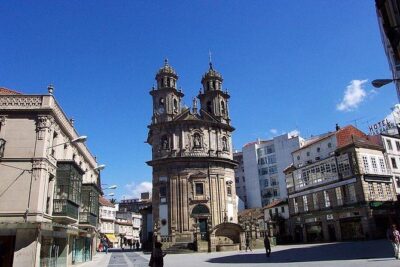
This is a bus day trip, starting in Santiago de Compostela at Capela do Pilar on Av. de Xoán Carlos I, 6 with a 9:00 am start. You get back to the same meeting point at the end, which means you can focus on the route instead of planning connections or renting a car for the coast.
The group max is 55 travelers, so it’s not a tiny private van, but it’s also not a mass-coach free-for-all. In real terms, that usually means you can follow the guide’s cues and get in and out of each stop without chaos, especially when the timing stays on track.
Also, the guide work tends to be a major part of the value here. People consistently praise guides such as Ana, Lucia, Noel, and Alexis for being friendly and giving enough context that each place feels connected, not random stops.
Stop 1: Muros fishing village lanes in a short, sweet window
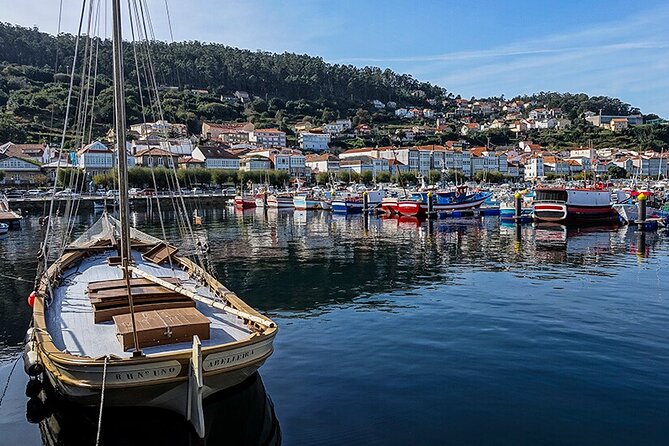
Muros is your first stretch of “Galicia that feels alive.” Even with only about 30 minutes, you’ll get a chance to stroll the intricate streets and wander toward the small fish stalls. This is the type of place where even a quick walk gives you texture, old stone, working details, and that sea-proximity rhythm.
What I like about starting here is that it sets the tone early. You go from city energy to coastal life without a hard jump, and you’re already imagining what you’ll see later at the Cape area.
Time reality check: 30 minutes sounds short, and it is. If you want photos and a relaxed wander, stay flexible and don’t over-plan a “must-see list” for Muros.
Stop 2: Carnota’s Horreo and why it matters
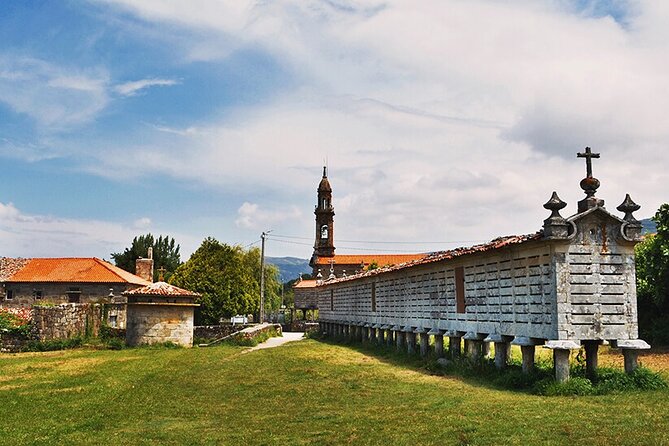
Next up is Horreo de Carnota, one of the key Costa da Morte monuments, known for being one of the longest horreos in Galicia. It dates to the 18th century and is built in granite in a distinctive setting near the long beach of Galicia.
If you’ve seen horreos elsewhere in Galicia, this one helps you understand why these structures are so iconic. Horreos are functional folk architecture, designed for drying and storing grain. In other words, it’s not a decorative thing stuck by a roadside, it’s part of how people historically lived and survived in a coastal farming economy.
The stop is about 20 minutes, so think of it as a fast hit. Look for the materials, the scale, and the way it sits in the local scenery, even if the sky is less than perfect.
Other Santiago de Compostela and Galicia we sat down and reviewed
Stop 3: Ézaro waterfall where the river meets the sea
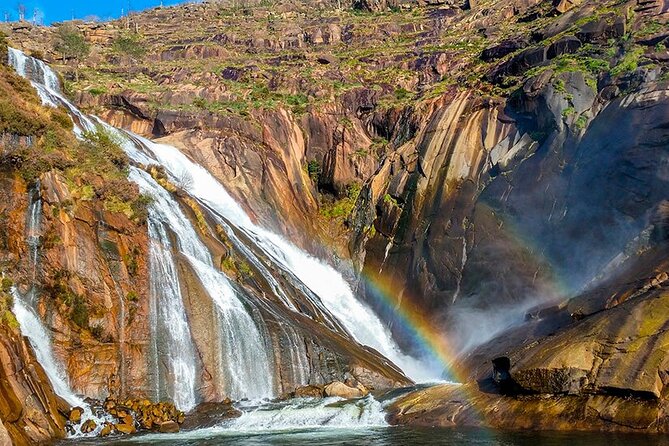
Ézaro is one of the stops that can make the whole day click. The Fervenza de Ézaro is described as special for being the only southern European river waterfall that flows into the sea. The setting is framed by Mount Pindo, often called the Celtic Olympus, plus nearby fishing villages and beaches.
This is a stop that works even if you’re not a hardcore “waterfall person.” The reason is the story layer: you’re seeing a natural system where land runoff and the Atlantic meet. That mix is part of why Costa da Morte feels so different from the more famous, sun-forward coastlines.
Timing here is about 45 minutes, and that extra time helps. You’ll have a better chance to walk a bit, reposition for photos, and just watch how the water behaves from different angles.
Weather note: if it’s raining, the waterfall can still be impressive. But heavy rain and mist can also limit lighthouse and coastal visibility later.
Stop 4: Fisterra streets, free time, and a calm “end of the world” walk
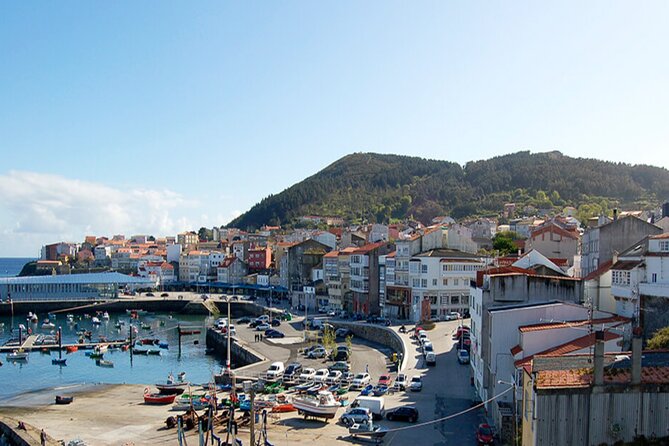
Then you reach Fisterra, also called Faro de Fisterra in many discussions, but here you’re specifically getting free time to eat and to walk the small streets and the perquero port. Your block of time is about 1 hour 30 minutes, which is meaningful because you can actually do both: grab lunch and still take a slow look around.
This part of the route matters if you’re traveling for the Camino feeling. Fisterra is often the symbolic landing point for “the end,” and just wandering the town helps the whole day feel like a journey rather than a checklist.
Practical tip: since lunch is not included, use this time to pick a place that feels comfortable and not just the first one you see. If the weather is rough, go for somewhere with quick service and indoor seating.
Stop 5: Faro de Fisterra, Ara Solis links, and the lighthouse viewpoints
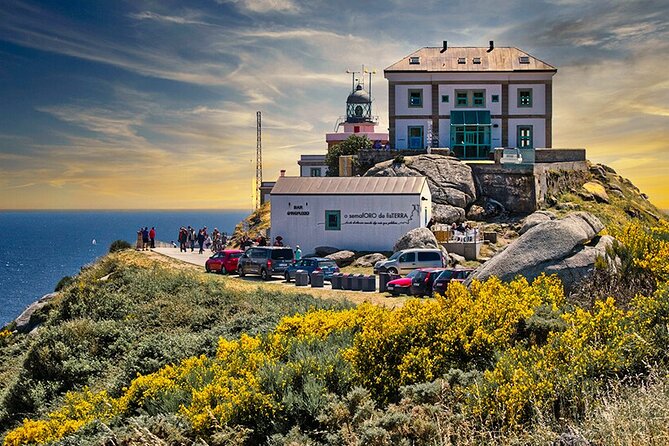
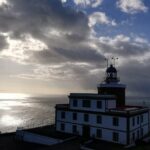
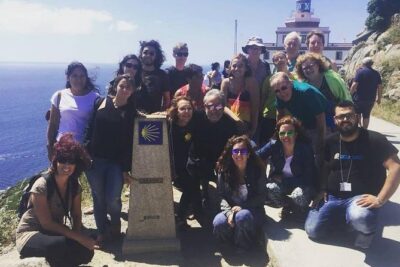
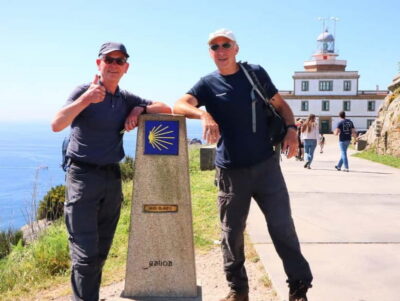
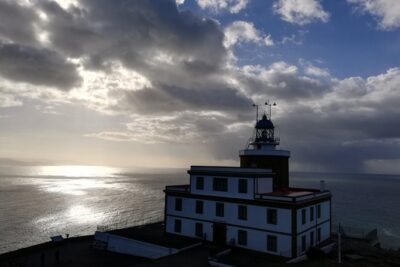
After Fisterra town time, you visit Faro de Fisterra, which is described as marking the end of the Roman world, plus connections to pre-Christian cults linked to the Ara Solis. The stop also ties into kilometer zero of the Camino de Santiago and includes a major lighthouse experience and viewpoints over the Atlantic.
Your time here is about 40 minutes. That’s enough to get oriented, take photos, and move around for better sightlines, as long as you stay aware of bus timing.
If the coastline is your favorite part of this day, this is the stop to treat like your “main event.” If skies are clear, you’ll get the classic wide ocean moments. If it’s gray or foggy, the lighthouse area can still feel powerful, just less photogenic.
Stop 6: Muxía and the Sanctuary of Nuestra Señora de la Barca
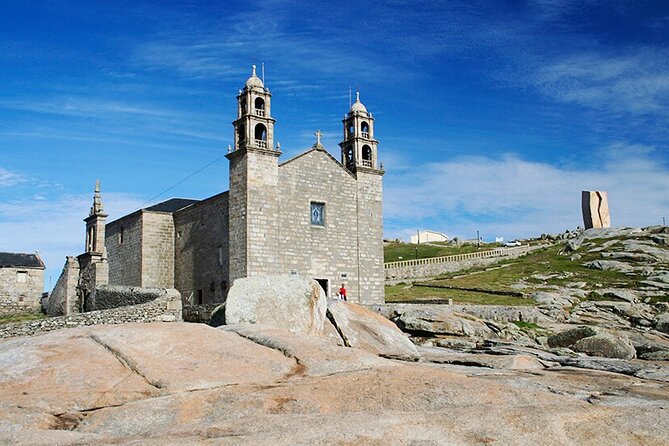
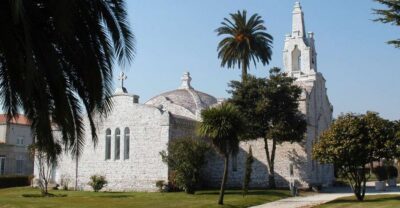
From the Cape area, the tour goes to Muxía, where you visit the Sanctuary of Nuestra Señora de la Barca. This is a pilgrimage place connected to the Camino, in a dramatic setting with holy stones and the Skin way.
The time here is about 40 minutes, which works well for a short walk, a look around the sanctuary area, and time to read what you can on-site. Even if you don’t follow the religious angle, the pilgrimage geography is part of Galicia’s identity. You’ll feel why people return here.
This stop also balances the day. You get cliffs and sea drama at Faro de Fisterra, and then Muxía gives you a more ritual, reflective pace, still tied to the water and the horizon.
Stop 7: Ponte Maceira’s Gothic bridge and medieval mills
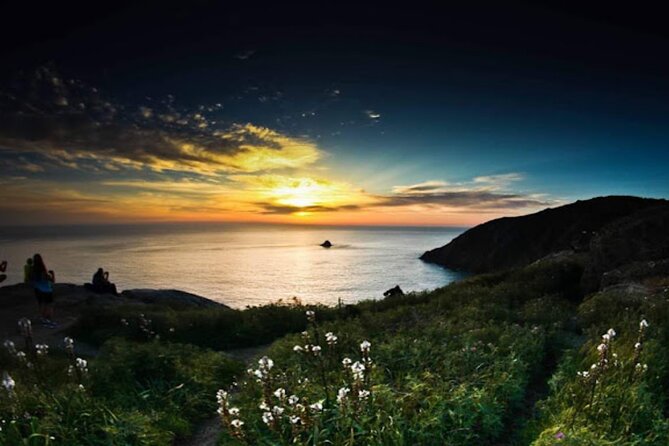
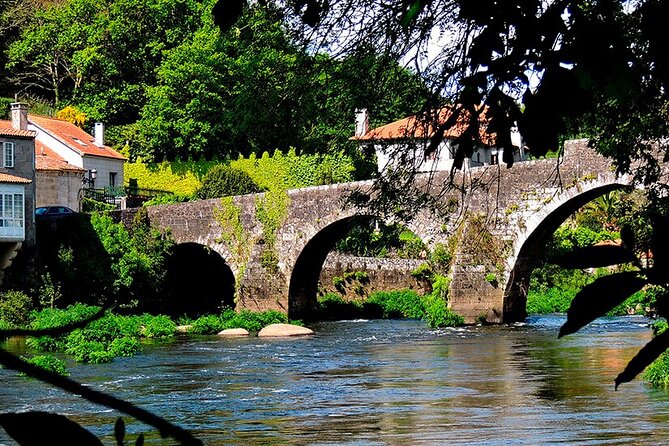
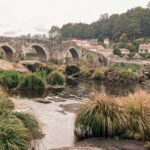
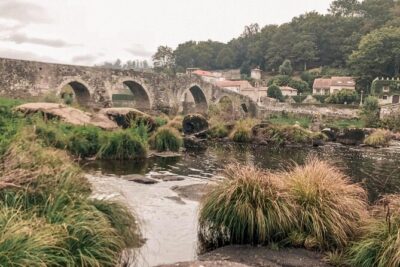
The final sightseeing stop is Ponte Maceira, with a included admission note. The town is associated with a 13th-century founding, and the highlight is the Gothic bridge along with mills.
Your time at this stop is about 30 minutes, so you’re going for structure and views, not a long sit-down visit. Still, this is a great closer because it shifts from end-of-the-world symbolism to old inland water-land infrastructure, showing how people shaped their landscape for work and survival.
In plain terms: it’s a calm ending. You get to stretch your legs for a short walk, absorb the medieval details, and then head back to Santiago.
- Santiago: Cathedral & Museum Tour + Pórtico of Glory Option
- Visit to the Cathedral of Santiago + Portico de la Gloria Option
- From Santiago: Tour to Rias Baixas with Boat Trip and Winery
- Santiago de Compostela: Cathedral, Museum, and Old Town Tour
- Excursion to Rias Baixas with Winery – Optional mussel boat
- Masaje del Peregrino
- Santiago de Compostela: Finisterre, Costa da Morte, Ézaro, Muros & Carnota
- From Santiago: Rías Baixas Galicia Seafood & Wine Day Tour
The pacing reality: how to use the time you’re given
This is a fast day, and that can be either a strength or a frustration depending on how you travel.
The best reviews basically agree on two things. First, the bus is comfortable, and second, the timing across the stops generally allows you to see what’s listed. At the same time, there are notes that some stops can feel rushed, especially if you’re not close to the bus door when it’s time to re-board.
My advice for you:
- Plan for quick wins at each stop. One photo spot, one short walk, one moment of just watching.
- Wear easy shoes, because coastal terrain plus short timing is a combo that punishes slippery sandals.
- If you want more time in Fisterra or at Faro de Fisterra, prioritize those, and go lighter at the horreo.
And yes, weather can change how much time you want outside. This tour requires good weather, so when skies turn, people often stay on the bus longer or move quickly to the closest sheltered parts of a stop.
Weather and clothing: Costa da Morte is dramatic
Costa da Morte lives up to its name. Even when everything is scheduled well, coastal weather can shift visibility fast, and that can affect how spectacular the lighthouse and Atlantic viewpoints feel.
Bring layers. In wind and mist, a light rain jacket usually beats relying on luck. Also bring something for the ground, because wet paths and stairs are common when conditions aren’t ideal.
If the tour is canceled due to poor weather, the rules say you’ll be offered a different date or a full refund. That means your best move is not to book this tour as an ultra-flexible “maybe I can go” day. Book it with a little cushion in your Santiago schedule.
Price and value: what you get for about $59.28
At $59.28 per person for an approximately 9-hour guided day trip, the value comes from bundling three big costs: round-trip transport from Santiago, guided context in Spanish and English, and a route that strings together multiple iconic stops.
Lunch is not included, so you’ll pay for your meal separately. But you do get a proper block of free time in Fisterra, so it’s not like you’re hungry at the first stop and stuck with leftovers later.
Also, most stops list admission ticket free, with Ponte Maceira marked as included. That matters, because it reduces surprises and makes the day feel like a true “ticket includes the sightseeing flow” experience.
If you’re trying to see the western-edge Camino feeling without renting a car and figuring out local driving, this kind of day trip often saves both money and stress.
Who should book this Finisterre and Costa da Morte day trip
This tour is a strong fit for you if:
- You want a single-day introduction to Finisterre and the Costa da Morte region from Santiago.
- You like historical context, not just scenery, and you want bilingual guiding for names, myths, and places.
- You’re finishing the Camino or want that final “end of the earth” symbolism without doing it as a multi-day hike.
You might skip it if:
- You hate timed stops. Some people feel the day is efficient enough that they want more minutes at each location.
- You’re chasing only coastline vistas and you have low tolerance for fog, rain, or reduced lighthouse views.
Should you book this Santiago de Compostela to Finisterre coast day trip?
If you want an easy, structured way to see the end-of-the-Camino feeling plus Costa da Morte landmarks in one day, I think it’s an easy yes. The biggest strengths are the comfortable bus, bilingual guidance, and a route where each stop has a reason to exist, especially Ézaro’s waterfall and the Camino-linked stops at Fisterra and Muxía.
Just go in with the right expectations. This is not a slow travel day. It’s a well-run, guided highlight circuit, and you’ll get the best experience if you move with the timing and keep a flexible attitude if weather changes the view quality.
FAQ
How long is the tour from Santiago to Finisterre and Costa da Morte?
The duration is approximately 9 hours.
Where do I meet, and what time does the tour start?
You start at Capela do Pilar, Av. de Xoán Carlos I, 6, 15701 Santiago de Compostela. The start time is 9:00 am, and the tour ends back at the meeting point.
What languages are the guides?
The tour includes a guided tour in Spanish and English.
Is lunch included?
No. Lunch is not included.
Are admission fees included for the stops?
Most stops list admission ticket free, and Ponte Maceira is marked as admission ticket included.
How large is the group?
The tour has a maximum of 55 travelers.
Do I receive a mobile ticket?
Yes, the tour uses a mobile ticket.
Is the tour affected by weather?
Yes. The experience requires good weather. If it is canceled due to poor weather, you will be offered a different date or a full refund.
Is there free cancellation?
Yes, free cancellation is available. You can cancel up to 24 hours in advance for a full refund.
More Santiago de Compostela and Galicia from the notebook
- From Santiago: Finisterre, Muxia & Costa da Morte Excursion
★ 4.7 · 1,481 reviews - Excursion to Finisterre + Muxia + Costa da Morte (7 stops)
★ 5.0 · 1,367 reviews - Finisterre and Costa da Morte: The Most Complete Tour of Santiago
★ 5.0 · 733 reviews - From Santiago: Finisterre, Muxia, Ézaro – 7 stops day tour
★ 4.6 · 553 reviews - Santiago de Compostela: Finisterre, Muxia & Costa da Morte
★ 4.7 · 526 reviews
Fresh off the desk: recent Santiago de Compostela experiences we have written up

Santiago de Compostela and Galicia, side by side.
 ★ 4.7From Santiago: Finisterre, Muxia & Costa da Morte ExcursionFrom $561,481 reviews
 ★ 5.0Excursion to Finisterre + Muxia + Costa da Morte (7 stops)From $591,367 reviews
 ★ 4.7Santiago de Compostela Full-Day Tour From PortoFrom $931,036 reviews
 ★ 5.0Finisterre and Costa da Morte: The Most Complete Tour of SantiagoFrom $59733 reviews
 ★ 4.6From Santiago: Finisterre, Muxia, Ézaro – 7 stops day tourFrom $56553 reviews
 ★ 4.7Santiago de Compostela: Finisterre, Muxia & Costa da MorteFrom $58526 reviews
 ★ 4.6Santiago de Compostela Cathedral and Museum Guided TourFrom $29511 reviews
 ★ 4.5Visit to the Cathedral of Santiago + Portico de la Gloria OptionFrom $26503 reviews
This tour also sits in