
Reviewed · SANTIAGO DE COMPOSTELA AND GALICIA
Finisterre and Costa da Morte: The Most Complete Tour of Santiago
There’s something final about this coast. This day trip turns Santiago de Compostela into a launchpad for Finisterre and the wild Costa da Morte, with stops tied to the pilgrim story and Galicia’s Atlantic myths. I love the way it mixes big, unforgettable viewpoints with real regional details, and I also like the practical setup, an air-conditioned coach, a bilingual guide in English and Spanish, and a centralized departure from Plaza de Galicia. One thing to consider is that it’s a long day with plenty of bus time, and a few stops can feel a little time-compressed if you like lingering.
You’re not just ticking off places. You’re learning why pilgrims look toward the sea at the so-called end of the known world, and why places like Muxía and the Ezaro waterfall matter in local legend. If you time your lunch well and dress for weather changes, this is a strong value way to see a lot of Galicia without renting a car. Still, you’ll want to plan for the fact that your return is to the Santiago meeting area, not necessarily right back at your hotel.
In This Review
- Key things I’d circle before you go
- Why Finisterre and Costa da Morte feel like Santiago’s coastal epilogue
- Price and logistics: what you get for about $59
- From Plaza de Galicia, you’re in motion fast
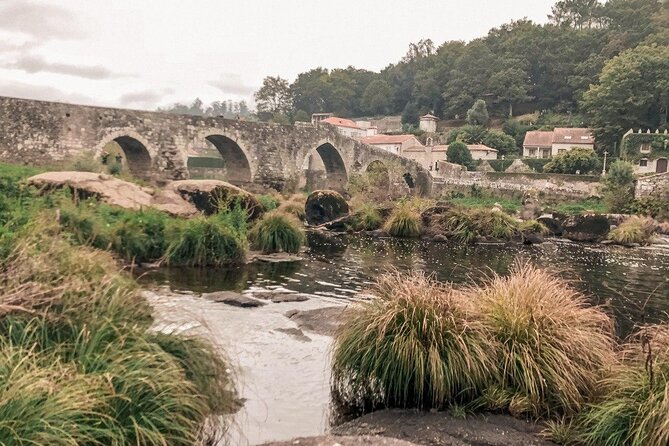
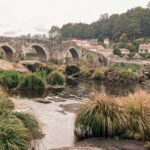
- Stop 1: Ponte Maceira, the Roman bridge that sets the tone
- Stop 2: Santuario da Virxe da Barca and why the ocean matters
- Stop 3: Muxía stones, Pedra D’abalar, and Pedra dos Cadris
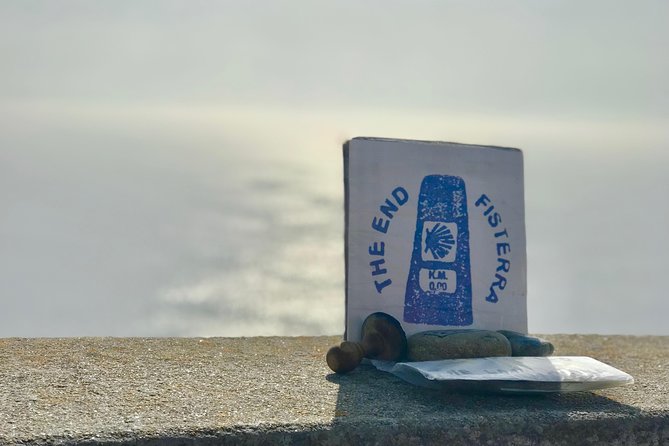
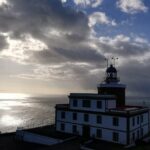
- Stop 4 and 5: Faro de Fisterra, Finisterre lunch, and the end-of-the-world views
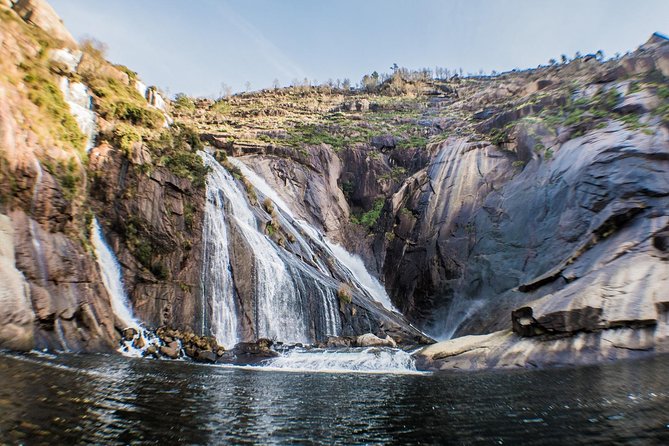
- Stop 6: Fervenza de Ezaro, the waterfall with pre-Roman echoes
- Stop 7: Horreo de Carnota, Galicia’s granary symbol you can recognize now
- Stop 8: Muros, estuary views and sea-farming platforms
- The best way to match this tour to your travel style
- Should you book the Finisterre and Costa da Morte tour from Santiago?
- FAQ
- How long is the Finisterre and Costa da Morte tour?
- What is the price per person?
- Where is the tour meeting point, and what time does it start?
- Is lunch included in the tour?
- What languages are offered on the tour?
- Is pickup offered?
- How large is the group?
- What happens if the weather is bad?
- Is cancellation free?
Key things I’d circle before you go
- A tightly packed “Camino-to-coast” route, built around Finisterre and the Costa da Morte (not just random viewpoints).
- Roman, sacred, and maritime sites in one day, from Ponte Maceira to shoreline mussel growing at Muros.
- Midday break in Finisterre, with time for lunch in the village area where prices can be more approachable than you might expect.
- Real Galicia symbols, especially the large horreos (granaries) at Carnota, which you’ll actually learn to recognize.
- Smallish group for a full-day coach, max 55 travelers, so it’s more organized than a giant day tour.
- English and Spanish guide service, with explanations throughout the stops so you’re not wandering blind.
Why Finisterre and Costa da Morte feel like Santiago’s coastal epilogue
Santiago is where the story often gets its formal ending, but Galicia’s Atlantic coast is where a lot of pilgrims feel the real shift. That’s why this tour works so well as a follow-up. You’re moving from stone to sea, from inland to salt air, with each stop connected to how people interpret the Camino journey emotionally and spiritually.
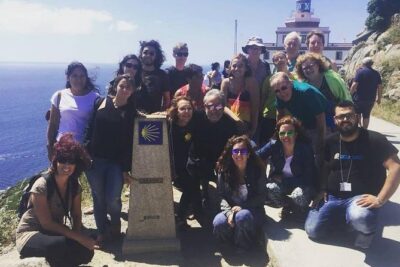
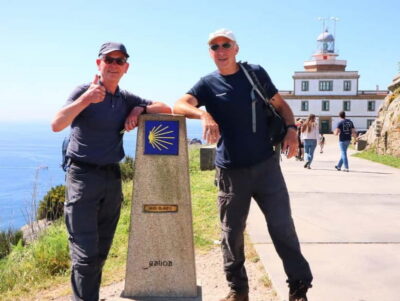
Finisterre, in particular, is famous for the feeling of reaching the edge. You see the far-reaching ocean views at Faro de Fisterra and then spend time down in the village of Finisterre. The vibe there is big sky and raw coastline, so even if you’re not traveling for religious reasons, it still lands as a “place you remember.”
Then you get the Costa da Morte contrast. The coast here can feel harsher and more myth-heavy, and the tour leans into that with local legends and pre-Roman cultural references. If you’ve already walked part of the Camino or you’re planning to, you’ll appreciate how the day turns those themes into physical places you can point to.
Price and logistics: what you get for about $59
At $59.26 per person for roughly 9.5 hours, this tour is priced like a value coach day, not a premium private excursion. The main “what you’re paying for” is transportation plus a guide in English and Spanish, and that matters here because you’re covering a lot of ground without dealing with driving, parking, or figuring out local transit schedules.
What’s included is clearly the heavy lift: air-conditioned coach, guide, transportation, and insurance. What’s not included is lunch and drinks, so you’re free to pick where you eat. I like this style for travelers who hate being locked into one lunch stop. You still get structured time, but you keep control over what you order and where.
A couple of practical notes you should factor in before you commit:
- The day is long, so pack for comfort, not just sightseeing.
- You won’t be expected to eat with the group at one single fixed time, which is good, but it does mean you’ll want to decide quickly when lunch time hits.
- The tour ends back at the Santiago meeting area, so don’t assume it will drop you at your door.
Other Santiago de Compostela and Galicia we sat down and reviewed
From Plaza de Galicia, you’re in motion fast
The departure is set in central Santiago de Compostela, with Plaza de Galicia as your main starting point. Start time is 9:00 am, and the tour returns to the same general Santiago area. That makes it easier for first-time visitors in town, because you’re not hunting down a remote pick-up spot.
Because this is a coach day with multiple stops, your morning will feel like a rhythm: drive, arrive, park, walk a bit, listen, photo break, then move on again. That’s how they keep the route full without turning it into a rushed mess every minute. Still, expect plenty of bus time, and bring something to make it bearable (water, a layer, and something to read or listen to).
The maximum group size is 55 travelers, which keeps you from feeling like you’re on a packed cattle-car. It also means the guide has enough hands-on time to help everyone get pointed in the right direction at each stop. If you’re sensitive to noise or prefer quieter photo moments, aim for the first part of each stop window rather than the last.
And one more reality check: the tour requires good weather. If conditions are poor, the operator may offer a different date or a full refund, so don’t plan this as the only day you can see the coast.
Stop 1: Ponte Maceira, the Roman bridge that sets the tone
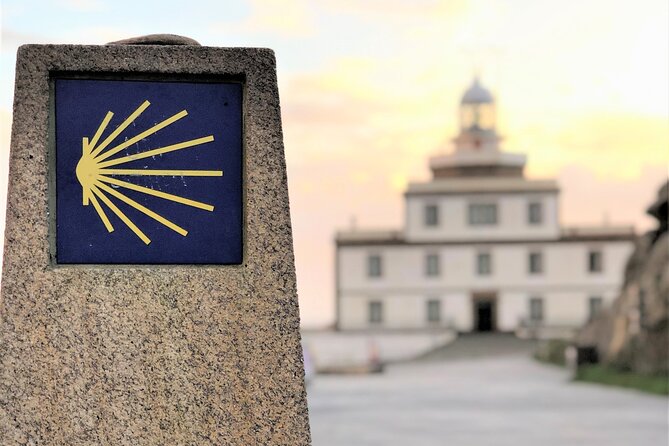
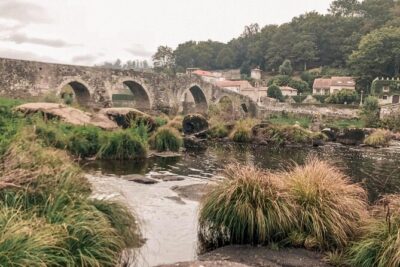
You start with Ponte Maceira, a Roman bridge that kicks off the “Finisterranean way” feeling, the idea that you’re heading toward the end of the world. This is one of those stops that works even if you’re not a history buff, because it gives you two useful things early on: a sense of place and a story anchor.
You get views of the bridge itself and also a chance to hear local legend tied to Santiago. That matters because later you’ll be hearing about saints, sacred sites, and sea power. If you arrive with the background early, the rest of the day clicks faster and feels less like random geography.
Time is about 30 minutes, so you won’t get stuck. You’ll walk, look, listen, and then get moving again before the day turns into pure driving.
Stop 2: Santuario da Virxe da Barca and why the ocean matters
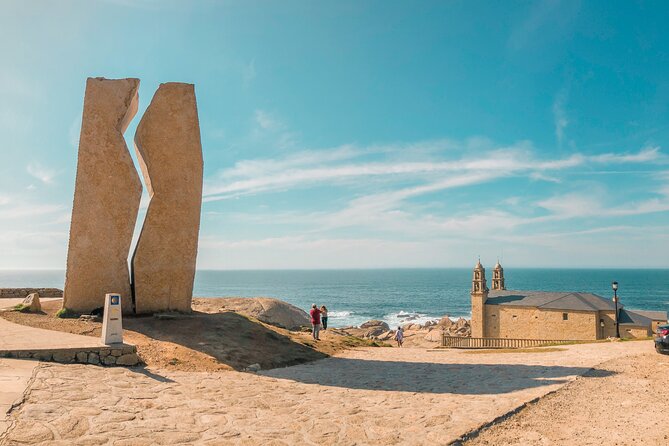
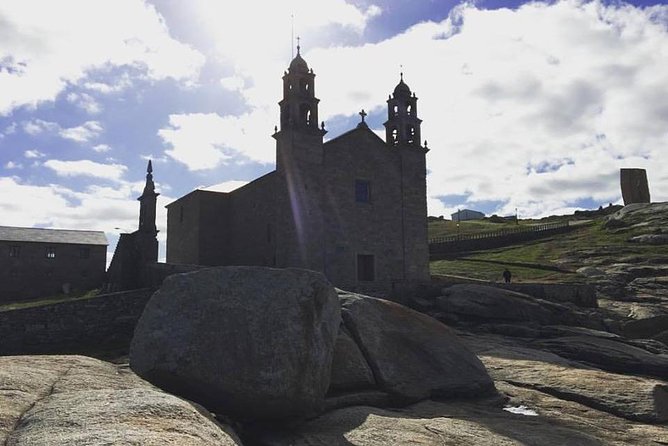
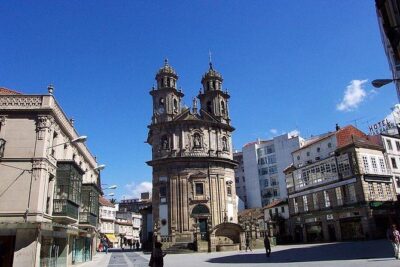
Next is the Santuario da Virxe da Barca, which is tied to pilgrimages connected to the Camino story. This is the kind of place where the architecture and the setting combine into a spiritual explanation: it’s about the Virgin, the sea, and the legends that pilgrims carry with them.
The key idea here is that pilgrims are expected to come and see the strength of the ocean, and you’ll hear stories about the arrival of Santiago the Apostle. Even if you’re not religious, this stop helps you understand why certain places on the coast feel “obligatory” to many walkers. It’s not just scenery, it’s symbolism.
You’ll have about 45 minutes, enough time to take in the sanctuary and absorb the meaning without feeling chased out by time.
Stop 3: Muxía stones, Pedra D’abalar, and Pedra dos Cadris
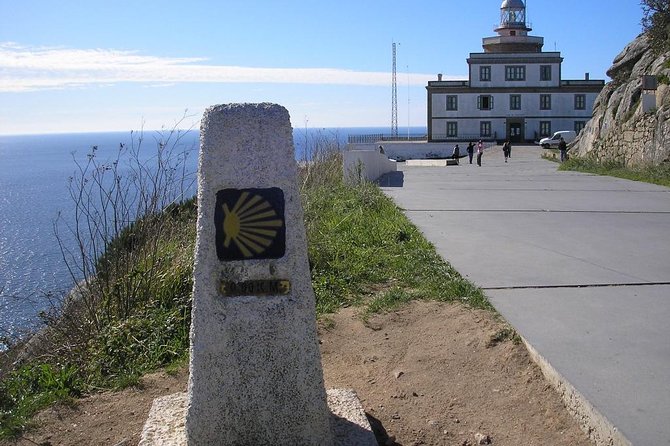
Then you head into Muxía territory with Pedra D’abalar and Pedra dos Cadris. These stones are venerated locally, and the tour includes the story of why they matter. The fun part is that the experience isn’t only about looking, you’ll also hear about the rituals locals do in relation to the stones.
The goal for you, practically, is to treat this as a cultural moment. Look closely, listen carefully, and if you’re invited into any hands-on ritual, follow the guide’s instructions. This is one of those stops where you learn something you won’t get from a photo alone, because the meaning is what makes it special.
Time here is about 30 minutes, which is right for a stop like this. It’s enough to understand the story and participate if you want, but not so long that you feel bored waiting.
Stop 4 and 5: Faro de Fisterra, Finisterre lunch, and the end-of-the-world views
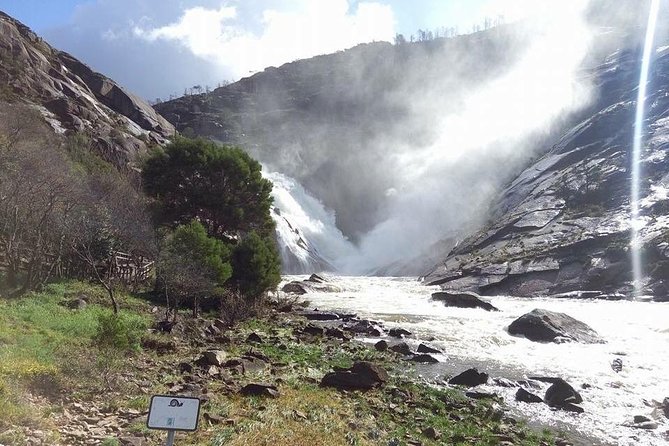
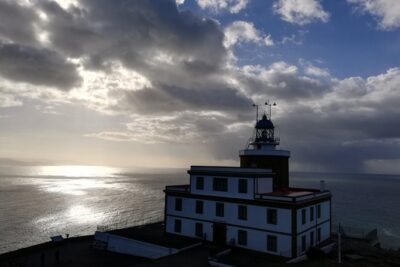
These are the headline stops, and they come with a good structure. At Faro de Fisterra, you’ll get the dramatic “end of the world” coastline mood and then you shift into lunch time around the Finisterre area. You have about 45 minutes at this stage, which is enough to find food without panicking.
Then you continue with more time centered on Fisterra (Finisterre) itself. You’ll have a longer block, around 1 hour 30 minutes, for views and a chance to eat in the village. This is where you can slow down a bit and actually choose your meal. Many restaurants are clustered around the area, so you’re not stuck walking far or paying tourist prices without options.
Here’s how I’d use your time if you care about comfort:
- Eat earlier rather than last minute. The longer you wait, the less choice you tend to have.
- If weather turns windy, lean into warm foods and indoor seating when possible.
- Take the views seriously. This is one of the coasts where photos can look good, but the real impact is the scale and the wind.
Also, if you finished the Camino recently, this is where the emotion often hits hardest. The tour’s design intentionally gives you room to feel it, not just stand in a parking lot.
- Santiago: Cathedral & Museum Tour + Pórtico of Glory Option
- Visit to the Cathedral of Santiago + Portico de la Gloria Option
- From Santiago: Tour to Rias Baixas with Boat Trip and Winery
- Santiago de Compostela: Cathedral, Museum, and Old Town Tour
- Excursion to Rias Baixas with Winery – Optional mussel boat
- Masaje del Peregrino
- Santiago de Compostela: Finisterre, Costa da Morte, Ézaro, Muros & Carnota
- From Santiago: Rías Baixas Galicia Seafood & Wine Day Tour
Stop 6: Fervenza de Ezaro, the waterfall with pre-Roman echoes
After the coast and town time, you get a change of pace at Fervenza de Ezaro, about 40 minutes. The waterfall here is tied to stories and references to pre-Roman culture, with legends focused on the power of each water drop.
This is a good stop for travelers who don’t want their day to be all coastline photos. Waterfalls add texture, sound, and a different kind of atmosphere. Plus, Ezaro can be easier to enjoy even when the wind is strong, because you’re not only facing open sea.
The practical tip: dress in layers. Even in decent weather, waterfall areas can feel cooler, and you may spend time standing or walking close to wet ground.
Stop 7: Horreo de Carnota, Galicia’s granary symbol you can recognize now
Next is the Horreo de Carnota, and this is one of my favorite types of stops because it teaches you how to “read” Galicia. Horreos are raised grain storehouses, and Carnota’s one is described as among the largest, which makes it a great example.
You’ll learn what makes them useful and why horreos became one of the most recognizable symbols of Galician society. It’s a cultural stop, but it’s also visual. Once you understand what you’re looking at, you’ll spot more horreos later in town or on side roads during other trips.
Time is about 30 minutes, so don’t plan on a deep museum-length experience. Instead, aim to walk around it, take photos from a couple angles, and listen for the practical explanation of how horreos function.
Stop 8: Muros, estuary views and sea-farming platforms
Your final stop is Muros, with views of the stuary of Muros and the bateas platforms used for cultivating mussels, oysters, and scalops. This is where the tour shifts from history and legend into everyday coastal life.
If you like the “how do they live here?” side of travel, this stop delivers. You’re seeing how food production fits directly into the shoreline environment, and it adds a grounded realism to a day that began with legends and sea power.
Time is about 30 minutes. It’s long enough to see the platforms from the viewpoints and get a sense of the scale, but you’re not trapped in a long final leg.
The best way to match this tour to your travel style
This tour fits best if you:
- Want a high-impact day after arriving in Santiago, without renting a car.
- Like the Camino story, even if you walked only a little, because the stops are chosen with that context.
- Enjoy regional details like horreos and sea-farming, not only religious landmarks.
It may feel less ideal if you:
- Hate long coach days. This is a lot of time on the bus for most people.
- Want unhurried, slow travel at every stop. Several parts of the day are designed around seeing many sites, not extended stays.
- Are extremely picky about guide communication. The tour is advertised in English and Spanish, and some days can run differently depending on the guide, but it’s still a guided experience through multiple stops.
One more practical point: the bus is enclosed. If you’re sensitive to strong smells, bring a mask or something to help you stay comfortable. And follow the crew’s approach to food and drink on board, since policies can be enforced by the driver.
Should you book the Finisterre and Costa da Morte tour from Santiago?
I’d book it if you want one day that mixes myth, coast, and culture in a way that feels like it belongs to Santiago. The combination of Faro de Fisterra, the Muxía stone stories, the Ezaro waterfall, and the horreos gives you variety, not just coastal repetition. At roughly $59, the value comes from the built-in transportation and guide time that would otherwise be hard to manage on your own.
I wouldn’t book it if you’re chasing a calm day with lots of free time and low travel fatigue. You’ll be traveling, stopping, listening, and moving again. If you know you’re okay with that structure, this is a strong, practical way to see the “end of the known world” side of Galicia.
FAQ
How long is the Finisterre and Costa da Morte tour?
The duration is approximately 9 hours 30 minutes.
What is the price per person?
The price is $59.26 per person.
Where is the tour meeting point, and what time does it start?
It starts at Plaza de Galicia in Santiago de Compostela, with a start time of 9:00 am. The tour ends back at the same general Santiago meeting point address.
Is lunch included in the tour?
No. Lunch is not included, and you’ll need to pay for food and drinks unless the guidebook mentions specific value-added offers.
What languages are offered on the tour?
The tour includes an English and Spanish tour guide.
Is pickup offered?
Pickup is offered.
How large is the group?
The tour has a maximum of 55 travelers.
What happens if the weather is bad?
This experience requires good weather. If it’s canceled due to poor weather, you’ll be offered a different date or a full refund.
Is cancellation free?
Yes. You can cancel for a full refund up to 24 hours in advance. If you cancel less than 24 hours before the start, the amount paid is not refunded.
Tours: the rest of our Santiago de Compostela write-ups
- Santiago: Cathedral & Museum Tour + Pórtico of Glory Option
★ 4.7 · 2,116 reviews - From Santiago: Finisterre, Muxia & Costa da Morte Excursion
★ 4.7 · 1,481 reviews - Excursion to Finisterre + Muxia + Costa da Morte (7 stops)
★ 5.0 · 1,367 reviews - From Santiago: Finisterre, Muxia, Ézaro – 7 stops day tour
★ 4.6 · 553 reviews - Santiago de Compostela Cathedral and Museum Guided Tour
★ 4.6 · 511 reviews
More Santiago de Compostela and Galicia from the notebook
- From Santiago: Finisterre, Muxia & Costa da Morte Excursion
★ 4.7 · 1,481 reviews - Excursion to Finisterre + Muxia + Costa da Morte (7 stops)
★ 5.0 · 1,367 reviews - From Santiago: Finisterre, Muxia, Ézaro – 7 stops day tour
★ 4.6 · 553 reviews - Santiago de Compostela: Finisterre, Muxia & Costa da Morte
★ 4.7 · 526 reviews - Santiago de Compostela Cathedral and Museum Guided Tour
★ 4.6 · 511 reviews
Fresh off the desk: recent Santiago de Compostela experiences we have written up

Santiago de Compostela and Galicia, side by side.
 ★ 4.7From Santiago: Finisterre, Muxia & Costa da Morte ExcursionFrom $561,481 reviews
 ★ 5.0Excursion to Finisterre + Muxia + Costa da Morte (7 stops)From $591,367 reviews
 ★ 4.7Santiago de Compostela Full-Day Tour From PortoFrom $931,036 reviews
 ★ 4.6From Santiago: Finisterre, Muxia, Ézaro – 7 stops day tourFrom $56553 reviews
 ★ 4.7Santiago de Compostela: Finisterre, Muxia & Costa da MorteFrom $58526 reviews
 ★ 4.6Santiago de Compostela Cathedral and Museum Guided TourFrom $29511 reviews
 ★ 4.5Visit to the Cathedral of Santiago + Portico de la Gloria OptionFrom $26503 reviews
 ★ 4.7From Santiago: Tour to Rias Baixas with Boat Trip and WineryFrom $50400 reviews
This tour also sits in