
Reviewed · ANDALUSIAN NATURE PARKS AND DESERTS
From Seville: Doñana National Park Day Trip
One day, ten hours, and a whole ecosystem.
What makes this Doñana trip special is the north-to-south sweep across marshes, forests, and sand dunes, plus the chance to build your own bird list with guides who actively work the sightings. I also like the add-ons that make it more than a park drive, especially El Rocío and the beach time at Matalascanas. The main drawback to plan for is that time in each stop can feel a bit tight, so if you want long walks only, you might wish for more on-foot time.
The vibe is very “field day,” not museum day. You’ll start in Seville, roll through the Guadalquivir area toward Doñana, then spend the day moving between habitats like La Rocina, El Rocío, and the dune system after lunch. Guides I keep hearing about, like José and Sergio, are the kind who notice tiny movement and slow down the bus when it matters.
In This Review
- Key things you’ll notice on this Doñana day trip
- Why Doñana feels like a whole world inside one day
- Leaving Seville and riding out toward the marshes
- Dehesa de Abajo and the morning bird focus
- Rice fields, storks, and the north-to-south sweep
- El Rocío: chapel, observatory, and village rhythm
- Matalascanas, dunes, and a possible Atlantic dip
- La Rocina trails and why the timing can help
- Big mammals and the lynx question
- Guides, prismatics, and how sightings actually happen
- Price and logistics: is $105 good value?
- What to bring so the day feels comfortable
- When the tour fits you, and when it might not
- Should you book this Doñana day trip?
- FAQ
- How long is the Doñana day trip from Seville?
- Is pickup from Seville included?
- What does the tour include besides transportation?
- Are meals and drinks included?
- What languages are available for the live tour guide?
- Will I get time in El Rocío and Matalascanas?
- Is swimming in the Atlantic possible?
- Can I see flamingos, imperial eagles, and lynx?
- What should I bring for the day?
- Are pets allowed?
- Is there a private or small-group option?
Key things you’ll notice on this Doñana day trip
- Real habitat variety in one long outing, from marshes and pine forests to dunes and beach.
- Bird spotting as a mission, with prismatics provided and frequent repositioning for views.
- El Rocío’s on-the-ground feel, including the chapel and an observatory stop.
- Atlantic time at Matalascanas, with a beach dip possible in warm months.
- Big mammal chances, but also realistic expectations for elusive species like lynx.
- Small-group flexibility, with private options, plus English, French, Italian, or Spanish guides.
Why Doñana feels like a whole world inside one day
Doñana National Park is huge, and that is exactly why this type of day trip works. Instead of picking one corner and hoping for the best, the route aims to cover different ecosystems in a single push. That means you’re not just looking at birds, you’re also seeing why the birds live here: marshes, rice fields, pine forest edges, and shifting dunes.
I like tours that treat nature as something you observe in motion. Doñana rewards that. Even when you do not see the star animals, you still get the smaller stuff: water birds in the flats, raptors overhead, and the feeling of being in a protected system that is still doing its own thing.
Leaving Seville and riding out toward the marshes
Pickup is from your Seville hotel area, and the first transfer is about 50 minutes in a van. You’ll pass through Coria del Río along the River Guadalquivir, which is a helpful way to mentally shift from city streets to wetland country.
This ride matters for two reasons. First, it sets the pace, so you are in the park habitats early enough to start looking immediately. Second, Doñana is not next door, so the schedule assumes you are comfortable spending a good chunk of time on the road. One note from past riders: some parts of the drive can feel bumpy, so it’s smart to bring comfort basics for the seat time.
Worth a side-by-side look, our other Andalusian Nature Parks and Deserts
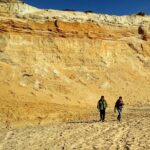
Dehesa de Abajo and the morning bird focus
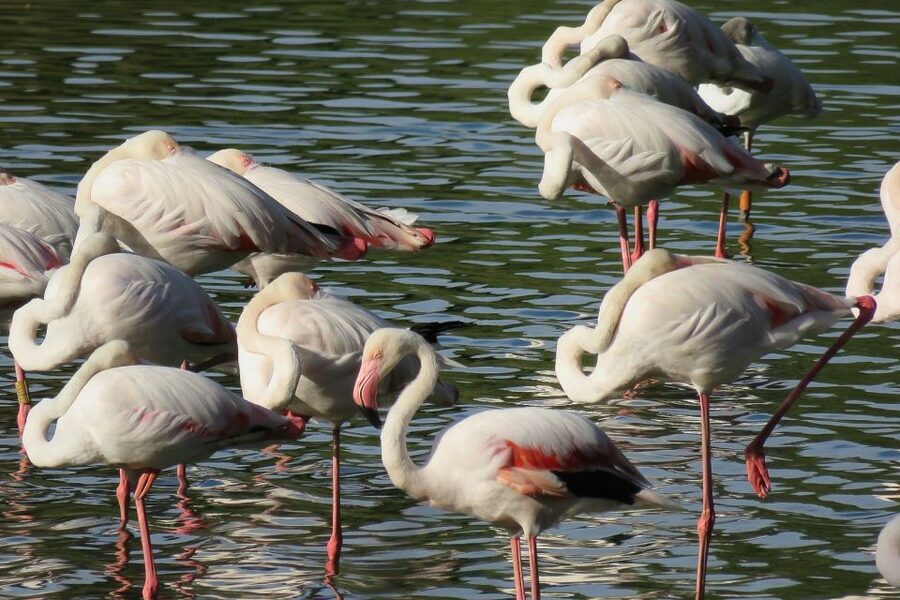
Your morning anchor is the visitor center at Dehesa de Abajo, in the northern marsh area. Expect a guided two-hour visit here, with time for photos and birdwatching.
This is where you start understanding Doñana as a living machine. The area is tied to pines and pastures and to wetlands that support a huge number of species. The park is described as home to around 200,000 residents across the system, including about 300 bird species, which is why you see guides treating bird sighting like a moving target.
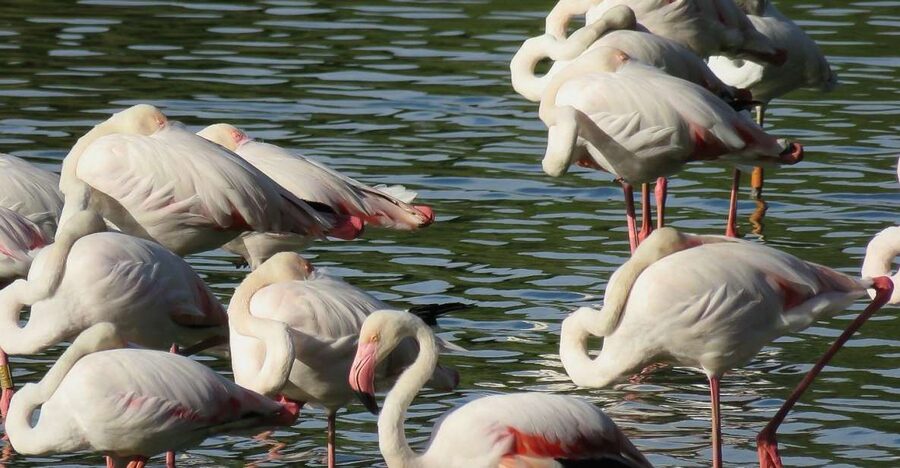
What you’re aiming for early can include flamingos and Spanish imperial eagles. Not every day gives you the flamingos in your exact spot, but the best guides try to increase your odds by working particular reserve areas and staying alert for the right conditions. Some past days have even involved lucky detours to get flamingos into view, which is a good reminder that wildlife spotting is partly timing and partly technique.
Rice fields, storks, and the north-to-south sweep
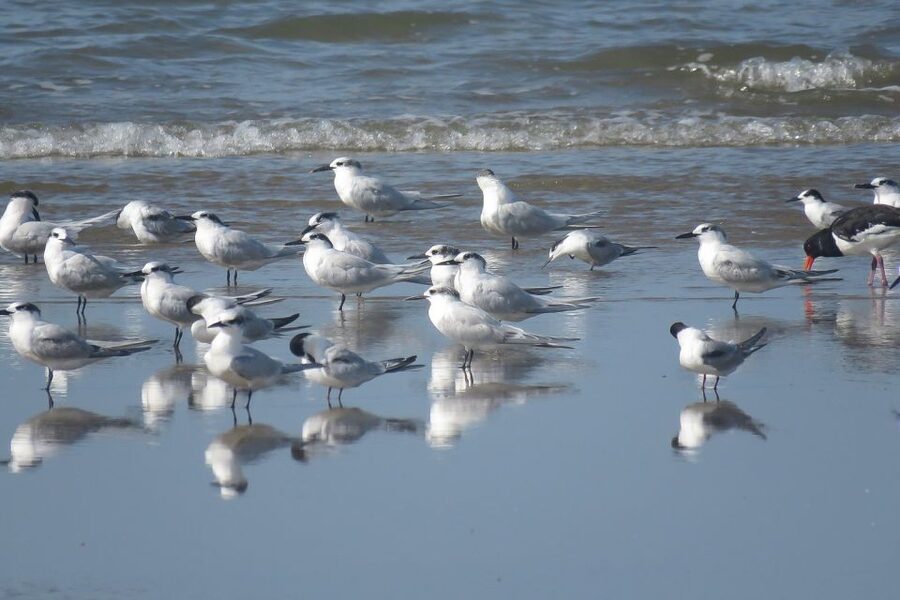
After Dehesa de Abajo, you’ll pass a rice field, described as Europe’s largest colony of storks. This kind of stop is more than scenery. It shows how the park’s wildlife and nearby agriculture overlap. If you care about ecology, these “in-between” zones often tell you as much as the official park paths.
From there, the tour continues through the vast northern area of Doñana. The idea is to keep changing habitats as the day goes on. Birds may shift with water levels, and mammals may move according to light and temperature. The route tries to match the day’s movement to what the animals tend to do.
A practical reality: Doñana is big and sightings are not guaranteed. Still, the structure helps. When the guide has time to reposition slowly and scan carefully, your odds of good views go up.
El Rocío: chapel, observatory, and village rhythm
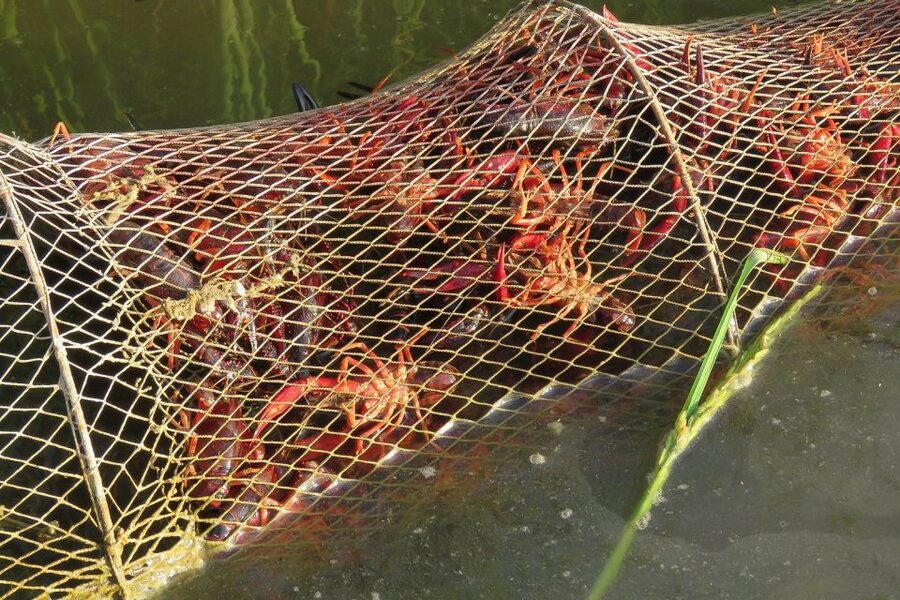
El Rocío is the cultural break built into a nature day. You’ll head there for a one-hour stop with a guided visit and photo time.
El Rocío is famous for its chapel and observatory, and that matters because it links the marsh world to how people have lived with this landscape over time. Even if you are mainly a wildlife person, the village stop gives your brain a rest from constant scanning and gives you a sense of place.
One thing to consider: the time here is not long. Some people love the stop and wish for a slightly slower pace, especially if they want more wandering or a longer sit-down lunch moment. If your top priority is birds, still, El Rocío is not random. It sits in the route so you can change habitats while keeping the day efficient.
Matalascanas, dunes, and a possible Atlantic dip
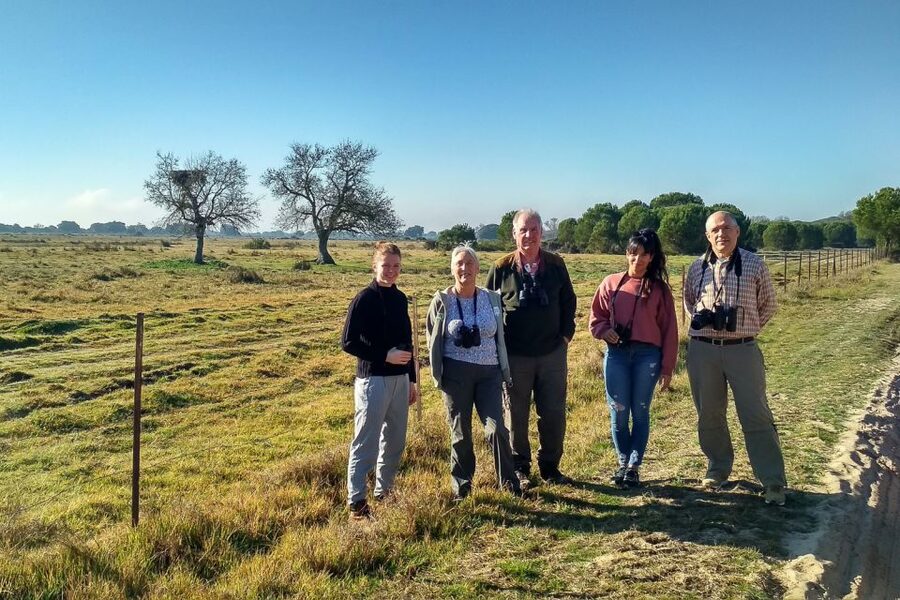
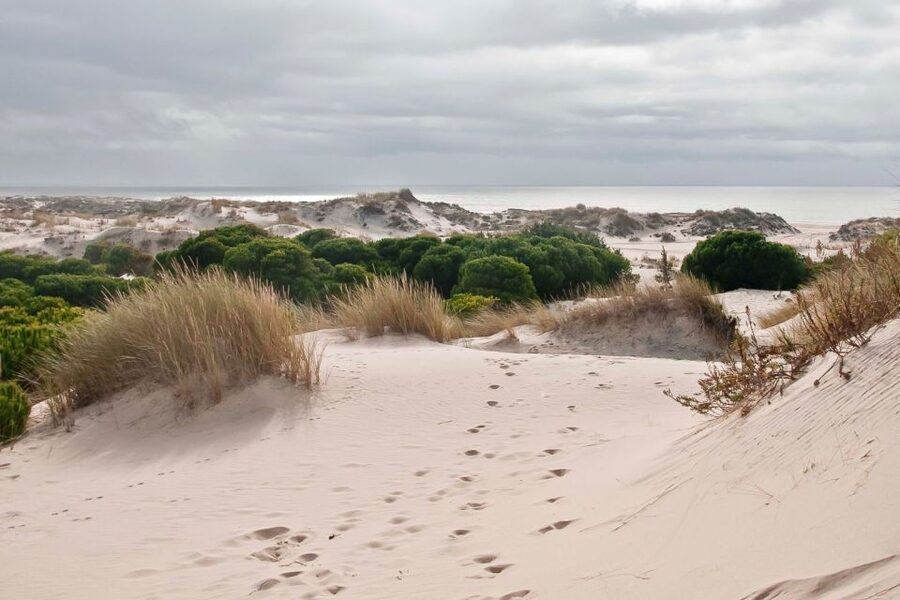
After El Rocío, you ride again (about 30 minutes) toward Matalascanas. Then you’ll spend roughly 2.5 hours there with guided walking and viewing.
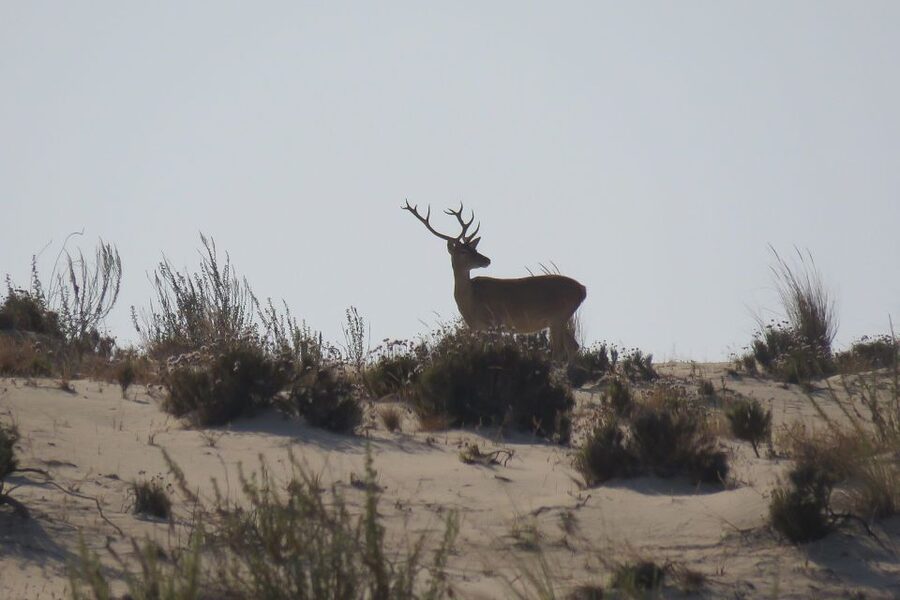
This is the part of the day that brings in the ocean. The plan includes exploring Spain’s largest dune system after lunch, plus a chance to get into the Atlantic in summer. If you’re traveling in warm months, this is often the moment people remember most, because it breaks the day up: you get birds and marsh air in the morning, then dunes and salty air after.
The dune system is not just a photo backdrop. It’s a different way of reading the park. Sand dunes change how wind moves, how water appears, and where animals can shelter. Even on days when wildlife is slow, the walking through the dune habitat can still feel like you’re moving through a distinct part of Doñana.
A heads-up from how timing can land: depending on the day and group pace, the beach time can feel short. If you want a long swim and a long relax, plan to treat the beach stop as a bonus rather than a full-on beach day.
La Rocina trails and why the timing can help
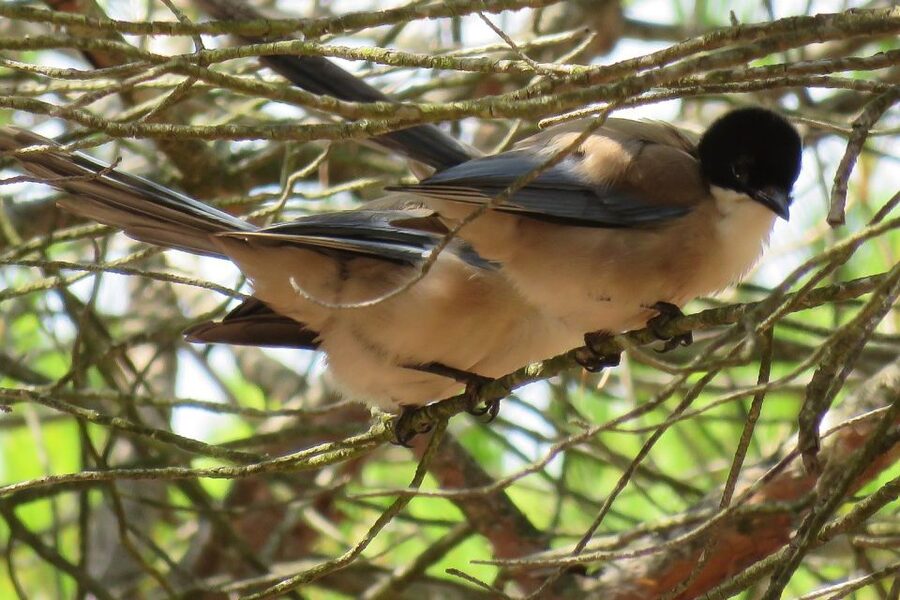
Later, you’ll walk trails around La Rocina, near the stream area. This part is valuable because it’s where you might see how water channels shape the ecosystem. Walking also gives your eyes a different focus, more like “birdwatching mode” than “vehicle spotting mode.”
In practice, this is often where small moments happen. Birds can be active near water lines, insects can be busy, and mammals sometimes reveal themselves in track or movement rather than in full-on sightings. Some past outings even mention seeing tracks or signs for elusive animals even when an actual visual sighting did not happen.
So if you’re the type who likes quiet attention, this section can be a payoff.
More of the same shelf: 1-Day Tours we have written up in Seville
- From Seville: Cordoba, the Mosque and Carmona Day Trip
- From Seville: Granada Day Trip with Alhambra and Albaicín
- From Seville: Granada Day Trip Alhambra and Albaycin
- Granada Day Trip with Alhambra and Albaicin Tour from Seville
- From Seville: Caminito del Rey Hike Day Trip
- From Seville: Cadiz and Jerez de la Frontera Day Trip
- From Seville: Doñana National Park Day Trip
- Granada Day Trip: Alhambra & Nazaries Palaces from Seville
Big mammals and the lynx question
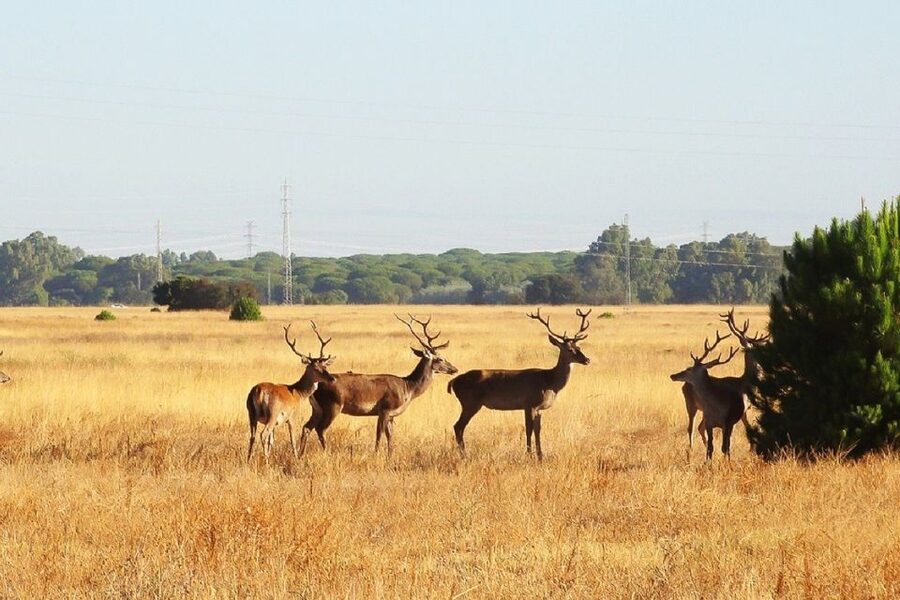
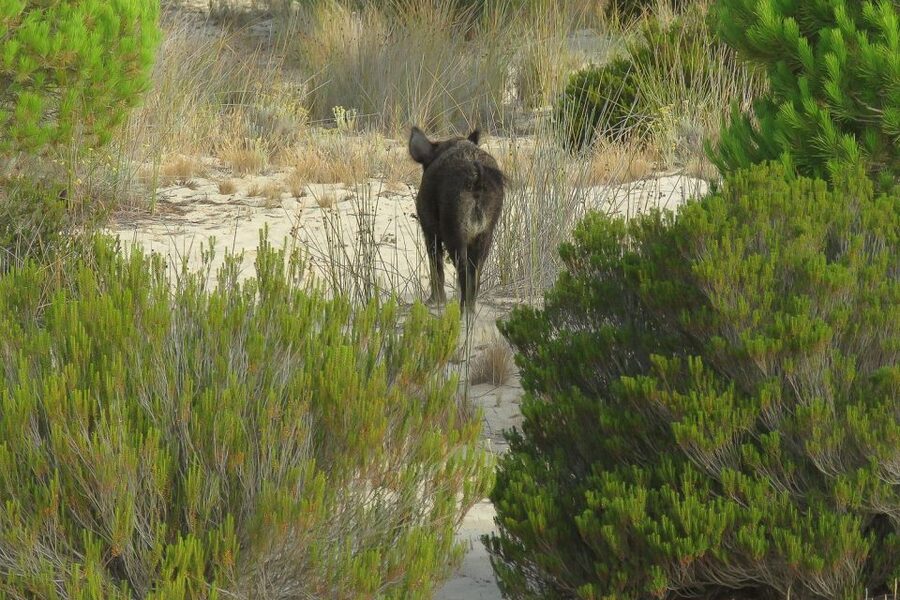
Doñana is known for big mammals, and the tour route aims to include opportunities to spot them near the end of the day, when conditions can line up. The plan specifically mentions chances for deer, wild boar, and the famous lynx.
Here’s the honest part: lynx are elusive. In some days, people have gone home without a sighting but still felt the payoff from seeing pawprints or other evidence. That’s how wildlife viewing in large protected areas often works. You come for the possibility and the experience of being out in habitat, not for a guaranteed animal checklist.
If you do get sightings, they tend to come from the combination of guide scanning, patient repositioning, and not rushing. This is also one reason why the guides’ field habits matter. Some guides, including José and Sergio on certain outings, have been praised for detours and slow driving when wildlife is spotted.
Guides, prismatics, and how sightings actually happen
The tour includes a guide and prismatics. Past riders have also noted that binoculars can be useful enough to bring your own if you care about details, especially for small birds or distant action. If you wear glasses, consider how comfortable your setup is after a long day of head-turning.
One of the biggest strengths is that the best guides do not just follow the plan. They adapt. People have credited guides like José, Sergio, and others with finding wildlife quickly and then making sure everyone gets a fair view, even by reversing or repositioning so the group can see. You can feel the difference between a guide who talks over the animals and a guide who times explanations for when the action is quiet.
Group size also plays into this. The option is either shared or private/small groups, and small groups generally make scanning and repositioning easier without the chaos of a big crowd.
Price and logistics: is $105 good value?
At $105 per person for a 10-hour day, this is not a budget snack. But it also isn’t just a bus ride. You get hotel pickup and drop-off, transportation, a live guide, and prismatics. Since meals and drinks are not included, you’re also not paying for a restaurant lunch that you might not even want.
For value, I’d weigh these questions:
- Do you want a guided route that covers multiple habitats in one day?
- Do you care about birdwatching with support, not just sightseeing from a vehicle?
- Are you okay paying for access and time, instead of trying to DIY Doñana from Seville?
If you answered yes, the price starts to make sense. You’re paying for the long transfer plus the on-the-ground interpretation, and that matters in a place as huge and changeable as Doñana.
If you answered no, you might prefer a less structured outing or only one habitat segment. But for most nature-minded people using Seville as a base, this kind of day trip tends to be the sweet spot.
What to bring so the day feels comfortable
This is a long outdoor day. Bring:
- Comfortable shoes (you will be walking at least a bit, including trails and dune areas)
- Sunglasses and sun hat
- Sunscreen
- A weather mindset: the plan is outdoors most of the time, even if you take vehicle breaks
If you are serious about birds, it’s worth packing your own binoculars. Some people have mentioned that binoculars are provided, but having your own helps you read behavior and plumage faster without swapping or waiting.
Also plan around the schedule. You’ll spend hours in transit and guided viewing, so bring a small power plan: water, a snack if you like, and something that keeps you from feeling “hangry” when meals are not included.
When the tour fits you, and when it might not
This tour is a strong match if:
- You want the big Doñana hit from Seville without planning a complex logistics day.
- Birds are a priority, and you enjoy learning what to look for.
- You like variety, marshes in the morning and dunes plus ocean time later.
It may be a weaker fit if:
- You want tons of unbroken walking time.
- You expect guaranteed lynx or flamingos, no matter the season.
- You prefer beach time to be the main event rather than a short Atlantic break.
The best strategy is to treat it like a nature day with multiple “chapters,” not one single long chapter.
Should you book this Doñana day trip?
If you want an efficient, guided way to see Doñana from Seville, and you enjoy birdwatching as an active sport, I think this is worth booking. The biggest draw is the mix of habitats plus the guide-driven effort to help you actually see what the park is good at, from flamingos to raptors.
Book it sooner rather than later if your dates are fixed, and consider paying extra attention to what you want most. If your dream animal is lynx, go in with patience and accept that signs can count as part of the story. If you want dunes and ocean time too, this route does a good job of giving you both, not just one.
FAQ
How long is the Doñana day trip from Seville?
The tour duration is listed as 10 hours.
Is pickup from Seville included?
Yes. Hotel pickup and drop-off are included. If pickup is optional for you, you should wait in the hotel reception or lobby about 10 minutes before your scheduled pickup time.
What does the tour include besides transportation?
The tour includes a guide and prismatics, plus the transportation and the pickup and drop-off.
Are meals and drinks included?
No. Meals and drinks are not included.
What languages are available for the live tour guide?
The live guide is available in English, French, Italian, and Spanish. Note that a minimum of 4 people speaking the same language is required to accommodate that language, otherwise you may be offered an alternative language, date, or a full refund.
Will I get time in El Rocío and Matalascanas?
Yes. You’ll visit El Rocío for a guided stop, and then later Matalascanas for a guided experience.
Is swimming in the Atlantic possible?
The highlights say you can hop into the Atlantic during the summer, and the day includes time at a beach area in Matalascanas.
Can I see flamingos, imperial eagles, and lynx?
The tour is designed to look for birds like flamingos and Spanish imperial eagles and to spot mammals like deer, wild boar, and lynx. Wildlife sightings are never guaranteed, but the route focuses on habitats where these animals may appear.
What should I bring for the day?
Bring comfortable shoes, sunglasses, a sun hat, and sunscreen.
Are pets allowed?
No. Pets are not allowed on the tour.
Is there a private or small-group option?
Yes. You can choose between shared or private/small groups.
National Parks we rated next in Seville
- Donana National Park: Guided Day Tour from Seville
★ 4.5 · 372 reviews - Donana National Park and El Rocío: Guided Tour from Seville
★ 4.5 · 240 reviews
1-Day Tours worth comparing before you book in Seville
- From Seville: Pueblos Blancos and Ronda Full-Day Trip
★ 4.5 · 3,849 reviews - From Seville: Ronda+Setenil de las Bodegas Day Trip
★ 4.4 · 3,562 reviews - From Seville: Cordoba, the Mosque and Carmona Day Trip
★ 4.5 · 1,967 reviews - From Seville: Granada Day Trip with Alhambra and Albaicín
★ 4.4 · 1,499 reviews - From Seville: Granada Day Trip Alhambra and Albaycin
★ 4.2 · 1,391 reviews
Andalusian Nature Parks and Deserts: the others that earned a place
- Donana National Park: Guided Day Tour from Seville
★ 4.5 · 372 reviews - Donana National Park and El Rocío: Guided Tour from Seville
★ 4.5 · 240 reviews
Fresh off the desk: recent Seville experiences we have written up






Andalusian Nature Parks and Deserts, side by side.
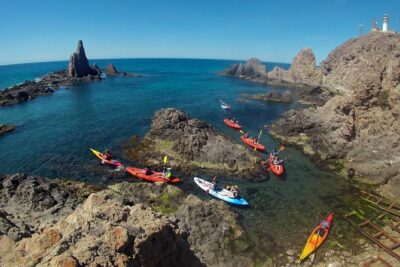 ★ 5.0Cabo de Gata Active. Guided kayak and snorkel route through coves of the Natural ParkFrom $541,531 reviews
 ★ 4.9Granada: Sierra Nevada Safari Tour to 2500 m with a DrinkFrom $851,466 reviews
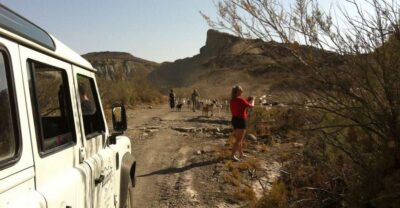 ★ 4.9From Almeria: Tabernas Desert 4WD Joyriding TourFrom $451,344 reviews
 ★ 5.0From Granada: Sierra Nevada Safari tour up to 2500 meters highFrom $102673 reviews
 ★ 4.7Cabo de Gata: Natural Park Kayaking and Snorkel ExcursionFrom $53442 reviews
 ★ 4.9Almeria: Horse Riding Tour Through the Tabernas DesertFrom $53406 reviews
 ★ 4.5Donana National Park: Guided Day Tour from SevilleFrom $95372 reviews
 ★ 4.7From Granada: Alpujarra Mountain Villages TourFrom $80298 reviews
This tour also sits in