

Reviewed · ALCÁZAR PALACES AND MOORISH FORTRESSES
Seville: Alcazar Skip-the-Line Guided Tour with Tickets
One palace can feel like 11 centuries. This skip-the-line Alcázar tour is built for exactly that kind of time travel, without wasting your morning or afternoon in crowd lines. I like how you move through the story of rulers and architecture at a steady pace, while also getting hands-on stops like the fountains and the Patio del León.
Two things I really like: first, the skip-the-line ticket matters in Seville, because the Alcázar can get packed fast. Second, the tour pays attention to the details you might miss alone, especially Mudéjar plasterwork and beams in the Patio del León, plus garden moments that hit more than your eyes, like the sound of fountains and the fragrance of flowers.
One consideration before you book: the tour includes the palace and gardens, but the royal chamber entrance is not included, so don’t assume you’ll see every room. Also, while headsets are provided, the style of earpieces may feel odd to some people.
In This Review
- Key takeaways before you go
- What you’re buying for $51 in Seville terms
- Where to meet and how to avoid a stressful start
- The 90-minute flow: how your guide moves you through time
- Entering the Alcázar: seeing walls as history, not decoration
- Almohads to Christian kings: the story your eyes can follow
- The Mudéjar moment: Patio del León and the craft you should look for
- Gardens and patios: the sensory stops that make it feel like more than sightseeing
- Headsets, audio, and crowd reality
- What’s not included: the royal chamber gap
- Wheelchair accessibility and planning your route
- Price and value: is it worth paying instead of going alone?
- Who this guided tour is best for
- Should you book the Alcázar skip-the-line tour?
Key takeaways before you go
- Skip-the-line entry so you can spend your time inside, not trapped at the entrance
- A guided walkthrough through major eras, from early construction to Almohad fortress changes and Christian rule
- Mudéjar details you’ll actually know to look for, including the craft in the Patio del León
- Garden stops for the senses, with fountains, flowers, and quiet patio moments
- Headsets included, helpful in crowded spaces where you’d normally struggle to hear
- Royal chamber not included, so you may want a follow-up visit if that room is a priority
What you’re buying for $51 in Seville terms
At $51 per person, this is not a budget ticket. You’re paying for three things that save you real travel time: skip-the-line access, a live guide, and headsets so you can hear the story even in a crowd.
If you already plan to spend a good chunk of your day at the Alcázar, guided entry often pays off. A self-guided visit is beautiful, but the guide helps you connect what you see, like why Almohads and later Christian kings shaped different sections of the palace.
Timing also matters. The tour runs about 1.5 hours, which is long enough to get the big architectural beats and the garden highlights, without turning the visit into a half-day marathon.
Where to meet and how to avoid a stressful start
The tour’s meeting point is given as Miguel de Mañara Street, with directions also mentioning a Tourist Information Office in the Shop Murillo area next to the Real Alcázar of Seville. Since another part of the instructions points to the Plaza del Triunfo area, treat this as a “meet near the palace” situation, not a “show up anywhere in Seville” situation.
My practical tip: arrive early and look for staff identifying the group near the listed meeting location. The Alcázar area is right where lots of tours cluster, so even a few minutes of delay can make you feel like you’re searching the wrong square.
Bring your passport or ID card. That’s one of those annoying details that is simple to handle ahead of time, and not fun if you forget it.
Reviewed and rated alongside this one, further Alcazar Palaces and Moorish Fortresses






The 90-minute flow: how your guide moves you through time
This tour is designed as a guided loop through key parts of the Alcázar, starting with the long-line problem handled for you. You meet your guide at the meeting point and then head in with skip-the-line tickets.
From there, the story is structured like a sequence of rulers and renovations. You start with the Alcázar’s early beginnings, attributed to the Cordoban governors of Seville starting in 913, and then you see how it expanded over roughly 11 centuries of use.
Then the guide brings in the two major “turns” that help you read the buildings like clues:
- Almohads in the 12th century, when they transformed the complex into a fortress-like residence
- Fernando III, the Christian king who moved in after capturing Seville in 1248
That matters because it changes how you interpret the same space. When you understand the political shift, the architecture stops feeling like random beauty and starts feeling like evidence.
Entering the Alcázar: seeing walls as history, not decoration
The first moment you step inside, you’re not just touring rooms. You’re walking through layers of control, government, and court life.
You’ll hear about the officials, court servants, and royal guard who worked around the palace spaces. You’ll also get a clear explanation of how Muslim rulers left behind architectural evidence, and how those choices shaped what you see later.
This is where a good guide name matters. Some French-language departures are led by guides such as Maria, Lina, Raul/Raoul, Jose, Pablo, Christina, Lena, and Victoria. Even if you don’t know the names ahead of time, the shared theme in how they teach is the same: they point out “why” as much as “what.”
Crowds can make you feel rushed. The nice thing about a guided route is that someone’s timing your “turn your head and look right there” moments so you don’t miss the details while you’re trying not to get swept along with the crowd.
Almohads to Christian kings: the story your eyes can follow
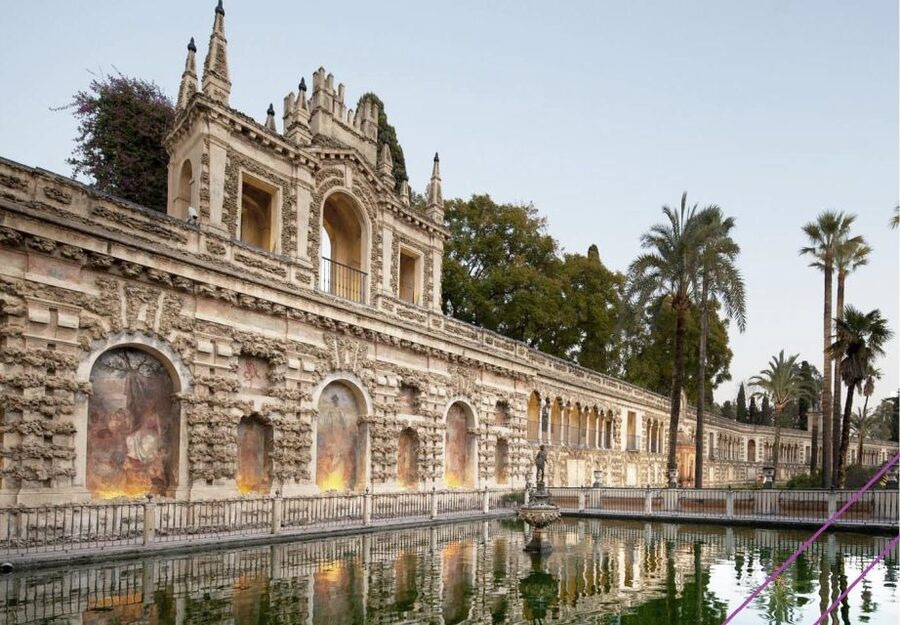
The Almohads part is especially important because it’s not just a date. It’s a visual shift toward fortress energy in the way the complex was adapted in the 12th century.
Then you move into the Christian era through Fernando III, tied to 1248. That’s a useful anchor date because it helps you stop thinking of the Alcázar as one style. Instead, it becomes a living place that kept changing rulers, needs, and tastes.
As you listen, you’ll notice how the tour connects space with power. The idea is that court life and administration happened in these spaces, so architecture wasn’t just aesthetic. It supported function, hierarchy, and spectacle.
The Mudéjar moment: Patio del León and the craft you should look for
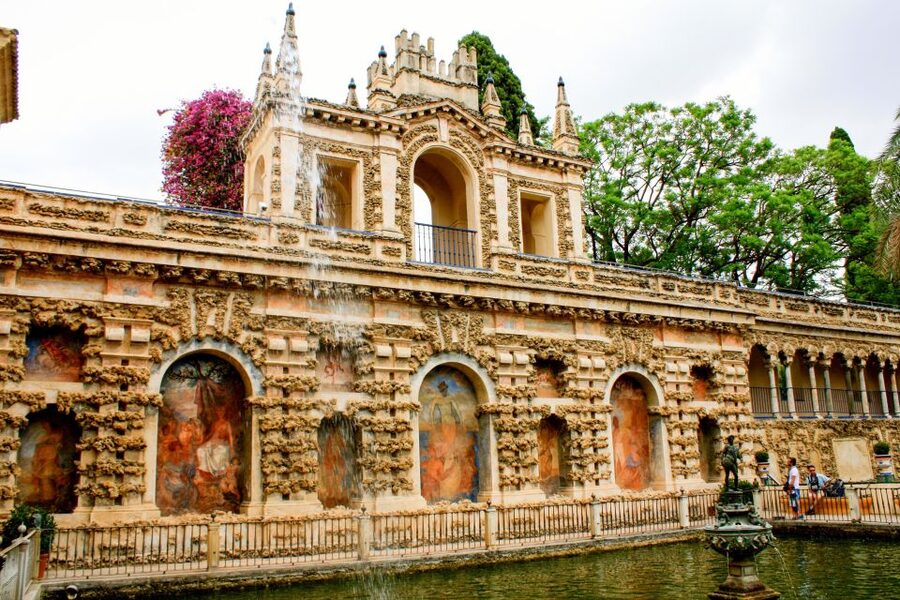
Mudéjar architecture is one of the big reasons the Alcázar is famous, and this tour does a strong job putting it on your radar. You get to see what Mudéjar looks like in real, up-close form, not as a textbook concept.
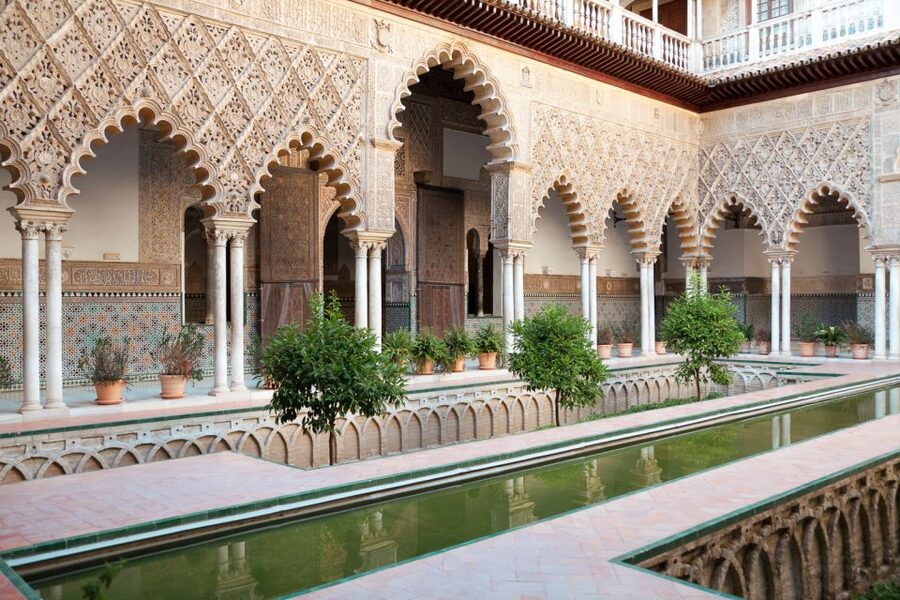
The tour specifically highlights the Patio del León, including the intricate Mudéjar plaster work and beams, plus the experience of the fountains there. That’s key because it’s one of those spaces where the beauty is physical, not just visual.
Here’s what I suggest you do once you’re there: slow down mentally, even if the crowd is moving. Look at the plasterwork, then look at the beams, then connect that to the sound and movement of water nearby. Your brain starts to “read” the space as a designed environment, not a hallway of pretty surfaces.
Also, some guides add light pop-culture trivia, including references related to filming in and around Seville. If you hear it, treat it as a fun overlay, not the core reason you’re there.
Gardens and patios: the sensory stops that make it feel like more than sightseeing
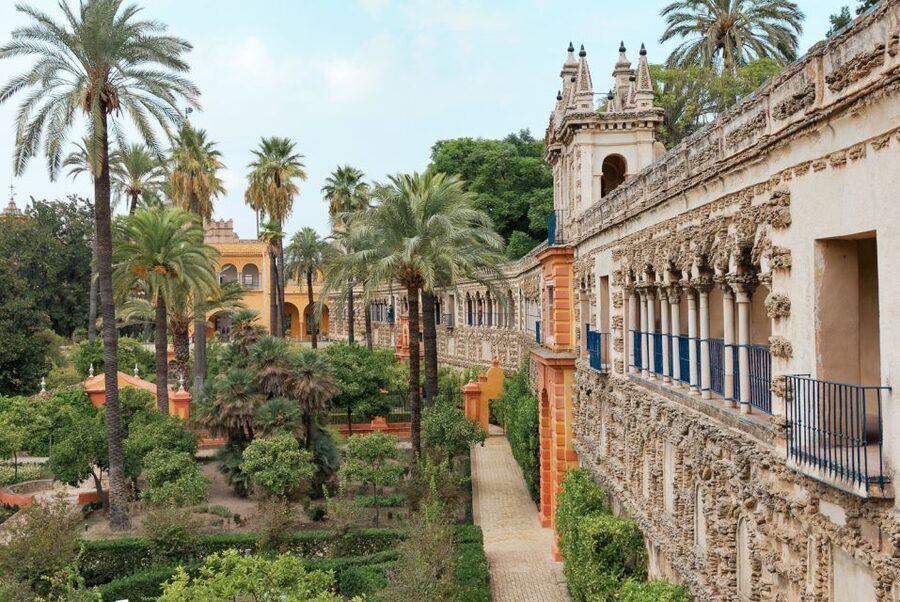
One of the tour highlights is the Alcázar gardens and patios, described as fragrant and full of flowers. That’s not just a poetic detail. It changes the experience because you get breaks in the building’s indoor intensity.
The fountains are part of the sensory plan, too. You’re meant to hear them, and then connect that sound to the patio design and the way the space is lived in.
This is where I think the guided format really helps. If you go alone, you might rush from one highlight to the next. With a guide, you get signposted “pause moments,” so you actually experience the Alcázar with more than just your eyes.
And yes, it can still be crowded. But when you’re following a guide, you can manage that crowd feeling better.
Reviewed and rated alongside this one, further Tickets in Seville
- Seville: Live Flamenco Dancing Show Ticket at the Theater
- Seville: Setas de Sevilla Entry Ticket
- Seville: Puro Flamenco Show with Optional Museum Ticket
- Seville: Casa de Pilatos Ground Floor Entry Ticket
- Seville: Alcázar and Cathedral Entry Ticket and Guided Tour
- Alcazar and Cathedral of Seville Tour with Skip the Line Tickets
- Alcázar of Seville Skip-the-Line Tickets and Guided Tour
- Seville Cathedral and Giralda Tower Guided Tour and Tickets
Headsets, audio, and crowd reality
Headsets are included, which is a big deal at the Alcázar. When you’re in close quarters, it’s hard to hear a guide without help.
The helpful part: multiple people praise the audio devices and the clarity they provide. The caution part: some guests report that the earpiece style can be uncomfortable, may not sit perfectly, and can affect sound quality.
My practical fix if you’re sensitive to ear pressure: wear comfortable, secure clothing and consider bringing your own solution for comfort if you know you react badly to earbuds. And if audio seems off, let the guide or staff know right away so they can help troubleshoot.
What’s not included: the royal chamber gap
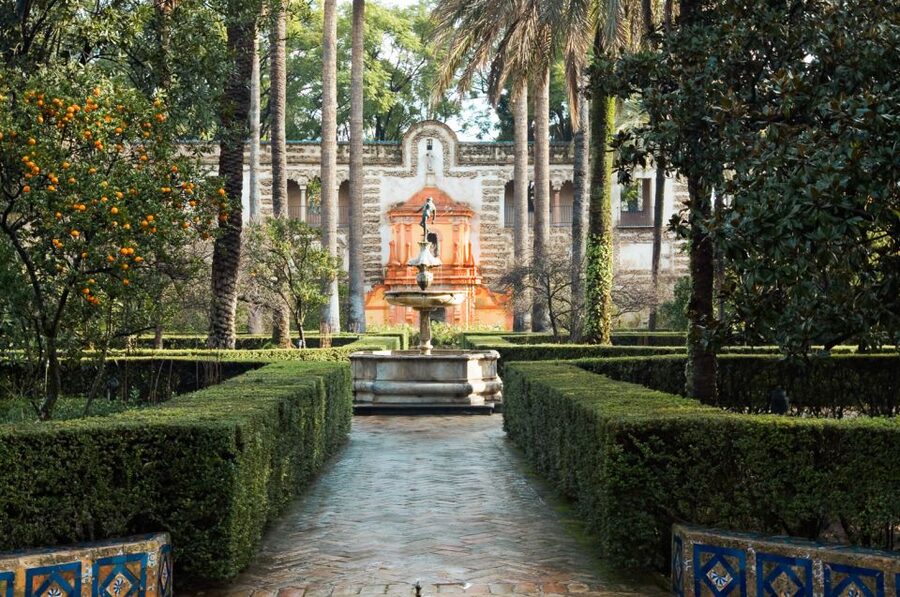
This tour includes the palace and gardens highlights, but entrance to the royal chamber is not included.
For some people, that’s fine. For others, the royal chamber is the reason they’re making a special trip. If that’s your priority, consider planning a separate add-on or a later visit so you don’t end the tour feeling like you left something essential behind.
Wheelchair accessibility and planning your route
This activity is listed as wheelchair accessible. The guide’s role matters here because moving through historical spaces is easier when someone can guide you toward accessible paths.
If you’re traveling with mobility needs, I recommend you double-check the day’s route expectations when you arrive. Historic sites often have uneven transitions, and crowd control can change where you stand and how long you wait.
Price and value: is it worth paying instead of going alone?
For $51, you’re buying three advantages that reduce friction:
- Skip-the-line access, which saves time when the site is busy
- A guided explanation, connecting architecture to power shifts like Almohads and Christian rule
- Headsets, so the story stays audible in crowded interiors
If your alternative plan is to wander in with no structure, the guided tour usually feels worth it because it gives you a framework. Mudéjar details, like those in the Patio del León, are easier to appreciate when you know what the craftsmanship represents.
But if you already have a strong interest in architectural history and you love slow, unscripted exploring, you may feel the time limit is tight. This tour is about 1.5 hours, so you’ll get the key beats, not every possible room.
Who this guided tour is best for
This tour fits you if you want:
- an efficient Seville experience that avoids lines
- a guided story that connects what you see to who controlled the palace over time
- clear highlights, especially Mudéjar architecture and Patio del León
- garden moments that add smell and sound, not just photos
It’s also a good choice for families and mixed-age groups because the pace is structured. Even people who worry they’ll be bored often appreciate how the guide keeps the tour moving while still pointing out details.
If you’re the type who wants hours in one room and hates group movement, you may want to pair this with extra self-guided time afterward rather than expecting the tour itself to cover everything.
Should you book the Alcázar skip-the-line tour?
I’d book it if you want your Alcázar visit to feel organized, story-driven, and efficient, with skip-the-line tickets and headsets doing the heavy lifting for you. It’s a strong way to see the big architectural transitions from early construction through Almohad changes to Fernando III, and to get the Mudéjar craftsmanship you came for.
I would think twice or add a plan if the royal chamber is your must-see. In that case, you’ll likely want a separate visit or add-on so you don’t feel like the tour stopped just before your favorite room.
If you do book, arrive a bit early, bring your ID, and go in ready to look at details, not just take photos. The Alcázar is one of those places where noticing small things is exactly what makes the whole experience click.
Tickets: the rest of our Seville write-ups
- Seville: Live Flamenco Dancing Show Ticket at the Theater
★ 4.7 · 16,396 reviews - Seville: Setas de Sevilla Entry Ticket
★ 4.6 · 8,901 reviews - Seville: Puro Flamenco Show with Optional Museum Ticket
★ 4.8 · 6,088 reviews - Seville: Casa de Pilatos Ground Floor Entry Ticket
★ 4.5 · 5,691 reviews - Seville: Alcázar and Cathedral Entry Ticket and Guided Tour
★ 4.6 · 5,056 reviews
Tours: the rest of our Seville write-ups
- Seville: Cathedral, Giralda, and Royal Alcázar Guided Tour
★ 4.7 · 9,165 reviews - Seville: Cathedral, Giralda & Alcazar Entry With Guided Tour
★ 4.6 · 8,560 reviews - Seville: Priority Access Cathedral, Giralda & Alcázar Tour
★ 4.8 · 7,563 reviews - Seville: Alcázar and Cathedral Entry Ticket and Guided Tour
★ 4.6 · 5,056 reviews - Seville: City Sightseeing Hop-On Hop-Off Bus Tour
★ 4.0 · 4,633 reviews
Alcazar Palaces and Moorish Fortresses: the rest of our write-ups
- Seville: Cathedral, Giralda, and Royal Alcázar Guided Tour
★ 4.7 · 9,165 reviews - Seville: Cathedral, Giralda & Alcazar Entry With Guided Tour
★ 4.6 · 8,560 reviews - Seville: Priority Access Cathedral, Giralda & Alcázar Tour
★ 4.8 · 7,563 reviews - Seville: Alcázar and Cathedral Entry Ticket and Guided Tour
★ 4.6 · 5,056 reviews - Alcazar and Cathedral of Seville Tour with Skip the Line Tickets
★ 4.5 · 4,579 reviews
Fresh off the desk: recent Seville experiences we have written up









Alcázar Palaces and Moorish Fortresses, side by side.
 ★ 4.6Seville: Royal Alcázar Entry TicketFrom $2328,378 reviews
 ★ 4.7Seville: Cathedral, Giralda, and Royal Alcázar Guided TourFrom $699,165 reviews
 ★ 4.6Seville: Cathedral, Giralda & Alcazar Entry With Guided TourFrom $658,560 reviews
 ★ 4.7Madrid: Segovia and Toledo Tour, Alcazar, and CathedralFrom $487,797 reviews
 ★ 4.8Seville: Priority Access Cathedral, Giralda & Alcázar TourFrom $647,563 reviews
 ★ 4.8Málaga: Alcazaba and Roman Theatre Guided Tour With EntryFrom $145,792 reviews
 ★ 4.6Seville: Alcázar and Cathedral Entry Ticket and Guided TourFrom $785,056 reviews
 ★ 4.5Alcazar and Cathedral of Seville Tour with Skip the Line TicketsFrom $714,579 reviews
This tour also sits in