
Reviewed · JEWISH QUARTERS AND OLD TOWN WALKS
Barcelona: Jewish Quarter 2-Hour Walking Tour
A medieval map in the middle of Barcelona. This 2-hour Jewish Quarter walk turns the Gothic Quarter into a story you can follow block by block. I like that you don’t just see famous sights, you also track Jewish presence through the narrow lanes and overlooked remnants.
I especially love the anchor stop at Sinagoga Mayor Barcelona, described as the oldest synagogue in Spain and one of Europe’s oldest. You also get a strong second layer with the medieval Mikve site and the ruins around the old Jewish quarter, not just one highlight.
One thing to consider is that the experience includes synagogue-related spots where access can depend on what is open that day. Even with a great guide, you may find that a particular ruin or area has limited entry.
In This Review
- Quick hits
- A 2-hour plan that actually feels like Barcelona
- Meeting at Plaça Sant Jaume, then straight into the Gothic Quarter
- Sinagoga Mayor Barcelona: the anchor stop you’ll keep thinking about
- The medieval Mikve site: where the story turns from big names to daily life
- Ruins of the Old Synagogue (Shlomo Ben Adret) and the feeling of “what’s left”
- Gothic Quarter lanes and the Jewish quarter near Roman walls
- What the guides do that makes the tour worth the money
- Price and value: is $76 reasonable for this 2-hour walk?
- Who this tour suits best (and who might want a different style)
- Should you book the Barcelona Jewish Quarter 2-hour walking tour?
- FAQ
- How long is the Barcelona Jewish Quarter walking tour?
- What does the tour cost?
- Where do I meet for the tour?
- Is the tour wheelchair accessible?
- How big is the group?
- What language is the tour guide?
- What’s included in the price?
- Is the entrance fee to the Synagogue Museum included?
- Can I skip the ticket line?
- What is the cancellation policy?
Quick hits
- Sinagoga Mayor Barcelona gets you to a major starting point for Jewish life in the city
- Medieval Mikve stop helps you picture everyday ritual life in old Barcelona
- Ruins of the Old Synagogue (Shlomo Ben Adret) give the story a quieter, more grounded feel
- Gothic Quarter alley walking keeps the whole tour connected instead of hopping around
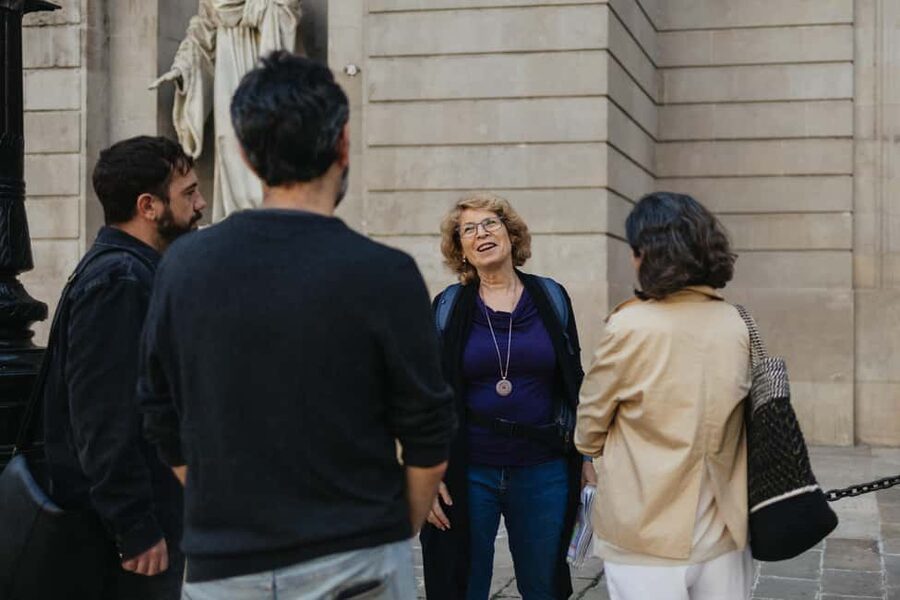
- Small groups (up to 6) make it easy to ask questions and keep a comfortable pace
- English live guides like Ella, Alan, Edu, and Lilach are consistently praised for pacing and clarity
A 2-hour plan that actually feels like Barcelona
If you only have a short window in Barcelona, this kind of walking tour works because it uses the Gothic Quarter’s tight street plan to do the heavy lifting. Instead of reading names from a plaque, you move through the exact neighborhoods where history left physical traces.
You’ll hear how the Jewish community’s story in Spain begins to take shape centuries ago, with arrivals linked to the period after the Second Temple’s destruction in Jerusalem (70 CE). The tour then traces growth in Barcelona, when Jewish residents became increasingly important politically and spiritually. It’s the kind of narrative that makes the streets feel less like a “tourist maze” and more like a lived-in map.
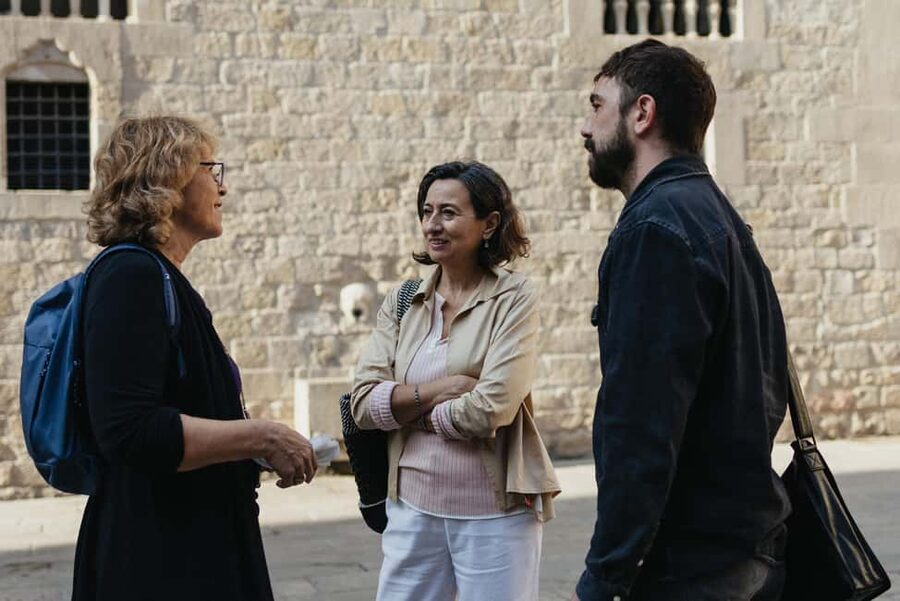
And with a small group, you’re less likely to feel swept along. Several guides, including Ella, Alan, Edu, and Lilach, are repeatedly praised for keeping the pace friendly and for answering questions in a way that sticks.
Meeting at Plaça Sant Jaume, then straight into the Gothic Quarter
You’ll meet at Plaça Sant Jaume, right next to the Alcampo store. That’s a smart choice because Plaça Sant Jaume sits at the center of the historic core, so you can connect this walk with other plans without a long commute.
The tour ends back at the meeting point, so you’re not forced into a “last stop then scramble home” situation. That matters if you’re pairing this with a museum visit or dinner nearby, since you can keep your logistics simple.
Also, since it’s a walking tour, good shoes help. The Gothic Quarter is full of narrow streets and uneven sidewalks. If you’re using a wheelchair, the tour is listed as wheelchair accessible, which is a big plus in this part of the city.
Our remaining Jewish Quarters and Old Town Walks notes, in case one suits you better

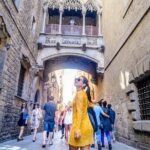

Sinagoga Mayor Barcelona: the anchor stop you’ll keep thinking about
The centerpiece is the Sinagoga Mayor Barcelona, highlighted as the oldest synagogue in Spain. The tour treats this site as a starting point for understanding what Jewish life looked like over time, and why this area matters so much.
What I like about tours that begin here is that they give you context before you start looking for smaller clues. You’ll be able to see later ruins and structures in relation to a bigger framework, instead of feeling like you’re just collecting random fragments.
Another practical detail: the experience is designed to skip the ticket line. That’s not flashy, but it saves time and stress, especially if you’re visiting during a busy period.
One possible catch is that the tour also mentions an entrance fee to the Synagogue Museum as not included. So if the route includes museum access on a given day, you might pay extra. You’ll want to factor that into your budget so you are not surprised at the point of entry.
The medieval Mikve site: where the story turns from big names to daily life
After the main synagogue focus, the tour moves into smaller, more specific remnants tied to Jewish practice in medieval Barcelona. A standout here is the site of the medieval Mikve.
Even if you only know the basics, a Mikve stop changes your mental picture. You stop thinking only about institutions and public roles, and you start thinking about routine life and continuity. That’s one reason this stop feels more personal than many history attractions. It’s also a helpful contrast to the larger synagogue highlight, because it brings the tour closer to the physical reality of daily practice.
In the Gothic Quarter, details like these matter. Many structures are partially obscured by time, layout changes, or later buildings. A good guide helps you spot what’s left and explain why it matters, and guides like Ella and Lilach are repeatedly credited with pointing out remnants that are easy to miss.
Ruins of the Old Synagogue (Shlomo Ben Adret) and the feeling of “what’s left”
One of the most emotionally grounded parts of the tour is the walk to the ruins of the Old Synagogue, named for Shlomo Ben Adret. The tour doesn’t treat this as a distant monument. It frames the ruins inside the larger arc of the Jewish community in Barcelona and Spain.
You’ll hear how Jewish life in Spain saw relative peace for centuries, then faced a brutal turn in 1391, when an attack dramatically ended Jewish presence in Spain. That shift is heavy, and the ruins help you feel how quickly the “before” and “after” can change an entire neighborhood.
In several tour experiences, the most valuable moment is not just seeing what remains, but understanding why it remains. The old synagogue ruins work well for that, especially when the guide explains what you’re looking at and how it connects to the old city layout.
A practical note: one review mentioned that the old synagogue was closed, but the group still enjoyed the walk. So if you’re planning this as a must-see, I’d go in with flexible expectations for access that day.
Gothic Quarter lanes and the Jewish quarter near Roman walls
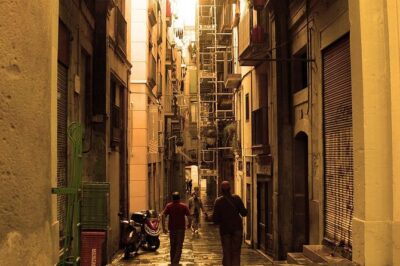
The tour’s walking route matters. You’ll stroll through narrow alleys dating back to the Middle Ages, in the area where a small Jewish quarter once sat near Roman walls.
This is the part where you get the most “walkable history.” The Gothic Quarter can feel confusing on your own, but with a guide you learn what to look for: street lines, corner placements, and small remnants that connect places across time.
I also like that the tour doesn’t pretend the history is only one building. It highlights that the city center held multiple focal points for Jewish life. The tour specifically says you’ll discover the location of four historic synagogues in the Barcelona city center. That’s useful because it teaches you how to read the neighborhood as a network, not a single sight.
What the guides do that makes the tour worth the money
The biggest repeatedly praised factor in this tour is the guide quality. People name guides like Ella, Alan, Edu, and Lilach, and the common threads are clear: strong communication, deep background context, and a pace that fits the group.
Alan is mentioned for answering questions, using photos and mockups and even adjusting to weather conditions by being concerned about safety in the rain. Edu gets strong credit for weaving history into conversation, adapting pace when needed, and helping the group find the nooks and crannies that you might otherwise miss. Lilach is praised for being engaging, fun, and for being able to answer questions directly.
If you care about more than just facts, this is where you feel the difference. A great guide turns “I saw a synagogue” into “I understand how the city’s story changed.” That’s also why the tour stays engaging even when you’re looking at ruins instead of polished interiors.
Other 2-Hour Experiences we sat down and reviewed across Barcelona
- Barcelona: Two-Hour Midday or Sunset Sailing Cruise
- Barcelona: 2-Hour City Sights Guided Segway Tour
- Barcelona: 2-Hour Sailboat Tour with Snacks and Drinks
- 2-Hour Sailing Tour in Barcelona with Open Bar & Snacks
- Barcelona 2-Hour Gothic Walking Tour
- Jewish Walking Tour Barcelona by Expert Jewish Guide 2h
- Barcelona Grand 2-Hour Segway Tour
Price and value: is $76 reasonable for this 2-hour walk?
The price is listed at $76 per person for a 2-hour live English walking tour with small group size limited to 6 and skip-the-ticket-line benefits. The walking portion is included.
Here’s how I think about value for a tour like this:
- You’re paying for a guide who can connect multiple sites in a tight area and explain the story so it makes sense.
- You’re also paying for the time benefit, since skip-the-line reduces wasted waiting.
- You might have extra costs if Synagogue Museum entrance applies on the day you go, since it’s not included.
For most people, the “value” comes from the guide plus the sequence of stops. If you try to DIY this area without context, you could easily miss the Mikve site, the significance of the old synagogue ruins, or why certain lanes matter. With a guide, the same streets become a clearer narrative.
Who this tour suits best (and who might want a different style)
This is a strong fit if you:
- want Jewish history in Barcelona but prefer it walking-based, not lecture-only
- enjoy seeing how stories connect across sites in a small area
- like asking questions and getting clear answers from an English-speaking guide
- appreciate small group dynamics, since this one is capped at 6
It’s also a good option if you want something manageable in the middle of a day. Two hours is long enough to feel “done,” but short enough that you can still move on to other parts of the city afterward.
If you’re someone who needs fully indoor stops, you should know the tour includes ruins and exterior remnants. That does not make it less meaningful, but it does change the vibe compared with museum-heavy itineraries. Also, if you’re counting on specific access, remember that one review noted the old synagogue was closed, so you should be mentally flexible.
Should you book the Barcelona Jewish Quarter 2-hour walking tour?
Yes, I think you should book it if your goal is to understand Barcelona’s Jewish heritage in a practical, neighborhood-first way. The combination of Sinagoga Mayor Barcelona, the medieval Mikve, and the Old Synagogue ruins (Shlomo Ben Adret) gives you both headline history and smaller, physical clues in the street layout.
I’d especially book it if you value guides who teach in an organized way and keep the pace comfortable. The consistent praise for guides like Ella, Alan, Edu, and Lilach is a real signal that you’re not just buying a route, you’re buying interpretation.
One last check before you go: plan for the possibility of additional museum costs and for site access to vary by day. If you go in with that flexibility, this tour is a smart way to add depth to your Barcelona trip without eating up your whole schedule.
FAQ
How long is the Barcelona Jewish Quarter walking tour?
The tour lasts 2 hours.
What does the tour cost?
The price is listed as $76 per person.
Where do I meet for the tour?
Meet in Plaça Sant Jaume, just next to the Alcampo store.
Is the tour wheelchair accessible?
Yes, the tour is listed as wheelchair accessible.
How big is the group?
It’s a small group limited to 6 participants.
What language is the tour guide?
The live tour guide is in English.
What’s included in the price?
The walking tour is included.
Is the entrance fee to the Synagogue Museum included?
No, the entrance fee to the Synagogue Museum is not included.
Can I skip the ticket line?
Yes, the tour includes skipping the ticket line.
What is the cancellation policy?
Free cancellation is offered up to 24 hours in advance for a full refund.
More 2-Hour Experiences from the Barcelona notebook
- Barcelona: Two-Hour Midday or Sunset Sailing Cruise
★ 4.8 · 1,732 reviews - Barcelona: 2-Hour City Sights Guided Segway Tour
★ 4.9 · 453 reviews - Barcelona: 2-Hour Sailboat Tour with Snacks and Drinks
★ 4.8 · 357 reviews - 2-Hour Sailing Tour in Barcelona with Open Bar & Snacks
★ 5.0 · 318 reviews - Barcelona 2-Hour Gothic Walking Tour
★ 4.7 · 317 reviews
Tours: the rest of our Barcelona write-ups
- Barcelona: Casa Batlló Entry with Self-Audioguide Tour
★ 4.7 · 25,359 reviews - Barcelona: 24 or 48-Hour Hop-On Hop-Off Bus Tour
★ 4.4 · 20,872 reviews - Barcelona: Park Guell Guided Tour with Skip The Line Entry
★ 4.7 · 17,563 reviews - Barcelona: Sagrada Familia Skip-the-Line Entry Ticket & Tour
★ 4.8 · 12,789 reviews - Barcelona: FC Barcelona Museum “Barça Immersive Tour” Ticket
★ 4.4 · 10,944 reviews
Our other Jewish Quarters and Old Town Walks, side by side
- Barcelona in 1 Day: Sagrada Familia, Park Guell,Old Town & Pickup
★ 5.0 · 13,541 reviews - Barcelona: Sagrada Familia, Modernism, and Old Town Tour
★ 4.7 · 1,621 reviews - Barcelona Helicopter, Sailboat & Old Town Private Walking Tour
★ 5.0 · 1,395 reviews - Barcelona: Old Town and Gothic Quarter Walking Tour
★ 4.8 · 1,393 reviews - Barcelona Old Town & Gothic Quarter Small Group Tour
★ 5.0 · 1,308 reviews
Fresh off the desk: recent Barcelona experiences we have written up





Jewish Quarters and Old Town Walks, side by side.
 ★ 5.0Barcelona in 1 Day: Sagrada Familia, Park Guell,Old Town & PickupFrom $12013,541 reviews
 ★ 5.0Toledo Tour from Madrid: Cathedral, Synagogue & St. Tome’s ChurchFrom $816,784 reviews
 ★ 4.7Córdoba: Jewish Quarter, Mosque, and Alcázar TourFrom $504,279 reviews
 ★ 5.0Valencia Old Town Tour with Wine & Tapas in 11th Century Historic MonumentFrom $963,234 reviews
 ★ 4.6Cordoba Mosque & Jewish Quarter Tour with TicketsFrom $401,996 reviews
 ★ 4.5Madrid Old Town & Royal Palace Walking Tour Skip the Line TicketFrom $401,829 reviews
 ★ 4.9Valencia: Old Town Tour, Wine & Tapas in an 11th c. MonumentFrom $941,797 reviews
 ★ 4.7Barcelona: Sagrada Familia, Modernism, and Old Town TourFrom $521,621 reviews
This tour also sits in