
Reviewed · JEWISH QUARTERS AND OLD TOWN WALKS
Barcelona: Old Town and Gothic Quarter Walking Tour
Old Rome and Gothic streets in one walk. This Old Town and Gothic Quarter tour threads Roman ruins into medieval power centers and pairs it with a small group for a question-friendly pace.
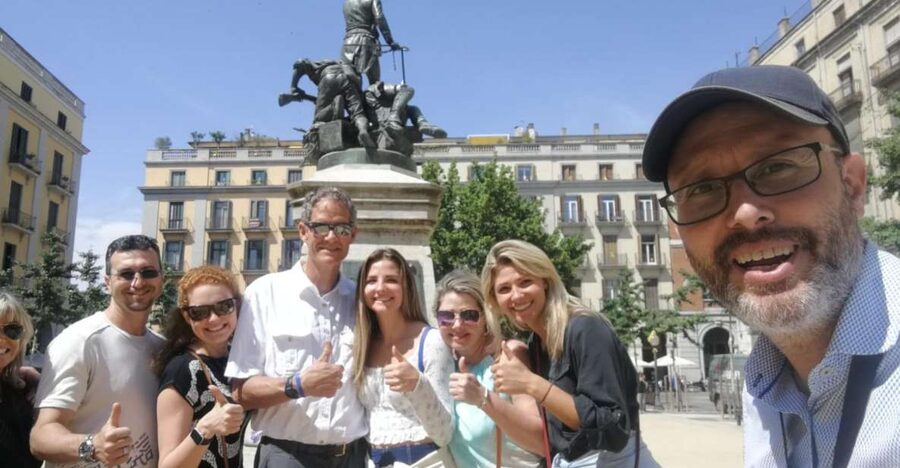
I especially like how the route mixes headline landmarks with street-level atmosphere, from Plaça del Rei and Barcelona Cathedral to La Boqueria with its 300 plus stalls. Guides such as Alba and Omid are praised for turning facts into stories you can actually picture, plus sharing smart food and drink ideas.
Just plan for steady walking. You cannot bring luggage or large bags, so wear comfortable shoes and keep your load light.
In This Review
- Key things to know before you go
- A fast way to understand Barcelona’s old layers, Roman to Gothic
- Plaça de Sant Jaume: from Roman Forum to Catalan power
- The Roman wall and Pati Llimona baths: learning to look at stone
- Gothic Quarter courtyards: Plaça del Rei, Palau Reial, and Columbus context
- Barcelona Cathedral and Santa Maria del Mar: Catalan Gothic with real engineering clues
- El Born and the Palace of Catalan Music pass-by: where the old and new overlap
- La Rambla: flower stalls, entertainers, and the big-street energy
- La Boqueria: how to use a 300-plus stall market without getting overwhelmed
- Finishing near Passeig del Born: a smooth ending point for the rest of your day
- Price and value: what $21 gets you in real walking-time
- Logistics that actually affect your comfort: shoes, bags, and time
- Who should book this tour, and who might want a different style
- Should you book this Barcelona Old Town and Gothic Quarter walk?
- FAQ
- How long is the Barcelona Old Town and Gothic Quarter walking tour?
- Where does the tour start and end?
- What languages are the guides available in?
- How big is the group?
- What should I bring, and what should I avoid?
- Is La Boqueria included, and what will I see there?
- Can I get a refund if I change plans?
Key things to know before you go
- Roman to Gothic timeline in one walk, starting at Plaça de Sant Jaume where a Roman Forum once stood
- A Roman wall stop that’s built to last, plus stories about the baths of Pati Llimona and everyday life
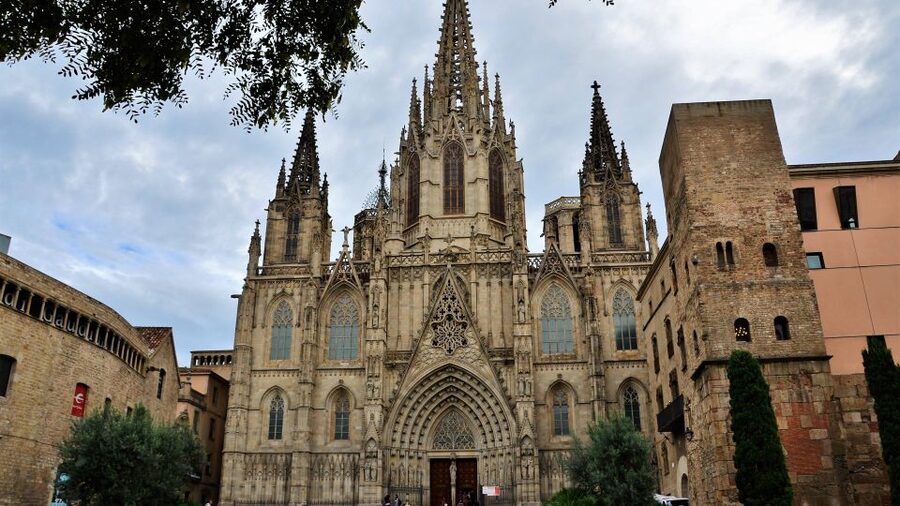
- Gothic Quarter highlights with context, including Plaça del Rei, Palau Reial, and Barcelona Cathedral
- Santa Maria del Mar gets the engineering explanation, including how it was built in a remarkably short time
- La Rambla to La Boqueria is the mood switch, with flower stalls, entertainers, and 300-plus market stalls
A fast way to understand Barcelona’s old layers, Roman to Gothic
Barcelona’s Old Town can feel like you’re walking through snapshots. This tour helps you connect the dots. You’ll move from Roman foundations to medieval centers of power, then into today’s Barcelona street life, all with a live guide who keeps the pace tight.
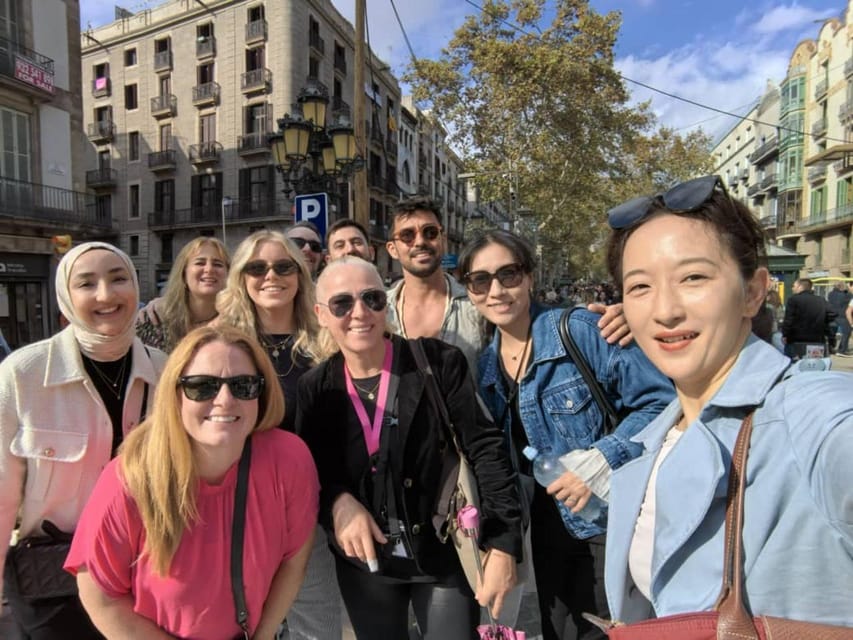
It also helps that this is a small-group format, max 15 people. With that size, you’re not just listening, you’re able to ask questions and get answers without waiting for a microphone moment. The tour also has a strong track record, with a 4.8 rating from 1,393 reviews.
Plaça de Sant Jaume: from Roman Forum to Catalan power
You start at Plaça de Sant Jaume, a square that still feels like the city’s political nerve center. The guide points out that a Roman Forum once stood here, and that this space has remained important for over 2,000 years.
Why this stop matters: if you only look at the buildings, you miss the point. This square is a reminder that power keeps reusing the same geographic anchor. The guide’s framing makes it easier to understand why the later medieval layout and institutions grew around the same area.
More of the same shelf: our Barcelona Gothic Quarter Walks write-ups




The Roman wall and Pati Llimona baths: learning to look at stone
Next comes one of the most satisfying parts of the walk: a stretch of Roman wall described as one of the best-preserved in the world. Even if you’re not a history person, you can feel why guides like to bring people here first, because you’re literally seeing infrastructure that survived.
Then you’ll hear stories tied to the baths of Pati Llimona. These aren’t grand monuments in the abstract. The guide’s angle is everyday life, how people moved, gathered, and dealt with daily routines in Roman Barcelona.
Practical note: wear shoes you trust. The route is built around walking and short viewpoint pauses, not sitting for long.
Gothic Quarter courtyards: Plaça del Rei, Palau Reial, and Columbus context
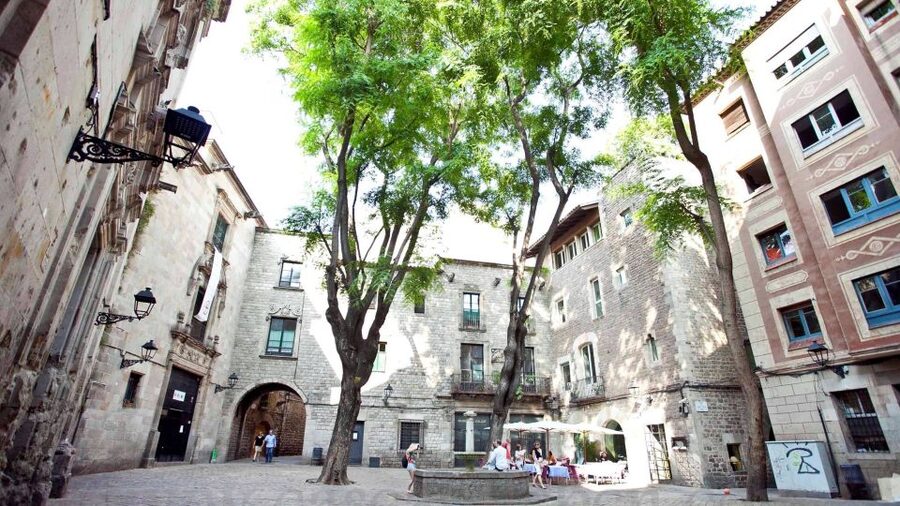
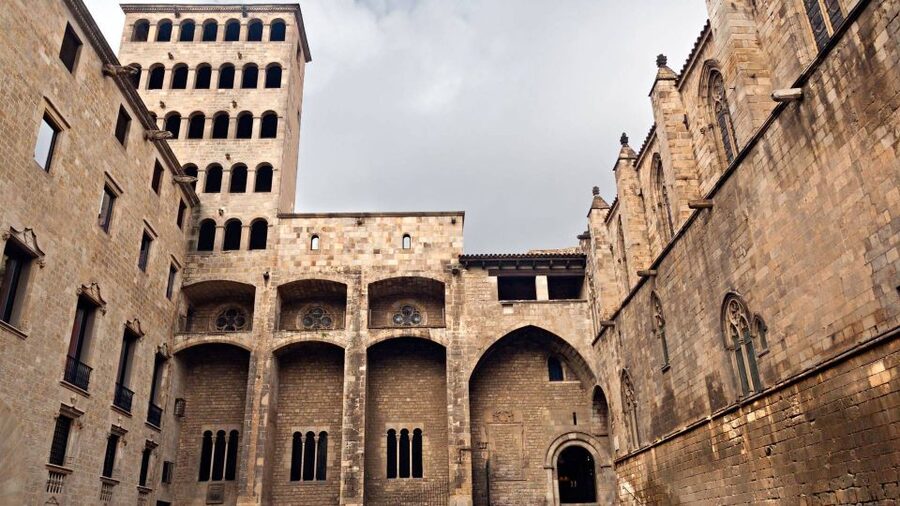
As you work your way deeper into the Gothic Quarter, you’re shown the kinds of spaces where decisions happened. Plaça del Rei is one of those moments, with the Palace of the Viceroy and the Palau Reial (Royal Palace) in view.
This is where the tour’s storytelling clicks. You’ll hear how Christopher Columbus was welcomed by the Catholic Monarchs at the Palau Reial after his journey to the Americas. That one detail helps you see the Middle Ages as global, not just local. The guide connects ceremony and authority, and you start noticing how architecture supported that message.
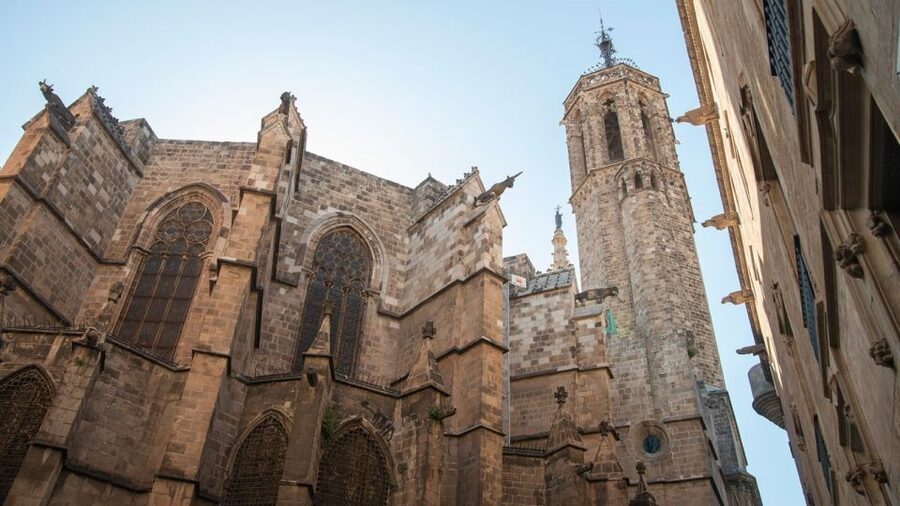
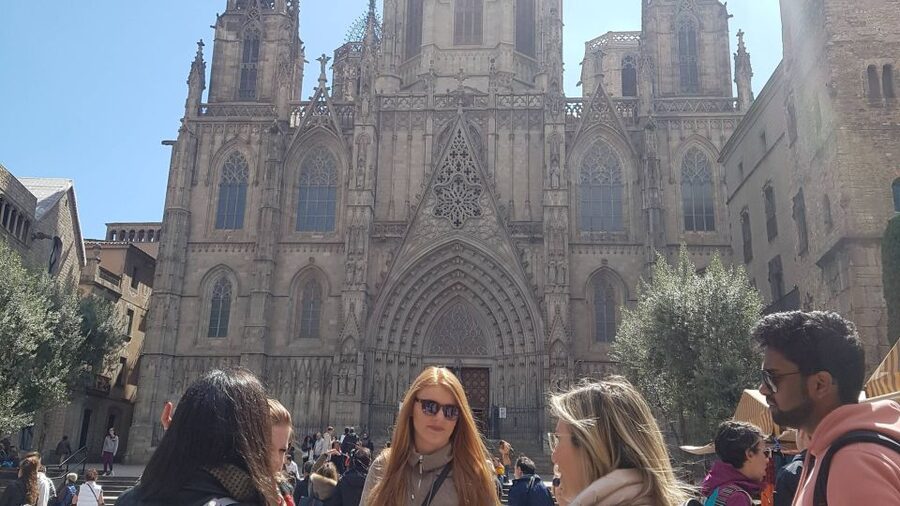
You’ll also pass the Barcelona Cathedral area as you move through the quarter. The point isn’t just to stare at famous facades. The guide helps you read the Gothic style so it makes sense in your head instead of being random decoration.
Barcelona Cathedral and Santa Maria del Mar: Catalan Gothic with real engineering clues
Two major stops anchor the Gothic Quarter portion: Barcelona Cathedral and Santa Maria del Mar, also known as the St. Mary of the Sea Cathedral. You’ll get an explanation of both as standout examples of Catalan Gothic architecture.
Santa Maria del Mar is a special case. The tour highlights that it was built in an incredibly short time, which is a big clue that medieval projects were organized and engineered with serious efficiency. Even if you’re not great at art history, this timing detail gives you something concrete to understand the building process.
How to use this stop: slow down for a minute and notice that Gothic architecture was designed for how people would see and move through it. Let the guide’s talk give you a mental map, so later, when you spot similar features in other churches, you can recognize what you’re seeing.
El Born and the Palace of Catalan Music pass-by: where the old and new overlap
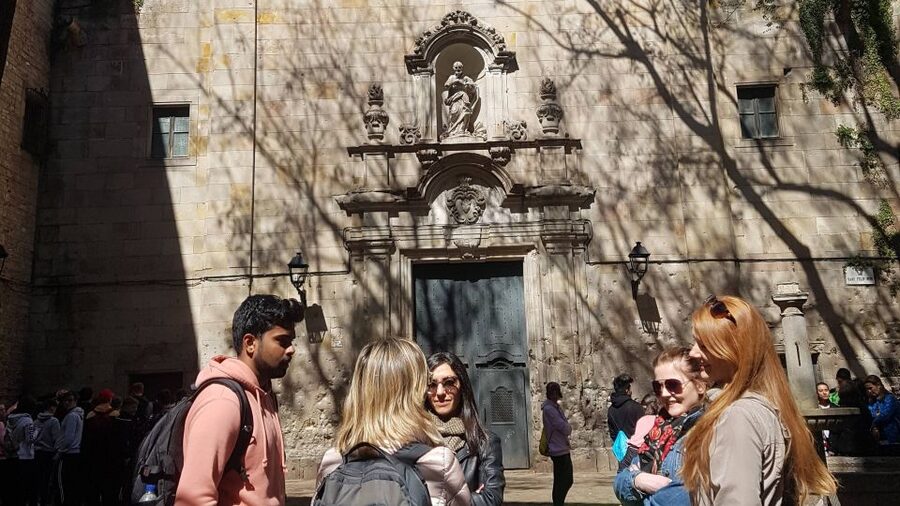
After the cathedral area, the tour leans into atmosphere. You’ll soak up the feel of El Born, with its mix of trendy cafes, boutique shops, and lively streets.
You’ll also pass by the Palace of Catalan Music. You won’t get a full deep inspection like you would on a dedicated music hall tour, but the stop still helps you place El Born as a neighborhood that’s both historic and actively used today.
This part is useful for first-time visitors. It shows you that Barcelona’s old streets aren’t just museum corridors. They’re real places where people work, eat, shop, and meet.
La Rambla: flower stalls, entertainers, and the big-street energy
Then comes a change of pace. La Rambla is one of those streets you can’t ignore in Barcelona, and the guide walks you along it with attention to the scene.
You’ll pass flower stalls, street entertainers, and outdoor eateries. It’s the kind of street where your senses get busy, so having a guide here helps you stay oriented. Instead of getting lost in the noise, you learn what to watch for and how the street fits into the city’s daily rhythms.
Our remaining Jewish Quarters and Old Town Walks notes, in case one suits you better
- Barcelona Helicopter, Sailboat & Old Town Private Walking Tour
- Barcelona: Old Town and Gothic Quarter Walking Tour
- Barcelona Old Town & Gothic Quarter Small Group Tour
- Barcelona e-Bike Tour: Gaudí & Old Town Small Group
- Ramblas, Old Town, Gothic and Gaudi Architecture Walking Tour
- Barcelona Old Town Tapas Tour: Vermouth, Bites & Hidden Gems
- Barcelona: Old Town, Montjuic Castle, Cable Car Small Group Tour
- Barcelona: Jewish Quarter 2-Hour Walking Tour
La Boqueria: how to use a 300-plus stall market without getting overwhelmed
La Rambla leads you into La Boqueria Market, with over 300 stalls offering local products. The tour gives you the context for what you’re looking at, so you’re not just wandering randomly among displays.
This is also where the tour can turn practical. Several guide stories highlight that they’ll point out where to shop and, importantly, where to eat and drink afterward. That’s a real value add because market browsing can be fun, but decision-making is hard when everything is tempting.
How to approach it: keep your expectations flexible. If you want a quick snack, you can look for it. If you want ingredients for later, it’s the kind of market where you can browse slowly. The guide’s job is to help you choose the right way to experience it during your time.
Finishing near Passeig del Born: a smooth ending point for the rest of your day
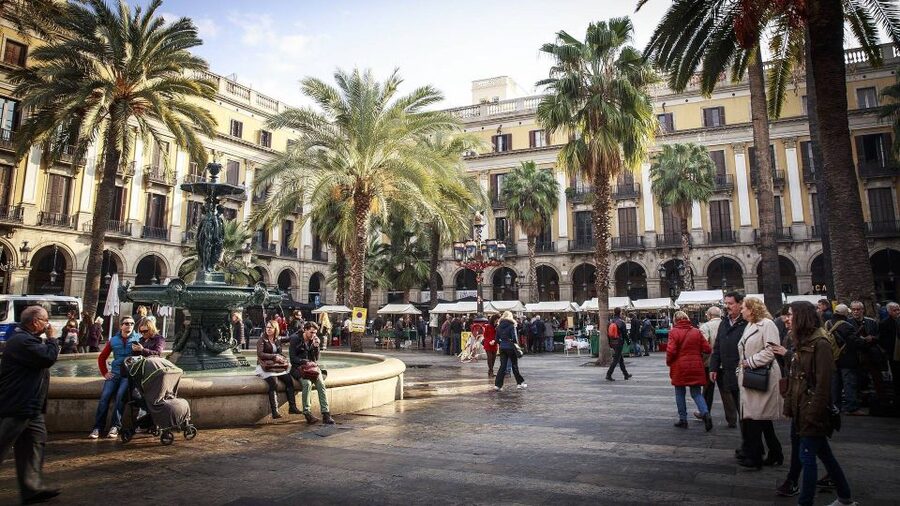
The tour ends at Passeig del Born (08003 Barcelona, España). That’s a smart finish because you’re placed back in an area where you can keep walking, eat dinner nearby, or connect to other plans without feeling stranded.
It also makes the whole route feel coherent. You start in a civic square tied to ancient power, you move through religious and royal spaces, then you land in modern neighborhood life. You get an overview, not just a checklist of stops.
Price and value: what $21 gets you in real walking-time
$21 for a guided 2.5 to 4 hour tour is a bargain if you’re trying to learn something and not just check boxes. The key is the guide component. You’re paying for interpretation, not just movement.
And this is exactly why the small-group size matters. When you have up to 15 people, the guide can pace better and answer more than generic questions. That’s the difference between hearing facts and actually understanding why they connect.
Also, the tour includes an English and Spanish-speaking guide. Reviews you’ll likely have seen for this tour often praise guides for mixing history with humor and practical suggestions. That combination makes the price feel more like a cultural primer than a sightseeing add-on.
Logistics that actually affect your comfort: shoes, bags, and time
Plan for comfortable shoes. This is a walking tour built around getting from place to place and stopping for explanation. If your feet need frequent breaks, you might find the schedule a bit tight.
You also need to travel light. Luggage or large bags are not allowed. If you’re carrying a daypack, keep it manageable so you’re not dragging it through crowded market areas.
Meeting point can vary depending on what you booked. One listed option is Movistar Centre. The safest move is to check your exact confirmation details so you show up at the right place and time.
Duration runs 2.5 to 4 hours depending on the starting time and the flow of the walk. So if you have an afternoon reservation, you’ll want a little buffer.
Who should book this tour, and who might want a different style
You’ll love this tour if you want a guided overview of Barcelona’s oldest streets, especially if this is your first day in the city. The Roman start at Plaça de Sant Jaume, the Roman wall stop, and the Gothic Quarter landmarks give you a layered understanding fast.
It’s also a great fit if you like your history explained in plain human terms, like everyday life in Roman baths or how medieval architecture functioned for power and public space.
If you want a slower museum-style day where you stay inside buildings longer, you might prefer a more focused ticketed tour for one site. This is built for walking and moving through multiple areas.
One more note: children under 2 can join for free, which can make it easier for families.
Should you book this Barcelona Old Town and Gothic Quarter walk?
Yes, if you want your first Barcelona visit to start with real context, this is one of the most efficient ways to do it. The mix of Plaça de Sant Jaume, Roman wall and Pati Llimona stories, Gothic Quarter power spots, and La Rambla into La Boqueria gives you both structure and atmosphere.
Book it with confidence if you value a guide who can connect buildings to stories and also point you toward what to do next. Skip it only if you hate walking, or if you want to spend most of your time in one single attraction rather than comparing several key areas in one half-day.
FAQ
How long is the Barcelona Old Town and Gothic Quarter walking tour?
The tour lasts 2.5 to 4 hours, depending on the starting time and how the day is scheduled.
Where does the tour start and end?
The meeting point may vary depending on the option booked, with Movistar Centre listed as one option. The tour finishes at Passeig del Born, 08003 Barcelona, España.
What languages are the guides available in?
The guide is available in English and Spanish.
How big is the group?
This is a small group tour with a maximum of 15 participants. Private group options are also available.
What should I bring, and what should I avoid?
Bring comfortable shoes. Luggage or large bags are not allowed.
Is La Boqueria included, and what will I see there?
Yes. You’ll pass through and shop at La Boqueria Market, which has over 300 stalls with a variety of local products.
Can I get a refund if I change plans?
The tour offers free cancellation, with a full refund available if you cancel up to 24 hours in advance.
Tours: the rest of our Barcelona write-ups
- Barcelona: Casa Batlló Entry with Self-Audioguide Tour
★ 4.7 · 25,359 reviews - Barcelona: 24 or 48-Hour Hop-On Hop-Off Bus Tour
★ 4.4 · 20,872 reviews - Barcelona: Park Guell Guided Tour with Skip The Line Entry
★ 4.7 · 17,563 reviews - Barcelona: Sagrada Familia Skip-the-Line Entry Ticket & Tour
★ 4.8 · 12,789 reviews - Barcelona: FC Barcelona Museum “Barça Immersive Tour” Ticket
★ 4.4 · 10,944 reviews
Our other Jewish Quarters and Old Town Walks, side by side
- Barcelona in 1 Day: Sagrada Familia, Park Guell,Old Town & Pickup
★ 5.0 · 13,541 reviews - Barcelona: Sagrada Familia, Modernism, and Old Town Tour
★ 4.7 · 1,621 reviews - Barcelona Helicopter, Sailboat & Old Town Private Walking Tour
★ 5.0 · 1,395 reviews - Barcelona Old Town & Gothic Quarter Small Group Tour
★ 5.0 · 1,308 reviews - Barcelona e-Bike Tour: Gaudí & Old Town Small Group
★ 5.0 · 769 reviews
Barcelona Gothic Quarter Walks worth comparing before you book
- Barcelona: Poble Espanyol Entry Ticket
★ 4.1 · 3,137 reviews - Barcelona: Flamenco Show with Drink at La Rambla
★ 4.6 · 2,090 reviews - Barcelona Gothic Quarter Tapas & Taverns Food & Wine Tour
★ 5.0 · 1,470 reviews - Barcelona Old Town & Gothic Quarter Small Group Tour
★ 5.0 · 1,308 reviews - Ramblas, Old Town, Gothic and Gaudi Architecture Walking Tour
★ 5.0 · 723 reviews
Fresh off the desk: recent Barcelona experiences we have written up



Jewish Quarters and Old Town Walks, side by side.
 ★ 5.0Barcelona in 1 Day: Sagrada Familia, Park Guell,Old Town & PickupFrom $12013,541 reviews
 ★ 5.0Toledo Tour from Madrid: Cathedral, Synagogue & St. Tome’s ChurchFrom $816,784 reviews
 ★ 4.7Córdoba: Jewish Quarter, Mosque, and Alcázar TourFrom $504,279 reviews
 ★ 5.0Valencia Old Town Tour with Wine & Tapas in 11th Century Historic MonumentFrom $963,234 reviews
 ★ 4.6Cordoba Mosque & Jewish Quarter Tour with TicketsFrom $401,996 reviews
 ★ 4.5Madrid Old Town & Royal Palace Walking Tour Skip the Line TicketFrom $401,829 reviews
 ★ 4.9Valencia: Old Town Tour, Wine & Tapas in an 11th c. MonumentFrom $941,797 reviews
 ★ 4.7Barcelona: Sagrada Familia, Modernism, and Old Town TourFrom $521,621 reviews
This tour also sits in