
Reviewed · BARCELONA GOTHIC QUARTER WALKS
Barcelona Gothic Quarter’s Deepest Secrets & Sangria
Barcelona does dark history well. This 3-hour small-group walk through the Gothic Quarter trades generic facts for story stops with real atmosphere, from Roman ruins to civil-war squares. You also get a proper payoff at the end: traditional sangria with conversation, right when you are ready to slow down.
I also like the pacing. The tour mixes big names like the area around Barcelona Cathedral with quick looks at places most people miss, and guides such as Juliana, Sabrina, and Valentina are consistently praised for making navigation and history click. One thing to consider: entry into Basilica Santa Maria del Pi and Barcelona Cathedral is listed as not included, so if you want to go inside, you should plan for that.
In This Review
- Key highlights that make this tour worth your time
- Gothic Quarter walking logic: why this feels efficient
- Meeting at Cafe Zurich and the glide into the old city
- Santa Maria del Pi and Barcelona Cathedral, what you should focus on
- The Archivo Historico and Placa Sant Jaume: where power shows up
- Roman walls, the Jewish quarter, and the civil-war squares
- Art-school stops: Picasso, Miró, and Dalí links you can actually remember
- Las Ramblas to Barceloneta: ending with an easy transition to dinner
- Sangria and conversation: why the finish matters
- Price, timing, and how to judge value before you book
- Who this tour fits best
- Should you book Barcelona Gothic Quarter’s Deepest Secrets and Sangria?
- FAQ
- How long is the Barcelona Gothic Quarter Deepest Secrets and Sangria tour?
- What is the price per person?
- How big is the group?
- What does the tour include?
- Where does the tour start and end?
- Is the tour in English?
- Do I need to pay for admission at the cathedral and Santa Maria del Pi?
- Is the ticket mobile and do I get confirmation?
- What is the cancellation policy?
Key highlights that make this tour worth your time
- Small group format (max 15): less waiting, more real Q and A
- Sangria at the end: a relaxed finish after a lot of walking
- Story stops beyond the postcard sites: Roman walls, Jewish quarter, and civil-war squares
- Barcelona art connections: Picasso, Miró, and Dalí links show up along the route
- Useful city-orientation help: you learn where things are and how the streets connect
Gothic Quarter walking logic: why this feels efficient
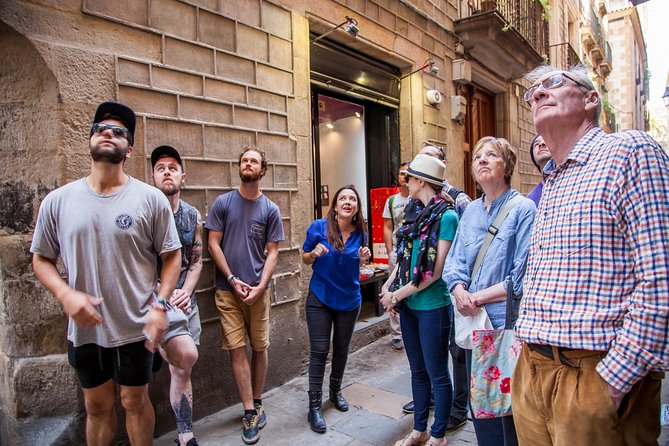
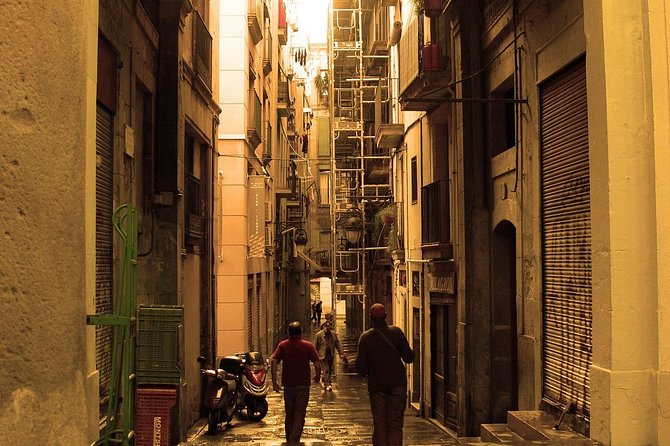
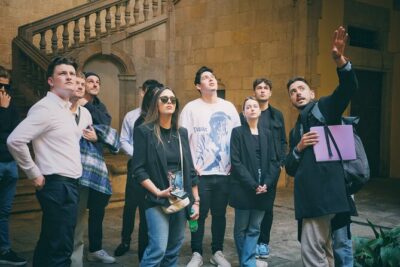
The Gothic Quarter can be a maze, even when you know the names of famous sights. This tour is built for that reality. You start near Plaza de Catalunya, then move into the older street web where directions get tricky fast. With a maximum of 15 people, you are not constantly stopping for stragglers, and you can actually ask follow-up questions without the guide rushing the group.
Another smart thing is the structure: short, timed viewing stops paired with a guided story. Even when you are only standing still for a few minutes, you are not just looking at stone and moving on. You get a reason to notice what is in front of you, whether it is an old wall line, a square tied to Spain’s 1930s conflict, or an art-school connection that explains why Barcelona matters beyond architecture.
If you want to hit the big sights later on your own, this format still works. It gives you context first, so when you return to a cathedral front or a plaza, you know what you are seeing.
Meeting at Cafe Zurich and the glide into the old city
The tour starts at Cafe Zurich, Pl. de Catalunya, 1 (L’Eixample) and ends at Port Vell (Ciutat Vella). That matters because Plaza de Catalunya is a natural hub for transport and taxi drop-offs, and Port Vell is a logical finish if you plan dinner by the waterfront.
You get an intro at Plaza de Catalunya, then the route drops toward the older core. One stop is Las Ramblas, Barcelona’s most emblematic street. You are not there to shop or people-watch for hours. You use it as a transition corridor, so your guide can anchor you to the city’s layout before you start threading through tighter streets.
Then you hit Carrer Petritxol, often described as one of the sweetest lanes in Barcelona. This is the kind of street that looks like it belongs in a film set, and the short stop is exactly right. The guide can point out details while the group stays moving.
Practical tip: wear shoes you can stand in for 2 to 3 hours. This is a walk-first tour, and the best parts are the small corners that require you to actually get close.
More of the same shelf: our Barcelona Gothic Quarter Walks write-ups



Santa Maria del Pi and Barcelona Cathedral, what you should focus on
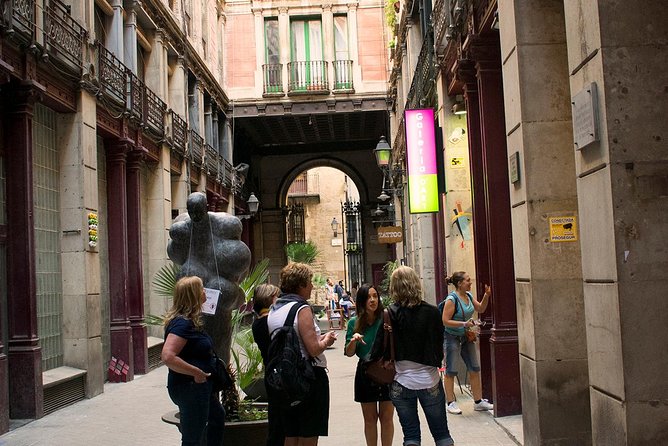
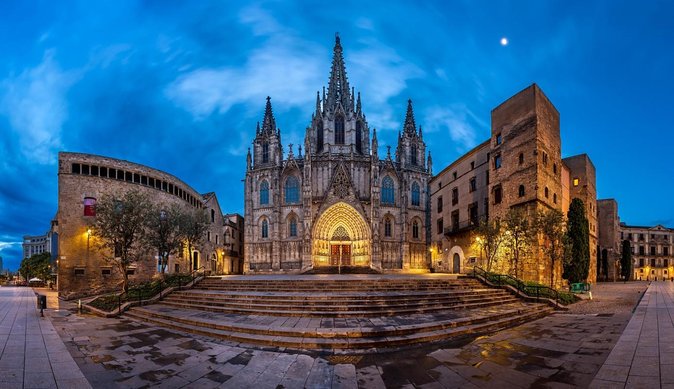
Two of the most important Gothic stops are in the route: Basilica de Santa Maria del Pi and Barcelona Cathedral. The key detail is that admission for both is listed as not included. So think of this as a guided look, not a guaranteed inside visit.
When the group stops outside the basilica, the value is in what your guide connects to the building. You learn what to look for, and you also learn what stories cling to a church in a city that has layered centuries on top of each other. In one set of feedback, a guide even highlighted a quirky detail people notice in the basilica area, like the story around the number of geese associated with the church. That kind of fact is exactly why a guided pause beats a selfie-and-go approach.
At Barcelona Cathedral, the same idea applies. You are likely to see the main exterior, absorb the Gothic scale, and get the historical framing. If you decide to go inside later, you will already understand why the place feels so tied to the city’s identity.
If you are the type who loves architecture, you will enjoy the way the tour sets you up for return visits. If you only want one cathedral stop, plan time after the walk to either go in or move on, since the tour itself keeps these stops short.
The Archivo Historico and Placa Sant Jaume: where power shows up
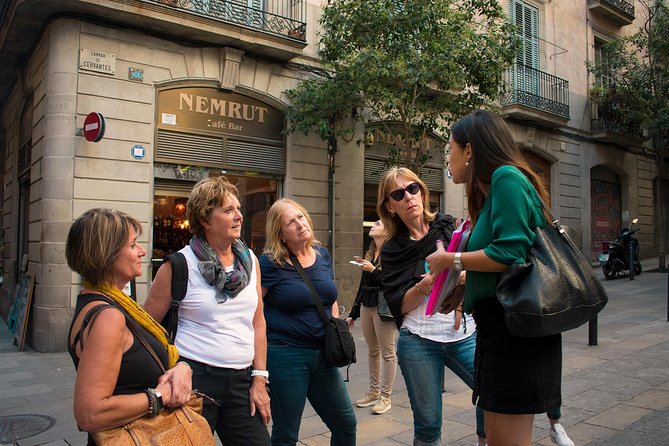
From the cathedral area, the tour continues into civic territory. Two stops worth your attention are:
- Archivo Historico de la Ciudad de Barcelona, connected with the Archive of the Crown of Aragón
- Placa Sant Jaume, the government square
Even if you do not enter any buildings, these pauses change how you see the Gothic Quarter. It is easy to treat the area as a medieval postcard. Your guide frames it as a place where institutions lived, decisions got made, and Barcelona’s identity kept shifting.
Placa Sant Jaume is especially useful because it is one of those spaces where the city’s political story is easy to feel. You stand in a square and the guide gives you the why behind it. Then, when you see other parts of the city later, you start noticing the same pattern: power, religion, and public life all carved into the same streets.
This is one of the reasons the tour works well early in your trip. You stop viewing sights as isolated things. You start seeing how Barcelona is organized.
Roman walls, the Jewish quarter, and the civil-war squares
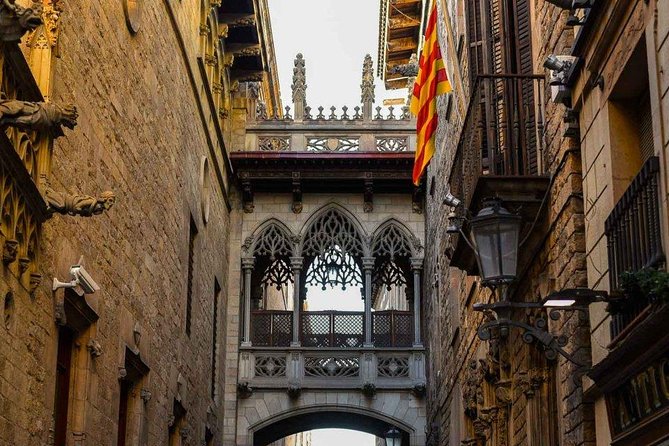
This tour leans into the darker, harder-to-find side of Barcelona, and it does it with specific locations.
Along the way, you encounter references to:
- Roman walls and ancient Roman ruins
- the Jewish quarter and a synagogue
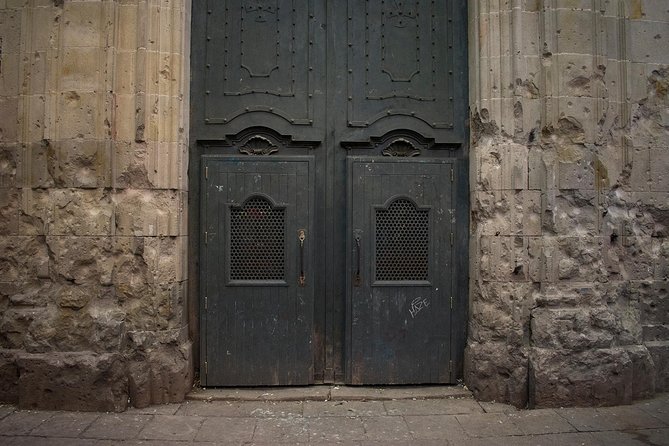
- Placa Sant Felip Neri, tied to the Spanish civil war
- George Orwell Square (Plaza Tripi), also connected to the Spanish civil war
These stops turn the Gothic Quarter into more than medieval scenery. Roman leftovers explain why Barcelona’s oldest streets feel permanent. The Jewish-quarter story adds another layer, one that many first-time walks skip because it requires extra framing.
Then the civil-war squares bring the story into the 20th century. Even if you only know Orwell by reputation, the connection is part of what makes Barcelona feel like a living classroom. It is not just old buildings. It is old beliefs, old conflicts, and how people survived them.
You do not need to know Spanish history beforehand. Your guide is the bridge. If you tend to zone out on facts, focus instead on atmosphere cues: how a square feels, how narrow an alley compresses space, and how monuments and memorial-type details pull your attention back to the human side of history.
Art-school stops: Picasso, Miró, and Dalí links you can actually remember
One of the best parts of this tour is that it does not stop at Gothic stone. It also connects Barcelona to modern art.
You will see stops linked to art education, including:
- an art school where Picasso, Miró, and Dalí studied (described in the route)
- Miro’s place of birth
- Royal Artistic Circle of Barcelona, described as Gaudí’s first work of art
The practical value here is that it gives you a mental anchor for later museum visits. If you go from this walk to a Picasso-related stop afterward, you will already understand why Barcelona shaped his life and why the city feels like an artist’s workshop.
It also helps if you like cross-links. The guide can connect buildings and institutions to people, so you do not end up with a list of names. You get a sense of why those names belong here.
Las Ramblas to Barceloneta: ending with an easy transition to dinner
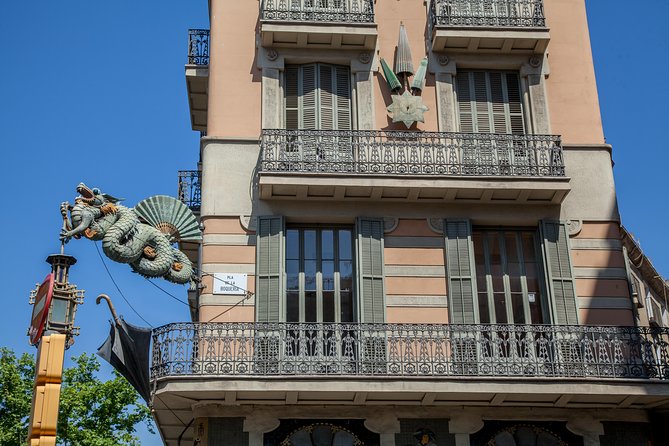
The latter portion of the walk brings you toward Barceloneta, and the tour ends near Port Vell. The route includes Barceloneta and the Port as part of the experience, and you get a short stop near the waterfront area.
This ending is smart. It gives you choices. If you want seafood, you are in position. If you want tapas and a slower pace, you are already close to where that is easier to find.
There is also Pailebot Santa Eulalia on the route. The tour description frames it with a patron-saint story, so even if you are not focused on maritime history, you get a human thread. These kinds of small stops make the walk feel less like a checklist and more like an afternoon story you can carry into dinner.
- Barcelona: Sagrada Familia Entry Ticket with Audio Guide
- Barcelona: Park Güell Admission Ticket
- Barcelona: 24 or 48-Hour Hop-On Hop-Off Bus Tour
- Barcelona: Park Guell Guided Tour with Skip The Line Entry
- Barcelona in 1 Day: Sagrada Familia, Park Guell,Old Town & Pickup
- Barcelona Aquarium: Entry Ticket
- Barcelona: Sagrada Familia Skip-the-Line Entry Ticket & Tour
- Barcelona: FC Barcelona Museum “Barça Immersive Tour” Ticket
Sangria and conversation: why the finish matters
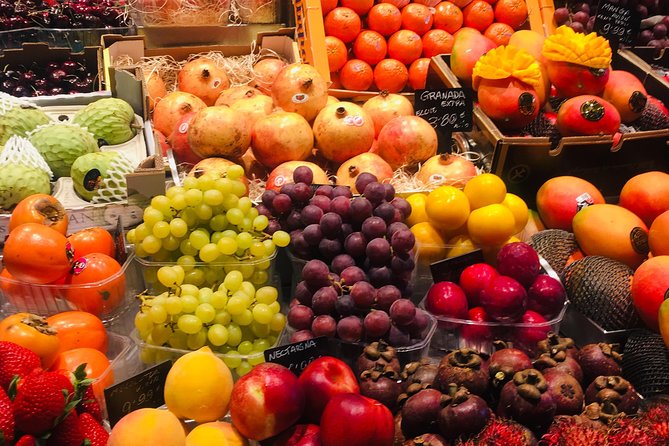
The tour ends with traditional sangria. That is not just a nice perk. It is a reset point after a lot of walking and standing around in old streets.
I like that you are not rushed out the moment you see the last main sight. You get a social buffer. It helps you absorb what you learned while your feet finally agree to stop.
Also, sangria makes sense in this setting. The Gothic Quarter is dramatic and compressed. A shared drink shifts the mood from museum mode to city mode.
One bonus detail from guide feedback: some guides have added extras like chocolate tasting or pointing you toward an area eatery you might not find alone. Those extras are not guaranteed from the provided facts, but they are consistent with the overall style people describe: a guide who wants you to taste and understand the place, not just photograph it.
Price, timing, and how to judge value before you book
At $65.33 per person for about 3 hours, this is positioned as a focused, guided neighborhood experience. The value depends on what you want.
If you want to learn the why behind the Gothic Quarter, this price starts to make sense. You are paying for:
- a professional guide
- a small group format
- sangria included
- a route that hits many distinct story locations without the usual chaos of big group tours
If you are mainly chasing photo ops and you already know you will skip most explanations, you might feel the price is high. But the tour is designed for people who like context.
Timing: the tour is offered in English and confirmation is received at booking. The average booking window is about 52 days in advance, which tells me it is popular, especially during peak travel months. If you are traveling in a busy season, it is worth booking earlier rather than hoping a last-minute slot appears.
Who this tour fits best
This is a strong match if you:
- want a first-day orientation to Barcelona’s old streets
- enjoy history that spans eras, not just one century
- like story-led walking with clear stop points
- want a social finish without planning your own sangria stop
It is also a good choice if you have limited time and still want to feel like you saw more than the obvious highlights.
If you hate walking or want a long museum-style visit, the short, timed stops may feel fast. But for most people who can handle a couple hours on foot, the format is a good trade-off.
Should you book Barcelona Gothic Quarter’s Deepest Secrets and Sangria?
Yes, with a smart expectation: treat it as a guided story walk, not a full inside-access cathedral day.
Book it if you want:
- small group energy
- sangria included as a proper ending
- history that touches Roman remnants, Jewish quarter references, and Spain’s civil-war memory points
- art-school connections tied to Picasso, Miró, and Dalí
Skip or pair it with other plans if you:
- only care about going inside major churches, since entry for Santa Maria del Pi and Barcelona Cathedral is listed as not included
- dislike walking or prefer a quieter pace
If you are unsure, here is an easy decision rule: if you enjoy guided storytelling and you like the idea of starting in Plaza de Catalunya and ending near Port Vell, this tour is likely a good fit.
FAQ
How long is the Barcelona Gothic Quarter Deepest Secrets and Sangria tour?
The tour runs for approximately 3 hours.
What is the price per person?
The price is listed as $65.33 per person.
How big is the group?
This is a small group tour with a maximum of 15 travelers.
What does the tour include?
It includes a professional guide, sangria, and the small group tour experience.
Where does the tour start and end?
It starts at Cafe Zurich, Pl. de Catalunya, 1, L’Eixample, 08002 Barcelona, Spain. It ends at Port Vell, Ciutat Vella, 08039 Barcelona, Spain.
Is the tour in English?
Yes, it is offered in English.
Do I need to pay for admission at the cathedral and Santa Maria del Pi?
Admission for Basilica de Santa Maria del Pi and Barcelona Cathedral is listed as not included.
Is the ticket mobile and do I get confirmation?
You receive a mobile ticket, and you should receive confirmation at the time of booking.
What is the cancellation policy?
Free cancellation is available up to 24 hours before the experience’s start time for a full refund.
Barcelona Gothic Quarter Walks worth comparing before you book
- Barcelona: Poble Espanyol Entry Ticket
★ 4.1 · 3,137 reviews - Barcelona: Flamenco Show with Drink at La Rambla
★ 4.6 · 2,090 reviews - Barcelona Gothic Quarter Tapas & Taverns Food & Wine Tour
★ 5.0 · 1,470 reviews - Barcelona: Old Town and Gothic Quarter Walking Tour
★ 4.8 · 1,393 reviews - Barcelona Old Town & Gothic Quarter Small Group Tour
★ 5.0 · 1,308 reviews
Fresh off the desk: recent Barcelona experiences we have written up



Barcelona Gothic Quarter Walks, side by side.
 ★ 4.1Barcelona: Poble Espanyol Entry TicketFrom $153,137 reviews
 ★ 4.6Barcelona: Flamenco Show with Drink at La RamblaFrom $312,090 reviews
 ★ 5.0Barcelona Gothic Quarter Tapas & Taverns Food & Wine TourFrom $1311,470 reviews
 ★ 4.7Barcelona: Gothic Quarter Ghosts and Legends Walking TourFrom $191,443 reviews
 ★ 4.8Barcelona: Old Town and Gothic Quarter Walking TourFrom $211,393 reviews
 ★ 5.0Barcelona Old Town & Gothic Quarter Small Group TourFrom $221,308 reviews
 ★ 5.0Ramblas, Old Town, Gothic and Gaudi Architecture Walking TourFrom $35723 reviews
 ★ 4.8Barcelona: El Born and Gothic Quarter Wine & Tapas Bar TourFrom $81674 reviews
This tour also sits in