
Reviewed · WALKING TOURS
Barcelona 2-Hour Gothic Walking Tour
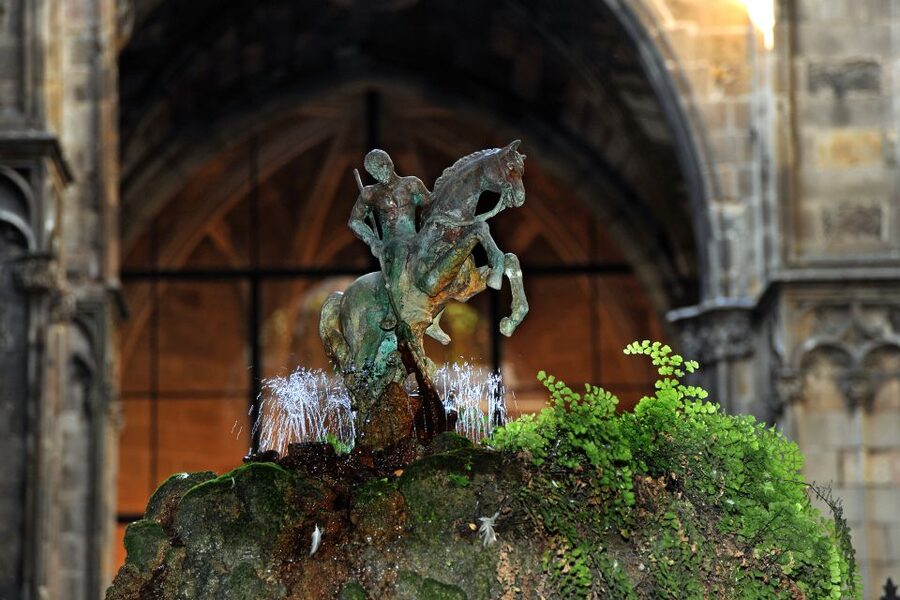
Gothic streets feel like open-air museums. I love how this 2-hour guided walk links what you see to what came before, especially at the Barcelona Cathedral cloister and Saló del Tinell. I also like that the English tour can end with free entry to Museu Frederic Marès, so you get a museum finish without extra planning.
You’re guided through the tight medieval streets and atmospheric squares, with key stops like Plaça del Rei and Carrer del Bisbe. You also get context for the Roman Barcelona layer, since the route includes the Roman Temple of Augustus tucked into a medieval courtyard setting.
The only real drawback is simple: it’s 2 hours of walking on uneven old-stone streets, so wear comfy shoes and bring water if your day runs warm or muggy.
In This Review
- Key highlights to look for
- Why a 2-Hour Gothic Walk Works in Barcelona
- Finding the Tour Start at Plaça Seu (the i Symbol)
- Saló del Tinell and Roman Barcino in the Same Walking Loop
- Barcelona Cathedral Cloister: More Than Just the Facade
- Santa Àgata Chapel, Plaça del Rei, and the Stories Behind Stone
- Plaça Sant Felip Neri: A Small Square With a Big Memory
- Museu d’Historia de Barcelona Stop: What It Adds to the Street Walk
- English Tour Finale: Free Museu Frederic Marès and Time to Wander
- Is $32 Good Value for This Guided Quarter Loop?
- Who This Tour Fits Best (and What to Bring)
- Should You Book This Barcelona 2-Hour Gothic Walking Tour?
- FAQ
- Where does the tour start?
- How long is the Barcelona 2-Hour Gothic Walking Tour?
- What is the price?
- What’s included with the tour?
- Does the tour visit the Barcelona Cathedral?
- Is Museu Frederic Marès included?
- What language is the tour offered in?
- How does cancellation work?
- Can I reserve without paying right away?
Key highlights to look for
- Cathedral cloister visit gives you a calmer, more meaningful look than just passing by
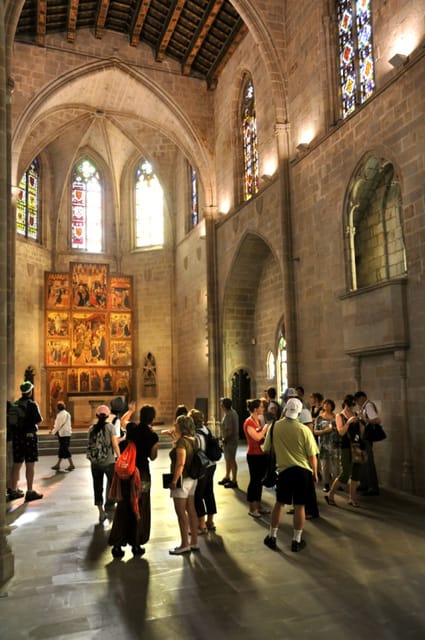
- Saló del Tinell helps you connect Gothic grandeur to Catalan royal power
- Roman Temple of Augustus shows how Barcino’s roots fit inside medieval Barcelona
- Santa Àgata plus Plaça del Rei turns facades and stonework into believable stories
- Plaça Sant Felip Neri is a moving pause point with visible marks from the Spanish Civil War
- English tour includes Museu Frederic Marès free time right after the walk
Why a 2-Hour Gothic Walk Works in Barcelona
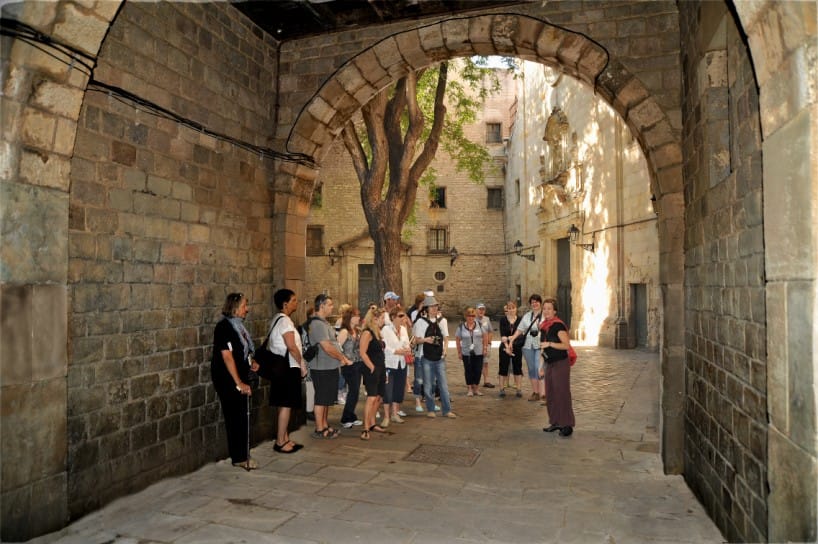
Barcelona’s Gothic Quarter is one of those places where you can wander for hours and still feel like you only grazed the surface. This tour helps you read the neighborhood instead of just looking at it. In two hours, you move through the most important layers of the area, from Roman Barcelona to medieval Gothic, with stops that show how each era reused space, power, and artistry.
At $32 per person for a guided, local-led circuit, the value comes from what you gain quickly: perspective. Instead of guessing which building is important and why, you get a sequence. That sequence makes the streets feel less random and more like a designed story you can follow on your next walk.
One more thing I appreciate: the pacing is built for seeing a lot in a short window. The quarter is compact, so you can get your bearings fast, then keep exploring afterward on your own with a clearer mental map.
Finding the Tour Start at Plaça Seu (the i Symbol)
The tour meeting point is at the tourist information office near Plaça Seu, 2. Look for the little i symbol. If you’ve never done this before, don’t overthink it. The i mark is meant to be quick to spot, and arriving a few minutes early keeps you from having to rush through narrow streets.
The tour also lists drop-off at Plaça Seu, 2, so you’re not sent across town at the end. That matters if you have dinner plans or you want to pop back toward Placa de Catalunya or the El Born area afterward.
If you’re the type who likes to arrive ready, I’d do two things before you start:
- Have a quick glance at your phone map so you know where Plaça Sant Felip Neri and the Cathedral sit relative to each other.
- Bring water, because you’re out on foot for the full 2 hours.
Other 2-Hour Experiences we sat down and reviewed across Barcelona






Saló del Tinell and Roman Barcino in the Same Walking Loop
One of my favorite parts of this tour concept is that it doesn’t treat Barcelona’s past like separate chapters. It shows how eras overlap in the same block.
You pass by Saló del Tinell, which is tied to royal Catalan history and helps explain why this neighborhood became such a center of power. Even if you’ve seen plenty of Gothic buildings before, this stop clarifies the difference between decorative stonework and stonework that signals authority.
Then you get the Roman link through the Roman Temple of Augustus, a relic of Barcino. The key here is not just that it exists, but that it’s tucked away in a medieval courtyard setting. That contrast makes the quarter make sense. You stop feeling like you’re seeing a museum-like street scene, and you start understanding how layers of the city literally sit on top of each other.
The practical payoff: once you’ve seen these overlaps explained, you’ll start noticing them everywhere you go in the area, even after the tour ends.
Barcelona Cathedral Cloister: More Than Just the Facade
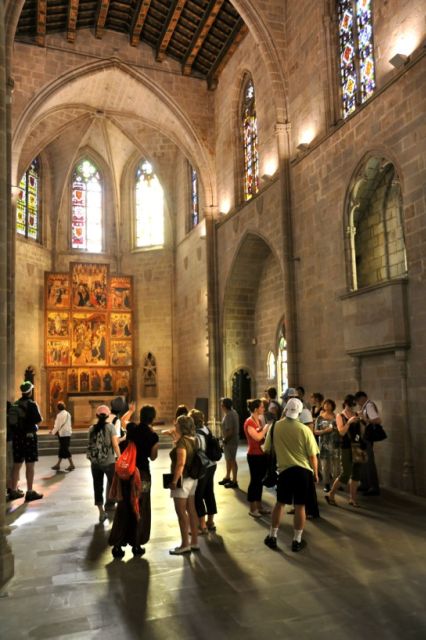
The Barcelona Cathedral is the obvious headline, but the tour’s smarter because it goes further than a quick photo stop. You get a closer guided look that includes the cloister, which is where the mood changes. The cloister spaces often feel quieter and more contained than the streets, so you can appreciate details without competing with traffic and crowds.
This part of the experience is also where the guide’s storytelling pays off. Cathedral architecture can look like a blur of stone and angles if you don’t know what to focus on. With a guide in your ear, you can start spotting the elements that shape the Gothic feel, not just admiring the height.
A small practical note: even in a short tour, cathedral visits can mean small pauses where you’ll need to stay close to the group and listen. If you’re traveling with kids or you’re sensitive to group flow, this is still manageable, just keep your expectations realistic.
Santa Àgata Chapel, Plaça del Rei, and the Stories Behind Stone
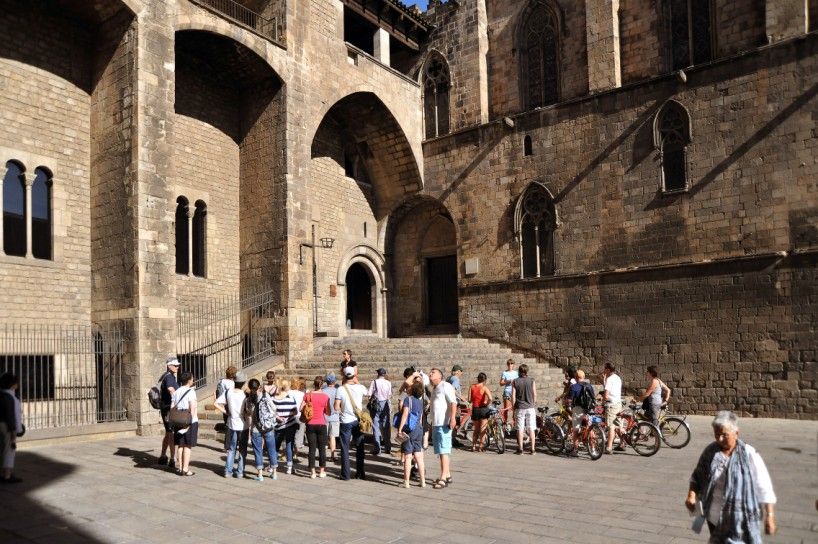
After the Cathedral area, the route moves into places that feel intimate and dramatic at the same time. One stop you should look forward to is the Chapel of Santa Àgata. Capella de Santa Àgata is famous for its haunting atmosphere, and the guided context helps you understand why that “quiet intensity” isn’t random. It’s part of the architectural and cultural language of the quarter.
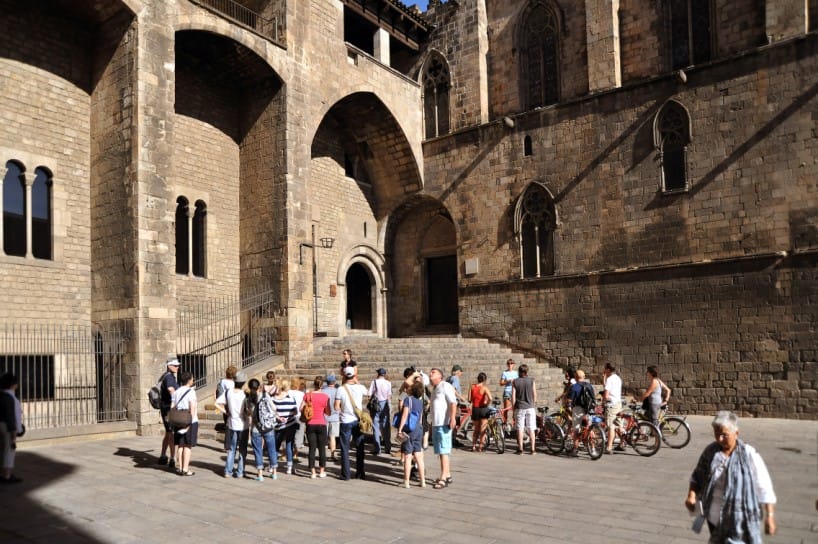
Then the tour weaves through squares that are easy to walk past if you’re not paying attention. Plaça del Rei is one of the most atmospheric spots in the area, and the guidance helps you see why it matters. You’re not just standing in a pretty open space. You’re in a square tied to political and royal setting, and that context changes your entire impression of the space.
You’ll also spend time around Carrer del Bisbe, where the facades and balconies give you that classic Gothic Quarter look. If you like picture-taking, this route gives you several chances without making you feel like you’re stuck doing a photo assembly line.
Plaça Sant Felip Neri: A Small Square With a Big Memory
This is the stop that feels like a pause button. Plaça Sant Felip Neri is described as tranquil today, but it carries visible marks from the Spanish Civil War era. That contrast matters. You see a baroque church presence, you sit in a calmer pocket of the quarter, and you’re reminded that history isn’t only medieval. It has recent chapters too.
The tour’s value here is emotional clarity. Stone and walls can look like decoration until someone explains what you’re looking at. With the guidance, the square becomes a place with meaning, not just a break in the walking.
If you want an “I’m glad I did the tour” moment, this is often it. It’s also a great reminder that you don’t always need another major monument to feel the weight of place.
Museu d’Historia de Barcelona Stop: What It Adds to the Street Walk
Your itinerary includes a stop at Museu d’Historia de Barcelona. Even if you don’t turn it into a full museum afternoon, this kind of break helps connect the dots you’ve been hearing while walking.
This is where I think the tour works best for first-time visitors. Street-level sights can be hard to remember later, because everything blends together. A museum stop gives your brain a reference point. It’s like bookmarking a story so you can keep it straight when you wander afterward.
One practical consideration: museums add indoor time and slower pace. If you’re traveling with someone who gets restless during indoor visits, plan for it and keep a positive attitude. This stop is short enough to stay on schedule, but it still changes the tempo.
Our remaining Walking Tours notes from Barcelona, in case one suits you better
- Barcelona Tapas and Wine Experience Small-Group Walking Tour
- Barcelona: Tapas Walking Tour with Food, Wine, and History
- Barcelona Tapas Walking Tour: Food, Wine & History
- Barcelona: Tapas Food Crawl Walking Tour with Tastings
- Barcelona Helicopter, Sailboat & Old Town Private Walking Tour
- Barcelona: Old Town and Gothic Quarter Walking Tour
- Barcelona: Helicopter Flight, Boat Ride, and Walking Tour
- Barcelona: City Walking Tour with Local Guide
English Tour Finale: Free Museu Frederic Marès and Time to Wander
If you’re on the English tour, there’s a bonus that I genuinely think is smart. After the walking portion, you get free admission to Museu Frederic Marès, and you have time to explore.
What you should expect: the museum is housed in a medieval palace, and that alone makes it feel like part of the story, not a separate side trip. The collection focuses on sculptures, antique curiosities, and personal artifacts collected by Frederic Marès. You’ll see everything from medieval religious art to everyday objects from later periods.
I like this ending because it matches the Gothic Quarter theme without repeating it. Outdoors, you’re learning how the city was built and rebuilt. Indoors, you’re learning how objects, faith, power, and daily life show up through curated collections.
If you care about value, this matters: you’re getting a museum visit included, which can save both time and ticket costs compared to adding it later on your own.
Is $32 Good Value for This Guided Quarter Loop?
Let’s talk money in a way that helps you decide fast.
At $32 per person for 2 hours, you’re paying for two things:
- A guided sequence through key sites that most people would not connect on their own.
- Time efficiency, since the Gothic Quarter is packed and easy to get turned around in.
This tour earns that price when you want more than photos. The recurring strength in the experience is that the guide points out details you’d likely miss while walking solo. That includes architecture cues, how squares relate to power, and why Roman remnants sit where they do.
Does it make sense if you already love architectural history and you can read buildings well on your own? You might find it less necessary. But for most people, $32 is a reasonable way to get clarity quickly, especially if it’s your first day and you want to orient yourself.
Who This Tour Fits Best (and What to Bring)
This tour fits best if you want to:
- Get your bearings in Barcelona fast
- Understand what you’re seeing in the Gothic Quarter
- See standout sites like the Cathedral cloister, Saló del Tinell, and Santa Àgata without guessing
- Add a museum moment through Museu Frederic Marès (if you book the English tour)
You might not love it as much if you hate walking, or if you want a purely flexible, wander at your own pace day. The route is concentrated, but you are moving with the group for the full 2 hours.
What I’d bring:
- Comfortable walking shoes for old stone surfaces
- A small water bottle, especially in warm weather
- A charged phone for maps and quick note-taking
- Patience for narrow lanes and brief pauses at each stop
If you like asking questions, bring curiosity. This kind of tour tends to work best when you engage instead of tuning out.
Should You Book This Barcelona 2-Hour Gothic Walking Tour?
I’d book it if you want a first-rate shortcut to understanding the Gothic Quarter. The mix of Roman Barcelona context, Cathedral cloister time, and story-led stops around Plaça del Rei and Plaça Sant Felip Neri gives you a mental framework that makes the rest of your day better. And if you’re booking the English tour, the included Museu Frederic Marès finish is a practical bonus.
Skip it only if you already know the area deeply, or if you prefer long, self-paced wandering over a guided sequence.
If you’re doing Barcelona for the first time, this is one of the easiest “do it early” choices you can make.
FAQ
Where does the tour start?
The meeting point is at the tourist information office near Plaça Seu, 2. Look for the i symbol.
How long is the Barcelona 2-Hour Gothic Walking Tour?
The tour lasts about 2 hours.
What is the price?
The price is $32 per person.
What’s included with the tour?
You’ll have an official local tour guide for the walking portion. If you book the English tour, it includes free admission to Museu Frederic Marès after the walking tour.
Does the tour visit the Barcelona Cathedral?
Yes, the tour includes a guided visit that includes the Cathedral and the cloister.
Is Museu Frederic Marès included?
It is included for the English tour, after the walking tour, with free admission and time to visit.
What language is the tour offered in?
The tour is available in English.
How does cancellation work?
You can cancel up to 24 hours in advance for a full refund.
Can I reserve without paying right away?
Yes, the tour offers reserve now and pay later.
Our other Walking Tours across Barcelona
- Barcelona Tapas and Wine Experience Small-Group Walking Tour
★ 5.0 · 5,804 reviews - Barcelona: Tapas Walking Tour with Food, Wine, and History
★ 4.8 · 4,261 reviews - Barcelona Tapas Walking Tour: Food, Wine & History
★ 4.5 · 1,928 reviews - Barcelona: Tapas Food Crawl Walking Tour with Tastings
★ 4.9 · 1,798 reviews - Barcelona Helicopter, Sailboat & Old Town Private Walking Tour
★ 5.0 · 1,395 reviews
More 2-Hour Experiences from the Barcelona notebook
- Barcelona: Two-Hour Midday or Sunset Sailing Cruise
★ 4.8 · 1,732 reviews - Barcelona: 2-Hour City Sights Guided Segway Tour
★ 4.9 · 453 reviews - Barcelona: 2-Hour Sailboat Tour with Snacks and Drinks
★ 4.8 · 357 reviews - Barcelona: Jewish Quarter 2-Hour Walking Tour
★ 4.8 · 333 reviews - 2-Hour Sailing Tour in Barcelona with Open Bar & Snacks
★ 5.0 · 318 reviews
Tours: the rest of our Barcelona write-ups
- Barcelona: Casa Batlló Entry with Self-Audioguide Tour
★ 4.7 · 25,359 reviews - Barcelona: 24 or 48-Hour Hop-On Hop-Off Bus Tour
★ 4.4 · 20,872 reviews - Barcelona: Park Guell Guided Tour with Skip The Line Entry
★ 4.7 · 17,563 reviews - Barcelona: Sagrada Familia Skip-the-Line Entry Ticket & Tour
★ 4.8 · 12,789 reviews - Barcelona: FC Barcelona Museum “Barça Immersive Tour” Ticket
★ 4.4 · 10,944 reviews
Fresh off the desk: recent Barcelona experiences we have written up




Walking Tours, side by side.
 ★ 5.0Barcelona Tapas and Wine Experience Small-Group Walking TourFrom $835,804 reviews
 ★ 4.8Barcelona: Tapas Walking Tour with Food, Wine, and HistoryFrom $784,261 reviews
 ★ 4.9Granada: Albaicín and Sacromonte Guided Sunset Walking TourFrom $172,962 reviews
 ★ 5.0Toledo Tour & Vineyard Walk with Wine Tasting from MadridFrom $1332,546 reviews
 ★ 5.0Madrid Walking Tour from Puerta del Sol to Retiro ParkFrom $32,285 reviews
 ★ 4.5Barcelona Tapas Walking Tour: Food, Wine & HistoryFrom $661,928 reviews
 ★ 4.5Madrid Old Town & Royal Palace Walking Tour Skip the Line TicketFrom $401,829 reviews
 ★ 4.9Barcelona: Tapas Food Crawl Walking Tour with TastingsFrom $821,798 reviews
This tour also sits in