
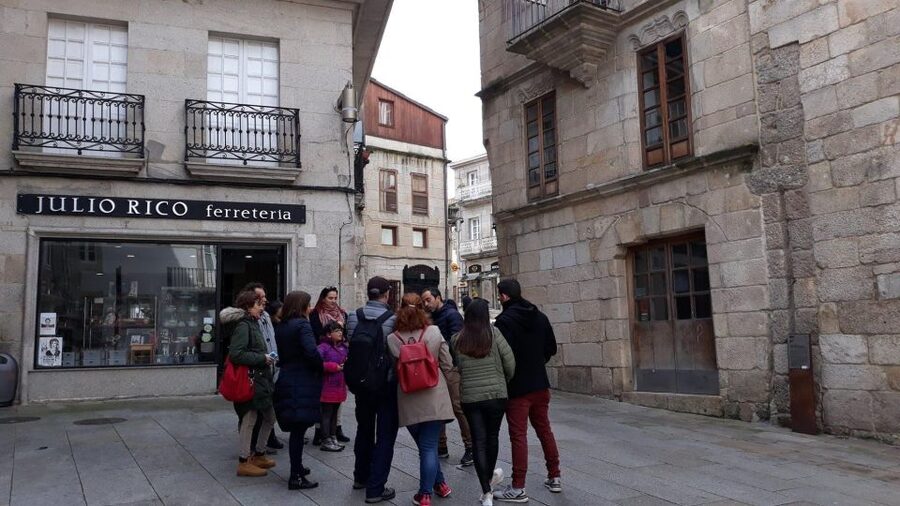
Reviewed · SANTIAGO DE COMPOSTELA AND GALICIA
Vigo: Walking Tour with local History & Culture
Vigo hits you fast, then surprises you. This 2 hour walking tour threads through Vigo’s old town and down toward the harbor so you get the city’s big symbols and the stories behind them, including the legends around the Treasure of Rande. I especially liked how the route keeps returning to views of the Ría de Vigo, so history and geography feel linked, not like two separate lessons.
Two other things I really liked: you get real local plans for the rest of your trip, and the guide storytelling tends to be funny and personal. Guides such as Jose Manuel and Jorge show up again and again in people’s write ups, and their energy comes through in how they pace stops and answer questions.
One consideration: the walk includes streets that can feel hilly and a bit rocky in places, and if the group is large, it can get hard to hear at the back. Also, on some days the tour may run a bit longer than the time advertised.
In This Review
- Quick hits
- Where the walk starts: Porta do Sol and El Sireno
- Vigo’s old town: quick steps, big context
- Garcia Barbon Theatre and the main squares: history you can point to
- Castelo de San Sebastián: views plus a reason to climb
- The Treasure of Rande and the maritime legends
- Port of Vigo: the nautical area story
- Food and local recommendations: what you do after the walk
- Meet the guide: humor, clarity, and real city love
- Price and what you truly get in 2 hours
- Getting the best experience: hearing, pace, and weather
- Who should book this Vigo walking tour
- Should you book this Vigo walking tour?
- FAQ
- Where is the meeting point for the tour?
- How long does the walking tour last?
- Is the tour tip-based?
- What languages are offered?
- Is the tour wheelchair accessible?
- Are entrance fees included?
- What does the tour include?
- What do we see on the route?
- Is there cancellation available?
Quick hits
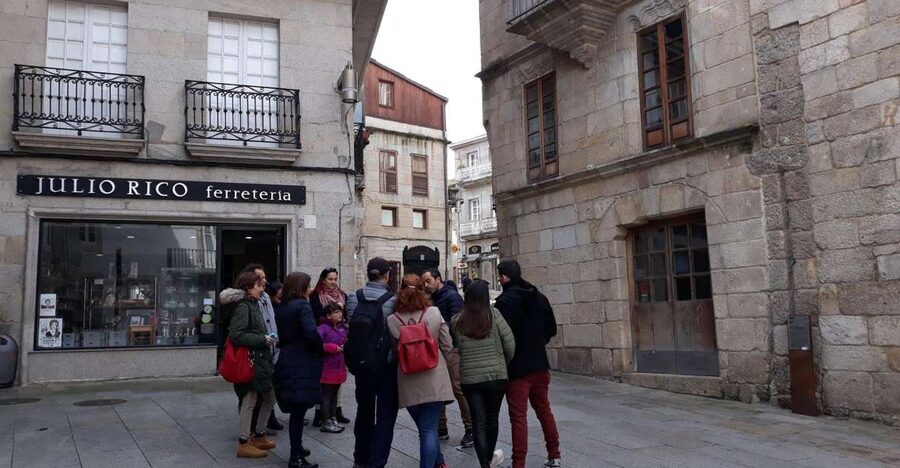
- Meet at Porta do Sol, right by the El Sireno statue, a perfect first landmark.
- Ría de Vigo viewpoints come up repeatedly, even when you are still deep in the old streets.
- You hear the Treasure of Rande story and the maritime legends that shape Vigo’s identity.
- The route covers standout sites like the Garcia Barbon Theatre and the Castelo de San Sebastián.
- You end with practical Vigo recommendations, including where to eat, like O Porco.
- Guides often adapt well, with some naming of favorites like Jose Manuel, Jorge, Pedro, Omar, Miguel, and Borja.
Where the walk starts: Porta do Sol and El Sireno
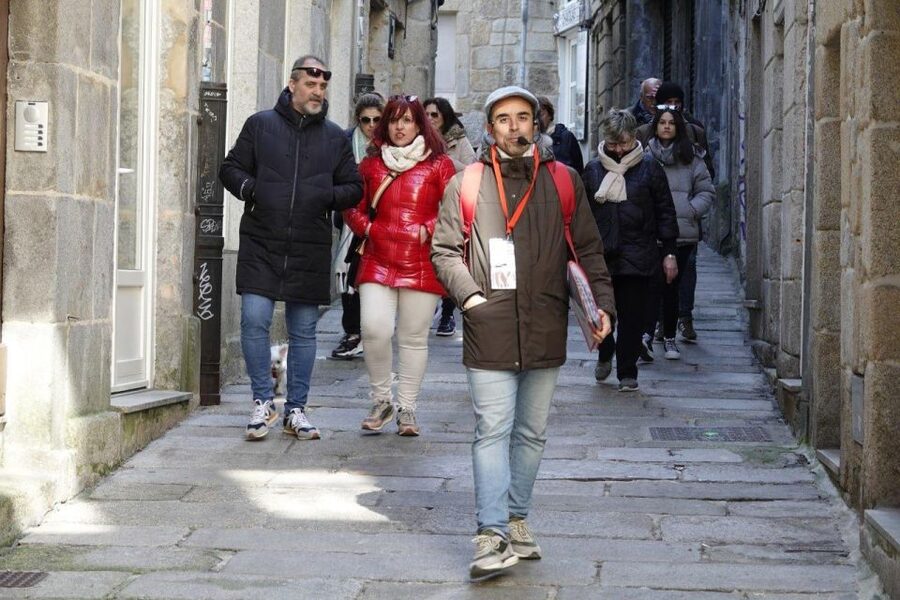
You start in Praza Porta do Sol, in the middle of Vigo, near the famous statue El Sireno, the man-fish symbol. It is easy to spot once you know what to look for, but there is a catch: the statue is high above the ground. So don’t waste time scanning randomly. Find a guide holding a red umbrella, then head straight to the meeting point.
This matters because you can get lost fast in any coastal city center. Starting at a clear square landmark helps you lock in the basics of where you are, so the rest of the walk makes sense later when you are wandering on your own.
Vigo’s old town: quick steps, big context
From Porta do Sol, the tour turns toward one of Vigo’s “you have arrived” moments, with the El Sireno area and its role as a city emblem. Then you begin moving through narrow streets and small squares where the city’s layers show up in small details.
A few named stops along the way give the walk structure. You pass through Rúa Policarpo Sanz, then you check out the Garcia Barbon Theatre area. The theater stop is short, but it is a useful reset point. It helps you notice the city’s scale and ambition, not just its fishing-port image. Vigo looks like a working city on the surface, yet you see how much culture has shaped it over time.
Then the route continues to Rúa do Príncipe. This is the kind of lane where the guide’s job is crucial. Without a guide, you might just see pretty stone and street life. With a guide, you understand why people built in certain places, how neighborhoods developed, and which historic figures are tied to the city’s growth.
If you care about architecture and street history, this part is where the tour feels efficient. Each stop is brief enough to keep energy up for a 2 hour total, but you still get enough names and context to feel oriented.
Garcia Barbon Theatre and the main squares: history you can point to
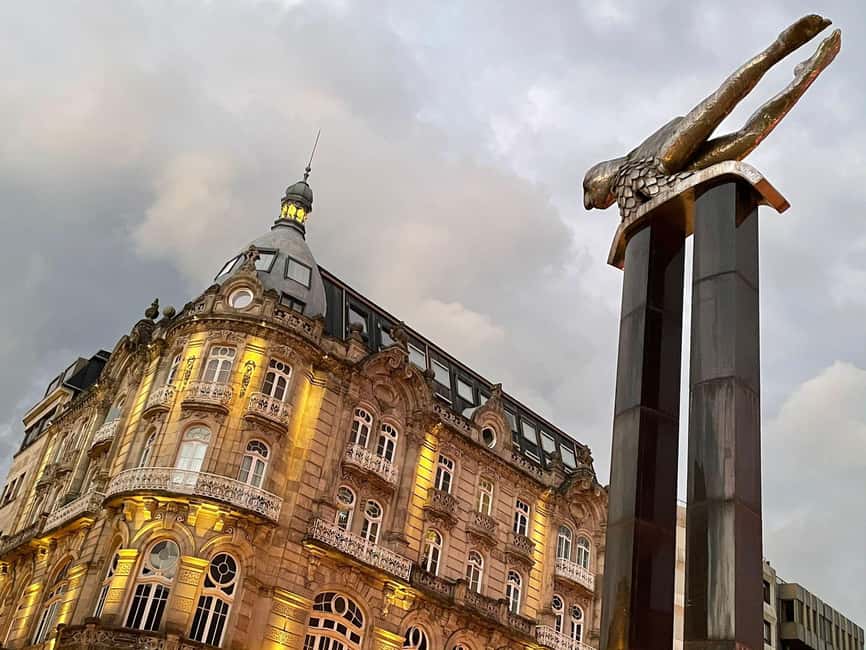
After the streets, the walk moves into the rhythm of Vigo’s center with stops around Praza da Constitución and Praza da Igrexa. These are the kind of squares where a city “turns.” You tend to feel it immediately, even if you don’t speak Spanish or Galician.
At Praza da Constituição you get guided explanation that ties the city’s story to what you are seeing. At Praza da Igrexa you get another quick slice of context, then you continue on toward the Rúa Pescadería area. That name alone signals what kind of city Vigo has been, even before you get the deeper maritime stories later.
Practical note: squares are also where you can naturally pace yourself. If your legs get tired, these are the moments to pause and let the group regroup. It is not a long sit-down tour, but the square stops do break up the walking.
Castelo de San Sebastián: views plus a reason to climb
One of the best parts of this walk is the transition from urban streets to viewpoints above the estuary. You reach the Castelo de San Sebastián after a short walk, and then you get a longer guided segment once you are there.
Even if you are not into fortresses, this stop works because it connects geography to history. Vigo’s position matters. The Ría de Vigo is a key setting for trade, migration, and conflict. The guide uses that setting to explain why Vigo became so strategically important over time.
You also hear stories that connect the city to danger and survival. Some parts of the walk are described as streets that endured terrible threats. The castle helps you understand that in a visual way. You can look out and realize why someone would build defensive walls there.
Downside: this is where hills and uneven pavement can show up. One of the practical comments you should take seriously is that the route can be tiring if you struggle on slopes. If you have mobility concerns, plan to go slow and ask the guide to adjust pace early. People have noted that some guides adapt, but the physical reality of the climb still exists.
The Treasure of Rande and the maritime legends
A central theme of the tour is maritime lore. The tour explicitly covers the secrets behind the Treasure of Rande, and it also builds toward the harbor area with stories about sunken treasures around Vigo.
This is not just myth for myth’s sake. The way the guide frames it, legend becomes a way to explain real patterns: why sailors came, what routes mattered, and why the port shaped local identity. It also helps you understand why Vigo has a different feel than inland Spanish cities. The city’s personality comes from water first.
The harbor section is where this story lands. Legends about sunken treasure give you something fun to hold onto while you look at the docks and waterline. And if you like hearing how locals turn history into modern talk, you will enjoy this segment.
Port of Vigo: the nautical area story
After the castle viewpoints, the walk heads toward the harbor and the landscaped nautical area. This is a guided segment that lasts about 20 minutes, long enough for the guide to connect dots.
Expect discussion about how the city developed with migration history and maritime links. You also hear the practical side of Vigo’s strategy. People often mention the port’s connection to places across the water, including links to France and the UK due to Vigo’s strategic position.
The port segment is a good time to ask questions too. If you have wondered why Vigo feels like it is always looking outward, this is when the guide gives you a clear answer that matches what you can see.
Food and local recommendations: what you do after the walk
A walking tour should help you travel better, not just learn facts. This one tries to do that. The final part of the experience includes the best plans for Vigo as a local, along with advice for Galician cuisine and where to go for it.
One review detail that sticks out is a food recommendation for O Porco. Even if you don’t end up choosing that exact place, the value is that the guide helps you pick something that fits your preferences, timing, and walking tolerance.
Here is how to use the food recommendations smartly: before you leave the tour, ask for two options. One “close and easy” option for the next day. One “special treat” option for later. Guides are used to this and can usually steer you well because they know what is near, what is worth waiting for, and what matches local habits.
Meet the guide: humor, clarity, and real city love
This tour stands or falls on the guide. The good news is that people highlight guide energy again and again. Jose Manuel is repeatedly praised for being informative and friendly, with humor that keeps the pace light even when the subject gets serious. Jorge gets frequent mentions for passion and storytelling, and Pedro also comes up as engaging and enthusiastic.
There are also specific quality points you can take seriously:
- English is often strong, with some guides blending languages as needed.
- Some guides name humor and warmth as part of the delivery, not just facts.
- Several guides show flexibility, including slowing down when someone needs it.
If you want a tour that feels like a conversation with a local, not a lecture with a headset, this one tends to deliver that.
Price and what you truly get in 2 hours
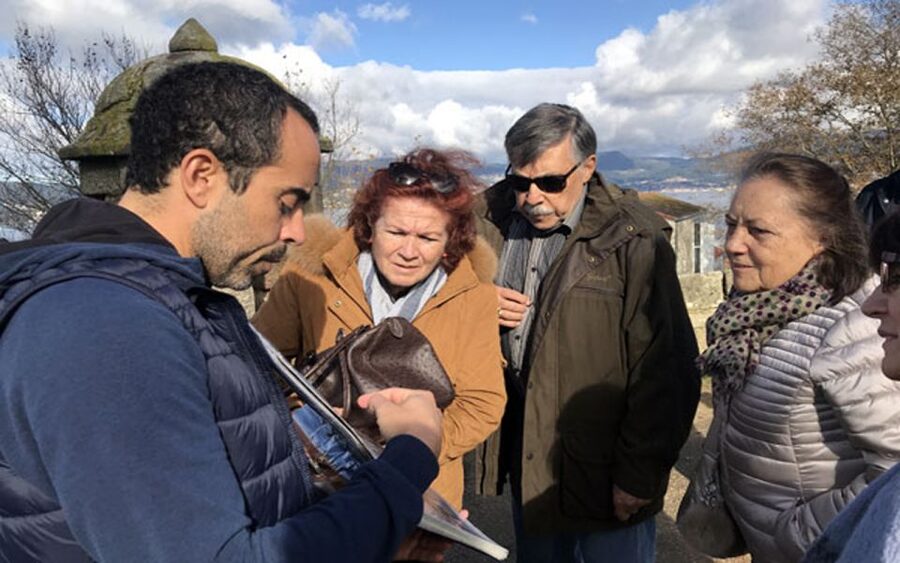
At $22 per person, this tour is priced like an easy “start here” experience. You are not paying for entrance tickets. The route focuses on walking, storytelling, and city orientation.
What you get for the money:
- An expert local guide for about 2 hours.
- Views of the Ría de Vigo during most of the tour.
- Historical documentation tools, including maps and historical photographs along the way.
- Practical recommendations for what to do next, including food guidance.
- A microphone if the group is big, which can help clarity.
Is it good value? Yes, if you treat it like orientation plus local stories. If you arrive already knowing Vigo well, you might find it less useful. But for a first visit, it helps you build a mental map fast, then gives you a way to spend the rest of your time more confidently.
Also remember the tour is tip-based, with payment at the end based on satisfaction. So bring a flexible mindset. Pay what you feel is fair for service quality, not only for a fixed script.
Getting the best experience: hearing, pace, and weather
There are two things to watch so the tour stays enjoyable.
First is hearing. In larger groups, people have noted that you may need to muscle your way toward the front to hear clearly, even if a speaker is used. If you are sensitive to noise or you struggle to hear in crowds, choose an early arriving time if possible, and position yourself near the front at the start.
Second is pace and terrain. Some sections include hills and rocky footing. The tour can also run a bit long on some days. You can help yourself by wearing grippy shoes. If you have a mobility device, the tour is described as wheelchair accessible, but it requires an accompanying person.
If you are traveling with mobility needs, plan ahead. Ask the guide early about best positioning for viewing points and where the easiest surfaces are.
Weather is another factor. The tour is outdoors and involves walking through old streets. If it is windy or wet, you will want a light rain layer and non-slip shoes. The upside is that Vigo still looks great from viewpoints even when weather changes fast.
Who should book this Vigo walking tour
Book it if:
- You want a fast orientation to Vigo’s old town and port.
- You like history that connects to where you are standing, especially maritime stories.
- You want local food guidance and practical “what to do next” advice.
- You appreciate a guide with humor and energy, like Jose Manuel, Jorge, Pedro, Omar, Miguel, or Borja.
Skip it or pick a different style if:
- You dislike walking on uneven pavement or steep sections.
- You need lots of frequent seating, because this is built around movement and short stops.
- You already know Vigo deeply and are only hunting for one specific monument.
Should you book this Vigo walking tour?
Yes, if it is your first time in Vigo and you want a smart 2 hour introduction. The big draw is the combo of port stories, old town street history, and repeat viewpoints over the Ría de Vigo, plus the guide recommendations that help you plan your next meals and walks.
My final advice is simple: arrive ready to walk, bring comfortable shoes, and aim for a good spot at the front if the group looks large. Then let the guide do their job. You will leave with a clearer map of Vigo and a better sense of why this Galicia city grew the way it did.
FAQ
Where is the meeting point for the tour?
You meet in Praza Porta do Sol, near the El Sireno statue. The statue is high above the ground, so look for the guide with a red umbrella.
How long does the walking tour last?
The tour lasts about 2 hours.
Is the tour tip-based?
Yes. It is described as a tip-based tour where payment is made at the end based on satisfaction.
What languages are offered?
The live guide offers the tour in English and Spanish.
Is the tour wheelchair accessible?
The tour is wheelchair accessible, but it requires an accompanying person.
Are entrance fees included?
No. Entrance fees are not included.
What does the tour include?
It includes a walking tour with an expert local guide, views of the Ría de Vigo, historical materials like maps and historical photographs, and a microphone if the group is big.
What do we see on the route?
You pass through Vigo’s old town and squares, learn about landmarks such as Garcia Barbon Theatre and Castelo de San Sebastián, and then reach the Port of Vigo. The tour also covers the Treasure of Rande stories.
Is there cancellation available?
Yes, free cancellation is available up to 24 hours in advance for a full refund.
Santiago de Compostela and Galicia, side by side.
 ★ 4.7From Santiago: Finisterre, Muxia & Costa da Morte ExcursionFrom $561,481 reviews
 ★ 5.0Excursion to Finisterre + Muxia + Costa da Morte (7 stops)From $591,367 reviews
 ★ 4.7Santiago de Compostela Full-Day Tour From PortoFrom $931,036 reviews
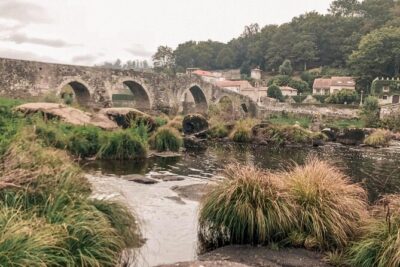 ★ 5.0Finisterre and Costa da Morte: The Most Complete Tour of SantiagoFrom $59733 reviews
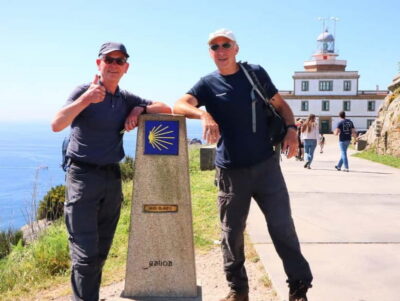 ★ 4.6From Santiago: Finisterre, Muxia, Ézaro – 7 stops day tourFrom $56553 reviews
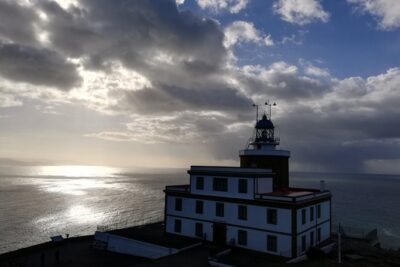 ★ 4.7Santiago de Compostela: Finisterre, Muxia & Costa da MorteFrom $58526 reviews
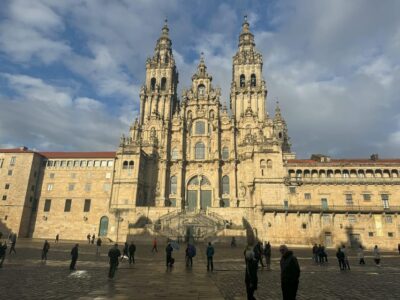 ★ 4.6Santiago de Compostela Cathedral and Museum Guided TourFrom $29511 reviews
 ★ 4.5Visit to the Cathedral of Santiago + Portico de la Gloria OptionFrom $26503 reviews
This tour also sits in