
Reviewed · JEREZ, SHERRY AND ANDALUSIAN HORSES
Jerez de la Frontera: Andalusian Horse Dance and Museums
Andalusian horses move like ballet dancers. This 3.5-hour visit pairs the How the Andalusian Horses Dance show with two major museum stops, and I especially like the precision of the horse-rider choreography and the horse-and-tack detail in the collections. One watch-out, though, is that seating can feel uncomfortable for some people depending on where you land.
You also get good value for the price, because the ticket covers more than just the 90-minute spectacle. You can fit in the early audio-visual presentation and then work your way through the Art Equestrian and Carriage Museums at your own pace.
This is a great pick if you love horses, Spanish culture, or both. Just be ready for the on-site rules, including no cameras and no video recording, and plan your transport timing so you do not get stuck after the crowd leaves.
In This Review
- Key points to know before you go
- Getting to the Royal Andalusian School in Jerez (and avoiding transport stress)
- Your half-day schedule, film before 11, museums until early afternoon, show 12:00 to 1:30
- How the Andalusian Horses Dance show: classical moves, big energy, and real discipline
- The choreographies you should listen for during the show
- Haute École highlights: what to actually look for
- Heat, seating, and expectations
- Inside the Visitor Reception Centre and the Art Equestrian Museum (11 rooms of horse art, tack, and practice)
- Saddlery, harnesses, and why the details matter
- The Carriage Museum: costumes and vehicles that started as transport
- Training areas and stables: where you see the work behind the ballet
- Price and value: why $38 can feel fair for this much horse content
- Who should book this Andalusian horse dance and museum visit
- Should you book? My take on the decision
- FAQ
- What is the total duration of the experience?
- When does the horse show take place?
- Is there an audio-visual presentation before the show?
- Which museums are included, and what are their opening hours?
- Is the palace included every day?
- Is the saddlery always included?
- Are pets allowed?
- Can I bring a camera or record video?
- What should I bring for entry?
- Is the experience wheelchair accessible?
- Where do I exchange my ticket when I arrive?
Key points to know before you go
- The equestrian ballet is built on classical dressage and Doma Vaquera, with multiple choreographies (from Pas de Deux to piaffe between pillars).
- Museum time is real time, not a quick hallway walk, with an 11-room Art Equestrian Museum and a separate Carriage Museum.
- The venue is a working school, so you may catch horses preparing and getting schooled before the performance.
- Closed days matter: the palace and saddlery are closed on Saturdays and public holidays.
- Photography rules are strict, so plan to enjoy it with your eyes, not your phone.
Getting to the Royal Andalusian School in Jerez (and avoiding transport stress)
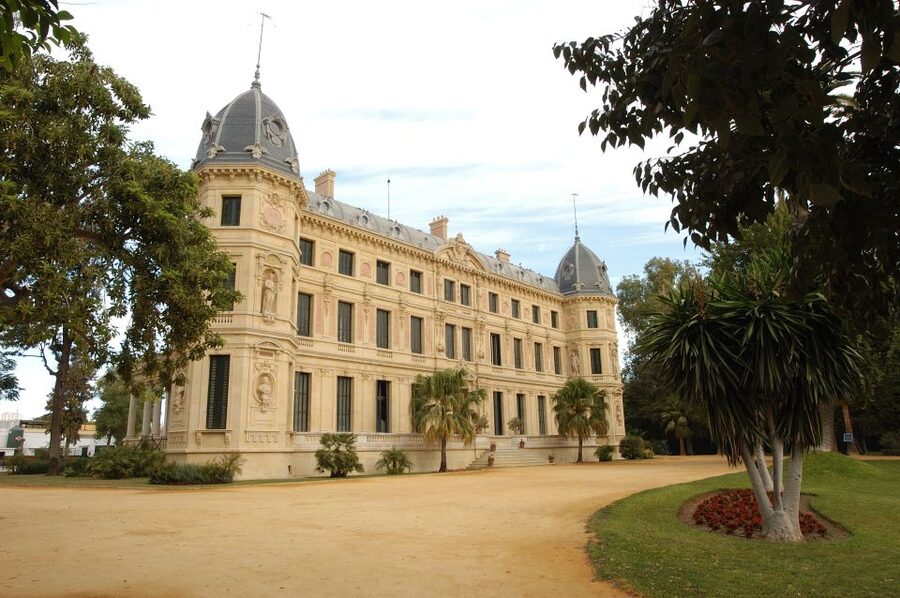
The action happens at the Royal Andalusian School of Equestrian Art in Jerez de la Frontera. The experience starts when you arrive and exchange your ticket at the ticket office.
If you are coming from the train station, taxis are common and easy. One practical thing I learned from other visitors is that the ride is usually short, but timing matters: after the show, taxis can feel harder to find because many people leave at once.
If you are driving, keep parking in mind. One traveler noted parking can be tricky around the area, with fines reported on surrounding streets. If you want a stress-free morning, I would treat taxi access as your default plan unless you already know the local parking situation.
Your half-day schedule, film before 11, museums until early afternoon, show 12:00 to 1:30
This ticket is built around a simple flow: culture first, then performance, then museums. Here is the structure you will want to plan around:
- Until 11:00 AM: the Visitor Reception Centre’s digital cinema runs, with an audio-visual presentation about the history of equestrian art in Andalusia.
- Art Equestrian Museum: open 10:00 AM to 2:00 PM.
- Carriage Museum: open 10:00 AM to 3:00 PM.
- Horse show: 12:00 PM to 1:30 PM, featuring the Andalusian horses dancing at an equestrian ballet.
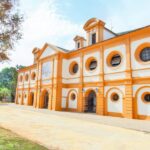
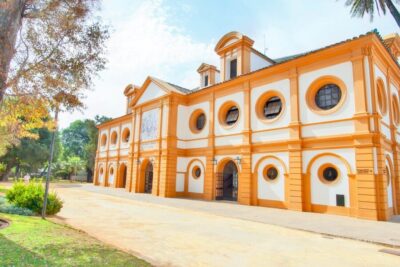
You also pass through gardens before you reach the palace. The palace sits above those gardens and is described as a beautiful example of 19th-century architecture. Then, the Art Equestrian Museum is in the basement, so plan on moving indoors for that main part.
One schedule detail that can change your plan: the palace is closed on Saturdays and public holidays, and the Saddlery is closed on Saturdays and public holidays. If you are visiting on one of those days, adjust your priorities toward the show and whichever museum sections are open.
The best use of 3.5 hours is usually this: arrive close to 10:00 AM, do the digital cinema and one museum segment before the show, watch the performance, then finish with the Carriage Museum before 3:00 PM.
If this one is booked out, these Jerez, Sherry and Andalusian Horses come close

How the Andalusian Horses Dance show: classical moves, big energy, and real discipline
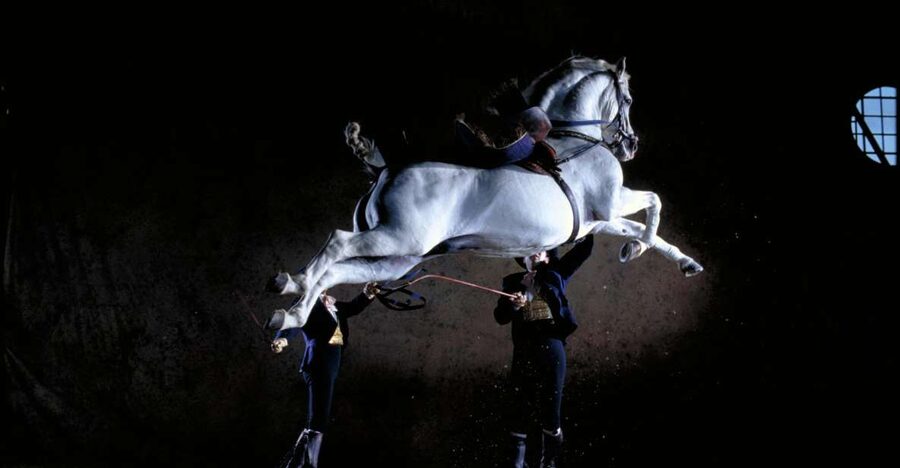
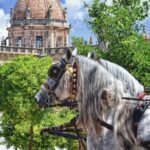
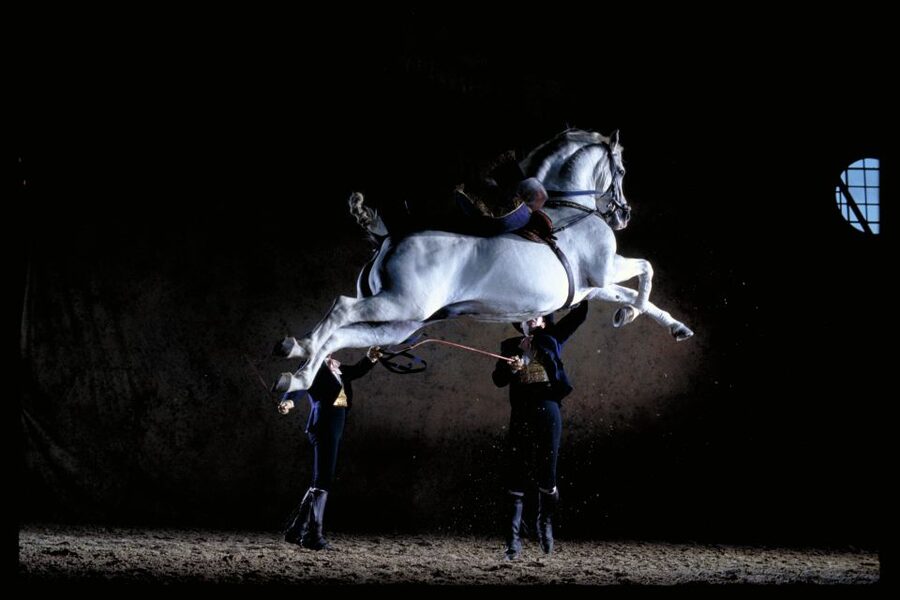
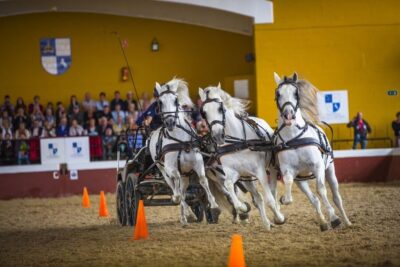
The headline is the equestrian ballet at the Royal Andalusian School. The performance runs from 12:00 PM to 1:30 PM and is staged with music and costumes inspired by an 18th-century look.
This is not just prancing for applause. The choreography is built from classical dressage skills, Doma Vaquera movements, and traditional equestrian work. You will see advanced exercises performed to music, and the whole thing is designed like a set of distinct pieces rather than one long routine.
The choreographies you should listen for during the show
Each show can include 6 to 8 different choreographies, such as:
- The Colts
- Airs on Horseback
- Pas de Deux
- Passage and Piaffer
- Domino on Horseback
- Airs Above the Ground
- Fantasy
As the pieces change, watch how the riders guide the horses through transitions. That is where the show becomes more than a visual trick. It is control: rhythm, balance, and timing all at once.
Haute École highlights: what to actually look for
If you like the technical side of horsemanship, this is where the show pays off. The performance includes classic Haute École exercises such as:
- Levades
- Caprioles
- Courbettes
- Piaffe between pillars
- The Spanish walk
For me, the most satisfying part is how often the riders and horses move in unison. It makes the whole show feel like choreography, not random tricks. And because it is tied to classical forms, the show gives you a lens for understanding why Andalusian horses became so famous in the first place.
Heat, seating, and expectations
Some people will tell you the horses are amazing even when it is hot. That is believable, because a performance like this requires sustained muscle and calm under pressure.
One caution: seating comfort can be hit or miss. At least one visitor reported the seating was extremely uncomfortable. So if you are sensitive to hard seats, arrive a little early to get the best spot you can, and do not assume every row will feel the same.
Inside the Visitor Reception Centre and the Art Equestrian Museum (11 rooms of horse art, tack, and practice)
Before you reach the palace and museum spaces, you have a chance to orient yourself. Through the Visitor Reception Centre, you can watch a digital cinema presentation. It runs until 11:00 AM, and it is there to give you context on the history of equestrian art in Andalusia.
Then you move into the gardens, and the palace sits above them. The museum is in the basement and is organized as 11 rooms. The Art Equestrian Museum is where you connect what you see in the show to how equestrian art developed in Andalusia.
What you will likely appreciate most here is that it focuses on more than paintings or trophies. The collection includes practical horse-related craft, so you understand the human work behind the performance.
Saddlery, harnesses, and why the details matter
The saddlery is part of the story because it deals with the equipment side of horsemanship. The experience includes entrance to the Saddlery, where harnesses are made and repaired, but remember it is closed on Saturdays and public holidays.
This matters because equestrian art is built on partnerships: rider, horse, and equipment all have to work together. When you see how harnesses and related gear are handled, the show’s precision makes more sense.
From feedback I saw, the museum information is designed to be accessible. People noted it has English content as well as Spanish, which helps if your Spanish is basic.
The Carriage Museum: costumes and vehicles that started as transport
Once you finish the Art Equestrian Museum, the visit naturally ends at the Carriage Museum. This is where you get a different kind of visual pleasure: not the action, but the objects.
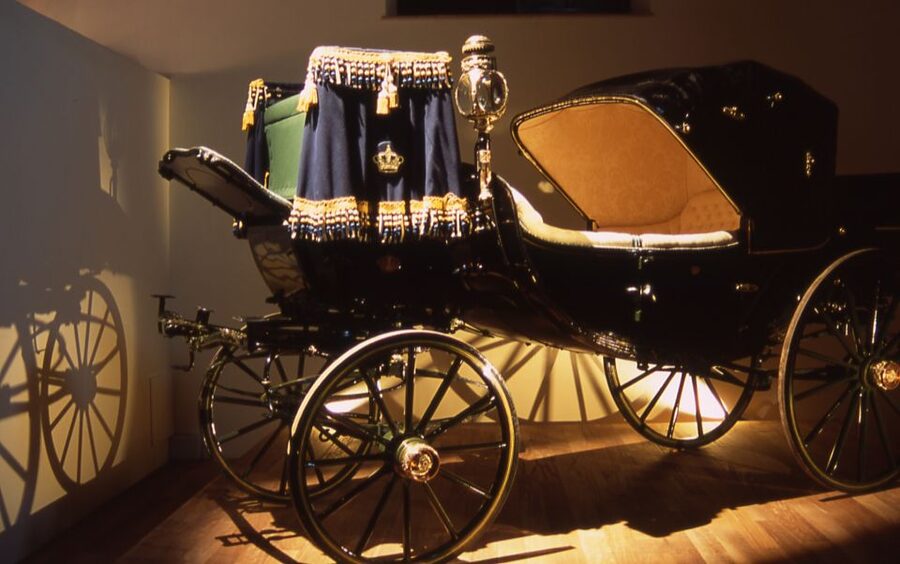
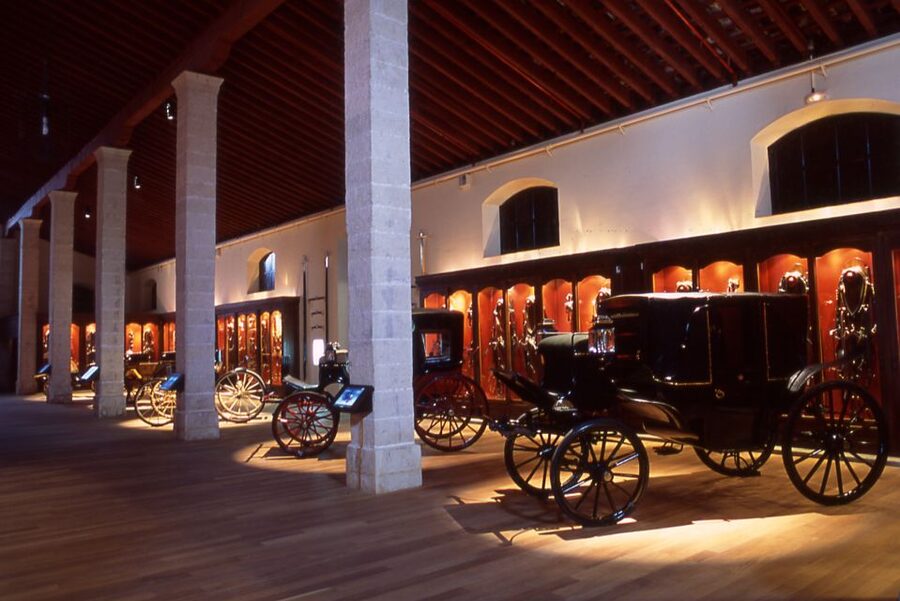
The Carriage Museum highlights vehicles, harnesses, and equestrian costumes. You will also see the broader equestrian culture around the horse, where carriages were originally used for transport and later became part of sport and exhibition.
In the show, the horses can even demonstrate drawing carriages. Seeing the museum artifacts after you watch that part can make the objects feel alive, because you remember how the equipment is supposed to function.
The Carriage Museum is open 10:00 AM to 3:00 PM, which means it is usually your safest bet for the last stop. You have time to slow down here without feeling like you are racing the show schedule.
Training areas and stables: where you see the work behind the ballet
One of the big reasons this experience feels complete is that you are not only watching the performance. Many visitors find time to get close to the horses in schooling and preparation areas before the show.
If you plan it right, you may be able to see horses being groomed and prepared, and you might even spot training sessions. Several accounts mention being able to observe the horses warming up and even watching young equestrians in the training areas.
This is not just a sentimental extra. It changes how you watch the show. When you have seen the horses working through prep, the performance looks less like magic and more like skilled routine.
Just note that some people reported the stables or museum route felt confusing at the venue, with limited guidance in parts of the walk. If you are trying to maximize your time, ask staff when you are unsure. They are used to helping people move between areas.
Price and value: why $38 can feel fair for this much horse content
At $38 per person for about 3.5 hours, this ticket can feel like good value because it bundles three things into one admission:
- The show (12:00 PM to 1:30 PM)
- The Art Equestrian Museum (10:00 AM to 2:00 PM)
- The Carriage Museum (10:00 AM to 3:00 PM)
- Plus the Visitor Reception Centre audio-visual presentation until 11:00 AM, and access to the palace when open
You are paying for a venue that functions like a school and a museum at the same time. That matters. A lot of horse shows are only one act with a gift shop afterward. Here, you get context, craftsmanship, and objects tied to the performance.
It also helps that the venue receives strong demand, with a 4.7 rating from 1,289 reviews. High ratings do not guarantee your experience will match someone else’s, but they are a useful signal that most people leave feeling it was worth the effort.
Who should book this Andalusian horse dance and museum visit
You will love this if you:
- Care about horsemanship and want to see classical dressage elements like piaffe, levades, and caprioles
- Enjoy Spanish culture that is visual, not abstract
- Like museums where the objects connect to real practice, like harnesses, saddlery, and carriage equipment
It also works for families when kids are animal fans. One visitor described bringing a young child who was excited by the performance. If your group enjoys spectacle plus calm indoor time, this fits nicely.
If you dislike horse-related experiences, or you are not interested in museums, you might find it too structured. But if the show is a “must see” for you, the museums and tack collections are what make this feel like a full morning or midday stop.
Should you book? My take on the decision
Book it if you want the best combination of show + museum + context in Jerez de la Frontera. The performance is the main event, and the museum parts help you understand what you just watched, including classical equipment and Andalusian equestrian art.
Skip it only if you cannot handle the idea of restrictions like no cameras and you are not interested in museum time. This experience rewards people who pay attention, even for small details like harnesses and costumes.
FAQ
What is the total duration of the experience?
The total duration is about 3.5 hours.
When does the horse show take place?
The show takes place from 12:00 PM to 1:30 PM.
Is there an audio-visual presentation before the show?
Yes. The digital cinema audio-visual presentation runs until 11:00 AM.
Which museums are included, and what are their opening hours?
You have access to the Art Equestrian Museum from 10:00 AM to 2:00 PM, and the Carriage Museum from 10:00 AM to 3:00 PM.
Is the palace included every day?
The entrance to the palace is included, but it is closed on Saturdays and public holidays.
Is the saddlery always included?
The saddlery entrance is included, but it is closed on Saturdays and public holidays.
Are pets allowed?
No, pets are not allowed.
Can I bring a camera or record video?
Cameras and video recording are not allowed.
What should I bring for entry?
Bring your passport or ID card.
Is the experience wheelchair accessible?
Yes, it is wheelchair accessible.
Where do I exchange my ticket when I arrive?
When you arrive at the Royal Andalusian School, go to the ticket office to exchange your ticket.
Keep browsing Horses in Jerez De La Frontera
- Jerez: Yeguada de la Cartuja Carthusian Horses Tour
★ 4.8 · 970 reviews
Jerez, Sherry and Andalusian Horses we rated next
- Jerez: Yeguada de la Cartuja Carthusian Horses Tour
★ 4.8 · 970 reviews - Jerez: Royal Andalusian School of Equestrian Art Admission
★ 4.6 · 882 reviews - Jerez: Bodegas Fundador Guided Tour with Tasting Session
★ 4.8 · 714 reviews - Jerez: Guided Winery Tour with Wine Tasting
★ 4.4 · 636 reviews - Jerez de la Frontera: Sherry Winery Tour with Tasting
★ 4.6 · 309 reviews
Fresh off the desk: recent Jerez De La Frontera experiences we have written up
Jerez, Sherry and Andalusian Horses, side by side.
 ★ 4.6Jerez de la Frontera: How the Andalusian Horses DanceFrom $316,168 reviews
 ★ 4.5Cordoba: Equestrian Show General EntryFrom $212,333 reviews
 ★ 4.8Jerez: Yeguada de la Cartuja Carthusian Horses TourFrom $22970 reviews
 ★ 4.6Jerez: Royal Andalusian School of Equestrian Art AdmissionFrom $18882 reviews
 ★ 4.8Jerez: Bodegas Fundador Guided Tour with Tasting SessionFrom $21714 reviews
 ★ 4.4Jerez: Guided Winery Tour with Wine TastingFrom $22636 reviews
 ★ 4.2From Seville: Cadiz and Jerez de la Frontera Day TripFrom $117595 reviews
 ★ 4.5Andalusian Horses Dance ShowFrom $33483 reviews
This tour also sits in