
Reviewed · JEREZ, SHERRY AND ANDALUSIAN HORSES
Andalusian Horses Dance Show
Horses, music, and Andalusia in one arena. I love the doma vaquera segment and the precision classical dressage that turns the arena into a stage for centuries-old riding skill.
There is one trade-off: seating. Your ticket category does not let you pick a row or exact seat, and some lower views can feel blocked.
In This Review
- Key things to notice before you go
- Arriving at the Royal Andalusian School in Jerez
- The show format: 6 to 8 choreographies in one ticket
- The big moment: doma vaquera, where cattle-herding meets control
- Classical dressage segments you can follow in your head
- Carriage driving: the school proves it beyond the saddle
- Work in hand and Haute École: watching without the rider
- The carousel finale: the grand finale in the center
- Timing, tickets, and what to do right at the door
- Price and value: about $33.43 for a full arena event
- Best seating strategy: choose your comfort first
- Parking and getting there without stress
- Going from the show to the real Jerez
- Who should book this show, and who might skip it
- Should you book it?
- FAQ
- How long is the Andalusian Horses Dance Show?
- What time does the show start in Jerez?
- Where do I redeem my voucher?
- Does the ticket include more than entrance to the show?
- How many different choreographies are included?
- Can I film or take photos during the show?
- Are seats assigned by category, and can I choose a specific seat number?
- What is the latest time I can cancel for a full refund?
Key things to notice before you go
- Doma vaquera, one-hand control with rhythm changes, pirouettes, and fast arreones
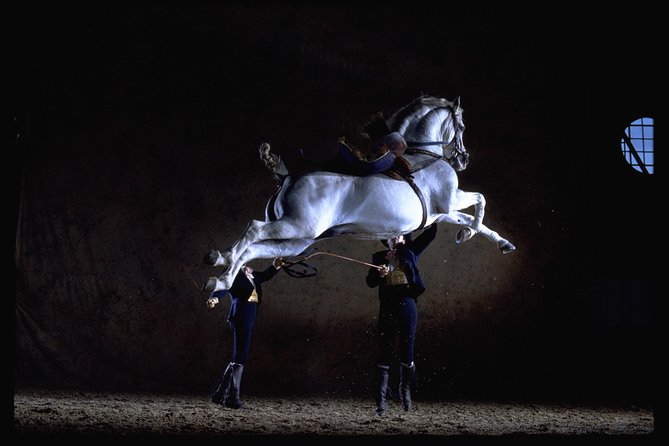
- Classical dressage with named choreographies like Pas de Deux and Passage and Piaffer
- Carriage driving in traditional harness that shows the training beyond the saddle
- Work in hand from Haute École dressage even when the horse is guided without being ridden
- A coordinated carousel finale that pulls everything together in the center of the arena
- Warm weather comfort matters since the arena can get hot, so bring a fan and arrive early
Arriving at the Royal Andalusian School in Jerez
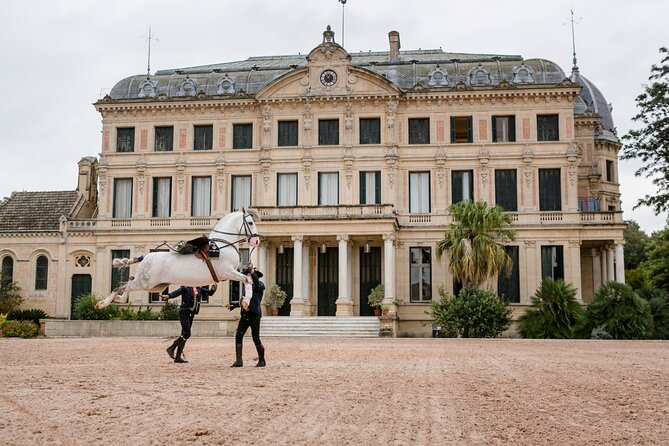
The show takes place at the Royal Andalusian School of Equestrian Art in Jerez, run by the Fundación Real Escuela Andaluza del Arte Ecuestre. Your start point is Av. Duque de Abrantes, s/n, 11407 Jerez de la Frontera. The official show start time is 12:00 pm, and the experience runs about 1 hour 30 minutes.
This venue is the kind of place where you feel the training culture right away. Even before the main routines begin, you can usually see the horses and riders getting ready. One practical bonus is that there is a cafe and a shop inside, so you do not have to scramble for food or drinks right before the arena doors open.
If you are coming from another city, plan the day so you are not rushing. I’d rather you arrive calmly with time to look around than sprint in with a tight timetable. Parking can be easy, but it can also turn annoying, depending on the day.
The show format: 6 to 8 choreographies in one ticket
This show is built as a sequence. Each performance uses six to eight different choreographies, and the exact mix can change depending on the day. What stays consistent is the structure: riders and horses move from one discipline style to the next, with the school presenting each segment as a piece of their riding tradition.
You are not just watching one routine. You are watching how Andalusian training shows up in different forms: cattle-herding inspired movements, classical dressage exercises, carriage work, and exercises where the horse responds without the rider being in the saddle.
Also pay attention to the rules and the pacing. You will be asked to keep your phone away for video and photos. The management does not allow filming, recording, or taking photographs unless you are an authorized professional. Bring water, but skip anything you cannot take in, like glass bottles or cans, since the venue can consider those unsuitable.
Different budget or pace in mind? Here is the rest of our Cadiz shortlist.


The big moment: doma vaquera, where cattle-herding meets control
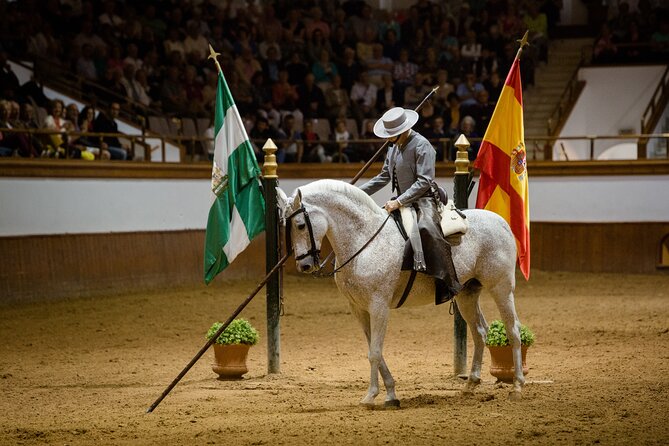
If you only have time for one segment, make it doma vaquera. This is one of the most recognizable flavors of Andalusian riding because it is tied to traditional cattle herding techniques. The key detail is how it looks, not just that it is Spanish.
In this part, the horseman rides using one hand, moving around the arena with rhythm changes. First comes trotting, then you get galloping, then comes the fun part for horse lovers: maneuvers where the rider asks for sharp changes and collected turns. You can see pirouettes, and you’ll also see arreones, which are bursts into a gallop.
Why it matters for your experience: doma vaquera is not about soft, slow elegance. It is about responsiveness and timing. The skill shows in the horse’s balance and the rider’s ability to communicate precisely with minimal movement.
Classical dressage segments you can follow in your head
After doma vaquera, the show leans into classical dressage, with horses performing advanced equestrian exercises to classical music. This is where the arena starts feeling like a ballet, except it is a ballet with thunder hooves and perfect foot placement.
The show includes named choreographies, and some of the ones you might see are:
- The Colts
- Airs on Horseback
- Pas de Deux
- Passage and Piaffer
- Domino on Horseback
- Airs above the ground
- Fantasy
Even if you do not know the technical terms, you can still read the performance. Watch for collection, then watch how the horse keeps rhythm while doing higher-level movements. That is the point of classical dressage. It is disciplined movement made theatrical.
One practical note: audio support can be partial. There may be announcements in multiple languages, but narration for each segment can be Spanish-only. You might still enjoy every segment because so much of the meaning is visible in the choreography, but if you prefer explanations in English, go in with the expectation that you will understand through watching more than listening.
Carriage driving: the school proves it beyond the saddle
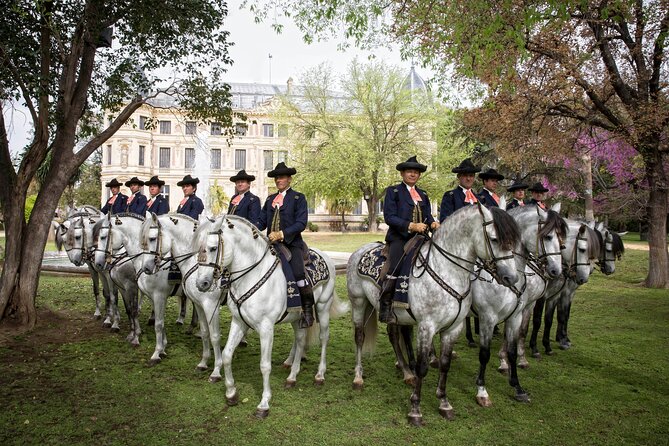
A lot of horse shows focus only on riding. Here, you also get carriage driving. Horses demonstrate their ability by drawing carriages using classical harness, driven by coachmen.
What makes this segment worth your attention is that carriage driving is a different kind of communication and coordination. The horse is trained for steering and response in a way that is not the same as being ridden. The harness setup and the carriage rhythm change how everything looks in the arena.
If you are traveling with kids or family members who get bored with technical explanations, this is often a crowd-pleaser because you can see the whole system working together: the horse, the harness, the coachman’s signals, and the carriage’s controlled movement.
Work in hand and Haute École: watching without the rider
The show also includes work in hand. This is one of the coolest ideas in equestrian training because the horse obeys commands even when the horseman is not sitting on the saddle. You’ll see classical Haute École dressage exercises such as levades, caprioles, courbettes, and piaffe between pillars. Other movements you might see include the Spanish walk and long reins.
Why I like this for your trip: it makes you stop thinking of the horse as a vehicle. You get a direct look at the training relationship. The horse is working because the training system is real, not because someone is pulling reins while sitting on top.
If you enjoy precision, this segment can feel like a puzzle being solved in real time. Everything depends on balance, posture, and calm control.
The carousel finale: the grand finale in the center
The show ends with carrousel. This is where horses and riders work together in unison for a coordinated grand finale in the center of the arena.
Even if you did not catch every term earlier, you will understand this part. Multiple horses moving together makes the choreography easier to read. It also helps you appreciate timing and spacing, which are hard to fake and easy to spot when a group is truly trained.
This finale is a good closer if you are hoping for a full evening memory rather than a quick demonstration. You get a feeling of completion, like the show has told a whole story, not just thrown in tricks.
Timing, tickets, and what to do right at the door
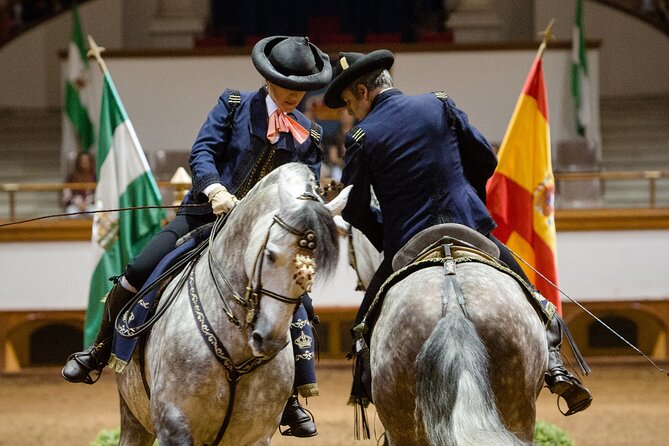
Your voucher is redeemed at the Royal Andalusian School of Equestrian Art. The venue requires a printed receipt for ticket office pickup. Confirmation is received within 48 hours of booking, subject to availability.
One more detail that affects your day: admission covers the show. Entrance to other facilities is not included, so do not assume unlimited access to everything on site.
When you arrive, plan for warm-up and a quick wander. A practical tip from real-world timing: give yourself 30 to 45 extra minutes to visit the grounds. You’ll have time to find where your seat is, check out the cafe and shop, and watch the calm before the performance starts.
Price and value: about $33.43 for a full arena event
At $33.43 per person, this is not a bargain, but it also does not feel overpriced for what you get. You are paying for a live arena performance at an institution that specializes in equestrian art. The show lasts roughly 1 hour 30 minutes, and the format includes multiple riding disciplines rather than one short act.
It also offers good value if you want one evening activity that works for mixed ages. The pacing is varied. You get dressage elegance, carriage driving, and high-level movements like piaffe and levades. It is the kind of ticket that can work for adults who want technique and kids who just want to see beautiful horses doing impossible-looking things.
One booking reality: it is often booked about 31 days in advance. If you are traveling in high season or around popular weekends, I would not wait until the last minute.
Best seating strategy: choose your comfort first
This is the one area where your experience can swing. Tickets are sold by category, and you do not get a right to choose row or seat number. Seats are allocated according to the order of purchase or booking.
So what should you do? First, if you care about sightlines, treat this as a “book early” experience. You want the best chance at an unobstructed view. Second, if your goal is clear arena coverage, consider that higher seats may offer a wider view of the full action.
What else can help? Plan for comfort. The arena can get warm in summer, so bring a fan and dress in breathable layers. Also remember there is no filming allowed, so you’ll be better off focusing on what is in front of you rather than trying to record everything.
Parking and getting there without stress
The venue is near public transportation, which is useful if you do not want to fight for car access. Still, many people drive, and parking experiences can vary.
Here is the practical approach I suggest:
- Arrive early enough to park without panic.
- Watch for people signaling parking spots, since some visitors report being pressured into paid parking when street or nearby options exist.
- If you find a spot, do not overthink it, especially if you are within a short walk.
Taxis can get expensive depending on where you start from, especially if you are coming from a cruise area. If you are deciding between options, compare total cost, and if you already use ride apps, that can be a way to reduce surprises.
Going from the show to the real Jerez
When the show ends, you are in central Jerez. That matters because you can keep your day going without long travel time. After the arena, you can head out for cafes and historic sites nearby.
I like using this kind of show as the anchor of the afternoon. You get a focused cultural experience, then you have time to wander without feeling like you are racing between far-flung stops.
If you want to make it a smooth day, consider building your schedule around the show start time. That keeps your evening flexible and lets you adjust if you decide you want a longer stop for food.
Who should book this show, and who might skip it
Book this if you love live performances with real training behind them, not just a casual animal show. It is family-friendly, and the mix of doma vaquera, classical dressage, carriage driving, and work in hand gives you more than one “wow” moment.
You should also book if you are visiting Andalusia and want one activity in Jerez that feels distinctly Spanish and technical at the same time. The disciplines are different, but the theme is consistent: precision, control, and partnership between horse and rider.
Skip it only if you dislike structured arena events or you know you get frustrated by partial language support. There can be Spanish-only narration for segments. The announcements may be multi-language, but you should plan to understand most of the story through the movements.
Should you book it?
Yes, I’d book it if you want a memorable, watchable, high-skill equestrian show in a real Andalusian institution. It is good value for the time, it gives you several riding disciplines in one sitting, and it is easy to fit into a day in Jerez.
Just do two things to stack the odds in your favor: book ahead and arrive early. You will enjoy the show more when you are settled, cool-headed, and ready to watch.
FAQ
How long is the Andalusian Horses Dance Show?
It runs about 1 hour 30 minutes.
What time does the show start in Jerez?
The start time is 12:00 pm.
Where do I redeem my voucher?
You redeem it at the Royal Andalusian School of Equestrian Art, Av. Duque de Abrantes, s/n, 11407 Jerez de la Frontera, Cádiz, Spain.
Does the ticket include more than entrance to the show?
Your admission ticket includes entrance to the show only, not other facilities.
How many different choreographies are included?
Each show uses between six and eight styles of choreography, and the program can vary by day.
Can I film or take photos during the show?
No. Filming, recording, and taking photographs are not allowed unless you are an authorized professional.
Are seats assigned by category, and can I choose a specific seat number?
Tickets are purchased by category only, and you do not have a right to select row or seat number. Seats are allocated based on order of purchase or booking.
What is the latest time I can cancel for a full refund?
You can cancel up to 24 hours in advance of the experience’s start time for a full refund.
Fresh off the desk: recent Cadiz experiences we have written up

Jerez, Sherry and Andalusian Horses, side by side.
 ★ 4.6Jerez de la Frontera: How the Andalusian Horses DanceFrom $316,168 reviews
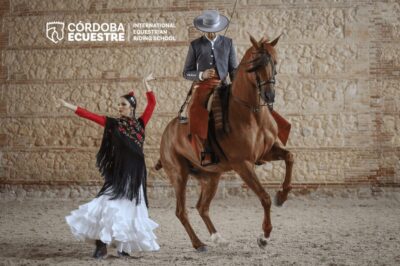 ★ 4.5Cordoba: Equestrian Show General EntryFrom $212,333 reviews
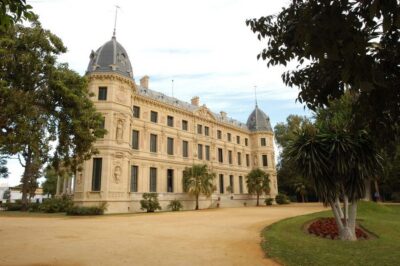 ★ 4.7Jerez de la Frontera: Andalusian Horse Dance and MuseumsFrom $381,289 reviews
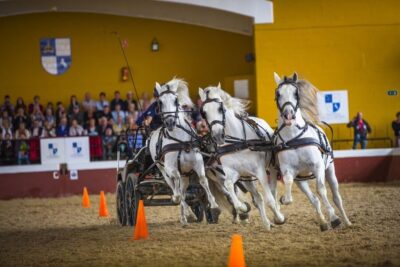 ★ 4.8Jerez: Yeguada de la Cartuja Carthusian Horses TourFrom $22970 reviews
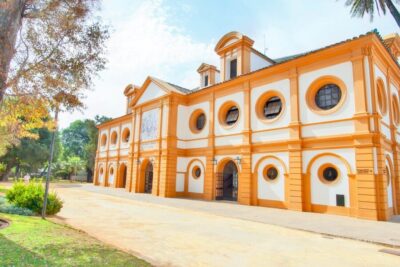 ★ 4.6Jerez: Royal Andalusian School of Equestrian Art AdmissionFrom $18882 reviews
 ★ 4.8Jerez: Bodegas Fundador Guided Tour with Tasting SessionFrom $21714 reviews
 ★ 4.4Jerez: Guided Winery Tour with Wine TastingFrom $22636 reviews
 ★ 4.2From Seville: Cadiz and Jerez de la Frontera Day TripFrom $117595 reviews
This tour also sits in