
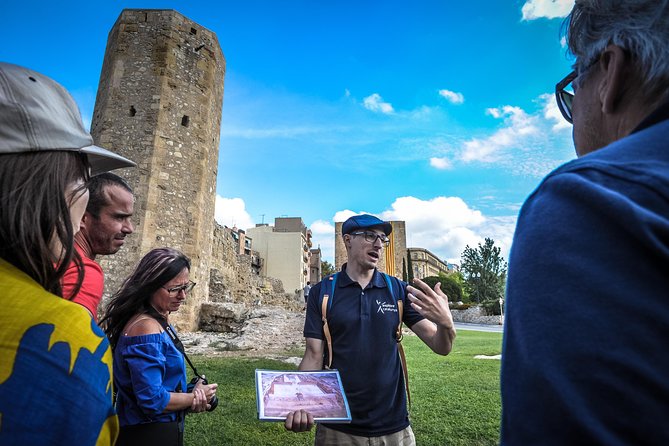
Reviewed · TARRAGONA, SITGES AND PORTAVENTURA
Tarragona and Sitges Small Group Tour – Roman History & Culture
Roman ruins and beach time in one day. I like how this small-group format keeps the day feeling personal, not rushed. I also love the main event, walking across the Pont del Diable aqueduct top. A possible drawback: you are doing a full long day, and you will still want to choose your priorities, because Tarragona and Sitges both get busy.
You start in Barcelona early, then switch worlds fast, from modern streets to Tarraco’s Roman skeleton. In the van, guides such as Sergio, Xavier, Henrique, Jordi, and Steve (just a few examples from past days) keep the story moving, and they tend to be generous with questions. If you’re sensitive to crowds, keep in mind Sitges can get noticeably full, especially if you hit a busier time of day.
In This Review
- Key things I’d circle on your map
- From Palau de la Música to Roman Tarragona: the rhythm of the day
- Walking the Pont del Diable aqueduct: the wow factor you can’t fake
- Tarragona’s old quarter: Roman walls, medieval layers, and a big cathedral moment
- Roman forum and circus: the best kind of surprise in the middle of town
- Roc de Sant Gaieta: a short coastal reset that changes your mood
- Sitges beaches, boutiques, and cafe stops: the part you’ll actually plan around
- How the minivan schedule and small group size affect your comfort
- What I’d pack (so the day feels fun, not fiddly)
- Price and value: is $119.48 a smart trade for your time?
- Who this tour fits best, and who should skip it
- Should you book this Tarragona and Sitges Roman history and culture trip?
- FAQ
- What time does the tour start in Barcelona?
- Where do we meet and where does the tour end?
- How long is the tour?
- What group size should I expect?
- Is the tour offered in English only?
- How do entrance fees work for Tarragona?
- Can I swim in Sitges?
- Can I get a refund if I cancel?
Key things I’d circle on your map
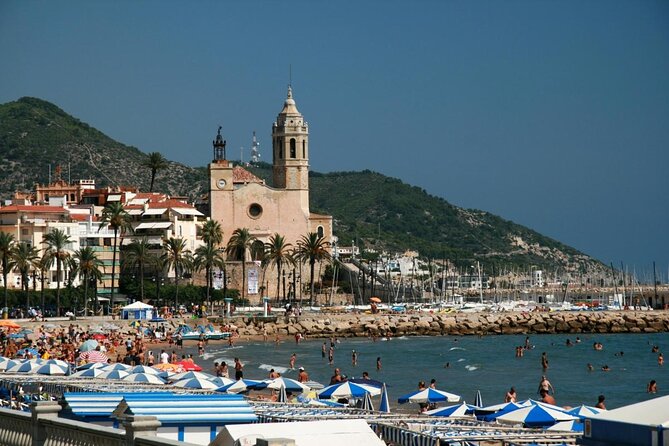
- Walk the Pont del Diable aqueduct top for that rare, hands-on Roman moment
- Tarragona’s Roman forum and circus area tucked into today’s streets
- A cathedral stop with market energy when it overlaps with Sunday hours
- Roc de Sant Gaieta for quick sea air before you head to Sitges
- Sitges beach break with time to browse, eat, and swim if you want
From Palau de la Música to Roman Tarragona: the rhythm of the day
This is a long day trip, built for people who like seeing more than one side of the same region. You meet near Palau de la Música in central Barcelona around 8:15 am, then the group rolls out at about 8:30 am. After that, you get roughly 90 minutes by air-conditioned minivan to Tarragona, with a short Barcelona orientation along the way.
What I like about this pace is that it gives you both guided time and breathing room. The van keeps you moving, but the stops are spaced so you’re not staring at ruins through a window all day. You’ll return to Barcelona around 7:00 pm, usually ending at Plaça de Catalunya, with a fallback to the meeting area or nearby Arc de Triomf depending on traffic and group flow.
If you’re traveling with kids, note the tour is not recommended for children aged 4 and under. For most people, the day is very doable because it’s structured, with guide-led sections plus time to wander on your own.
Walking the Pont del Diable aqueduct: the wow factor you can’t fake
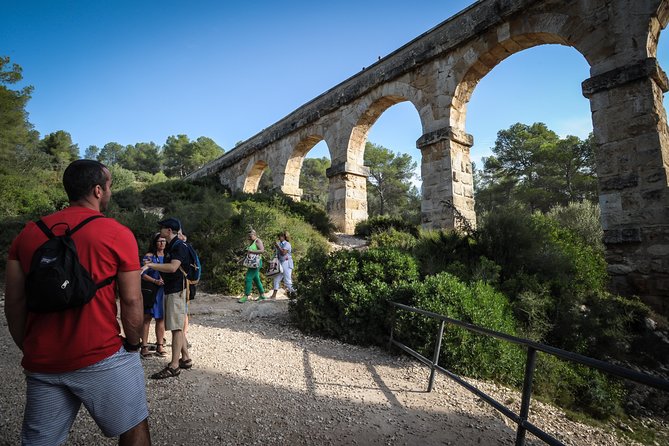
Pont del Diable, also called Les Ferreres, is the stop that people talk about for a reason. You reach it just outside Tarragona around late morning, and you get the chance to walk across the top of the aqueduct. This is the real deal, a Roman water-supply structure dating to the 1st century BC, and it still looks shockingly complete.
Here’s why this works so well for you: it turns Roman history from a photo into a body experience. You’re literally on the infrastructure that once moved water around the city. The views from above are also a treat, because you can see how the structure fits into the landscape and the modern road network below.
Practical tip: wear shoes you trust. Even if the walk is not long, you’re up high and you’ll want solid footing. If it’s sunny, plan on sunscreen and water, because you won’t always be in shade at this stop.
If this one is booked out, these Tarragona, Sitges and PortAventura come close




Tarragona’s old quarter: Roman walls, medieval layers, and a big cathedral moment
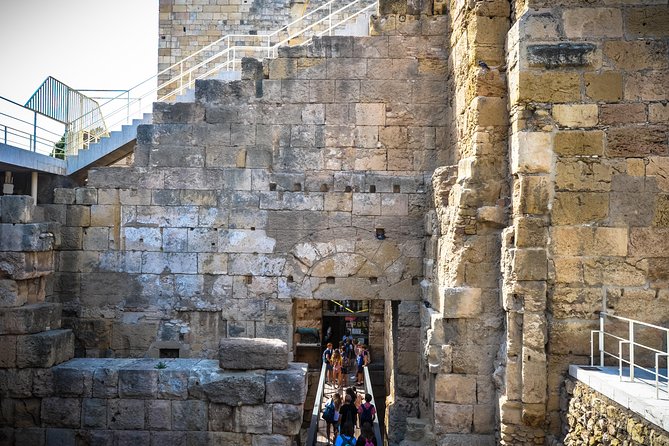
Once you get back into Tarragona, the tour shifts from one big landmark to a whole city section at a walking pace. You enter the old part of town through an ancient gateway in the walls, then move through the overlap of eras, where modern streets sit right beside Roman remnants.
One part I really appreciate is how the guide ties the geometry together. You’re not just looking at isolated stones. You’re seeing how Tarragona grew, how new buildings appeared over older foundations, and how daily life kept happening even after the Romans were gone.
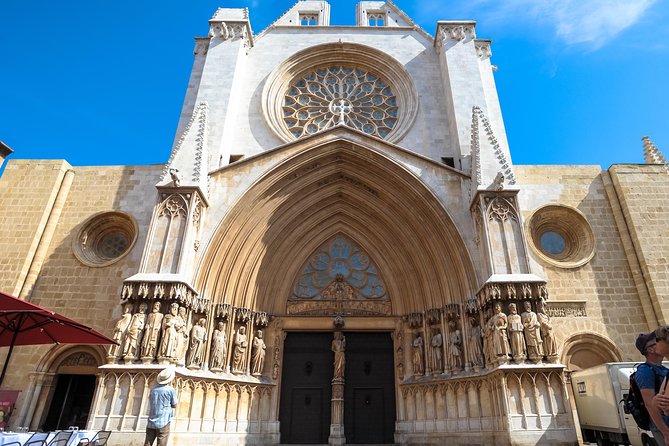
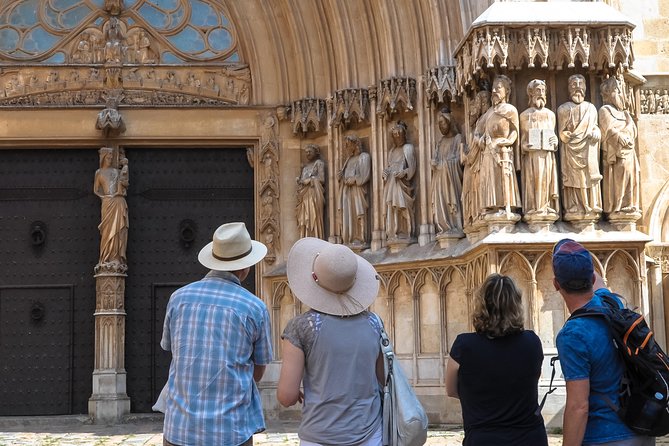
The cathedral stop is a highlight because it breaks up the Roman focus with a different kind of viewpoint. The tour includes time around that area, and if your day lands on a Sunday morning, you may catch an antique market vibe near the cathedral. Even if you don’t, it’s a good pause, because the area tends to feel lively without being frantic.
This is also where you get a quick sense of Tarragona’s texture: narrow lanes, a mix of older and newer facades, and enough time to look up at walls and down at street-level details.
Roman forum and circus: the best kind of surprise in the middle of town
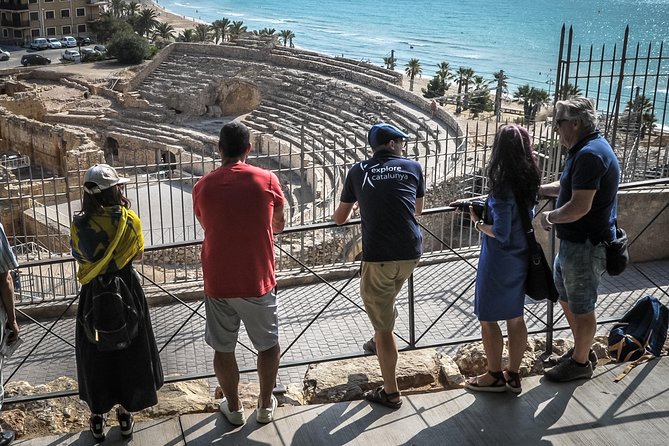
The Roman forum and circus area is where Tarragona starts to feel special in a more subtle way. Instead of being a single fenced-off ruin park, these spaces are woven into today’s urban design. That means you’ll see stone remains, walk along parts of the walkway system, and then step into areas tied to the circus stands and underground passageways.
I like this because it gives you that rare feeling of time layering. You are moving through present-day streets, but your guide is pointing out what those same lines meant in Roman times. The tour also includes time in Placa de la Font, a square inside the historic circus layout.
And then there’s the seaview moment. You get breathtaking views over the amphitheater area, plus a chance to imagine what the stage floor and surrounding blocks looked like when gladiatorial spectacles were happening. A neat detail here is the Christian church built in the middle of the stage using blocks from the earlier amphitheater, which helps you understand how later generations repurposed the Roman world instead of starting from scratch.
If you love architecture that tells a story, this stop is the payoff. If you prefer very large, obvious monument entrances, you might wish for more time inside every single structure. But for most people, the combination of views, walking, and guided context hits a sweet spot.
Roc de Sant Gaieta: a short coastal reset that changes your mood
After the Roman focus, you stop briefly at Roc de Sant Gaieta on the rocky shoreline. This is quick, about 20 minutes, but it works like a palate cleanser. You’ll stroll between tiny white houses, and the whole place feels smaller and calmer than both Tarragona and Sitges.
What makes it interesting is the mix of coastal village atmosphere with a Mediterranean, old-world feel. You are getting sea air and a break from stone and streets, then you’re heading straight back toward beach time.
Practical note: because it’s short, treat it as a photo and viewpoint window. If you want to enjoy the water more fully, save that energy for Sitges.
Sitges beaches, boutiques, and cafe stops: the part you’ll actually plan around
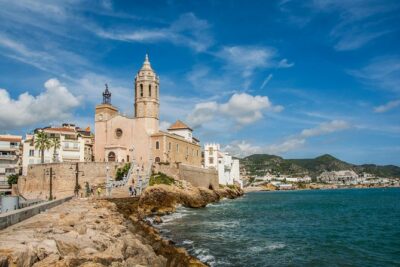
Sitges is the other half of the day, and it’s a totally different energy. This used-to-be fishing village became fashionable starting in the 1890s, and you feel that in the architecture, the promenade rhythm, and the way people treat the area like a day-and-evening destination.
You get around three hours in Sitges, after arriving about 2:30 pm and leaving around 5:30 pm. During this time, you can choose how you spend it: beach time, wandering shady lanes, browsing boutiques, or taking breaks in cafes and restaurants.
Two things I like about the Sitges block:
First, it’s not just beach lounging. You also get time to explore the town’s whitewashed neighborhoods and seafront vibe. Second, there’s flexibility. If you want a quick swim, the tour encourages you to bring a swimsuit and beach towel. It even explicitly notes that swimming time is possible.
Also keep in mind: Sitges has multiple beaches, mentioned as 17 in the tour description. That’s not a promise you’ll hit all of them in the time you have, but it helps you understand why locals and visitors can spread out while still feeling close to the action.
A practical reality check from the day’s pacing: restaurants can take longer than you expect if the group ends up lingering. If your main goal is beach time, I’d treat lunch as a plan, not an open-ended event. Pick a place, eat, then head to the sand.
How the minivan schedule and small group size affect your comfort
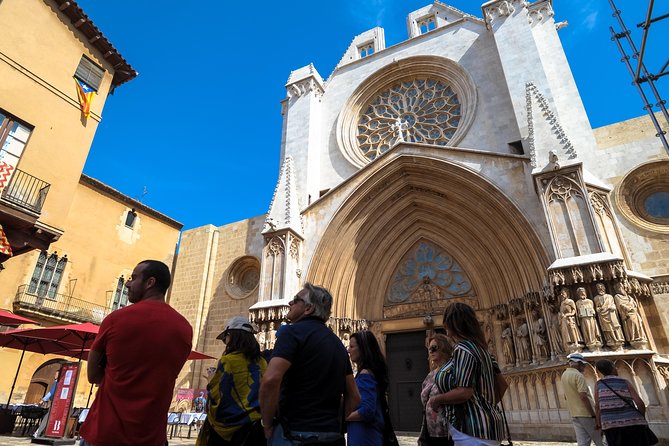
This is marketed as a small group tour, with a maximum of 8 travelers noted, and it also sits in the general small-group range. That small size matters because it changes how your guide can move the group through places like narrow lanes and crowded squares.
The minivan itself is a real comfort factor on a day like this. You’re traveling between cities and dealing with early departure from Barcelona, and air-conditioning helps a lot in hot weather. You also get an organized day flow with bathroom time at the start, which is a small thing until you’re tired and need it.
Another helpful detail: you receive a mobile ticket, so you’re not trying to manage paperwork while also keeping track of timing.
Finally, the guide usually ends the day in or near Plaça Catalunya, which is convenient because it gives you fast metro or taxi options back to most hotels.
- Barcelona: Sagrada Familia Entry Ticket with Audio Guide
- Barcelona: Park Güell Admission Ticket
- Barcelona: 24 or 48-Hour Hop-On Hop-Off Bus Tour
- Barcelona: Park Guell Guided Tour with Skip The Line Entry
- Barcelona in 1 Day: Sagrada Familia, Park Guell,Old Town & Pickup
- Barcelona Aquarium: Entry Ticket
- Barcelona: Sagrada Familia Skip-the-Line Entry Ticket & Tour
- Barcelona: FC Barcelona Museum “Barça Immersive Tour” Ticket
What I’d pack (so the day feels fun, not fiddly)
You’re out walking, and you’re also in exposed sun at aqueduct and coastal stops. The tour guidance is to bring suitable clothing, footwear, and sun protection. I’d treat that as a checklist:
- Comfortable walking shoes for the aqueduct top and old quarter streets
- Sun protection, especially for the mid-morning Roman stop
- Water bottle, even if you plan on buying drinks later
- If you want to swim in Sitges, pack your swimsuit and beach towel
If you’re the type who likes a little extra planning, I’d also bring a small bag you can keep with you during the Sitges wandering time. You’ll have plenty of stops where you won’t want to carry heavy items.
Price and value: is $119.48 a smart trade for your time?
The price is listed as $119.48 per person for an approximately 10 hours 30 minutes full day. That might sound like a lot if you’re thinking only about sightseeing.
Here’s the value angle I’d use to judge it:
- You get transport by air-conditioned minivan from Barcelona
- You get a professional guide for the day
- You get a small-group experience with time built in for you to wander
- You get two very different towns, Tarragona for Roman ruins and Sitges for beach culture
Entrance fees are listed as not included for museums and monuments in Tarragona. At the same time, the schedule shows multiple stops as admission ticket free, including the aqueduct and the Tarragona Roman stops. So the likely scenario is that you’re not spending most of your budget on entry tickets for the core sights. Still, if you decide to add any extra museum time beyond what’s on the day’s plan, that’s on you.
If you’re short on time in Barcelona and you want one organized day that covers serious Roman sites plus actual beach time, I think this price is reasonable.
Who this tour fits best, and who should skip it
This is a good match if you:
- Want Roman Tarragona without the stress of getting there and back on your own
- Like a guided story while still getting time to roam
- Want beach time, not just a photo stop in Sitges
- Enjoy small groups, where you can ask questions and hear the guide without shouty crowds
You might consider skipping if:
- You only want one major city and would rather spend more time in a single place
- You’re very sensitive to crowds, because Sitges can feel busy depending on the day and time
- You’re looking for a fully timed, inside-every-structure Roman experience, because the day includes views, walking routes, and outdoor exploration more than a deep museum marathon
As a final note, guides have been praised for being friendly and for keeping the day interesting, and many people highlight the aqueduct walk as the standout moment. If that is your kind of trip, you’ll probably enjoy the whole flow.
Should you book this Tarragona and Sitges Roman history and culture trip?
I’d book it if you want a one-day solution that feels like two trips. Tarragona gives you Roman ruins you can walk through, plus a city backdrop that keeps the story grounded. Sitges gives you time to slow down, browse, eat, and potentially swim.
If your ideal day is packed but not chaotic, this tour hits a practical balance: morning traction, Roman highlights, a short coastal breathing break, then a beach and town wander window.
If you hate early starts, or if you would rather linger longer in one place, you might prefer a more focused plan. But for many Barcelona visitors, this is one of the better ways to get out of the usual city loop and see real contrasts in a single day.
FAQ
What time does the tour start in Barcelona?
You start at 8:30 am. The meeting point includes time to meet your guide and use the restrooms before departure.
Where do we meet and where does the tour end?
You meet at C/ Palau de la Música, 1, Ciutat Vella, 08010 Barcelona. The tour ends at Plaça de Catalunya in Eixample, 08002 Barcelona, and sometimes returns to the office or Arc de Triomf depending on traffic.
How long is the tour?
It runs for about 10 hours 30 minutes.
What group size should I expect?
This is a small group tour with a maximum of 8 travelers.
Is the tour offered in English only?
Yes, the tour operates in English only.
How do entrance fees work for Tarragona?
Transport and the main guided stops are included, but entrance fees for museums and monuments in Tarragona are not included. The schedule shows multiple major stops listed as admission ticket free.
Can I swim in Sitges?
The tour notes you will have an opportunity to go swimming in Sitges if you want to. Bring a swimsuit and a beach towel.
Can I get a refund if I cancel?
Free cancellation is available. You can cancel up to 24 hours in advance for a full refund.
Tours: the rest of our Barcelona write-ups
- Barcelona: Casa Batlló Entry with Self-Audioguide Tour
★ 4.7 · 25,359 reviews - Barcelona: 24 or 48-Hour Hop-On Hop-Off Bus Tour
★ 4.4 · 20,872 reviews - Barcelona: Park Guell Guided Tour with Skip The Line Entry
★ 4.7 · 17,563 reviews - Barcelona: Sagrada Familia Skip-the-Line Entry Ticket & Tour
★ 4.8 · 12,789 reviews - Barcelona: FC Barcelona Museum “Barça Immersive Tour” Ticket
★ 4.4 · 10,944 reviews
Tarragona, Sitges and PortAventura we rated next
- Tarragona and Sitges Tour with Small Group and Hotel Pick Up
★ 5.0 · 1,211 reviews - PortAventura and Ferrari Land: Full-Day Trip from Barcelona
★ 3.9 · 559 reviews - From Barcelona: PortAventura Theme Park Ticket & Transfer
★ 4.2 · 558 reviews - From Barcelona: Tarragona & Sitges Full Day Tour with Pickup
★ 4.8 · 428 reviews
Fresh off the desk: recent Barcelona experiences we have written up


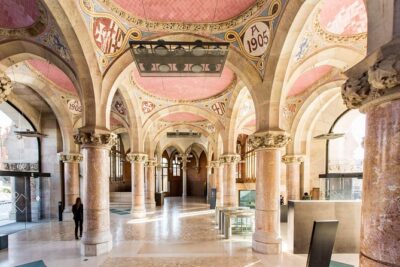
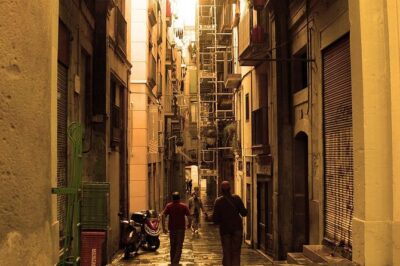

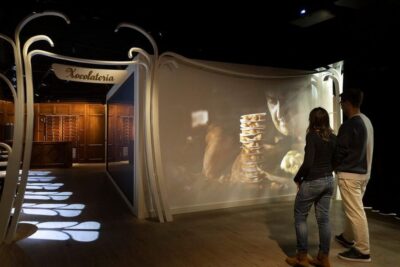





Tarragona, Sitges and PortAventura, side by side.
 ★ 4.4Cambrils: Costa Daurada Sail Catamaran CruiseFrom $121,765 reviews
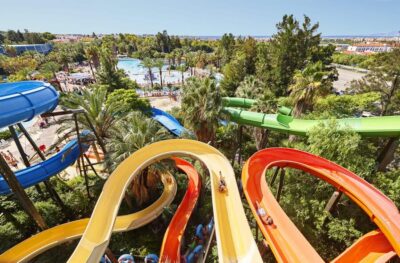 ★ 3.9Salou: PortAventura Caribe Aquatic Park 1-Day TicketFrom $371,320 reviews
 ★ 5.0Tarragona and Sitges Tour with Small Group and Hotel Pick UpFrom $1201,211 reviews
 ★ 4.5Cambrils: Catamaran Cruise with Drinks and BBQ Lunch OptionFrom $35935 reviews
 ★ 4.7From Salou/Cambrils: Speedboat TourFrom $45876 reviews
 ★ 4.4From Salou: Full Day Barcelona Panoramic Tour with Free TimeFrom $56718 reviews
 ★ 4.8Salou: Off-Road Guided Quad Safari with Hotel PickupFrom $102602 reviews
 ★ 3.9PortAventura and Ferrari Land: Full-Day Trip from BarcelonaFrom $93559 reviews
This tour also sits in