
Reviewed · PAELLA PANS AND MARKET COOKERY
Paella Cooking Class in Malaga
Paella in Malaga starts with a market stroll, then gets hands-on fast. I like the way this class pairs Atarazanas Market browsing with a chef-led cooking lesson, so you understand what goes in the pan and why. I also like the small-group feel, capped at 12 people, plus the included tastings like Aloreña olives and olive oil checks before you cook. One thing to plan for: the meeting point can be confusing if your confirmation details are not clear, so give yourself buffer time.
You’re in good hands with a chef and local food Sherpa, often named guides like Carmen, Jose, Anais, Elise, Fernando, or Javier depending on the date. Expect English support, plus help decoding menus and signs if you need it. You’ll leave with a full belly, a stack of recipes, and actual, usable habits for making paella at home.
In This Review
- Key Highlights You Should Actually Care About
- Atarazanas Market, Where Your Paella Starts Making Sense
- A practical note about the market
- The Short Walk to Soho: Modern Kitchen, Real Cooking Setup
- From Gazpacho to Sofrito: The Two-Step That Makes Paella Click
- What you should watch for in the paella lesson
- Cooking Paella in a Small Group Without Losing Your Turn
- Snacks, Sangría, and the Finishing Run: How the Meal Gets Rewarding
- The pairing piece
- Vegetarian Option, and How to Ask for What You Need
- Price and Value: What $84.69 Really Buys You
- Who This Paella Class Fits Best
- How to Prepare So the Day Starts Smooth
- Should You Book This Paella Class?
- FAQ
- Where is the meeting point for the paella cooking class?
- How long is the experience?
- Is the class offered in English?
- What’s included in the food and drinks?
- Is there a vegetarian option?
- Does the price include hotel pickup and drop-off?
Key Highlights You Should Actually Care About
- Atarazanas Market ingredient hunting with your guide, so you can recognize key items later
- Olive oil tasting plus local snacks like Aloreña olives or roasted almonds, and tostón de bacalao
- Step-by-step paella method starting with sofrito, not just a lecture
- Real group cooking energy in a modern kitchen, with constant chef check-ins
- Included pairings like sangría, wine or beer (and seasonal fruit afterward)
- Recipes included, so the class keeps paying off after you get home
Atarazanas Market, Where Your Paella Starts Making Sense
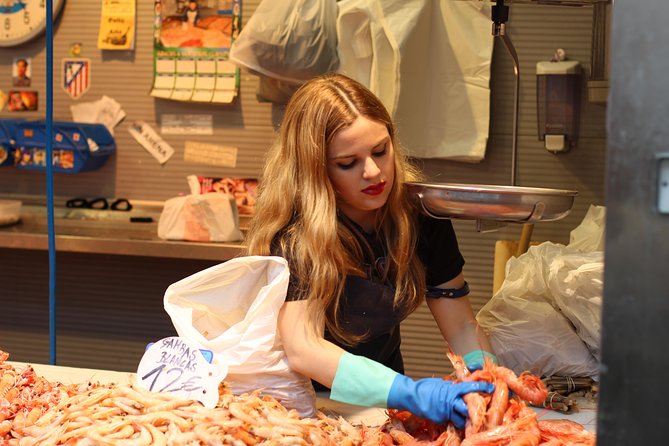
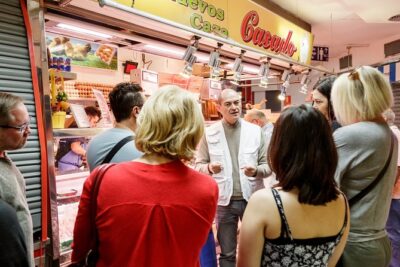
The experience begins at Kulinarea, and from there you head to Atarazanas Market in Malaga. This is the part that makes the cooking lesson feel grounded instead of staged. You walk the stalls while your guide points out what is in season and what matters for flavor, like fresh produce and Mediterranean staples that show up again and again in Andalusian cooking.
I especially like the guided angle here. You do not just watch someone buy ingredients. You learn how to think about them. What tomatoes are doing in a sauce. Why certain olives taste the way they do. How quality olive oil shows up in everything from bread toppings to the final aroma of rice.
And yes, you get help with language. If you are staring at a menu or a sign in another language, ask your guide to translate and explain. The class feels more valuable when you can decode what you are looking at.
A practical note about the market
Timing can matter in Spain, and markets can have closures or altered hours on holidays. If that happens on your day, the team may shift the plan to keep you fed and learning, but it can change the flow of what you see. Build some flexibility into your expectations.
Reviewed and rated alongside this one, further Paella Pans and Market Cookery

The Short Walk to Soho: Modern Kitchen, Real Cooking Setup
After the market, it is about a five-minute walk to the cooking venue in Malaga’s Soho district. This matters more than it sounds. That short transfer keeps the day moving, and it also means you are cooking with ingredients that still feel “fresh and recent.”
The kitchen is described as modern and clean, with enough space that you are not constantly bumping elbows. In a class with up to 12 people, the layout helps a lot. You get to work, taste, and ask questions without feeling rushed into the corner.
Before paella goes in the pan, you get a tasting lineup. Expect things like roasted almonds, Aloreña olives, extra virgin olive oil, and tostón de bacalao, which is rustic thick-crusted bread topped with salt cod and orange. Even if you do not become obsessed with salt cod in one afternoon, the combo teaches you something: Spanish flavor is often about contrasts, salty plus bright, fatty plus aromatic.
From Gazpacho to Sofrito: The Two-Step That Makes Paella Click
Before you touch the paella pan, you make gazpacho. In Andalusia, it is usually chilled and made from raw tomatoes, cucumbers, and peppers. The class approach is practical. You learn how the pieces come together so your gazpacho tastes like a real everyday dish, not like something you cooked from a recipe app once.
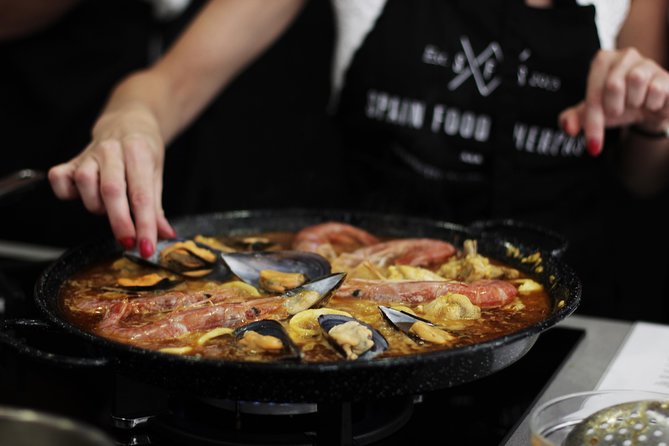
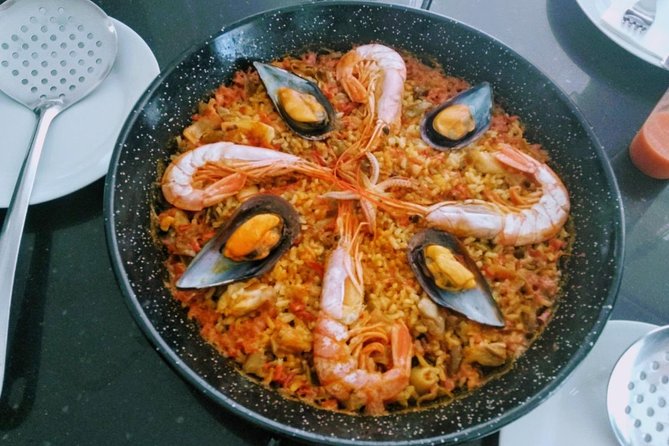
Then comes the paella method, built on one key idea: start with the base, then build up. You create a sofrito base sauce first, and only after that do you gradually bring everything together in the pan. That order helps because it gives the rice a foundation, not just a stew around it.
What you should watch for in the paella lesson
You will get step-by-step direction from the chef. Pay attention to the “why,” not just the “what.” In a good paella, the rice cooks with the right heat and the right flavor backbone. The chef tips help you understand the difference between following a list and cooking with rhythm.
Also, ask questions as you go. The best paella technique gets explained in small moments: when to adjust, what texture signals, and how to make the pan part of the process instead of something mysterious.
Cooking Paella in a Small Group Without Losing Your Turn
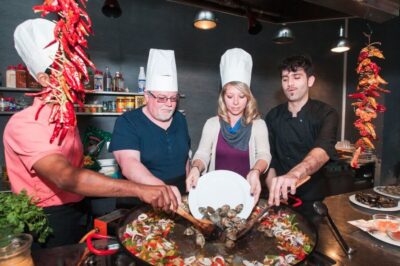
The group size is capped at 12 travelers, which is perfect for hands-on learning. You are not stuck waiting for your turn. You cook alongside others, often with support from the chef who comes around and corrects technique when needed.
I like this format because it changes the feeling of cooking classes. It stops being a performance and becomes problem-solving. If you are new to Spanish cooking, you can keep up without feeling lost. If you are more experienced, you still benefit from the chef’s “do it this way” tips.
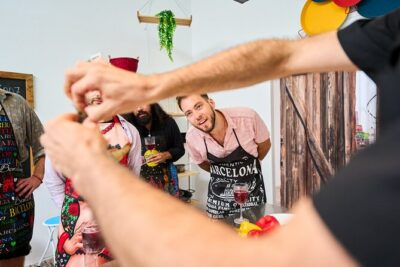
You also get to interact with the group. Several class experiences are described as friendly and international, which makes the long table feel easy. If you like travel social energy but hate forced icebreakers, this is a good middle ground.
Snacks, Sangría, and the Finishing Run: How the Meal Gets Rewarding
A big part of why this class is worth it is that it does not end with paella. The meal is structured like a Spanish food afternoon, not a single-dish factory.
Included tastings and extras commonly cover:
- Olive oil tasting and local snack bites, like Aloreña olives or roasted almonds
- Gazpacho before you cook
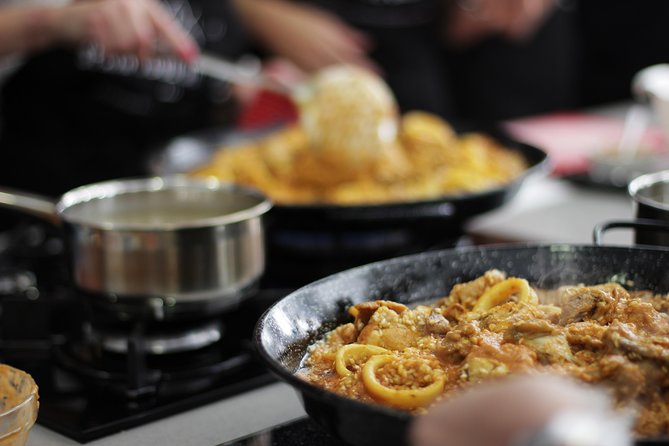
- Paella as your main event
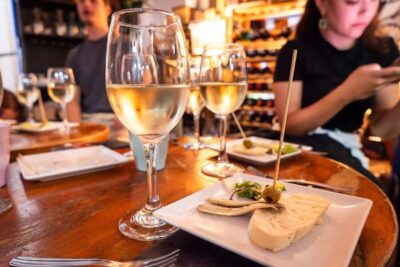
- Wine or beer paired with the menu
- Sangría as part of the experience
- Churros for dessert, plus fresh seasonal fruits afterward
There is also the chance of a special dessert surprise. One of the nicer surprises is that it feels like the team wants you to leave happy, not just full.
- Málaga: Alcazaba and Roman Theatre Guided Tour With Entry
- Malaga: Teatro Flamenco Malaga Live Flamenco Show
- From Málaga: Ronda+Setenil de las Bodegas with Little Train
- From Malaga: Granada Full-Day Trip with Alhambra
- Málaga: Sunset Catamaran Trip
- From Málaga: Caminito del Rey Day Trip & Guided Tour
- From Malaga: Ronda and Setenil Guided Tour Day Trip
- Malaga: City Sightseeing Hop-On Hop-Off Bus Tour
The pairing piece
You get wine or beer paired with the menu, which can sound like a throw-in. In practice, it helps you understand the social rhythm of Spanish meals: drink something simple, eat something fresh, and keep the table loose and relaxed. If you prefer non-alcohol, check with the organizers. The data does specify a minimum drinking age of 18, and some participants mention non-alcohol options have been available in the past, but you should confirm for your date.
Vegetarian Option, and How to Ask for What You Need
A vegetarian option is available, as long as you advise at booking. That matters because paella is ingredient-driven. The chef needs to know your needs early to adjust the method and ingredients.
If you have other dietary requirements, send those details in advance too. The experience instructions ask you to advise any specific dietary needs at booking. If you are gluten-free or have a specific allergy, it is smart to ask what can be done for your meal. At least one class guide reportedly arranged gluten-free bread for a participant, but that kind of support depends on what the kitchen can source that day.
Price and Value: What $84.69 Really Buys You
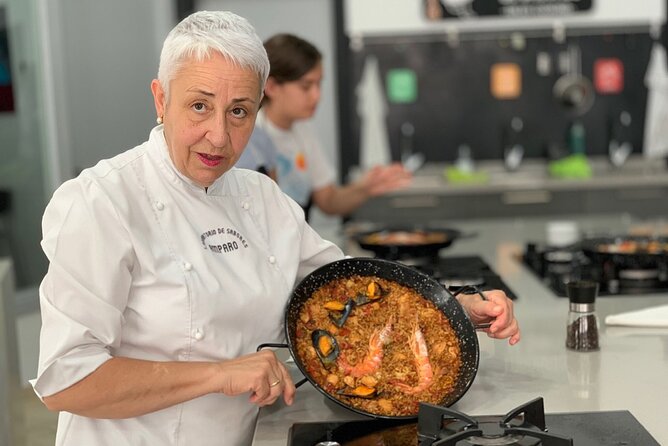
At about $84.69 per person for roughly 3.5 hours, this class is priced like a true small-group food experience, not a quick demo. The value is in what is included:
- Market experience where you learn ingredient choices
- Cooking session with step-by-step chef guidance
- Multiple food components (gazpacho, paella, snacks, churros)
- Drinks (wine or beer, plus sangría as part of the menu)
- Seasonal fruit
- Recipe handouts so you can try again at home
That last part, the recipes, is the real long-term value. A cooking class that gives you only food is fun. A class that gives you recipes and techniques keeps paying off when you are back in your kitchen.
Also, because it is booked about 40 days in advance on average, it is not always a last-minute whim. Popular dates can fill, and the smaller group size can make that even more true.
Who This Paella Class Fits Best
This is a strong fit if you:
- Want a hands-on Malaga food experience rather than a sit-down tasting
- Enjoy learning how dishes are built, especially rice and sofrito technique
- Like short city walks and want to connect food with neighborhood feel (market to Soho)
- Want a small group experience, not a big bus crowd
- Appreciate included tastings, drinks, and dessert, not just one plate
It may feel less ideal if you:
- Are tight on time and cannot spare a full half-afternoon
- Get easily thrown off by last-minute meeting point confusion (plan extra time)
How to Prepare So the Day Starts Smooth
This experience is near public transportation, but you still want to arrive on time. Since the meeting point can be a little tricky, I recommend you:
- Double-check the exact address for Kulinarea before you leave
- Give yourself extra buffer time to find the correct spot
- Bring a sense of humor if you need to ask for clarification early
Once you are in, you will get the most out of it by asking your guide for recommendations after the class. Several guides are known for offering what to eat next in Malaga, which can turn your “great afternoon” into a full food-focused trip.
Should You Book This Paella Class?
Yes, if you want the kind of cooking class that teaches real technique and gives you enough food to feel like you had a full meal plus a fun lesson.
Book it especially if you care about the market-to-pan flow, because the Atarazanas Market start helps you understand paella ingredients instead of treating them like a mystery box. The included olive oil tasting, gazpacho, and snacks make the class feel like a complete Andalusian food afternoon, not just a single main event.
Skip it or think twice only if you are extremely sensitive to meeting point hiccups or if your schedule cannot absorb a late start. In that case, reach out early for clarification, show up early, and keep your expectations flexible.
If you want paella done the Spanish way, with real guidance and a friendly group pace, this one is a solid bet in Malaga.
FAQ
Where is the meeting point for the paella cooking class?
The start point is at Kulinarea, Avenida de Manuel Agustín Heredia, 24, Distrito Centro, 29001 Málaga, Spain. The activity ends back at the same meeting point.
How long is the experience?
It runs for about 3 hours 30 minutes.
Is the class offered in English?
Yes. The experience is offered in English, and it may be operated by a multi-lingual guide.
What’s included in the food and drinks?
You get olive oil tasting, Aloreña olives or roasted almonds snack, gazpacho, paella, wine or beer paired with the menu, and a selection of seasonal fruits. All the recipes are included.
Is there a vegetarian option?
Yes. Vegetarian option is available, and you should advise the team at the time of booking.
Does the price include hotel pickup and drop-off?
No. Hotel pickup and drop-off are not included.
Workshops: the others that earned a place in Malaga
- Málaga: Spanish Cooking Workshop with Paella and Sangria
★ 4.9 · 613 reviews
Cooking Classes we rated next in Malaga
- Málaga: Spanish Cooking Workshop with Paella and Sangria
★ 4.9 · 613 reviews
Paella Pans and Market Cookery: the rest of our write-ups
- Málaga: Spanish Cooking Workshop with Paella and Sangria
★ 4.9 · 613 reviews - Malaga: Sailing Catamaran with Swimming and Paella Lunch
★ 4.1 · 578 reviews
Fresh off the desk: recent Malaga experiences we have written up









Paella Pans and Market Cookery, side by side.
 ★ 4.8Barcelona: Paella Cooking Experience & Boqueria Market TourFrom $853,661 reviews
 ★ 5.0Barcelona Paella Cooking Class with Market Visit, Tapas & SangriaFrom $1142,531 reviews
 ★ 4.4Menorca: Natural Coves and Beaches Boat Trip & Paella LunchFrom $631,753 reviews
 ★ 5.0Spanish Cooking Class Paella Tapas and Sangria in MadridFrom $1021,340 reviews
 ★ 5.0Barcelona Food Tour: Tapas, Paella, Sangria & 8+ Local TastingsFrom $1171,275 reviews
 ★ 4.9Madrid: Paella and Sangria Workshop in the City CenterFrom $691,264 reviews
 ★ 5.0Paella Cooking Class, Wine Tasting & Central Market in ValenciaFrom $841,150 reviews
 ★ 4.5Girona & Costa Brava Small Group Tour From Barcelona with Paella!From $1391,098 reviews
This tour also sits in