
Reviewed · WALKING TOURS
Barcelona in 2 Hours: Guided Walk Through History and Sights
Two hours can change how you see Barcelona. This walk turns famous corners into a clear story, from Els 4 Gats to Gothic cathedrals and squares tied to Catalan identity. I love how it connects art, faith, and politics, and I love the tight route that keeps you moving without feeling rushed.
My favorite part is that you do not get the quick photo-stop version of Barcelona. You get a guided pace, plus the kinds of details that make the street scene click, whether you are into architecture or just want to understand what you are looking at. Guides I saw highlighted by name, like Darren, Petra, Jorge, Sonia, and Vanessa, were praised for clarity and energy and for steering people toward spots they would not find alone.
One thing to consider: two of the big buildings, the Catedral de Barcelona and Basilica de Santa Maria del Mar, have admission not included, so you may pay extra. Also, because it is a walking tour with short stops, it is not the choice if you want long inside time at each site.
In This Review
- Key highlights you will actually feel on the street
- Why This 2-Hour Barcelona Walk Feels Like a Real Introduction
- Price and Value: What $22.99 Really Buys You
- Starting at Plaça del Vuit de Març: The Route That Makes Sense
- Stop-by-Stop: What Each Sight Teaches You
- Els 4 Gats: Where Art Circles Became a City Identity
- El Mon Neix En Cada Besada: A Photo Spot with Political Weight
- Catedral de Barcelona: Gothic Architecture and Saint Eulalia’s Story
- Casa de l’Ardiaca: Roman Remnants in the Gothic Quarter
- Pont del Bisbe: The Legend You Might Want to Take Seriously
- Placa Sant Felip Neri: A Square with Scars
- MUHBA – El Call: Medieval Streets of Jewish Life
- Plaça de Sant Jaume: Government, Protest, and Civic Power
- Plaça del Rei: Royal Power and the Spanish Inquisition
- Plaça de l’Àngel: From Wheat Square to a Saint Eulalia Miracle
- Basilica de Santa Maria del Mar: Maritime Gothic and Your Finish Line
- The Big Takeaway: Barcelona’s Identity Is Written in Streets
- How to Get the Most Out of the Walk
- Who This Tour Fits Best
- Should You Book This Barcelona in 2 Hours Tour?
- FAQ
- How long is the Barcelona in 2 Hours walking tour?
- What does the tour cost?
- Is the tour offered in English?
- Where does the tour start and end?
- Are admissions included for every stop?
- How large is the group?
- Can I cancel for a full refund?
Key highlights you will actually feel on the street
- A history-first route across Gothic Quarter and El Born, not a checklist of landmarks
- Els 4 Gats plus the Picasso and Gaudí connection that explains why the arts stuck in this city
- Catalan history markers tied to September 11, 1714, La Diada, and the scars of independence
- Stop-by-stop context for religion, Jewish life in El Call, and the Spanish Inquisition era
- A small group size (max 20) that makes questions practical
- Good value at $22.99, especially since many stops are free to enter
Why This 2-Hour Barcelona Walk Feels Like a Real Introduction
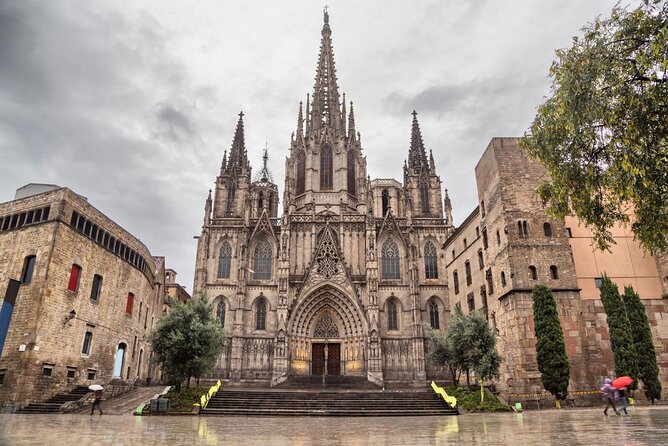
Barcelona can feel like a blur when you first arrive. Gaudí’s curves, Gothic stonework, busy plazas, and street art all mix together. This tour helps you sort it all out fast. You walk through the old core, and the guide keeps turning the sights into cause-and-effect: who lived here, what they believed, and why the city’s identity became the way it is.
What you get is not just a list of what to see. You get the why behind it. At places like Els 4 Gats, the stories explain how artistic circles formed here. At plazas like Plaça de Sant Jaume and Plaça del Rei, the conversation shifts to power, protest, and the darker chapters that shaped modern Catalonia. Even if you only stay two or three days, this kind of guided meaning helps your later self-guided wandering go better.
You also get a strong sense of the city’s “layers.” Roman traces show up near the aqueduct remnants at Casa de l’Ardiaca. Medieval streets appear when you walk into MUHBA – El Call. Then you hit church space and royal space. By the time you reach the sea-facing energy around Basilica de Santa Maria del Mar, the old city stops feeling like one big postcard and starts feeling like a timeline.
Price and Value: What $22.99 Really Buys You
At $22.99 per person for about two hours, this is priced like a budget-friendly orientation, but it includes more than a generic walking glance. The route has 11 stops, and many are admission free, which matters in Barcelona where popular sights can add up quickly.
Two stops do have admission not included: the Catedral de Barcelona and Basilica de Santa Maria del Mar. That is not a dealbreaker. It is a normal setup for guided walks in old towns, where you cannot always bundle every building fee. The key value point is that you are still getting the guide’s context at those locations, even if you choose to pay to go inside.
I also like the small-group approach. With a maximum of 20 people, you are less likely to feel like you are being herded. That helps questions land better, and it usually improves your chance of hearing the guide clearly at close range.
Other 2-Hour Experiences we sat down and reviewed across Barcelona




Starting at Plaça del Vuit de Març: The Route That Makes Sense
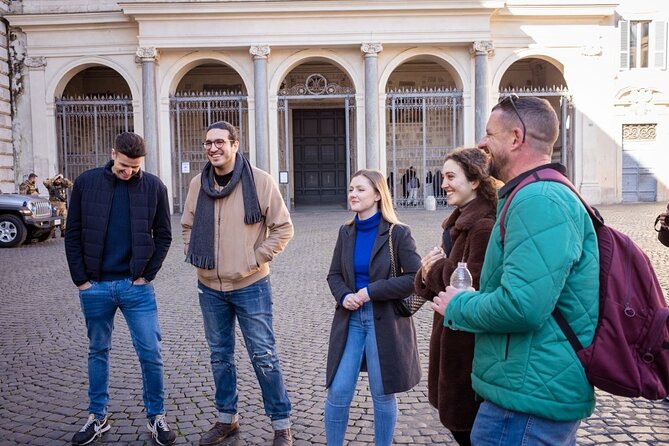
The tour starts at Plaça del Vuit de Març in Ciutat Vella and ends at Basilica de Santa Maria del Mar in the neighboring area of El Born. That start-to-finish idea is smart because you are not retracing your steps. You are trending through the oldest streets, from literary and artistic connections toward religious monuments and then down to a major Gothic basilica.
It also lines up with how most first-timers move. You begin in the Gothic core, where street scale is tight and the buildings rise close. Then you work across plazas and into the areas where you can see how civic life and faith shaped daily life. Ending at Santa Maria del Mar gives you a natural finish point where you can keep exploring nearby streets on your own.
Practical tip: this is a walking tour, and it is made of short visits (around 10 minutes each). Plan on wearing shoes you trust. One guide-friendly tip that keeps showing up in feedback is to use sun protection as well, because you will be outside for the full stretch.
Stop-by-Stop: What Each Sight Teaches You
This is the part that makes the tour worth it. The guide does not just point. You learn what you are supposed to notice, and what each place is connected to.
Els 4 Gats: Where Art Circles Became a City Identity
You begin at Els 4 Gats, a historic café and restaurant tied to the creative energy that Barcelona is famous for. The big reason this stop matters is the Picasso and Gaudí connection. You are not being asked to memorize dates. You are being shown why this kind of meeting space helped shape modern Catalan artistic identity.
Even if you only glance at the exterior, the place signals an artistic Barcelona mindset. It is easy to think of Gaudí as a lone genius. Stops like this remind you he and other artists moved within communities and scenes, and cafés and salons mattered.
Admission is listed as free here, which is a win. You get the story without a ticket line.
El Mon Neix En Cada Besada: A Photo Spot with Political Weight
Next is El Mon Neix En Cada Besada, known as an Instagrammable mosaic, but the real point is the history behind it. The guide ties it to Catalan defeat on September 11, 1714, and connects it to the celebration of La Diada, Catalonia Day.
If you only treat it like a mural for photos, you miss the thread. Here you learn to read street art as memory. That changes how you look at Barcelona after the tour too. You start wondering what else is commemorated in plain sight.
Admission is free, so you can focus on the explanation rather than logistics.
Catedral de Barcelona: Gothic Architecture and Saint Eulalia’s Story
Then you reach the Catedral de Barcelona, a Gothic church built over centuries. The guide highlights Eulalia, the patron saint of Barcelona, and explains how her life and death became a martyr story.
What makes this stop feel more than scenic is the way the religious narrative ties into civic identity. In many European cities, saints are local symbols. Here, the guide shows how devotion helped shape what people thought of as “Barcelona.”
One practical note: admission is not included for the cathedral. If you are hoping for inside time, decide ahead of time whether you want to pay based on your interests. Either way, the guide’s context helps you appreciate what you are looking at from outside.
Worth a side-by-side look, our other Historical Tours in Barcelona
- Barcelona: Tapas Walking Tour with Food, Wine, and History
- Barcelona Tapas Walking Tour: Food, Wine & History
- Barcelona: 2.5-Hour Bike or E-Bike Historical Tour
- Barcelona Erotic Museum – Explore Art, History & Fun
- Andorra Original History and Sightseeing Tour (Private, Pickup)
- Barcelona: Dark History Night Walking Tour
- Tarragona and Sitges Small Group Tour – Roman History & Culture
- Historical and Modernist Bike Tour Barcelona
Casa de l’Ardiaca: Roman Remnants in the Gothic Quarter
At Casa de l’Ardiaca, you get a compact lesson in architectural blending. It is described as a small architectural standout that mixes Gothic and Renaissance elements, and it also reaches back toward Roman times.
The guide points out remnants of Roman infrastructure, including wall traces and aqueduct arcades that once supplied Barcino with water. That is the kind of detail that makes the old city feel layered instead of frozen. You stop seeing buildings as static. You see them as built over older built-up life.
Admission is free, so it is an easy win for anyone who likes architecture but does not want to pay for every stop.
Pont del Bisbe: The Legend You Might Want to Take Seriously
Pont del Bisbe is famous for being photographed. The twist is the legend tied to walking under it. The guide frames it so superstitious visitors might take it seriously, and skeptical visitors might still think twice.
Even if the legend is the reason you notice it, the guide uses it to show how folklore becomes part of daily movement. In places like this, the city’s stories are not museum-only. They live in routes people walk every day.
Admission is free, and the stop is quick, so you can keep momentum.
Placa Sant Felip Neri: A Square with Scars
At Plaça Sant Felip Neri, you shift into a more sombre tone. This square is linked to the desire for Catalan independence and the tragic past that left lasting scars.
This stop matters because it shows how history is not only dates and battles. It is also where people gather, remember, and argue about identity. You leave the square understanding that Catalonia’s story is present tense for locals.
Admission is free, so you get the full impact just by listening and looking.
MUHBA – El Call: Medieval Streets of Jewish Life
Next is MUHBA – El Call, the old district connected to Barcelona’s former Jewish population. You get narrow streets and medieval atmosphere, but the guide’s focus is on historical context, not just ambiance.
This stop is valuable because it expands the city beyond the typical Gothic-and-Gaudí storyline. You understand how multiple communities shaped the urban fabric.
Admission is free here, making it an easy stop even if you are trying to manage costs.
Plaça de Sant Jaume: Government, Protest, and Civic Power
Then you reach Plaça de Sant Jaume, the main square where the seat of Catalan government and City Hall sit. The guide frames it as a place of both celebration and protest.
You also hear about an important figure connected to one of the beloved holidays of the year. That connection between square and celebration helps you understand why certain public spaces matter. In Barcelona, plazas are not just viewpoints. They are stages.
Admission is free. You get plenty of time to take in the civic setting while the story connects it to living Catalan identity.
Plaça del Rei: Royal Power and the Spanish Inquisition
At Plaça del Rei, the mood darkens again. This imposing square connects to the Royal Palace and to the period associated with the Spanish Inquisition.
The guide uses this to show how the old city’s architecture can carry political weight. Stone walls and formal squares are not neutral. They are part of systems of control, belief, and enforcement.
Admission is free, so you can focus on story without extra fees.
Plaça de l’Àngel: From Wheat Square to a Saint Eulalia Miracle
Next is Plaça de l’Àngel, once known as Wheat Square because of grain trading. The name changes when a heavenly apparition appears during the procession of Saint Eulalia’s body.
This is a fun stop if you like the way religion and street life overlap. It is also a good reminder that Barcelona’s stories often involve a shift from everyday business to sacred meaning.
Admission is free. The guide keeps it moving, so you take in the details without getting stuck in one spot too long.
Basilica de Santa Maria del Mar: Maritime Gothic and Your Finish Line
Finally, you end at Basilica de Santa Maria del Mar. It is a Gothic basilica in the El Born neighborhood and tied to the city’s maritime history.
If you have been following the tour’s thread of identity and community, this ending clicks. Harbor life meant work, risk, trade, and travel, and that shapes how a city builds its major religious spaces.
Admission is not included here. You can decide whether to add inside time based on your interest level. Either way, finishing here gives you a strong transition point for more exploring in El Born.
The Big Takeaway: Barcelona’s Identity Is Written in Streets
If you only look at Barcelona as architecture, you miss the human story. This walk makes you see the city as a set of communities, conflicts, and celebrations that still echo in public space.
A key theme is Catalan identity. The tour links street art and squares to La Diada and to the long pressure around independence. It also places religious stories, political power, and public life side by side. That is why the route feels more meaningful than a standard sightseeing shuffle.
It also helps with context later when you visit other neighborhoods. You start recognizing what kind of memory a city chooses to display, and what kind of message it leaves in plain sight.
How to Get the Most Out of the Walk
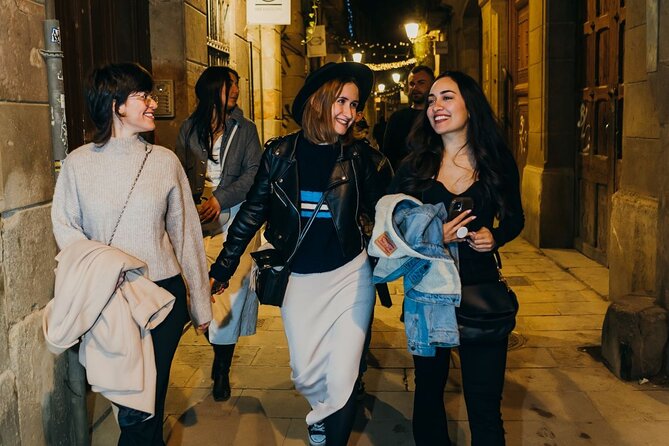
To enjoy this tour, I suggest you treat it like a guided orientation, not a slow museum visit. Keep your questions short and specific, because the guide moves quickly from one story to the next.
A few practical things that make a difference:
- Bring water if it is warm. The tour is outdoors for the entire window.
- Use good walking shoes. The stops are close but the total walk adds up.
- If you are sitting or standing where the street noise rises, lean in. One piece of feedback mentions background noise and that some guides may not use extra audio equipment, so you will want to position yourself for clarity.
And if you like food, ask the guide for a nearby tapas recommendation. At least one guide included a suggestion like Tapas 2254, which shows you how the tour can connect history with what you do next.
Who This Tour Fits Best
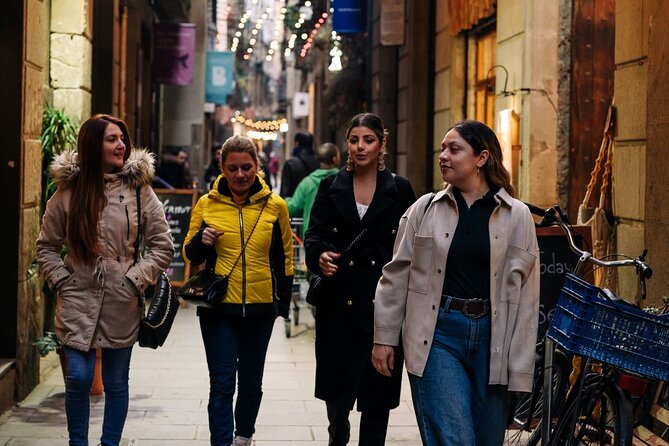
This is a strong fit if you:
- Want a fast, structured way to understand Barcelona’s old city
- Enjoy stories that connect art, religion, and politics
- Like walking tours where a guide gives you context you can use later
- Are traveling on a schedule and need orientation on day one or two
It may not be ideal if you:
- Want long time inside major sites, since two big churches charge separate admission
- Hate walking or standing around while listening in public squares
- Prefer a silent self-guided pace with unlimited time at each stop
Should You Book This Barcelona in 2 Hours Tour?
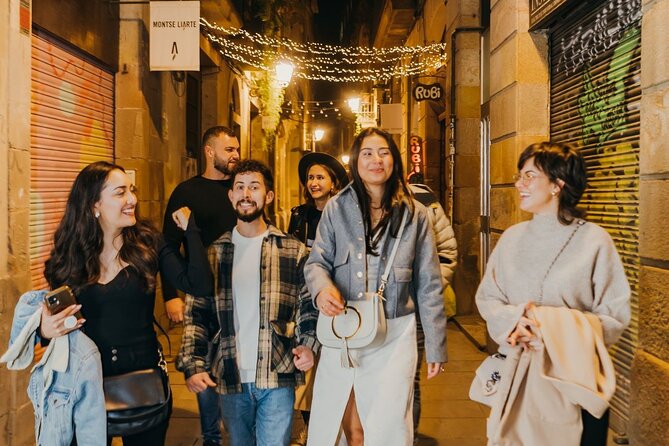
I think this is a smart booking if you want to see more than the surface. The biggest reason is the way the tour turns stops into a coherent story, with Catalan identity, artistic connections, and layered history all tied to places you can revisit later.
If you are okay with short stops and possible extra entry fees for the cathedral and basilica, the value is solid. At $22.99 and a max 20-person group size, you get a guided introduction that helps your whole trip make sense.
If you want a first pass at Barcelona that feels guided, practical, and story-driven, book it. Then use the route’s momentum to explore El Born and the Gothic Quarter further on your own, with a clearer sense of what you are looking at.
FAQ
How long is the Barcelona in 2 Hours walking tour?
It runs for approximately 2 hours.
What does the tour cost?
The price is $22.99 per person.
Is the tour offered in English?
Yes, the tour is offered in English.
Where does the tour start and end?
It starts at Plaça del Vuit de Març, Ciutat Vella, 08002 Barcelona, Spain and ends at Basílica de Santa Maria del Mar Plaça de Santa Maria, 1, Ciutat Vella, 08003 Barcelona, Spain.
Are admissions included for every stop?
No. Some stops are free, but others like the Catedral de Barcelona and Basilica de Santa Maria del Mar list admission as not included.
How large is the group?
The tour has a maximum of 20 travelers.
Can I cancel for a full refund?
Yes. You can cancel up to 24 hours in advance for a full refund. If you cancel less than 24 hours before the start time, the amount paid is not refunded.
Our other Walking Tours across Barcelona
- Barcelona Tapas and Wine Experience Small-Group Walking Tour
★ 5.0 · 5,804 reviews - Barcelona: Tapas Walking Tour with Food, Wine, and History
★ 4.8 · 4,261 reviews - Barcelona Tapas Walking Tour: Food, Wine & History
★ 4.5 · 1,928 reviews - Barcelona: Tapas Food Crawl Walking Tour with Tastings
★ 4.9 · 1,798 reviews - Barcelona Helicopter, Sailboat & Old Town Private Walking Tour
★ 5.0 · 1,395 reviews
Historical Tours: the others that earned a place in Barcelona
- Barcelona: Tapas Walking Tour with Food, Wine, and History
★ 4.8 · 4,261 reviews - Barcelona Tapas Walking Tour: Food, Wine & History
★ 4.5 · 1,928 reviews - Barcelona: 2.5-Hour Bike or E-Bike Historical Tour
★ 4.5 · 1,262 reviews - Barcelona Erotic Museum – Explore Art, History & Fun
★ 4.4 · 450 reviews - Andorra Original History and Sightseeing Tour (Private, Pickup)
★ 5.0 · 350 reviews
More 2-Hour Experiences from the Barcelona notebook
- Barcelona: Two-Hour Midday or Sunset Sailing Cruise
★ 4.8 · 1,732 reviews - Barcelona: 2-Hour City Sights Guided Segway Tour
★ 4.9 · 453 reviews - Barcelona: 2-Hour Sailboat Tour with Snacks and Drinks
★ 4.8 · 357 reviews - Barcelona: Jewish Quarter 2-Hour Walking Tour
★ 4.8 · 333 reviews - 2-Hour Sailing Tour in Barcelona with Open Bar & Snacks
★ 5.0 · 318 reviews
Fresh off the desk: recent Barcelona experiences we have written up



Walking Tours, side by side.
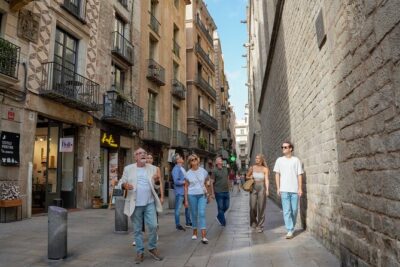 ★ 5.0Barcelona Tapas and Wine Experience Small-Group Walking TourFrom $835,804 reviews
 ★ 4.8Barcelona: Tapas Walking Tour with Food, Wine, and HistoryFrom $784,261 reviews
 ★ 4.9Granada: Albaicín and Sacromonte Guided Sunset Walking TourFrom $172,962 reviews
 ★ 5.0Toledo Tour & Vineyard Walk with Wine Tasting from MadridFrom $1332,546 reviews
 ★ 5.0Madrid Walking Tour from Puerta del Sol to Retiro ParkFrom $32,285 reviews
 ★ 4.5Barcelona Tapas Walking Tour: Food, Wine & HistoryFrom $661,928 reviews
 ★ 4.5Madrid Old Town & Royal Palace Walking Tour Skip the Line TicketFrom $401,829 reviews
 ★ 4.9Barcelona: Tapas Food Crawl Walking Tour with TastingsFrom $821,798 reviews
This tour also sits in