
Reviewed · TUK-TUKS
Madrid Expert Plus Tour with Local Guide in Eco Tuk Tuk Private
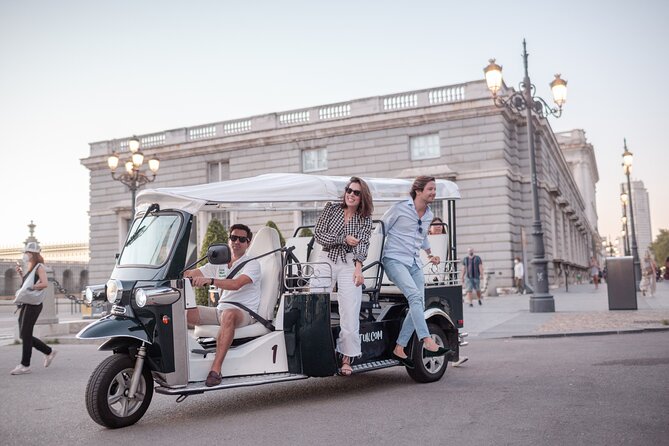
Madrid clicks into place fast. This private Eco Tuk Tuk ride makes the city feel readable, with a local guide connecting big landmarks like the Royal Palace and the Templo de Debod to the Madrid you actually walk through. On routes led by guides such as Christian, Lucia, Juan, and Enrique, the stories come with practical city tips too.
I especially love how the tour uses 100% electric transport in a covered setup, so you are not stuck sweating or shivering while trying to take in the details. I also like the built-in convenience: pre-selected photography stops, a schedule built to avoid delays, and a guide who keeps things moving without rushing you.
One drawback to consider: the plan is set. You cannot swap the stops on the fly, photo moments are in fixed places, and if you are late, the time window shrinks fast.
In This Review
- Key things to know before you go
- Why an electric Eco Tuk Tuk tour feels easier in Madrid
- Getting started near Puerta del Príncipe, right by Plaza de Oriente
- Covered Market and Atocha Station: seeing everyday Madrid first
- Palacio de las Cortes: classic Madrid architecture with real political history
- Plaza de Cánovas del Castillo and the Fountain of Neptune
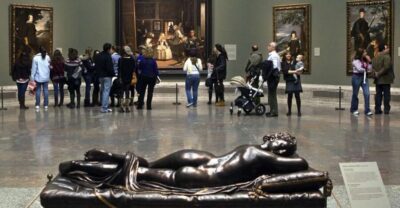
- Prado-area masterpieces: why this museum stands at the center of European painting
- San Jerónimo el Real: a royal church next to the Prado
- Puerta de Alcalá: a neoclassical arc that teaches you how Madrid staged power
- Plaza de Santa Ana: a classic square in the Cortes neighborhood
- Royal Basilica of San Francisco el Grande and Almudena Cathedral
- Royal Palace, Campo del Moro, and Sabatini gardens: the royal skyline feeling
- Temple of Debod: ancient Egypt in Madrid, and a quick but memorable pause
- Puerta de Alcalá and beyond: the tour reaches Salamanca and beyond
- Columbus monument, Cibeles, and the city’s modern monument circuit
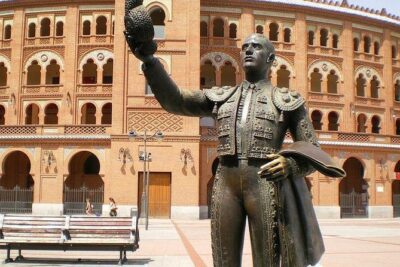
- Las Ventas bullring: big scale, even if you are not into bullfighting
- Food, shopping, and the value of a good guide
- How long should you choose, 2 hours or 4 hours?
- Price and what you truly get for about $28 per person
- Should you book the Madrid Expert Plus Eco Tuk Tuk tour?
- FAQ
- How long is the Madrid Expert Plus Tour in the Eco Tuk Tuk?
- Is the tour private, and what language is it offered in?
- What weather support is included for cold or rainy days?
- What major sights are included in the tour?
- Where do I meet the driver and get the tuk-tuk?
- Are there age, weight, or pet restrictions?
- Can I cancel for a full refund?
Key things to know before you go
- Eco-friendly electric tuk-tuk ride with blankets and protective layers for wind and rain
- Private vehicle for your group only, with up to 4 passengers per tuk-tuk
- No queues or waiting at the start, built for an efficient first-day overview
- Big landmark highlights spanning royal Madrid, museum Madrid, and modern neighborhoods
- Photo-friendly stops at pre-arranged viewpoints, including Templo de Debod
- Guides like Lucia, Juan, and Enrique bring stories plus real-world tips for food and shopping
Why an electric Eco Tuk Tuk tour feels easier in Madrid
Madrid is a city where you can waste a whole morning simply getting your bearings. This Eco Tuk Tuk approach helps because the vehicle does the heavy lifting. You get the freedom of seeing several neighborhoods in one go, without the fatigue that comes from trying to walk everything, especially if you land with tight timing or you have legs that are already tired from earlier sightseeing.
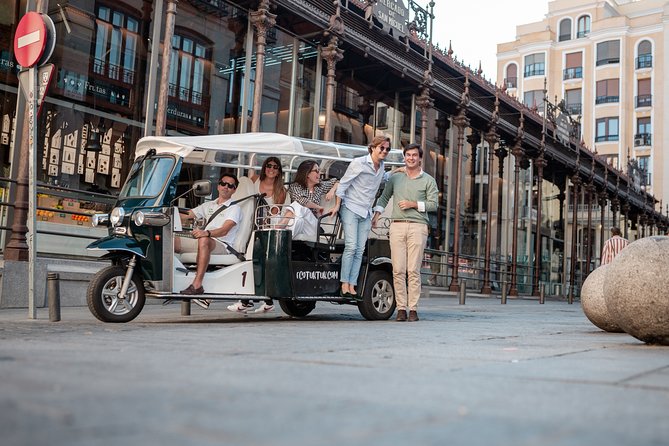
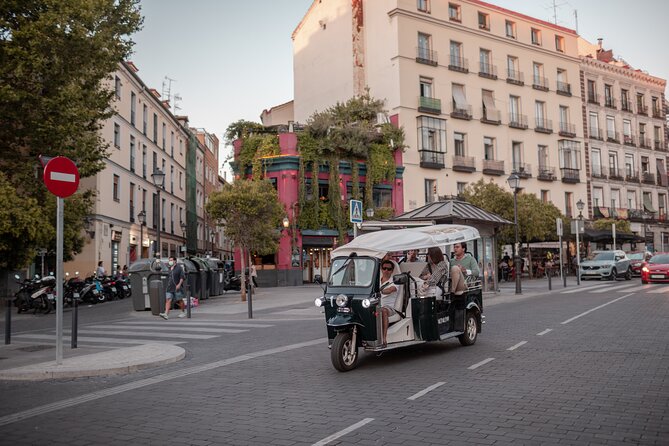
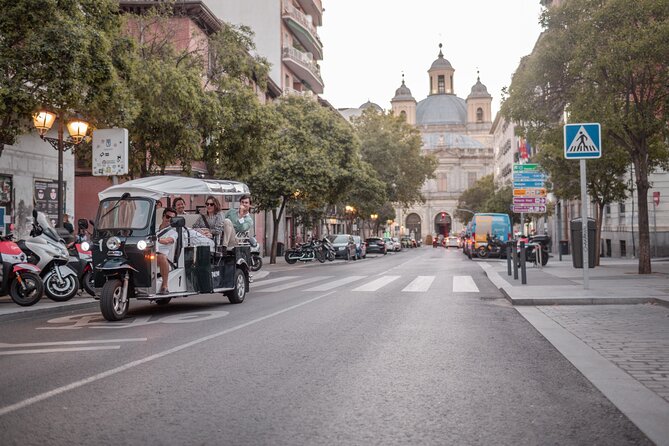
The ride also matches Madrid’s street reality. Some of the most interesting corners are not where big buses want to go. With a small, covered, motorized tuk-tuk, you can glide through areas that feel more local, then pop out near major sights where photos are actually worth the stop.
If you travel in a cooler or rainy season, the vehicle setup is part of the value. You are not just depending on luck. Blankets are provided in winter, and you get protective layers against rain and wind. That means you can keep sightseeing even when the weather tries to spoil the plan.
Getting started near Puerta del Príncipe, right by Plaza de Oriente
The meeting point is in the Centro area, near the Royal Palace, at C. de Bailén, 4, 28013 Madrid. The key detail is how to find it: you are heading to the bus station underground at Plaza de Oriente, next to the palace. There is no number 4 visible on Calle Bailén, so use Puerta del Príncipe in Google Maps to locate the right spot.
Once you are there, look for the Prince’s Gate area and the stairs that lead to the station level. You will see Eco Tuk Tuk signage. If you want backup, you can contact the team by phone or WhatsApp.
This matters because the whole tour works best when you are ready to roll on time. If you are delayed, the activity may be reduced based on lost time, and it can be canceled if your delay goes beyond 15 minutes, with no refund.
Undecided so far? The rest of our Private coverage in Madrid



Covered Market and Atocha Station: seeing everyday Madrid first
The early stops are smart because they ground the experience. Instead of starting only with monuments, you begin with a covered market area dating from around 1916. Markets in Madrid are not just places to buy food. They are where the city’s daily rhythm shows up: deli culture, local staples, and a lived-in atmosphere.
Then comes Atocha Station. This is not just a train stop. It is a large railway complex near Plaza del Emperador Carlos V, and it serves as a major hub, described as the busiest station in Spain and one of the busiest in Europe. From your tuk-tuk, you get the sense of how Madrid connects to the rest of the country and beyond, and your guide can translate that into context you can feel as you move through the city.
Palacio de las Cortes: classic Madrid architecture with real political history
Next, you visit the Palace of the Spanish Courts. The building sits on the former convent of the Holy Spirit, used as the seat of Congress between 1834 and 1841. That kind of transformation is very Madrid, old structures changing roles as the country evolves.
Even if you do not get a long interior visit, the external design details are the point. The guide can point out the neoclassical facade elements, including the staircase leading to a neoclassical porch with six columns of the Corinthian order, plus the triangular pediment with reliefs. You also learn about those lions flanking the entrance, connected to historical events and material reuse.
This stop is especially good if you like architecture that has a story, not just a pretty facade.
Plaza de Cánovas del Castillo and the Fountain of Neptune
After the grand civic building mood, you shift to a more playful landmark: the fountain of Neptune. It occupies the center of the roundabout in Plaza de Cánovas del Castillo, which gives the fountain its nickname. The timeline here is useful because it helps you see how Madrid builds its monuments in phases. Proposed in 1777, construction began in 1782, and it was completed in 1786.
From a tuk-tuk viewpoint, you can take in the symmetry and scale quickly. The guide’s job is to connect the monument to the broader city style, so you understand what you are seeing instead of just snapping photos and moving on.
Prado-area masterpieces: why this museum stands at the center of European painting
One of the biggest cultural stops is the museum area near the Prado. The guide explains why this place matters so much for European painting, with standout mentions of major artists like Velázquez, El Greco, Goya, Tiziano, Rubens, and El Bosco. It is framed as an especially strong collection for multiple eras, not just one school of art.
Even if you do not go deep into galleries on this ride, this stop is still valuable. You learn how to look at the city with museum logic. Madrid is not only streets and squares. It is also a capital that collected and displayed art with serious intent.
San Jerónimo el Real: a royal church next to the Prado
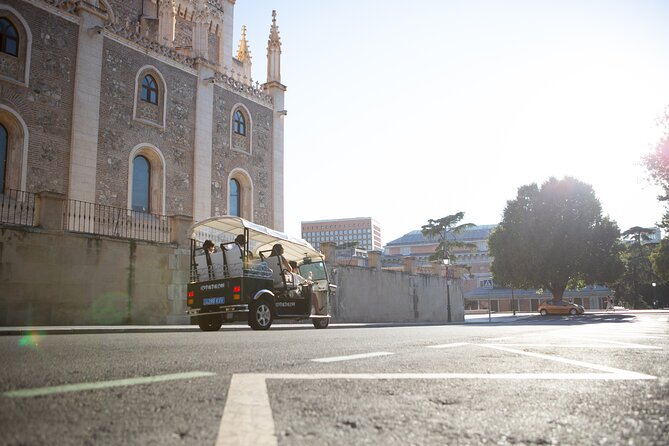
Right beside the Prado area, you will likely see San Jerónimo el Real, the Parish Church of San Jerónimo el Real, popularly known as Los Jerónimos. This church blends late Gothic with Renaissance influences from the early 1500s. A lot of the original structure is gone, and the building has been remodeled and restored many times.
What makes this stop more than a church photo is the royal connection. The guide ties the church’s relationship to Spain’s monarchs, including early royal construction and its role as a spiritual retreat. It also became a site for royal investiture when there was no cathedral, and the wedding of Alfonso XIII took place here.
More of the same shelf: Tuk-Tuks we have written up in Madrid
Puerta de Alcalá: a neoclassical arc that teaches you how Madrid staged power
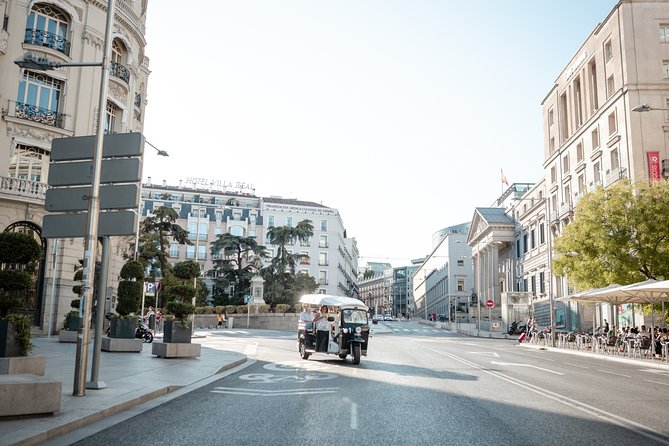
Puerta de Alcalá is one of those sights where you instantly recognize it, even if you cannot name it right away. The guide places it in context: designed by Francesco Sabatini and inaugurated in 1778, built on the neoclassical style as a kind of triumphal arc. The building is granite, and the design includes five openings, not the usual three.
This is also a good photo moment because you are not looking at a small ornament. You are looking at a full-on city statement. The guide can point out how the inner and outer facades differ in decorative wealth, which changes what the gate means depending on which direction you approach it.
Plaza de Santa Ana: a classic square in the Cortes neighborhood
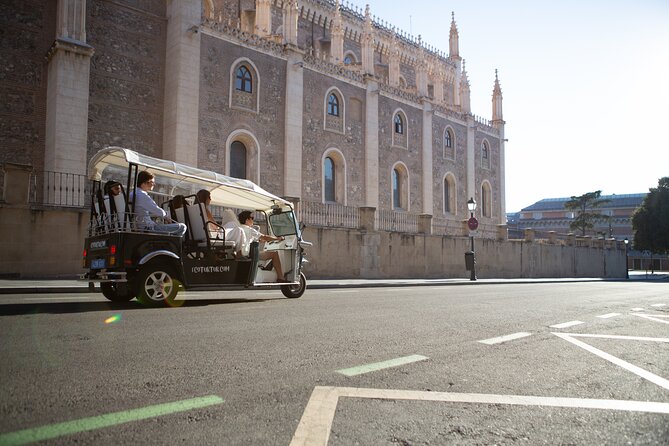
After the big architectural moments, you shift to a more human-scale space: Plaza de Santa Ana. Dating from 1810, it has gone through multiple urban changes over the years. Squares like this are where Madrid’s nightlife and street life tend to gather, and your tuk-tuk ride helps you feel the vibe without having to navigate on foot right away.
This stop is a useful breather, especially if you are doing the longer option. It keeps you from being “sightseeing exhausted” right before the tour hits the bigger zones.
Royal Basilica of San Francisco el Grande and Almudena Cathedral
Two major religious stops can make your tour feel surprisingly complete, because they show how Madrid’s spiritual identity is layered.
The Royal Basilica of San Francisco el Grande (officially Basilica of Our Lady of the Angels) is in the Palacio neighborhood within the historic center. Then you move to the Almudena Cathedral. This cathedral became the first consecrated cathedral outside Rome after Pope John Paul II’s consecration in 1993. There is also an Almudena Cathedral Museum with many objects that tell the story of the diocese of Madrid across multiple rooms.
Even without a long museum session, these stops are powerful because your guide ties the buildings to Madrid’s timeline. You start to see how the city built religious authority and cultural identity over centuries.
Royal Palace, Campo del Moro, and Sabatini gardens: the royal skyline feeling
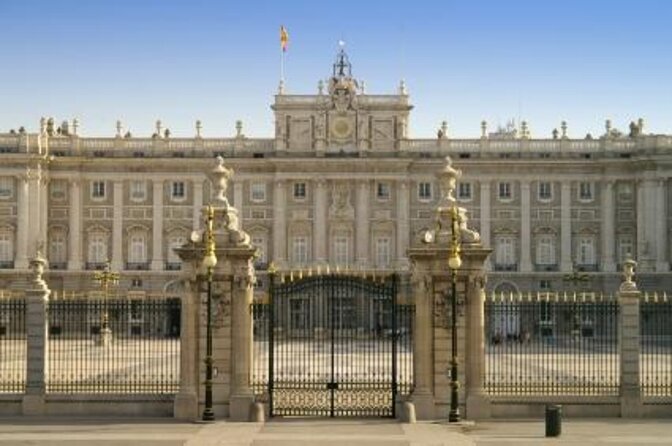
Now you get the big one: the Royal Palace, also called Palacio de Oriente. The construction started in 1738 and took 17 years, and Carlos III established it as his habitual residence in 1764. The palace sits on the former location of the Palace of the Austrias, destroyed in a fire during Christmas Eve in 1734.
The guide also connects the palace to the gardens that shape the experience of standing near it. Campo del Moro stretches about 20 hectares from the palace toward the promenade of the Virgin of the Port, and it is described as historical-artistic interest. The Sabatini gardens are created in the twentieth century and sit to the north.
This portion works well in a tuk-tuk because you can get the palace in your visual field without trying to cross large distances on foot. It also helps you understand how the palace relates to the surrounding royal landscape, not just the building itself.
Temple of Debod: ancient Egypt in Madrid, and a quick but memorable pause
Templo de Debod is one of the most distinctive stops in the whole city. It is an ancient Egyptian temple building currently located in Madrid, west of Plaza de España, near the Paseo del Pintor Rosales. The ride times it well too, with about 15 minutes there, and admission is free.
You learn the contrast immediately. Madrid’s architecture and streets become backdrop, while this temple changes your mental map of the city. It is the kind of stop that makes a tuk-tuk tour feel special, not just convenient.
Puerta de Alcalá and beyond: the tour reaches Salamanca and beyond
From here, the tour shifts into “different Madrid” mode. You will likely pass into the Barrio Salamanca area, including streets like Velázquez, Ortega y Gasset, and Serrano. Salamanca is the part of Madrid many visitors associate with refined shopping streets and elegant blocks, and moving through it on a small tuk-tuk keeps the vibe intimate rather than tourist-crowded.
Then the tour heads along Paseo de la Castellana toward Santiago Bernabéu Stadium. The stadium story is built into the experience: inaugurated December 14, 1947, and currently described with a capacity of 81,044. Even if you do not step inside, the guide can explain why this landmark matters in modern Madrid culture, not just sports.
Columbus monument, Cibeles, and the city’s modern monument circuit
From the stadium route, you also get a classic monument stop: the Christopher Columbus monument, which presides over a square with a fountain-like circular traffic layout. The neo-Gothic white marble sculpture is about 17 meters tall, built in 1885 by Jerónimo Suñol for the Alfonso XII and María de las Mercedes de Orleans wedding celebration.
The square also features the Gardens of Discovery, opened in 1970, where you can admire sculptures tied to discovery themes. There is also the Cultural Center of the Villa Fernán Gómez in the basement.
Next up is the Fountain of Cibeles. The guide frames it as a Roman goddess symbolizing land, agriculture, and fertility, riding a chariot pulled by two lions. The goddess is carved in marble, while the rest is in stone, and your tour can point out that the lions were sculpted by Roberto Michel. It is also linked to Real Madrid celebrations.
This is where Madrid’s identity becomes obvious: the city constantly mixes ancient myth, modern sports energy, and civic architecture. From a vehicle like this, it feels like you are driving through a museum of public spaces.
Las Ventas bullring: big scale, even if you are not into bullfighting
Las Ventas is included, and it is described as the biggest bullfighting arena in Spain. The numbers here are jaw-opening: 23,798 spectators and a ring diameter of 61.5 meters, with a capacity currently listed at 81,044 after its long history since its inauguration on December 14, 1947.
Even if you do not care about bullfighting, this stop is useful because it shows how Madrid stages major public events. Your guide can contextualize it culturally, so it becomes part of understanding Madrid as a city of spectacle and tradition.
Food, shopping, and the value of a good guide
The best part of this kind of tour is not the vehicle. It is the person holding the thread together. In the guide names that show up most in successful rides, you see a pattern: guides like Christian, Lucia, Juan, Enrique, Laura, Lluis, Camilo, and Lechia are repeatedly credited with engaging storytelling and practical suggestions.
A good guide also helps you avoid the common tourist trap of sightseeing without deciding what to eat or where to stroll next. If the guide gives you direct recommendations, it saves time after the tour ends, which is where the real value lives.
How long should you choose, 2 hours or 4 hours?
The tour runs approximately 2 to 4 hours. If you are on your first day and you want a complete overview, 3 to 4 hours is the safer bet. You get more chances to stop near major landmarks and still have time to soak in the contrasts, royal Madrid to museum Madrid to modern Madrid.
If you are short on time or you have already done museum days, a 2 hour option can still work. It helps you learn the city layout quickly, then you can return later for deeper visits where you actually want to spend money and time.
One caution: the tour is set. You cannot add stops or extend photo breaks on your schedule. That is why the right duration matters. Pick the length that matches your stamina and your travel pace.
Price and what you truly get for about $28 per person
At $28.67 per person for 2 to 4 hours, the price is about what you might pay for a ticketed attraction, but you are getting something broader. You are paying for a local guide, transportation in a 100% electric vehicle, weather gear, and structured photo stops across multiple districts.
The tour is also private for your group only. A tuk-tuk holds up to 4 passengers per vehicle, and the price scales based on how many tuk-tuks are needed for your group, up to the legal passenger maximum. That means families or small groups may feel the best value, especially compared with hiring separate services for getting around and learning at the same time.
If you plan to book, do it earlier. The average booking window is about 37 days in advance, which is a hint that this tour style is popular for first-time visitors.
Should you book the Madrid Expert Plus Eco Tuk Tuk tour?
Book it if you want a fast, guided overview that mixes royal sights, major museums area landmarks, and modern Madrid monuments without turning your day into an endurance event. It is also a great choice if you dislike rigid big bus schedules, since the vehicle is small and designed for street-level movement.
Skip it if you mainly want free-form wandering or you like controlling every stop detail. This tour is structured, and photo moments are set in advance. If your plans are constantly changing or you are likely to be late, the fixed timing can be stressful.
If you do book, I recommend treating it like your Madrid orientation session. After the ride, pick one or two places from the day and return on your own time for deeper exploration, meals, and slower photos.
FAQ
How long is the Madrid Expert Plus Tour in the Eco Tuk Tuk?
It runs for about 2 to 4 hours, depending on the route and timing on the day.
Is the tour private, and what language is it offered in?
Yes, it is private for your group only. The tour is offered in English.
What weather support is included for cold or rainy days?
In winter, blankets are provided. You also get protective layers against rain and wind to help you stay warm and comfortable.
What major sights are included in the tour?
The highlights include stops such as the Royal Palace area, Plaza Mayor area, Templo de Debod, Atocha Station, the Prado area, San Jerónimo el Real, Puerta de Alcalá, Las Ventas bullring, Santiago Bernabéu stadium, Cibeles, and Almudena Cathedral.
Where do I meet the driver and get the tuk-tuk?
The tour starts at C. de Bailén, 4, Centro, 28013 Madrid, near Plaza de Oriente and the Royal Palace. The pickup is at the underground bus station by the Prince’s Gate area. Eco Tuk Tuk signage will help you locate the exact spot.
Are there age, weight, or pet restrictions?
Minimum age is two years old, and babies are not allowed. There is also a minimum weight requirement of 9 kg. Pets are not allowed.
Can I cancel for a full refund?
Yes. You can cancel up to 24 hours in advance for a full refund. If you cancel less than 24 hours before the experience starts, the amount paid is not refunded.
Tuk-Tuks worth comparing before you book in Madrid
- Madrid Welcome Tour with Local Guide in Eco Tuk Tuk Private
★ 5.0 · 2,936 reviews - Madrid: Private City Tour by Eco Tuk Tuk
★ 4.9 · 2,876 reviews - Madrid Historical Tour with Local Guide in Eco Tuk Tuk Private
★ 5.0 · 876 reviews - Madrid Express Tour with Local Guide in Eco Tuk Tuk Private
★ 5.0 · 413 reviews - Madrid: City Highlights Tuk Tuk Tour
★ 4.4 · 334 reviews
Further Private we have reviewed in Madrid
- Madrid Welcome Tour with Local Guide in Eco Tuk Tuk Private
★ 5.0 · 2,936 reviews - Madrid: Private City Tour by Eco Tuk Tuk
★ 4.9 · 2,876 reviews - Madrid Historical Tour with Local Guide in Eco Tuk Tuk Private
★ 5.0 · 876 reviews - Toledo Private Tour with Licensed Guide and Driver from Madrid
★ 5.0 · 637 reviews - Madrid Private Segway tour. Retiro Park – Centro Historico
★ 4.9 · 636 reviews
Tours: the rest of our Madrid write-ups
- Madrid: Tour Bernabéu Entry Ticket
★ 4.5 · 21,573 reviews - Madrid: Panoramic Route City Tour
★ 4.1 · 12,259 reviews - Avila & Segovia Tour with Tickets to Monuments from Madrid
★ 5.0 · 9,762 reviews - Madrid: Segovia and Toledo Tour, Alcazar, and Cathedral
★ 4.7 · 7,797 reviews - Madrid: Royal Palace Expert Guided Tour with Skip-the-Line
★ 4.7 · 6,986 reviews
Fresh off the desk: recent Madrid experiences we have written up


Tuk-Tuks, side by side.
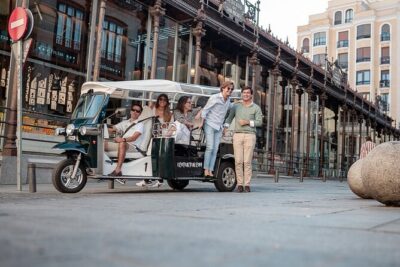 ★ 5.0Madrid Welcome Tour with Local Guide in Eco Tuk Tuk PrivateFrom $282,936 reviews
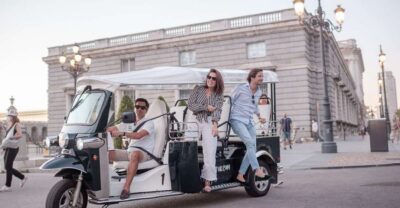 ★ 4.9Madrid: Private City Tour by Eco Tuk TukFrom $612,876 reviews
 ★ 5.0Tour Welcome Barcelona with Local Guide in Eco Tuk Tuk PrivateFrom $281,882 reviews
 ★ 4.9Barcelona: Private City Tour by Eco Tuk TukFrom $331,339 reviews
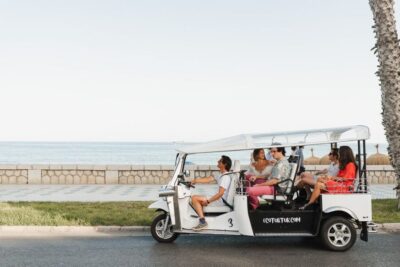 ★ 4.9Malaga: Private City Tour by Eco Tuk TukFrom $281,319 reviews
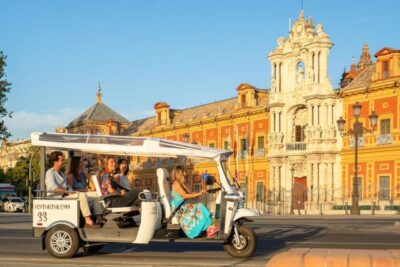 ★ 4.8Seville: Private City Tour by Eco Tuk TukFrom $33963 reviews
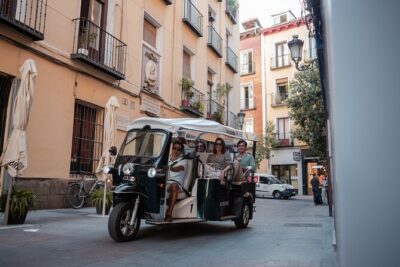 ★ 5.0Madrid Historical Tour with Local Guide in Eco Tuk Tuk PrivateFrom $28876 reviews
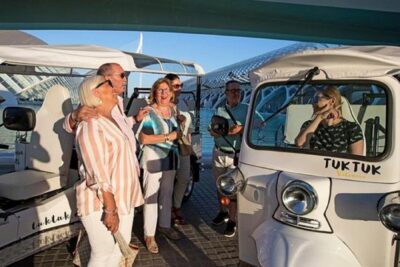 ★ 4.8Valencia: Complete Tuk-Tuk Tour Around the CityFrom $47793 reviews
This tour also sits in