
Reviewed · TUK-TUKS
Madrid Historical Tour with Local Guide in Eco Tuk Tuk Private
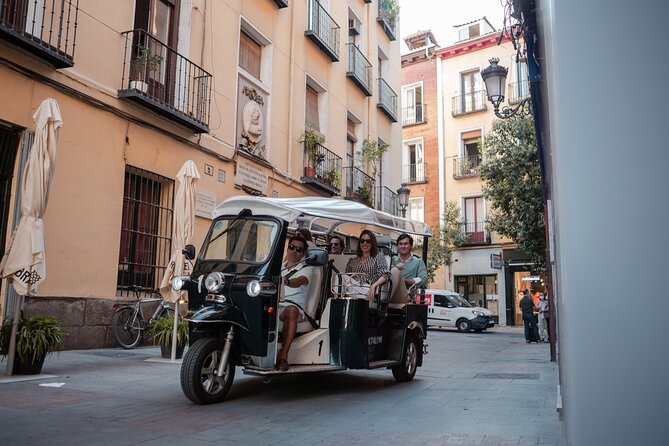
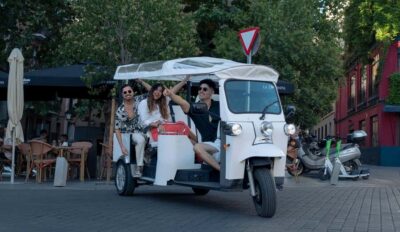
A tiny electric tuk-tuk makes Madrid click. This private, English-language tour uses a 100% electric ride to link classic landmarks and local neighborhood flavor without wasting your energy stuck in traffic or long walks. It’s a smart way to get oriented fast, especially if you’re seeing Madrid for the first time.
I love the no-queue start and the tight, story-led pacing from your local guide. You’ll also appreciate the photo planning built into the route, plus extra comfort for weather with blankets and protective layers when it’s chilly.
One consideration: you’re on a pre-arranged set of stops and photo moments, so if your dream plan is flexible, this tour is less of a free-for-all and more of a guided highlights route. Also, the meeting point is a bit tricky to find because it’s in an underground bus station area, so read the directions carefully before you go.
In This Review
- Key highlights you’ll feel right away
- A private electric tuk-tuk that keeps your day moving
- Price and value: what you get for $28.66 per person
- Meeting point reality check near the Royal Palace
- Your guide experience in English, with stops timed for photos
- Stop by stop: Madrid landmarks from food market to Debod
- Covered market with local flavors and an elegant feel
- San Francisco el Grande, Madrid’s major basilica stop
- Atocha station, the busiest rail hub as a city landmark
- The Palace of the Spanish Courts, built over a former convent
- Sports city vibes: Plaza del Dios del Mar and Cibeles
- The Prado area, European masters in one place
- Los Jerónimos, a church next to the Prado with late Gothic roots
- A monumental gate ordered by Carlos III
- Around it all: palaces, the city council, and the Bank of Spain
- A decorative bank headquarters idea from 1884
- Plaza de Santa Ana in the Cortes neighborhood
- Almudena Cathedral, consecrated outside Rome
- Royal Palace and its gardens, a whole royal package
- Temple of Debod, ancient Egypt in Madrid (free)
- What I think works best for your trip style
- Practical tips so your day stays smooth
- Should you book the Eco Tuk Tuk private historical tour?
- FAQ
- How long is the Madrid Historical Tour?
- Is the tour private?
- Is the tour offered in English?
- Are blankets provided for cold or windy weather?
- Do I need tickets for Templo de Debod?
- Where does the tour start?
- What if it rains?
- Are pets allowed on the tour?
Key highlights you’ll feel right away
- Private ride for your group with your own tuk-tuks reserved in advance
- 100% electric, sustainable transport that’s built for comfortable sightseeing
- Blankets and protective layers for winter cold or windy days
- Photo stops are planned, so you spend less time guessing where to pull over
- A guide who keeps it lively, with plenty of room for questions during the drive
- Covers major Madrid anchors in a way that works well for first timers
A private electric tuk-tuk that keeps your day moving
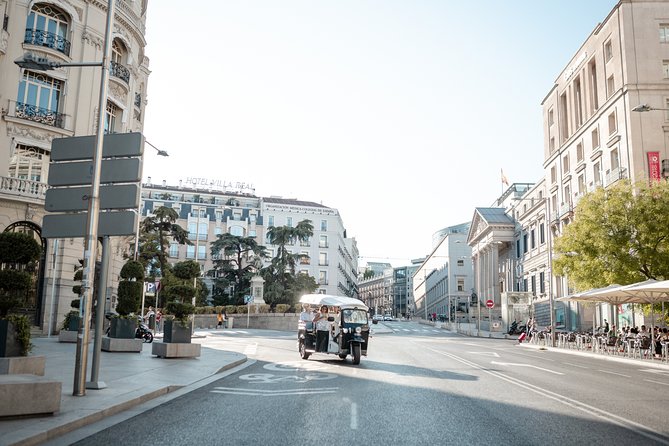
Madrid has a lot going on, and that’s exactly why this format works. Instead of bouncing between far-apart sights by foot, you glide from one key spot to the next in a ride that feels fun and a little different, but still practical.
You’re not crammed into a mixed bus tour either. This is a private setup, meaning your party stays together and your guide can steer the conversation around what you care about most, whether that’s architecture, street names, or how different neighborhoods earned their reputation.
Comfort matters here. The vehicle is designed to work well for older people, and drivers can help you get on if needed. And because Madrid weather can change without warning, you get blankets and protective layers so your sightseeing doesn’t grind to a stop when the wind picks up.
Price and value: what you get for $28.66 per person
At $28.66 per person, the best value angle is what’s included, not just the sticker price. You get an expert companion guide and driver, a private vehicle setup for your group, and a route designed to start without queues or waiting.
The electric part also isn’t just a gimmick. In a city with dense traffic, a tuk-tuk-style ride can help you cover more highlights without feeling like you did a workout. If you’re traveling as a family or as a small group, the private element usually feels worth it because you don’t have to share your route or your questions with strangers.
One pricing detail to keep in mind: your group’s setup depends on the number of tuk-tuks needed, with a legal maximum of 4 passengers per tuk-tuk. That means the per-person cost can be a great deal for smaller parties, while larger groups may use multiple vehicles.
Worth a side-by-side look, our other Historical Tours in Madrid




Meeting point reality check near the Royal Palace
The biggest practical challenge is where you actually meet. The start is at C. de Bailén, 4, Centro, 28013 Madrid, but there’s no number 4 you’ll necessarily spot at street level.
Here’s the reliable trick: search for Calle Bailén 4 or Puerta del Príncipe on Google Maps, and it should point you to the correct location. You’ll see the stairs to access the station, and you should look for the Eco Tuk Tuk signage at the underground bus station next to the Royal Palace.
If you worry you’ll miss it, you can contact them by phone or WhatsApp at +34 696 99 78 89. For mobility issues, ask ahead so they can help you access the meeting point by elevator.
Your guide experience in English, with stops timed for photos
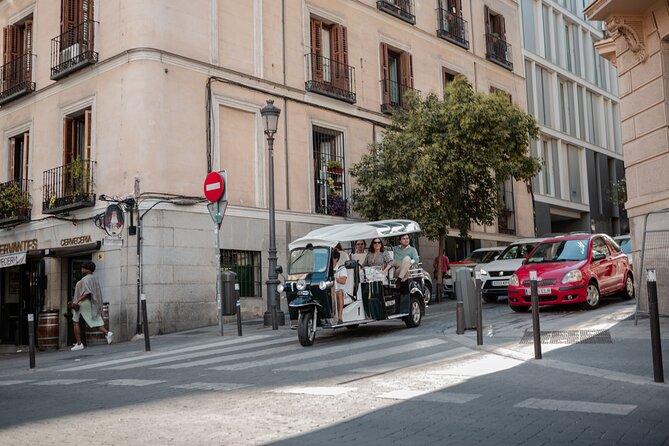
Tours like this live or die on the guide. This one is built for an engaging ride, and the names you might hear during tours include Carlos, Laura, Christian, Fernando, Gloria, Alejandro, Clara, Juan, Nerea, and Sandra. In practical terms, that usually means you get stories that connect places to how Madrid works today, plus answers to the questions that pop up while you’re moving.
Another big plus is that photo moments are pre-selected. You don’t need to hunt down the exact spot for the shot. The trade-off is that the route stops for photographs can’t be modified, so you’ll follow the guide’s plan rather than adding spontaneous detours.
Also note: the tour itinerary can shift because of closed streets or demonstrations. That doesn’t mean the day falls apart, but it does mean you should expect some route adjustments if Madrid is in motion that day.
Stop by stop: Madrid landmarks from food market to Debod
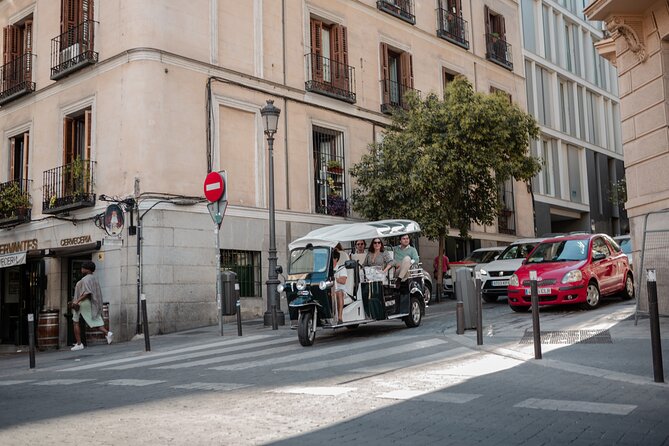
Below is the kind of route you can expect, with why each stop matters and what to watch for.
Covered market with local flavors and an elegant feel
You start at a covered market area dating from around 1916. The payoff here is simple: it’s a fast way to taste Madrid’s everyday culture, from local food and delicatessen to a sense of how events and community life have long been part of the city.
Practical tip: go in with your senses ready. Even if you don’t buy much, this stop helps you understand how Madrid thinks about food as part of life, not just a tourist item.
San Francisco el Grande, Madrid’s major basilica stop
Next is the Royal Basilica of San Francisco el Grande, officially the Basilica of Our Lady of the Angels. This is a major religious landmark in Madrid, located in the Palacio neighborhood within the historic center.
What’s useful about including a big basilica early is how it anchors you to the city’s long timeline. You also get a clear visual contrast as you move later toward civic and royal sites.
Undecided so far? The rest of our Private coverage in Madrid
- Madrid Welcome Tour with Local Guide in Eco Tuk Tuk Private
- Madrid: Private City Tour by Eco Tuk Tuk
- Toledo Private Tour with Licensed Guide and Driver from Madrid
- Madrid Private Segway tour. Retiro Park – Centro Historico
- Madrid Express Tour with Local Guide in Eco Tuk Tuk Private
- Madrid Barajas Airport Private Transfer To Madrid City
- Madrid Segway Private Tour in Retiro Park
- Segway Private Tour in the Historic Center of Madrid
Atocha station, the busiest rail hub as a city landmark
Then you reach Atocha station, one of Madrid’s key railway complexes near Plaza del Emperador Carlos V. It’s described as the busiest station in the country and also one of the main stations in Europe.
This stop works well for two reasons. First, it shows you Madrid’s modern movement patterns. Second, it gives your legs a break without turning the tour into a pure museum crawl.
The Palace of the Spanish Courts, built over a former convent
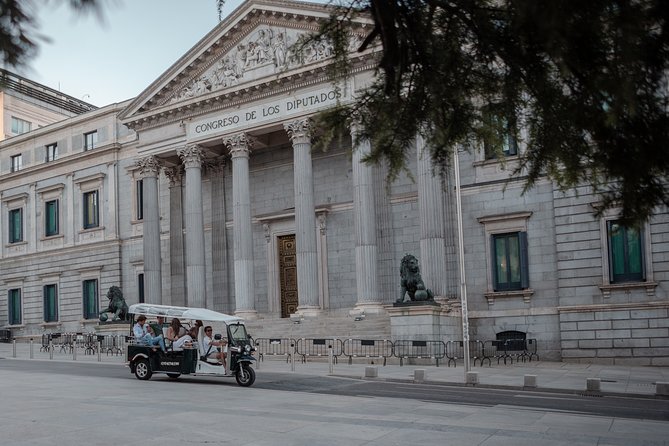
You’ll see the Palace of the Spanish Courts, built on the former convent of the Holy Spirit. It also served as the seat of Congress between 1834 and 1841, which adds an extra layer of meaning beyond the building itself.
Keep an eye on the facade details described for the building, including the neoclassical portico with six columns and the sculpted lions flanking the entrance. Also interesting, the bronze door opens only on very marked occasions, so don’t expect to go in unless the schedule allows it.
Sports city vibes: Plaza del Dios del Mar and Cibeles
One of the most fun beats in the route is the sports-themed contrast: Atlético de Madrid celebrations around Plaza del Dios del Mar, and Real Madrid around Cibeles. It’s a reminder that Madrid identity isn’t just royal and religious. It’s also intensely local and everyday.
If you like atmosphere, this part hits. If you’re not into sports, it still helps you spot landmarks that locals treat as part of their social map.
The Prado area, European masters in one place
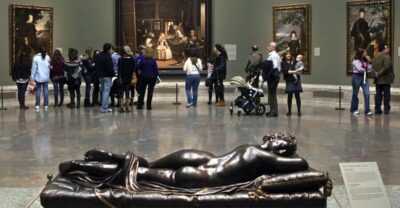
You’ll get a strong stop connected to the Prado area, described as having uniquely rich paintings by European masters from the 16th to the 19th centuries. The art historian Jonathan Brown is referenced for the idea that this museum is among the world’s most important for European painting.
Even if you don’t enter the museum, this kind of stop is valuable. It tells you what you should aim for later if your schedule includes ticketed museum time.
Los Jerónimos, a church next to the Prado with late Gothic roots
Then comes San Jerónimo el Real, popularly known as Los Jerónimos. It’s described as late Gothic with Renaissance influences from the early 16th century, located next to the Prado Museum in the back.
It’s also a useful stop because the description acknowledges how much the original building has been remodeled and restored over the centuries. That sets up the right mindset for Madrid sightseeing: layers matter, and not everything looks the same as it did centuries ago.
A monumental gate ordered by Carlos III
Next you’ll pass a monumental gate ordered by Carlos III to replace an older 16th-century gate, inaugurated in 1778. This is one of those “look up and take a second” moments where scale helps you understand how cities stage power and access.
A small caution: gates like this are often best from the right angle. Since photo stops are pre-arranged, trust the guide to position you where you’ll get the clean view.
Around it all: palaces, the city council, and the Bank of Spain
After that gate, the route circles through the surrounding complex feel: Buenavista Palace, Linares Palace, Communications Palace (now Madrid City Council), and the Bank of Spain. This section gives you a civic and administrative Madrid snapshot, close enough to connect it to what you just saw.
A decorative bank headquarters idea from 1884
There’s also a stop tied to a decorative building described as a National Exhibition of Fine Arts award from 1884. It was built to provide the National Bank with a headquarters reflecting the importance of its functions, like issuing coins and bills for all Spanish territory.
If you like stories about what buildings were meant to do, this one is fun. If you hate architecture trivia, it’s still a good breather stop before the next cathedral and royal focus.
Plaza de Santa Ana in the Cortes neighborhood
Next is Plaza de Santa Ana, an open space in the Cortes neighborhood dating from 1810. It’s gone through several urbanization changes over time, with results that varied.
Plazas are useful on a tuk-tuk tour because you get a sense of “how people actually use space.” You’ll remember it more easily than if it were just another building pass-by.
Almudena Cathedral, consecrated outside Rome
Almudena Cathedral is the most important religious building in Madrid on this route. It was consecrated on June 15, 1993 by Pope John Paul II, described as the first consecrated cathedral outside Rome.
This is a great stop for people who like modern religious landmarks with official significance. You’ll also feel how Madrid can hold old and new importance in the same city center.
Royal Palace and its gardens, a whole royal package
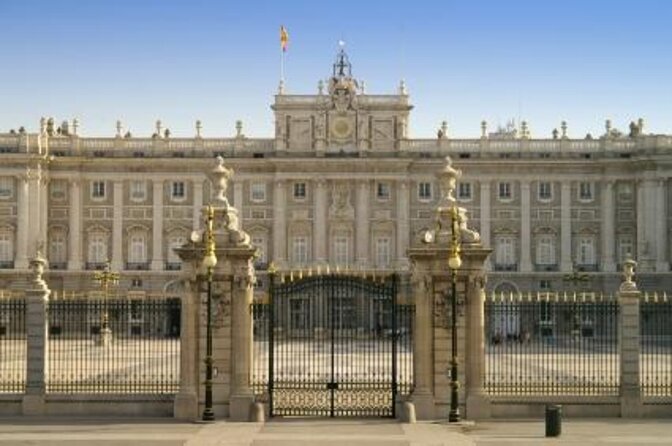
Then you move to the Royal Palace, also called Palacio de Oriente. Construction began in 1738 and lasted 17 years. After it was completed, Carlos III established his habitual residence there in 1764.
If you’re the kind of traveler who wants context, the text here helps you. It gives you a timeline, and that makes the place feel less like a random big building and more like a designed political center.
You’ll also get the gardens context: Campo del Moro gardens (west, dating from the Middle Ages) and Sabatini gardens (north, created in the 20th century). Campo del Moro can be visited during the day, while Sabatini is described in front of the north facade between Bailén street and San Vicente slope.
Temple of Debod, ancient Egypt in Madrid (free)
A major late-route highlight is Templo de Debod. It’s an ancient Egyptian building located in Madrid west of Plaza de España, by Paseo del Pintor Rosales near a hill where Cuartel de la Montaña was located.
It’s also listed as 10 minutes with admission ticket free. This is a smart add-on because it gives you something different from Spain’s own architecture, and it’s the kind of contrast you’ll still remember when your museum days blend together.
What I think works best for your trip style
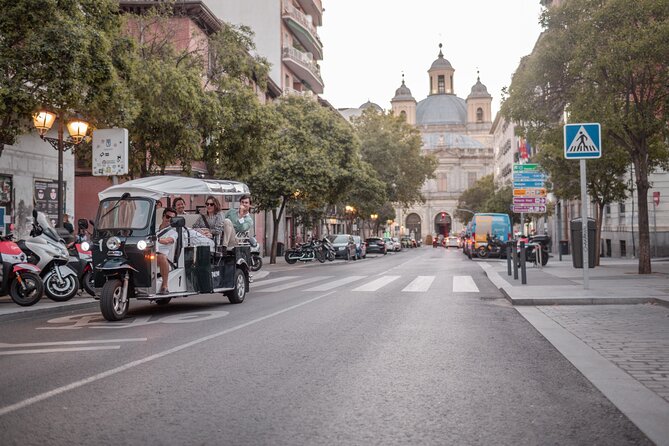
This is ideal for a couple of common Madrid situations.
If you have limited time, it helps you create a mental map fast. Several guides on this tour are known for giving practical recommendations and steering you toward neighborhoods you’ll want to revisit later. When you’re short on days, that kind of early direction is gold.
It’s also a strong family-friendly option. One review-style story included kids enjoying the ride and the humor baked into the tour, which makes sense. The tuk-tuk element breaks up sightseeing, and the quick stops keep younger attention spans from flattening.
And if you dislike long walking days, this tour is built around moving without marathon pace. You still see a lot, but you’re not spending your whole day just trying to get between sights.
Practical tips so your day stays smooth
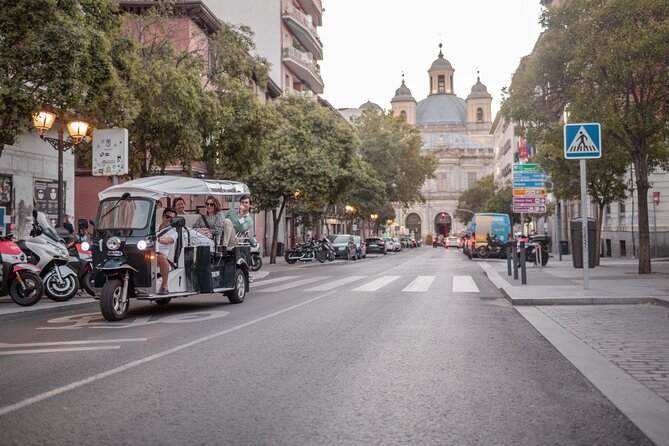
Here are the points that matter most when you show up:
- Dress in layers. You’ll get blankets and protective layers, but Madrid can still swing temperature quickly.
- Plan to follow the guide’s photo stops. Stops for photographs can’t be modified, so bring your camera skills, not your last-minute wish list.
- Expect fixed timing. Your itinerary can change due to street closures or demonstrations, but the structure stays in place.
- Don’t bring pets, and note the minimum age is two years. Babies are not allowed, and there’s a minimum weight requirement of 9 kg.
- If you’re late, the tour can be reduced if the delay is under 15 minutes, and it can be canceled if your delay is longer than 15 minutes, with no refund stated for that case.
- If you need the bathroom or a break, the ride is set up so you’re not stuck only doing “look and go.” Reviews also mention built-in moments to refuel or use the bathroom, so it’s worth asking your guide what the timing is for your specific day.
Should you book the Eco Tuk Tuk private historical tour?
I’d book this if you want a first-week Madrid orientation that feels fun, not exhausting. The big wins are the private electric ride, the no-queue approach, and the way the route links food and markets to churches, courts, sports landmarks, major museums, royal sites, and even the Temple of Debod.
Skip it if you want a fully flexible day where you can roam freely and chase your own photo stops. This tour is structured, and your success comes from leaning into that plan.
If you’re aiming to decide where you’ll spend more time later, this tour does that job well. You’ll leave with a clearer map, a list of places to return to, and a better sense of how Madrid identity gets stitched together from markets, religion, government, sport, and royalty.
FAQ
How long is the Madrid Historical Tour?
The tour duration is listed as 1 to 4 hours, approximately.
Is the tour private?
Yes. It is a private tour, and only your group participates.
Is the tour offered in English?
Yes. The tour is offered in English.
Are blankets provided for cold or windy weather?
Yes. Blankets and protective layers are included to help with cold weather.
Do I need tickets for Templo de Debod?
Admission for Templo de Debod is listed as free, and the stop is about 10 minutes.
Where does the tour start?
The start point is C. de Bailén, 4, Centro, 28013 Madrid. The pickup is described as being in the underground bus station area next to the Royal Palace near Puerta del Príncipe.
What if it rains?
Tours take place in rain or heat and can only be cancelled under extreme conditions.
Are pets allowed on the tour?
No. Pets are not allowed for security reasons.
Further Private we have reviewed in Madrid
- Madrid Welcome Tour with Local Guide in Eco Tuk Tuk Private
★ 5.0 · 2,936 reviews - Madrid: Private City Tour by Eco Tuk Tuk
★ 4.9 · 2,876 reviews - Toledo Private Tour with Licensed Guide and Driver from Madrid
★ 5.0 · 637 reviews - Madrid Private Segway tour. Retiro Park – Centro Historico
★ 4.9 · 636 reviews - Madrid Express Tour with Local Guide in Eco Tuk Tuk Private
★ 5.0 · 413 reviews
Historical Tours: the others that earned a place in Madrid
- Madrid Essential: Historic Center, Plaza Mayor & Royal Palace
★ 5.0 · 6,416 reviews - Madrid Historic Centre Food Tour with Authentic Tapas & Wines
★ 5.0 · 814 reviews - Madrid Historical Walking Tour
★ 5.0 · 721 reviews - Madrid in a Day Tour:Royal Palace, Historic Center & Prado Museum
★ 5.0 · 628 reviews - Madrid Local’s Tapas Tour Dinner with a side of History
★ 5.0 · 530 reviews
Tours: the rest of our Madrid write-ups
- Madrid: Tour Bernabéu Entry Ticket
★ 4.5 · 21,573 reviews - Madrid: Panoramic Route City Tour
★ 4.1 · 12,259 reviews - Avila & Segovia Tour with Tickets to Monuments from Madrid
★ 5.0 · 9,762 reviews - Madrid: Segovia and Toledo Tour, Alcazar, and Cathedral
★ 4.7 · 7,797 reviews - Madrid: Royal Palace Expert Guided Tour with Skip-the-Line
★ 4.7 · 6,986 reviews
Fresh off the desk: recent Madrid experiences we have written up




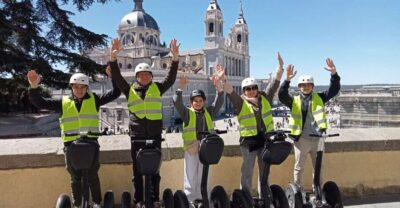
Tuk-Tuks, side by side.
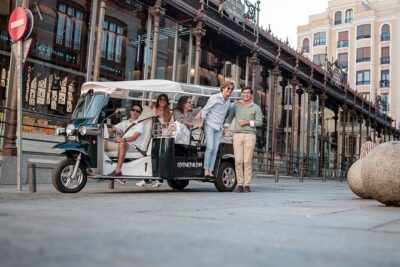 ★ 5.0Madrid Welcome Tour with Local Guide in Eco Tuk Tuk PrivateFrom $282,936 reviews
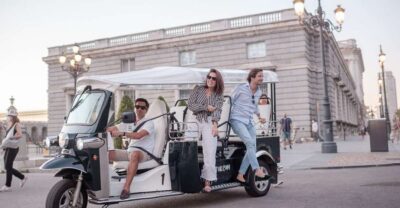 ★ 4.9Madrid: Private City Tour by Eco Tuk TukFrom $612,876 reviews
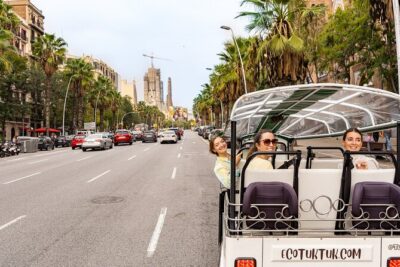 ★ 5.0Tour Welcome Barcelona with Local Guide in Eco Tuk Tuk PrivateFrom $281,882 reviews
 ★ 4.9Barcelona: Private City Tour by Eco Tuk TukFrom $331,339 reviews
 ★ 4.9Malaga: Private City Tour by Eco Tuk TukFrom $281,319 reviews
 ★ 4.8Seville: Private City Tour by Eco Tuk TukFrom $33963 reviews
 ★ 4.8Valencia: Complete Tuk-Tuk Tour Around the CityFrom $47793 reviews
 ★ 5.0Tour Welcome Seville with Local Guide in Eco Tuk Tuk PrivateFrom $28786 reviews
This tour also sits in