
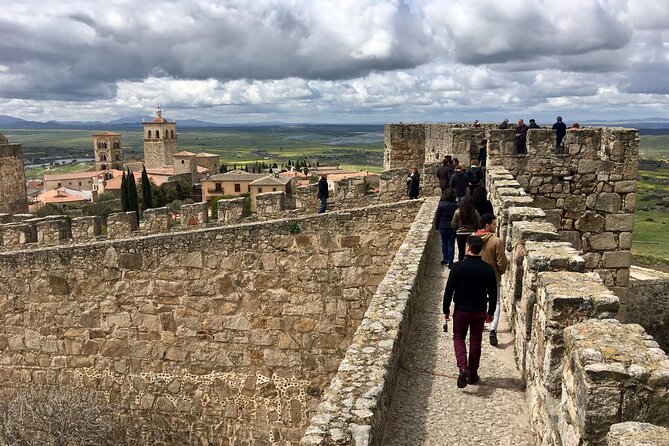
Reviewed · SALAMANCA, CUENCA AND CASTILIAN CITIES
Guided Tour of Historic and Monumental Trujillo
Trujillo moves fast when you have a plan. This guided tour strings together the most memorable monumental corners inside the medieval town, starting at Plaza Mayor and looping through castle, palaces, churches, towers, convents, and strong houses. I love how the route is designed so you naturally understand the town’s layout as you go, not after you leave.
Two things I really liked: first, the guide work, and I especially appreciated the way Ana makes the old streets feel readable, with lots of commentary and practical photo suggestions. Second, almost every stop is free to enter, so your money goes to the guiding and time, not ticket fees that can stack up fast. One consideration: it is an approximately 2-hour walk, so if you prefer long, slow museum pacing, you may feel a bit rushed on the historic-footprint heavy route.
In This Review
- Key Highlights You Should Care About
- From Plaza Mayor into a Walled Medieval Town
- Plaza Mayor: Where Renaissance Power Meets Pizarro
- Palacio de San Carlos: Look Up for Plateresque Detail
- Francisco Pizarro Equestrian Monument: A Photo Anchor Point
- The Historic Centre Walk: Walls, Alcazaba, Towers, Convents
- Strong House Stop: Casa-Fuerte de Luis de Chaves
- Palacio Viejo O de la Cadena: Order of Santiago Connection
- Castillo de Trujillo: Muslim Alcazaba and an Aljibe
- Pizarro House Museum: A Hidalgo Manor from the 15th Century
- Iglesia de Santa Maria la Mayor: Gothic Monument and Fernando Gallego
- Strong House of the Escobar: Maria de Escobar and Seeds to Peru
- Triumph Gate, Bejarano Redoubt, and Puerta de San Andres: Defensive Landmarks
- Why This 2-Hour Loop Feels Like More Than the Sum of Stops
- What to Expect on Your Walk, and Who It Suits Best
- Should You Book This Guided Historic Walk in Trujillo?
- FAQ
- How long is the Guided Tour of Historic and Monumental Trujillo?
- Where does the tour start?
- How much does it cost?
- Is admission included for the stops?
- Is the ticket digital?
- When should I book?
- What is the group size?
- Are there any cancellation options?
- Is the tour suitable for everyone?
Key Highlights You Should Care About
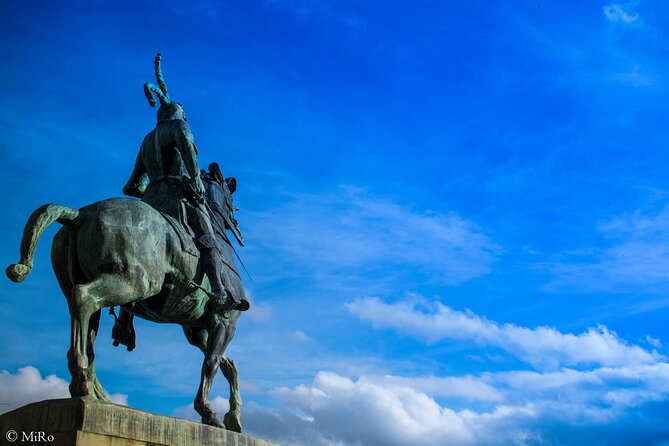
- A complete loop inside Trujillo’s medieval center, connecting walls, gates, and major monuments in about 2 hours
- Plaza Mayor first, with the Francisco Pizarro equestrian monument and Renaissance palace atmosphere right at the start
- Palacio de San Carlos (Plateresque details), a quick stop that rewards people who look up
- Castle time that explains the site, including the Muslim Alcazaba area and the aljibe from the 10th to 12th centuries
- Small-group feel, up to 30 people, so you can hear the guide and catch the best viewpoints
- Guide Ana style of commentary and photo tips, which is repeatedly what makes the experience feel full and fun
From Plaza Mayor into a Walled Medieval Town
The best way to enjoy Trujillo is to treat it like a story with chapters, and this tour gives you that structure. You start at TurismoTrujillo.es Actividades Turísticas at Plaza Mayor, right at the heart of the town’s monumental square energy. From there, the walk shifts away from open space and into the tighter feel of the medieval quarter, where stone, angles, and old defenses do the talking.
I like that the tour stays focused on the “big reads” of the town. Instead of scattering you across random points, it moves through the castle zone, the palaces, the churches, and the strong houses that explain how power and daily life worked in a place that was a residence of kings. You also get built-in attention to photographic spots and corners, which helps you avoid the common problem of arriving at a viewpoint and realizing you’re not sure what you’re actually looking at.
Time-wise, the pace is about 2 hours in total, which is long enough to feel like you saw the essentials, but short enough that you can still enjoy the rest of your day in Extremadura. Most travelers can participate, and since the activity ends back at the meeting point, it is easy to keep your plans simple.
Plaza Mayor: Where Renaissance Power Meets Pizarro
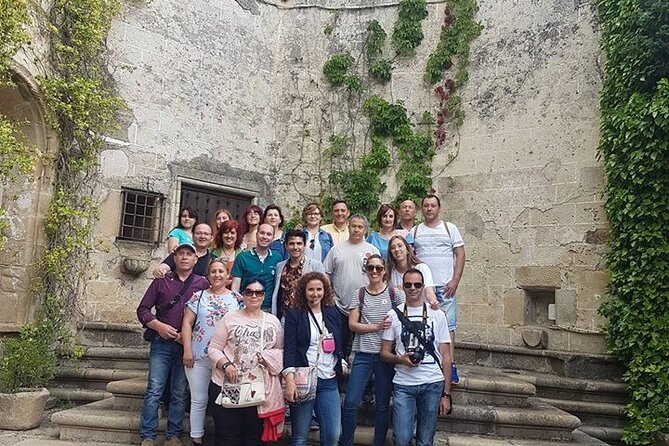
Plaza Mayor is where you get your bearings fast. You begin there, and the square instantly sets the tone with Renaissance palaces, a formal civic feel, and the equestrian sculpture of Francisco Pizarro. Even if you know little about the later history, the statue is visually strong, and it gives you a reference point for the walk ahead.
You will also spend time around the square’s historical development. The plaza you see has 16th-century roots, with construction beginning in 1562 by order of Hernando Pizarro. That detail matters because it explains why the square looks like a centerpiece for political power, not just a casual gathering spot.
And because admission is free for the stop(s) here, you do not lose momentum to ticket lines or complicated entry times. The square portion is short, about 20 minutes initially plus another brief stop, which is perfect. It helps you start the tour in a good mood and then use that energy to get the most out of the medieval streets that come next.
More of the same shelf: our Salamanca, Cuenca and Castilian Cities write-ups
Palacio de San Carlos: Look Up for Plateresque Detail
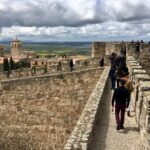
Next comes Palacio de San Carlos, also known as the Palacio de los Vargas-Carvajal. This is the kind of stop that rewards curiosity. The building is Plateresque, which is a style you can actually spot when you look closely at the façade. You may only spend a few minutes here, but a good guide time can turn a “pretty building” into something you can recognize and describe afterward.
What I like about this stop is that it is not only about what the palace looks like, but also how its façade relates to the surrounding streets. The building keeps an original Plateresque façade and also has the façade offered to Domingo Street. That kind of street-facing detail can be hard to notice on your own, especially in older towns where buildings layer over each other through centuries.
Drawback to consider: if you prefer very long, slow architectural reading, you may wish you had more time. But for a 2-hour tour, this is a smart “high impact” moment, and it sets you up to notice other façade and corner details later in the walk.
Francisco Pizarro Equestrian Monument: A Photo Anchor Point
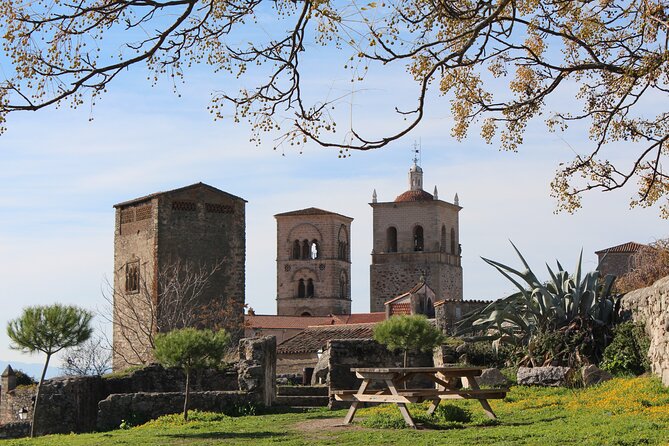
After you connect San Carlos to the street scene, you hit the Francisco Pizarro equestrian monument as its own quick stop. It is brief, about 2 minutes, but it works well as a visual anchor. When you are walking through tight medieval lanes afterward, this kind of landmark helps you keep a mental map.
Practical tip: if your camera habits are a bit scattered, use this moment to get your first strong shot and then commit to a simple goal for the rest of the tour. For example, you can decide to photograph doors, towers, and stone details only. You will thank yourself later when you are not trying to guess the right angle every few minutes.
The Historic Centre Walk: Walls, Alcazaba, Towers, Convents
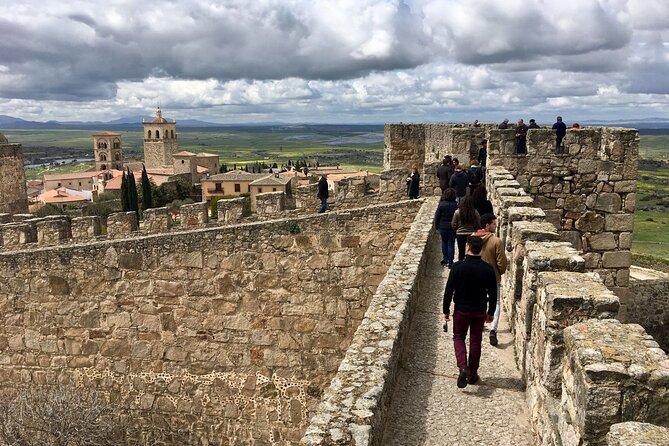
This is the part that makes the tour feel like a real overview. You spend about 2 hours in the historic centre area, and the focus is clear: medieval historic fabric, including a Muslim Alcazaba and walls, plus strong houses, manor houses, palaces, convents, and churches.
This is where the guided component earns its fee. When you are on your own, it is easy to admire stonework and then walk away with only vague impressions. With a guide, you get help seeing why certain areas exist, how the town’s defenses connect, and what types of buildings were built for different roles.
I especially like that the tour calls out the blend of cultures through the Alcazaba and the walls. You can actually sense transitions when you move through a town like Trujillo, because the physical remnants behave like clues. Even in a short walk, the guide’s commentary gives you a lens for noticing those clues.
One consideration: because the tour includes multiple categories of buildings, you might not get equal depth at every single stop. If you love one specific theme, like Gothic churches or defensive architecture, you will likely want to return on your own afterward to slow down.
Strong House Stop: Casa-Fuerte de Luis de Chaves
Then you shift to something more specific and personal: the Casa-Fuerte de Luis de Chaves, called El Viejo. This strong house spans the 13th and 14th centuries, and it ties into the Wars of Succession. The Catholic Monarchs stayed here during those conflicts.
This stop works well because it reminds you that these monumental towns were not only grand and ceremonial. Strong houses are about protection and survival, which makes the medieval setting feel more lived-in. You get a different kind of story here than you do at palaces.
Time-wise it is about 10 minutes, so it is enough to grasp the idea, see the structure, and move on. If you are the type who likes defense and domestic power, you will probably enjoy this more than you expect.
Palacio Viejo O de la Cadena: Order of Santiago Connection
Next, the Palacio Viejo, also called the Palacio de la Cadena, is tied to the Military Order of Santiago. The information you get highlights that it is a church founded by that order and dates back to the 13th century.
Even if you do not know much about the order itself, the tour’s format helps you categorize the site quickly. You can file it as a religious, military, and architectural footprint all at once, which is exactly what you need when you are touring multiple sites in one session.
Practical note: another shorter stop here, about 5 minutes. If you want to capture photos, focus on angles that show the location of the building within the street pattern. Medieval towns often make buildings look different from different corners.
Castillo de Trujillo: Muslim Alcazaba and an Aljibe
One of the biggest draws is the Castillo de Trujillo. This castle stop includes a Muslim Alcazaba and an aljibe, with references to the 10th through 12th centuries. Even with limited time, this is a high-value moment because it combines defense and water infrastructure.
Why does that matter? Because an aljibe, basically a cistern, is what keeps a fortress functional. When you understand that, your perception of the castle changes from “cool views” to “survival engineering.” You see the place as something built to last through stress.
You get about 10 minutes here, which is enough for the key points and a few viewpoint photos. If you want more time, you can always plan a self-guided return later, but for the structure of this tour, it hits the essential beats.
Pizarro House Museum: A Hidalgo Manor from the 15th Century
The Pizarro House Museum comes next, described as a 15th-century manor house of Hidalgo. This is a quieter stop compared to the castle, but it helps connect the monumental story to the people who lived in the town.
I like having a domestic-scale stop like this in the middle of a route packed with defenses and churches. It prevents the day from becoming only about walls and weapons. You get a sense of social status through the manor-house framing, and it sets you up to understand why the town could act as a royal residence.
Time here is about 10 minutes. Expect it to be a focused highlight rather than a deep museum-style visit.
Iglesia de Santa Maria la Mayor: Gothic Monument and Fernando Gallego
Now you hit one of the tour’s most culturally specific stops: the Iglesia de Santa Maria la Mayor. It is declared a Gothic church national monument, and the information you receive also points out earlier Romanesque remains, including the Torre Julia.
The biggest reason this stop is worth attention is the altar work. You will see mention of a Spanish-Flemish altarpiece by Fernando Gallego. That detail gives you a clear “what to look for” target, even if you are not studying art history on this trip.
What to do if you want to maximize this stop: take a full minute before taking photos. Stand back, let your eyes adjust, and then choose your angle for the altarpiece area. In churches, the best compositions often come from stepping slightly to the side, not from always going straight in.
Admission is listed as free for this stop, so you can treat it as a highlight without worrying about additional costs.
Strong House of the Escobar: Maria de Escobar and Seeds to Peru
Another strong house stop is Casa Fuerte de los Escobar. It is a military construction from the 15th century where María de Escobar lived. The information ties her to a story of being the first woman to bring wheat and barley seeds to Peru.
Even if you do not know the story already, this detail is memorable because it connects medieval Trujillo to the early agricultural exchange that shaped New World life. It is a good reminder that history is not only wars and monarchs. It is also food, crops, and the movement of practical knowledge.
You get about 10 minutes here. I recommend using that time to focus on the role of the building, military construction, plus the human story the guide connects to it.
Triumph Gate, Bejarano Redoubt, and Puerta de San Andres: Defensive Landmarks
Later in the walk, the route turns into a study of city gates and defensive points.
You will see the Triumph Gate, then the Bejarano Redoubt, a strong house from the 13th century that defended the Puerta del Triunfo. Then you pass by Puerta de San Andres, one of the seven gates of the wall, next to the Church of San Andrés.
These stops work because they teach you how the town controlled movement. Gates are more than entrances. They are decision points, where defense met daily travel.
I like that the tour gives you multiple gate references rather than only one. That makes it easier to understand the logic of walls and approach paths. You can feel the “why” in the stone. Without guidance, you might just read these as pretty remnants. With guidance, you start to treat them like a map of protection.
Time here varies, but you should expect the stops to be short and to focus on key features. The payoff is that by the time you finish, you can look at a gate and recognize it as a function, not just a photo.
Why This 2-Hour Loop Feels Like More Than the Sum of Stops
At a glance, this tour looks like a list: plaza square, palace, castle, church, gates. The reason it works is the sequencing. It starts with easy-to-recognize landmarks in Plaza Mayor, then transitions into the medieval core where walls, Alcazaba elements, and strong houses reinforce each other.
Also, the value math is strong. The price is $13.90 per person, and the major stops are marked as free admission. That means you are paying for interpretation and pacing, not entrance fees that can inflate the final bill elsewhere. For many people, that makes a short guided walk the best way to see the “must-not-miss” sites without feeling like you built a travel day around ticket policies.
Group size helps too. With a maximum of 30 travelers, the tour is big enough to be lively, but small enough that you can usually keep up and hear the guide without constant mic-escape. I found this sweet spot especially helpful in tight historic streets where turning around can get awkward fast.
What to Expect on Your Walk, and Who It Suits Best
This is a best-fit tour if you want a structured overview without spending a whole day on logistics. You will walk inside the medieval town walls, get repeated landmark moments, and leave with a sense of place that you can build on.
You will also appreciate it if you like historical themes tied to routes like Isabel la Católica, Carlos V, and film stage connections. Those thematic cues are exactly what turn a walking tour from “I saw buildings” into “I understand why these buildings matter.”
You might also like it if your travel style is photo practical. The tour specifically recommends more interesting photographic spots and corners, which saves you time later. It is also helpful if you tend to lose context when you are exploring alone, because the guide gives you the story behind each stop.
If you are someone who prefers deep museum hours, this may not fully satisfy. It is about highlights, plus enough commentary to make those highlights stick.
Should You Book This Guided Historic Walk in Trujillo?
I think you should book it if you want to get the core of Trujillo in about 2 hours, with free admissions at most major stops and a guide who gives lots of commentary and photo guidance. The $13.90 price feels fair because you are buying time, pacing, and an explanation of what you are seeing across castle, palaces, churches, strong houses, and gates.
Book with confidence if:
- You want a fast, structured overview of Trujillo’s medieval centre
- You like walking tours that include defensive architecture and landmarks
- You value a guide-driven experience, especially if you have trouble reading old towns on your own
Skip it or consider a longer self-guided plan if:
- You want extended time inside any one monument
- You dislike guided pacing and would rather wander without planned stops
Overall, this is a solid “first time in Trujillo” tour. It helps you understand the place quickly, then you can decide what to return to once you see what grabs you most.
FAQ
How long is the Guided Tour of Historic and Monumental Trujillo?
The tour lasts approximately 2 hours.
Where does the tour start?
The meeting point is TurismoTrujillo.es Actividades Turísticas, Pl. Mayor, 20, 10200 Trujillo, Cáceres, Spain.
How much does it cost?
The price is $13.90 per person.
Is admission included for the stops?
Admission is listed as free for the stops included on the tour.
Is the ticket digital?
Yes, you receive a mobile ticket.
When should I book?
On average, this tour is booked about 8 days in advance.
What is the group size?
The tour has a maximum of 30 travelers.
Are there any cancellation options?
There is free cancellation. You can cancel up to 24 hours in advance for a full refund.
Is the tour suitable for everyone?
Most travelers can participate, and service animals are allowed. The meeting point is also near public transportation.
Salamanca, Cuenca and Castilian Cities worth comparing before you book
- Visit Trujillo Medieval Scene and Route of the Discoverers
★ 5.0 · 204 reviews
Fresh off the desk: recent Trujillo experiences we have written up
Salamanca, Cuenca and Castilian Cities, side by side.
 ★ 4.5From Madrid: Day Trip to Ávila and Salamanca w/ Guided TourFrom $70456 reviews
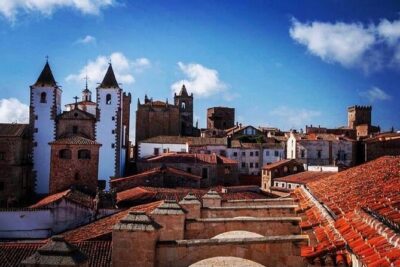 ★ 5.0Cáceres essentialFrom $11410 reviews
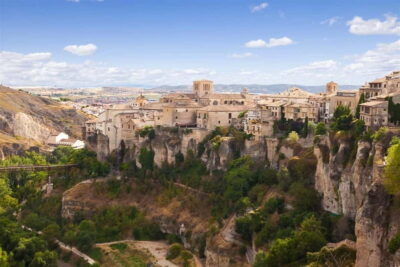 ★ 4.8Madrid: Cuenca Day Tour with or without Enchanted CityFrom $96398 reviews
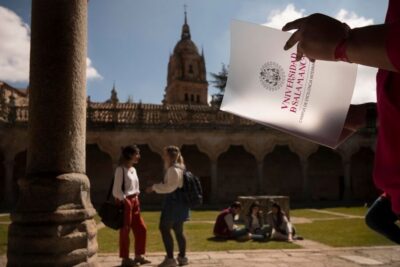 ★ 4.7Salamanca Sightseeing Walking Tour with Local Guide. SpanishFrom $14312 reviews
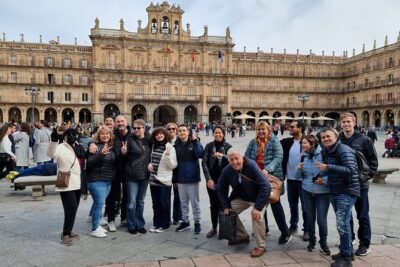 ★ 4.5Avila & Salamanca Tour with Tickets to Cathedral + Medieval WallFrom $58250 reviews
 ★ 5.0Visit Trujillo Medieval Scene and Route of the DiscoverersFrom $18204 reviews
 ★ 4.6Salamanca: Cathedral of Salamanca Ticket with Audio GuideFrom $11197 reviews
This tour also sits in