
Reviewed · SALAMANCA, CUENCA AND CASTILIAN CITIES
Visit Trujillo Medieval Scene and Route of the Discoverers
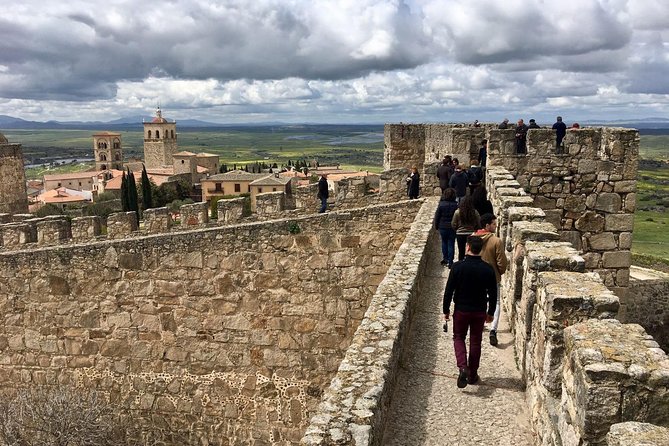
Trujillo puts history on your feet. This guided route ties together kings, conquerors, and the big medieval look-and-feel, starting at Plaza Mayor and working its way through the walled old town. I love how the castle and its Aljibes get folded into the story, not just photographed. I also love the pause at Santa María la Mayor, the province’s National Interest church, which helps you understand why Trujillo mattered.
One thing to plan for: you will walk. It’s an old-town route through an open-air mix of Renaissance and medieval streets, so wear shoes you can trust on cobblestones and don’t book it right after a long day without a cushion in your schedule.
In This Review
- Key highlights before you go
- Starting at Plaza Mayor, where Trujillo sets the tone
- Castillo de Trujillo and the Aljibes, why the fortress mattered
- Santa María la Mayor, a National Interest church stop that changes the scale
- Back to Plaza Mayor, now you notice the palaces
- The palace line-up, Plateresque style and classicist power
- Pizarro House Museum, a recreated manor that helps you picture daily life
- Iglesia de San Martín, the one church where your ticket might not cover
- Themed Discoverers routes, how the tour keeps you oriented
- How long it takes, and what your shoe and stamina need
- Price and value, why $18.54 often feels like more
- Who should book this Trujillo walk (and who might skip it)
- Final call: should you book it?
- FAQ
- How long is the guided tour in Trujillo?
- What time does the tour start?
- Where does the tour begin and end?
- How much does the tour cost?
- Are monument tickets included?
- Does the tour use a mobile ticket?
- How big are the groups?
- Is free cancellation available?
- Is it suitable for most people?
- Is a service animal allowed?
Key highlights before you go
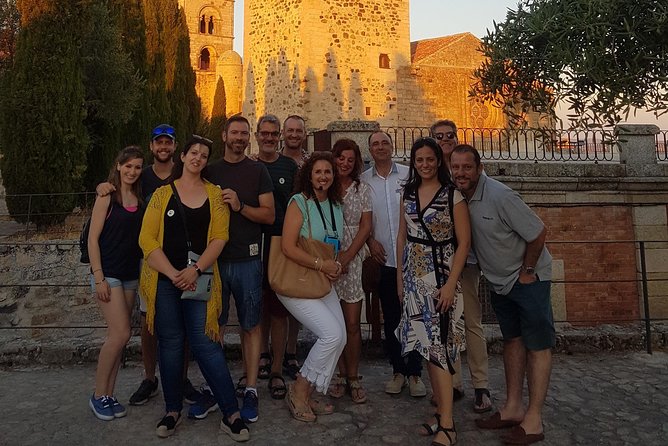
- Plaza Mayor to medieval lanes, with photo spots guided along the way
- Castle and cistern entrances included, including the Alcazaba/Castillo and its Aljibes
- Santa María la Mayor tickets included for the day tour, a major monument stop
- Multiple palace interiors or grounds included, including the Plateresque style Palacio del Marqués de la Conquista
- Thematic storytelling, tied to routes linked with Isabel la Católica and Carlos V
- Small group by design, with a maximum of 35 people
Starting at Plaza Mayor, where Trujillo sets the tone
Your tour begins in Trujillo at Plaza Mayor. This square is sometimes called Plaza de la Hispanidad, and it’s the perfect launchpad because you can see the Renaissance palaces that frame the space while still feeling the medieval town behind it.
From there, you move inside the historic center, where the city acts like an open-air museum. Your guide keeps the pace moving and also stops often enough that you’re not just passing landmarks. A big part of the fun is that you get pointed to details that most people miss at street level, like why certain balconies, coats of arms, and façades look the way they do.
If you’re trying to get your bearings fast, this works. You get the outline of Trujillo’s power base early, and then every next turn feels connected, not random.
Castillo de Trujillo and the Aljibes, why the fortress mattered
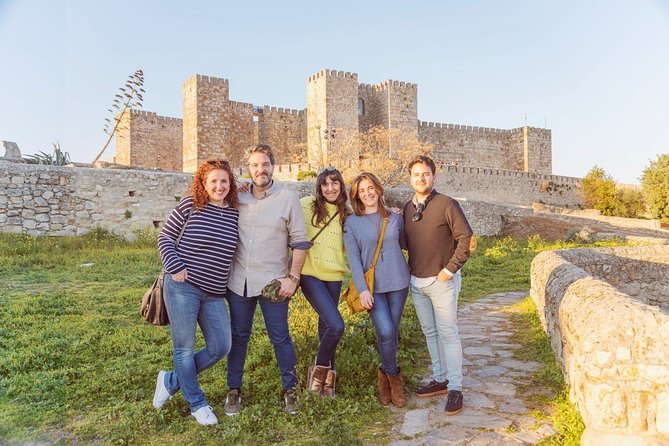
Next comes the main fortress stop: Castillo de Trujillo, including the entrances to the Alcazaba or Castillo and its Aljibes (cisterns). This is one of the best value moments in the whole experience because it combines viewpoint, structure, and function.
It’s easy to think of a castle as only defense. The cisterns change that. They show how a fortress had to handle water and survival, not just wars and banners. Even if you are not a hardcore medieval-history person, the Aljibes give you a more human sense of what daily life and planning meant.
The practical win is that the monument entrance is part of what you’re paying for. You’re not hunting down separate tickets mid-tour, which saves time and stress.
More of the same shelf: our Salamanca, Cuenca and Castilian Cities write-ups
Santa María la Mayor, a National Interest church stop that changes the scale
After the fortress area, you move to Iglesia de Santa María la Mayor, a National Interest Monument and the most important church in the province of Cáceres. This is a short stop, but it’s not a quick drive-by. It’s the moment where you shift from walls and towers to the spiritual and civic center of the town.
Santa María la Mayor also helps you understand the full Trujillo picture. A medieval town like this wasn’t just castles and power. It also had the architecture people gathered around, worshipped in, and trusted as a kind of anchor.
One small planning note: monument tickets are included for the day visits. The tour info also mentions that tickets are not included in the visit from 20h, so if you’re booking a later slot, double-check what’s covered for your specific departure time.
Back to Plaza Mayor, now you notice the palaces
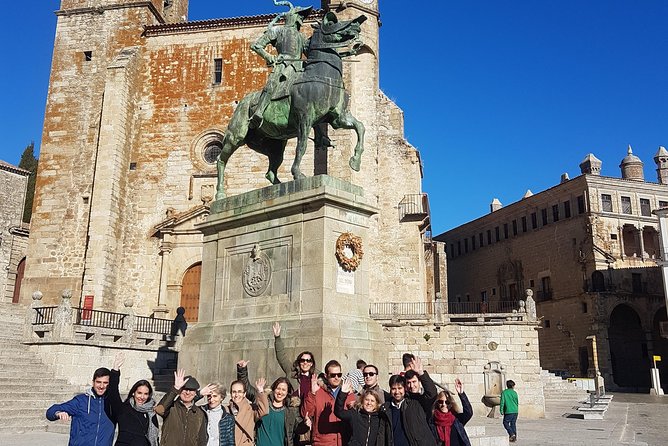
You return to Plaza Mayor again, and this second approach is different because you’ve already seen the military side. Now you’re looking at the Renaissance palace architecture that surrounds the square, and it makes more sense why Trujillo’s wealth showed up in stone and ornament.
This part of the tour leans into the city as a residence of kings and important families. Even on a short timeline, the guide brings up how different buildings reflect status and style, especially through the decorative language of the Renaissance.
If you like photography, this square is a gift. The light can be tricky depending on the time of day, but the composition is strong, and you get built-in chances to stop.
The palace line-up, Plateresque style and classicist power
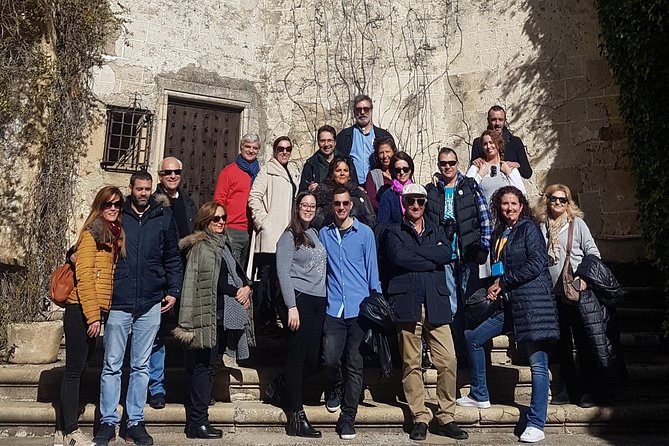
A highlight portion of the walk focuses on palaces clustered around the Plaza Mayor area. These are quick stops, but they matter because Trujillo’s identity shows up in these façades as clearly as it does in towers.
You’ll visit the Palacio del Marques de la Conquista, noted for its Plateresque style. You’ll also see the Palacio de San Carlos, described as classicist from the 16th and 17th centuries. And you’ll step by the Palacio de Orellanas-Pizarro, a Plateresque palace connected to the first corregidor of Cuzco.
These aren’t just names to memorize. They help you notice how style evolved over time, and how the town’s elite chose what to display. If you’ve ever walked through a historic town and thought, I see beauty, but I don’t know what it means, this section is designed for you. Your guide connects the visual details to people and power.
Pizarro House Museum, a recreated manor that helps you picture daily life
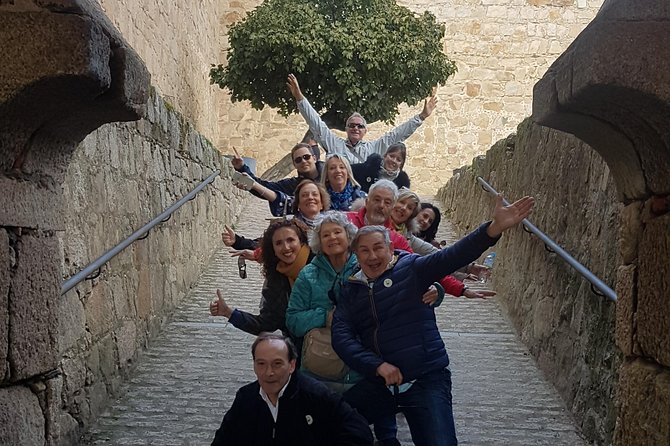
Next up is the Pizarro House Museum, where the tour includes an interior visit: a recreation of a manor house of Hidalgo from the late fifteenth century.
Recreations can be hit or miss, but in this case it works because it slows the whole story down. After walking through monuments and palaces, it becomes easier to imagine the household world behind the public stone.
You get another chance to understand the Conquistador era as more than dates and battles. The house framing gives you a place to think about how families lived, how status played out at home, and why architecture mattered beyond the street.
Also, the pace here supports different types of visitors. If you prefer atmosphere over facts, you can still enjoy the vibe. If you want explanations, the guide tends to connect details to the larger routes of the Discoverers theme.
Iglesia de San Martín, the one church where your ticket might not cover
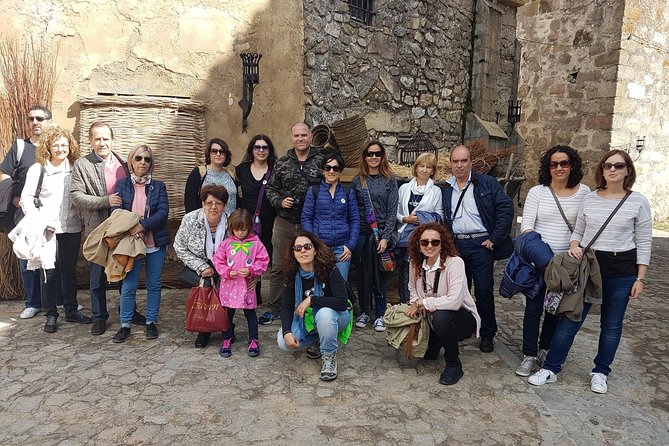
You’ll also pass by Iglesia de San Martin, a church dating from the 14th to 16th century and located in the Plaza Mayor. In this tour setup, the information says the admission ticket for this church is not included.
That doesn’t make it a bad stop. It just means you should be prepared for a small extra cost or to enjoy it from outside if entry isn’t included when you arrive. Either way, it adds depth to the “layers of Trujillo” feeling, because it broadens the religious architecture you’ve seen.
If you’re trying to keep your spending tightly controlled, this is the one item in the schedule to keep in mind.
Themed Discoverers routes, how the tour keeps you oriented
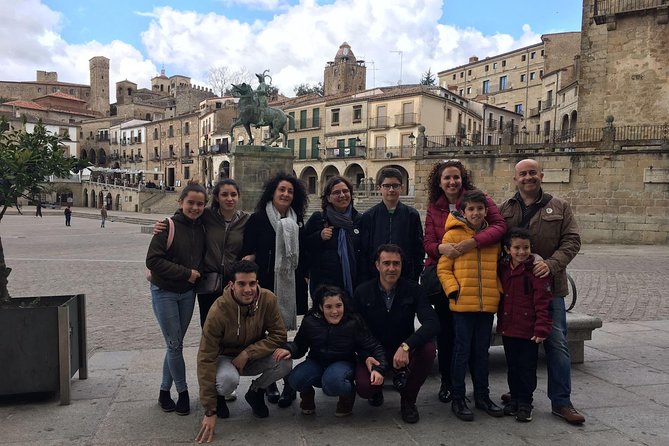
The tour is framed around the Thematic Routes of the Discoverers, including the Route of Isabel la Católica and the Route of Carlos V, plus references connected to Cinema Stages. That might sound like a marketing tag, but it’s actually helpful on the ground.
Without that structure, a medieval town walk can become a list of beautiful buildings. With the theme, each stop feels like a piece of a bigger story about influence, empire, and how Trujillo fit into major historical currents.
You also get photo-corner suggestions along the way, which is practical. If you’ve ever watched a guide quietly lead a group toward the exact spot with the best angle, you know how much that improves your photos. This tour is built with that in mind.
And the guide approach matters. The names Alicia, José, Ana, and Esmeralda appear as guides tied to high ratings, and the consistent theme is strong communication, lots of detail, and a knack for making the town feel alive. Some guides also highlight regional character, including biodiversity and Extremadura’s richness.
How long it takes, and what your shoe and stamina need
The duration is about 2 hours 30 minutes. You’ll start at 10:30 am and return to the meeting point at the end.
Group size maxes at 35, which keeps it from turning into a free-for-all. Still, you should assume you’ll be moving through narrow streets and stopping for short explanation chunks. If you’re someone who hates rushing, arrive a little early to settle in before the group departs.
The tour also uses a mobile ticket, so have your phone charged. And because it’s in an old town, plan for uneven surfaces. Comfortable shoes are not optional here, they are the difference between enjoying the castle views and feeling miserable halfway through.
Price and value, why $18.54 often feels like more
At about $18.54 per person, this tour is priced in a way that works if you care about more than walking by buildings.
What helps is the admission coverage. Tickets included for the day visit cover the Castle and Cisterns (including the Alcazaba/Castillo and its Aljibes) and Church of Santa María la Mayor. On top of that, the tour includes entries for several palace-related stops and the Pizarro House Museum.
So you’re paying for guidance plus multiple ticketed moments. That is usually where guided tours become worth it. Otherwise, you would pay separately for each monument and spend more time figuring out logistics.
Also, the schedule is compact. You get a concentrated dose of medieval and Renaissance Trujillo in a morning window, which is smart if your time in Extremadura is limited.
Who should book this Trujillo walk (and who might skip it)
This tour is a great match if you want a guided, story-led circuit through Trujillo’s most meaningful public buildings: castle, cisterns, major church, Renaissance palaces, and a recreated manor house.
It’s also ideal for first-time visitors. You get the main landmarks tied together with the Discoverers theme, so you can leave with a clearer sense of what matters and what to explore further on your own.
If you already love doing city walks self-guided and you prefer long stays at one site, you might find the pacing a bit structured. In that case, you can still book it, but plan extra time afterward so you can return to your favorite spot at a slower tempo.
Final call: should you book it?
Yes, you should book this if you want the fastest way to understand Trujillo’s medieval and Renaissance center without turning your morning into a ticket hunt.
I’d especially recommend it when you care about value, because included admissions cover the fortress and key church stop that people usually end up paying for separately. And I’d book early if your schedule is tight, since it is commonly reserved about 10 days in advance.
Skip it only if you want a totally free-form wandering day with no structured stops. Otherwise, this is the kind of tour that helps you see more, understand more, and come away with real images and context for the next town you visit.
FAQ
How long is the guided tour in Trujillo?
The tour is approximately 2 hours 30 minutes.
What time does the tour start?
It starts at 10:30 am.
Where does the tour begin and end?
It starts in Trujillo, Cáceres, Spain, and ends back at the meeting point.
How much does the tour cost?
The price is $18.54 per person.
Are monument tickets included?
Tickets are included for the Castle and Cisterns and for the Church of Santa María la Mayor on day visits. The admission ticket for Iglesia de San Martin is not included. The info also notes Santa María la Mayor tickets are not included in the visit from 20h.
Does the tour use a mobile ticket?
Yes, it uses a mobile ticket.
How big are the groups?
The tour has a maximum of 35 travelers.
Is free cancellation available?
Yes, you can cancel for a full refund up to 24 hours before the experience’s start time.
Is it suitable for most people?
Most people can participate.
Is a service animal allowed?
Yes, service animals are allowed.
Salamanca, Cuenca and Castilian Cities worth comparing before you book
- Guided Tour of Historic and Monumental Trujillo
★ 5.0 · 930 reviews
Fresh off the desk: recent Trujillo experiences we have written up
Salamanca, Cuenca and Castilian Cities, side by side.
 ★ 5.0Guided Tour of Historic and Monumental TrujilloFrom $13930 reviews
 ★ 4.5From Madrid: Day Trip to Ávila and Salamanca w/ Guided TourFrom $70456 reviews
 ★ 5.0Cáceres essentialFrom $11410 reviews
 ★ 4.8Madrid: Cuenca Day Tour with or without Enchanted CityFrom $96398 reviews
 ★ 4.7Salamanca Sightseeing Walking Tour with Local Guide. SpanishFrom $14312 reviews
 ★ 4.5Avila & Salamanca Tour with Tickets to Cathedral + Medieval WallFrom $58250 reviews
 ★ 4.6Salamanca: Cathedral of Salamanca Ticket with Audio GuideFrom $11197 reviews
This tour also sits in