
Reviewed · EL ESCORIAL, ARANJUEZ AND ALCALÁ TRIPS
Escorial Monastery and the Valley of the Fallen from Madrid
El Escorial and the Valley of the Fallen make a striking one-two punch. I love how the Royal Monastery turns Spain’s 1500s power into walkable rooms, and I also love the Valley’s big visual moment, that granite cross you can spot from far away. One thing to weigh is the pace and stairs, the tour is a real walking day inside historic stone.
You’ll start early, ride out about 28 miles (45 km) into the Sierra region, and come back with a clear sense of why these two sites matter. The best part is the structure: guided time where it counts, plus guided exterior context at the Valley and then your own look inside the basilica. A possible drawback is that English delivery can vary a bit, so pick a seat where you’ll hear the guide, and don’t be shy about asking for clarification at the start if radio reception feels odd.
In This Review
- Key highlights you should care about
- Why this two-site combo works so well from Madrid
- The coach ride out: early start, comfort, and what you’ll see en route
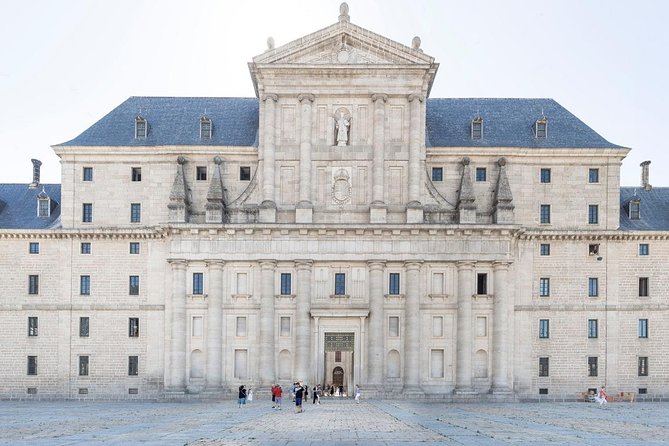
- El Escorial begins the story: the Royal Monastery of San Lorenzo de El Escorial
- The palace, the basilica, and that Baroque dome
- The Pantheon of Kings and themed rooms that make the complex feel organized
- The Valley of the Fallen: the cross, the mountain church, and what changes inside
- A key rule to know before you go
- Managing the pace: crowding, group size, radio audio, and language reality
- If you’re sensitive to fast walking, plan extra patience
- What to wear: stairs, cold mornings, and sensible footwear
- Price and value: what you’re actually paying for at $79.30
- Who should book this tour, and who should think twice
- My bottom line: should you book this El Escorial and Valley tour?
- FAQ
- How long is the tour?
- Where does the tour start and end?
- What time does the tour begin?
- Is pickup available?
- Is the tour offered in English?
- Are entrance tickets included?
- Is lunch included?
Key highlights you should care about
- El Escorial’s UNESCO-level rooms: palace spaces, basilica, Chapter House, and a famous library
- The Pantheon of Kings: marble tombs like Charles V, plus themed rooms (Weapons, Architects)
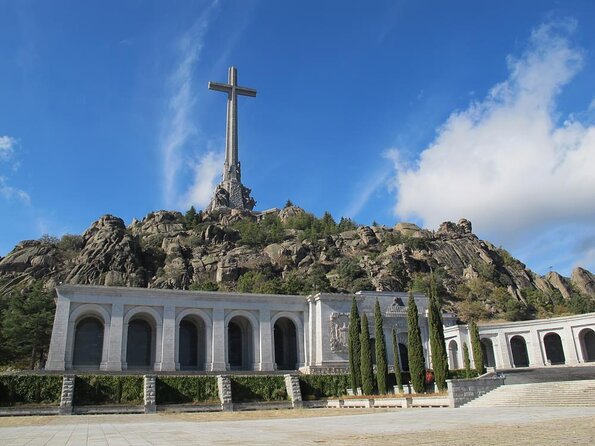
- The Valley’s mountain basilica: built into the rock, topped by the world’s largest cross
- Included entrance tickets for both sites (when you select the Valley option)
- Radio-guide system to help you keep up without constantly craning your neck
- Small-group reality: capped at 30 travelers per guide, but some days still feel crowded
Why this two-site combo works so well from Madrid
If you only do one historical day trip, this one has a strong case. El Escorial is royal Spain made concrete: symmetry, corridors, chapels, domes, and art arranged to impress power. Then the Valley of the Fallen shifts the mood. Even without getting political, it’s hard to ignore the scale, the hillside architecture, and the emotional weight many people feel when they see the site’s memorial design.
This combo is also efficient. You’re not just visiting one place and wasting a full day driving. You get about 2.5 hours at El Escorial, then about an hour at the Valley (if your option includes it), all wrapped in roughly 5.5 hours total. That’s a good match for visitors who want depth without surrendering your entire Madrid day.
The coach ride out: early start, comfort, and what you’ll see en route
You check in at the Julià Travel Madrid office in central Madrid about 15 minutes before departure. The tour starts at 8:30 am. From there, you board a comfortable air-conditioned coach and head about 28 miles (45 km) northwest toward San Lorenzo de El Escorial.
The ride matters more than you might think. The guides build context while you’re on the road, so by the time you reach the monastery, you’re not just staring at stone. You also get a chance to reset your day before the walking starts. If you’re doing this in cooler months, dress for it, some days can be foggy or chilly, and you’ll still be outside for parts of the route.
Same idea, different operator. Our other El Escorial, Aranjuez and Alcala Trips


El Escorial begins the story: the Royal Monastery of San Lorenzo de El Escorial
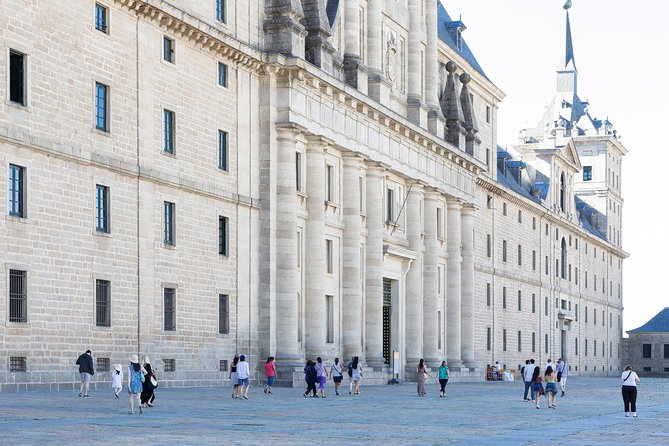
Plan to take your time here, even if the tour doesn’t give you unlimited hours. El Escorial is an architectural ensemble recognized by UNESCO, built in the 16th century and designed to broadcast government power through religion, art, and royal presence.
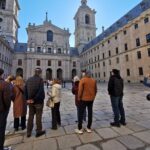
You’ll enter with your guide and focus on the most important areas. Expect big highlights like the monastery complex’s Renaissance feel, and a strong emphasis on the way rooms connect. This is the kind of site where the guide’s job is to help you notice relationships, not just individual sights. Once you understand the layout, the building becomes easier to read, like a map written in stone.
The palace, the basilica, and that Baroque dome
One of my favorite ways to visit El Escorial is to treat it like two stories that overlap. First is the royal palace side, where you connect the place to the Habsburg world. Then comes the religious story, where the basilica and related spaces signal how seriously Spain treated faith and authority.
During your guided time, you’ll move through key sections such as:
- the Habsburg’s Palace
- the Chapter House
- the Basilica area
- the Baroque dome
These details aren’t random. They’re there to show you how “power” worked in multiple registers: political, ceremonial, and devotional.
The Pantheon of Kings and themed rooms that make the complex feel organized
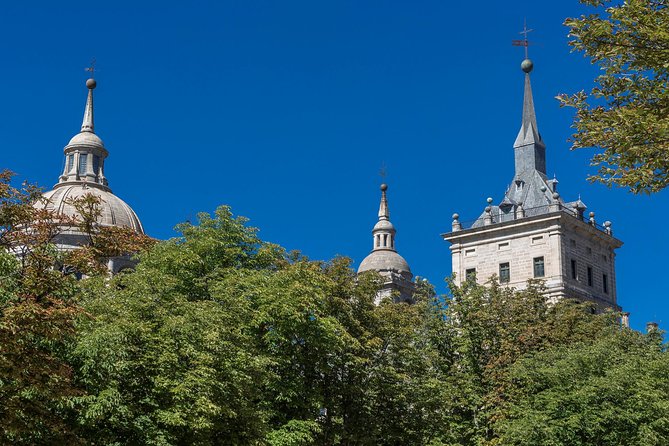
After you get your bearings, the tour shifts into very specific rooms. That’s a smart choice. Without that structure, El Escorial can feel like a museum maze. With it, you start to see the logic.
You’ll visit the grand palace known as the Pantheon of Kings. This is where the royal tombs come into focus, including the marble tomb of Charles V. The tour also includes themed rooms that add texture to the architecture and mindset of the era:
- the Architects Room, where you can learn about 16th-century building processes through collections of building equipment
- the Weapons Room, which helps you visualize the military thinking of the time
- the library, including frescoes
A small practical tip: if you love art ceilings and frescoes, slow down when the group pauses for photos. Some rooms need a little extra looking. The tour keeps moving, so you’ll want to grab those close-up moments while you still have them.
The Valley of the Fallen: the cross, the mountain church, and what changes inside
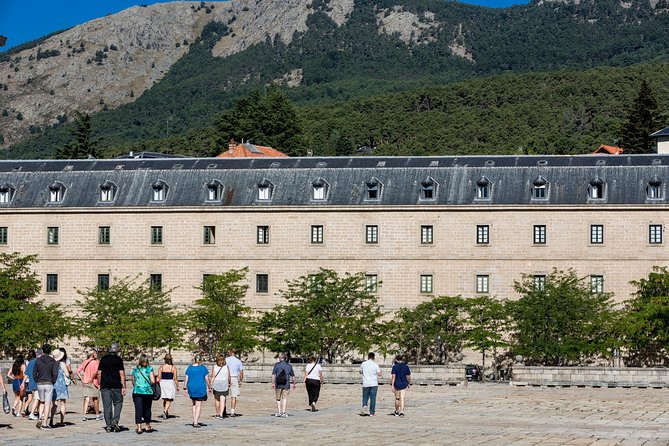
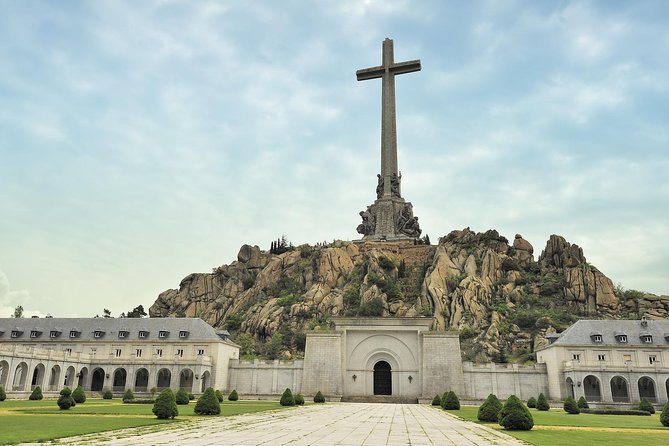
If your selected option includes it, you’ll make the short ride from El Escorial to the Valley of the Fallen. It’s about 9 km away, in the Sierra de Guadarrama. Even before you arrive, you get a visual hook: the monumental cross built above the site is visible from far away.
The Valley itself is an underground church carved into the side of a mountain, topped by the world’s largest cross. It’s the kind of place where the setting is the architecture. You’re not just entering a building, you’re entering a landscape shaped for memorial purposes.
A key rule to know before you go
Here’s the part that can surprise people. The Valley guide will not be able to give explanations inside the basilica. All information is given outside, and the visit inside is on your own. So treat it like a two-stage experience: guided context first, then your own look once you cross the threshold.
Because your time here is about an hour, you’ll want to plan your attention. Spend your guided time soaking up the key facts and symbolism outside. Then inside, look slowly enough to make the space click, not just snap a quick photo and rush onward.
- Madrid: Tour Bernabéu Entry Ticket
- Madrid: Prado Museum Entry Ticket
- Madrid: “Emociones” Live Flamenco Performance
- Madrid: Panoramic Route City Tour
- Madrid: Live Flamenco Show with Food and Drinks Options
- Avila & Segovia Tour with Tickets to Monuments from Madrid
- Three Cities in One Day: Segovia, Avila and Toledo from Madrid
- Madrid: Segovia and Toledo Tour, Alcazar, and Cathedral
Managing the pace: crowding, group size, radio audio, and language reality
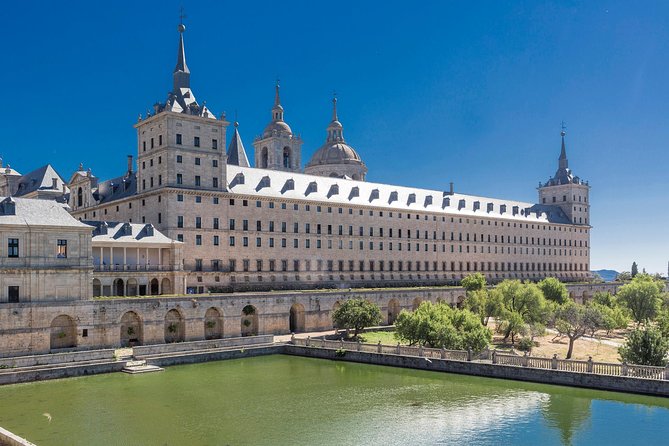
This tour is capped at 30 travelers per guide, and that helps. Still, El Escorial is popular, and the rooms can feel crowded. A common theme is that you may find limited space to appreciate art in the moment, especially if other tour groups overlap.
The good news is you’ll use a radio-guide system, which usually makes it easier to follow without being stuck right next to the guide. That said, audio issues and guide accents can affect comprehension. Multiple guide names show up in experiences tied to this route, including Jorge, Susanna, and María, and many people praised those guides for clear explanations. Your best bet is to stay near the front or somewhere you can hear consistently, and to be realistic that bilingual delivery can shift more toward Spanish at times.
If you’re sensitive to fast walking, plan extra patience
This is described as a walking tour on arrival at the site, with lots of stairs inside the monuments. That’s not the place for a “light stroll” mindset. The tour can feel rushed, especially if your focus is on reading plaques or lingering in one room. If you need more breathing room, you might prefer a different format that allows longer independent time.
What to wear: stairs, cold mornings, and sensible footwear
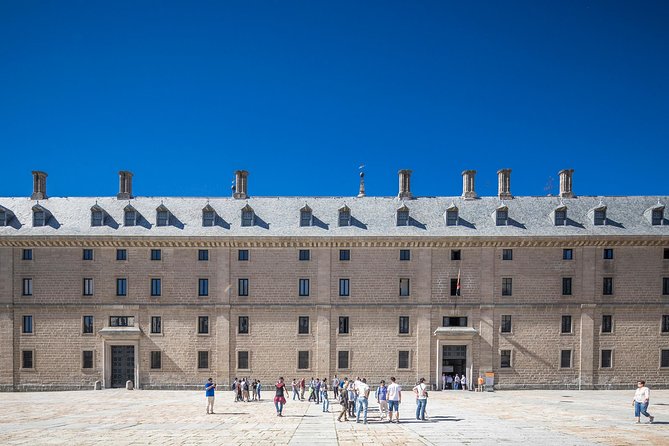
Wear appropriate attire. It’s a walking tour with stairs and significant indoor vertical movement. The tour notes that it is not recommended for people with walking difficulties or reduced mobility, and full accessibility can’t be guaranteed because of the architecture.
Even if you’re healthy, treat it like a workout day. Bring comfortable shoes you trust on stone and steps. If you’re visiting in cooler weather, add a layer. Some mornings can be foggy or cold, and you’ll still be outdoors for parts of the route.
Price and value: what you’re actually paying for at $79.30
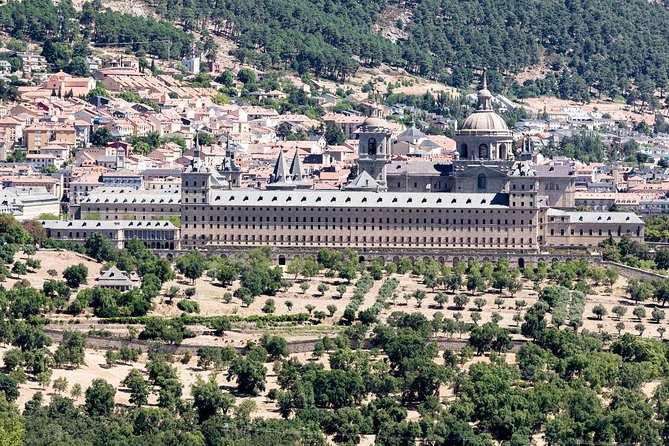
At $79.30 per person, the price feels very reasonable if you take advantage of what’s included. You’re getting:
- a guided visit to El Escorial
- a guided connection to the Valley of the Fallen if your option includes it
- admission tickets for both places (again, when the Valley option applies)
- a comfortable air-conditioned coach
- a local guide plus a radio-guide system
What can make value feel lower is timing or day-to-day changes. Some guests reported that the Valley visit wasn’t available on certain weekdays, and others noted situations where access to particular areas at El Escorial depended on the day. That doesn’t mean the experience is always different, but it does mean you should confirm you’re booking the version that includes the Valley for your date, and check for any access notes tied to your travel day.
So my value verdict is simple: if you get both sites and you’re okay with a guided, structured pace, this is a strong deal. If your one must-see is the Valley and it ends up swapped out on your date, the same price can sting.
Who should book this tour, and who should think twice
This works best if you:
- want a first-time Madrid history hit without planning two separate trips
- like guided structure that tells you where to look inside complicated buildings
- enjoy royal art, royal tombs, and strong architectural symbolism
- are okay with a half-day pace that prioritizes major highlights over deep free time
You should think twice if you:
- struggle with stairs or longer indoor walking
- want lots of quiet time to read everything at your own speed
- need a consistently easy English lecture, all the way through, without accent or audio hiccups
Also, the Valley of the Fallen is a memorial with a heavy backstory. The tour framing here focuses on the monument and those who perished, and you should be ready for the emotional weight that comes with that kind of place.
My bottom line: should you book this El Escorial and Valley tour?
I’d book it if your goal is a tight, guided sampler that covers the biggest moments at both UNESCO-listed stops. The included entrances, the coach comfort, and the structured visits to spaces like the Pantheon of Kings and the Valley’s mountain basilica make this more than a casual sightseeing bus.
Before you book, do two smart checks:
- Make sure you’re selecting the option that includes the Valley of the Fallen for your date.
- Know that you’re choosing a walking tour with stairs, so plan footwear and energy accordingly.
If that all lines up, this is the kind of half-day trip that gives you real context fast. El Escorial will likely leave you staring at ceilings and tomb details. The Valley will likely give you a quieter, heavier kind of memory, one tied to scale and symbolism more than museum-style explanation.
FAQ
How long is the tour?
It’s about 5 hours 30 minutes total.
Where does the tour start and end?
It starts at Julià Travel Madrid on C. de San Nicolás, 15, Centro (meeting point near the Plaza de Oriente area) and ends at Plaza de Oriente (Pl. de Ote., Centro).
What time does the tour begin?
The start time is 8:30 am.
Is pickup available?
Hotel pickup and drop-off are included if you select the Private Tour option. Otherwise, you check in at the meeting point.
Is the tour offered in English?
Yes. The tour is described as English and Spanish.
Are entrance tickets included?
Yes. Admission to the Royal Monastery of El Escorial and the Valley of the Fallen and Basilica is included (and the Valley is included when the option is selected).
Is lunch included?
No, lunch is not included.
Keep browsing El Escorial, Aranjuez and Alcala Trips
- Escorial Monastery and the Valley of the Fallen Tour from Madrid
★ 5.0 · 2,494 reviews - From Madrid: El Escorial and Valley’s Basilica Half Day Tour
★ 4.4 · 638 reviews - From Madrid: Escorial Monastery & Valley of the Fallen Trip
★ 4.4 · 389 reviews
Fresh off the desk: recent Madrid experiences we have written up




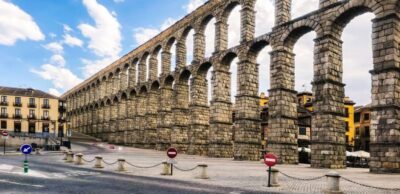
El Escorial, Aranjuez and Alcalá Trips, side by side.
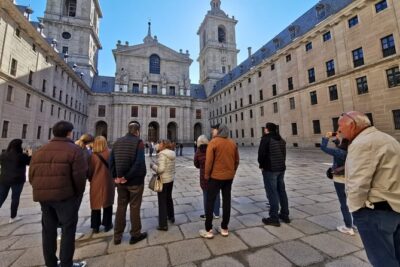 ★ 5.0Escorial Monastery and the Valley of the Fallen Tour from MadridFrom $742,494 reviews
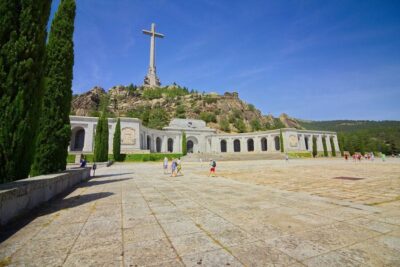 ★ 4.4From Madrid: El Escorial and Valley’s Basilica Half Day TourFrom $78638 reviews
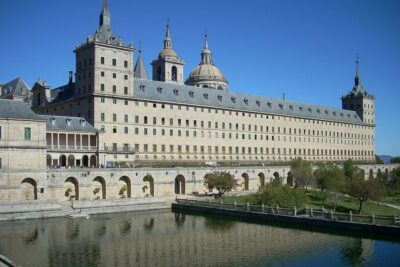 ★ 4.4From Madrid: Escorial Monastery & Valley of the Fallen TripFrom $78389 reviews
 ★ 4.4Royal Site of San Lorenzo de El Escorial Entrance TicketFrom $21239 reviews
This tour also sits in