
Reviewed · WHALE WATCHING
Bonadea II Ecological Whale Watching, 2 hours
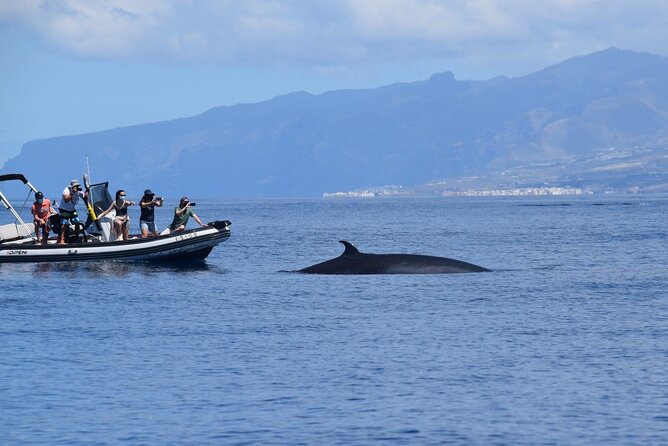
Whales feel surprisingly close in Tenerife. On Bonadea II Ecological Whale Watching, you cruise the protected Teno-Rasca strip in the Natura 2000 network with a small-group cap of 6, plus an English-speaking captain who explains what you are seeing while the team prioritizes a respectful approach to marine life (slowing down and keeping the experience calm when animals come near).
One thing to plan for is that this trip is weather dependent, and the boat has a passenger weight limit of 130 kilos due to the vessel’s characteristics. If the sea is rough, you may be offered another date or a refund, because they do not run this as a take-a-chance gamble.
In This Review
- Key highlights you will care about
- Bonadea II and Tenerife’s Teno-Rasca marine reserve
- Getting on the water: the 2-hour route and what to expect
- Why the small boat changes the whole whale-watching game
- Wildlife highlights: pilot whales, dolphins, and the occasional turtle
- Eco-friendly practices that show up on the ocean
- Guide time in English: what you gain beyond spotting
- Comfort and limits: safety, seasickness, and the 130-kilo rule
- Price in context: what $78.64 buys you
- Who should book this whale watching trip?
- Should you book Bonadea II Ecological Whale Watching?
- FAQ
- How long is Bonadea II Ecological Whale Watching?
- Where is the meeting point in Tenerife?
- How many people are allowed on the boat?
- Is the tour offered in English?
- Is there a weight limit for passengers?
- What kinds of marine animals does the tour focus on?
- Is the tour tied to a protected area?
- What is the cancellation policy?
Key highlights you will care about
- Max 6 travelers keeps the boat feel personal and the viewing comfortable
- Teno-Rasca ZEC in Natura 2000 means you are operating in a protected marine area
- Blue Boat authorization and conservation-focused rules help keep the tour wildlife-friendly
- Pilot whales and dolphins are common sightings, with turtles possible too
- Engine-off moments and patient watching instead of animal chasing
- Plastic pick-up on the water so conservation is not just talk
Bonadea II and Tenerife’s Teno-Rasca marine reserve
This whale watching trip is built around the south of Tenerife and a very specific piece of ocean: the ZEC Teno-Rasca marine strip, part of the Natura 2000 network. That matters because it is not just “go look for whales anywhere.” You are spending your time in a managed area where rules are meant to protect cetaceans and other marine life.
The operator Bonadea II (Diomedea) also states that it holds the “Blue Boat” flag, authorized by the Government of the Canary Islands tourism department and the Spanish Ministry of the Environment for whale watching activities. In plain terms, this is a strong hint that they are trying to follow best practices, not treat wildlife like a ride.
Then there is the human element. The captain team has decades of experience with passengers and cetacean observation. I like this kind of experience because it tends to translate into smoother boat handling, better reading of the sea, and more patience when animals do not show up on schedule.
Getting on the water: the 2-hour route and what to expect
You meet at Av. de Colón, 4, 38660 Costa Adeje, Santa Cruz de Tenerife, Spain. The activity starts and ends at the same meeting point, so you are not dealing with a complicated transfer chain. The experience runs for about 2 hours, which is long enough for real searching and circling, but short enough that you are not stuck offshore for half the day.
In the background, the tour plan is simple: go out into the protected zone, scan for signs of dolphins and whales, then stay with the animals without crowding them. On most days, that usually means multiple passes or loops around a pod, so you have chances to see different behaviors like surface breathing, resting, or calves staying close to mothers.
A practical tip: for the best whale-watching viewing, you want to be ready to look where the captain points, quickly. The most exciting moments tend to happen in short windows, especially when pods come up, then disappear back into the water.
Other 2-Hour Experiences we sat down and reviewed across Tenerife

Why the small boat changes the whole whale-watching game
The boat is designed for up to 6 passengers. That size is not a marketing detail, it is the reason this trip feels different from the large-boat version of whale watching.
With a small group:
- You get less “boat jam” feeling near the animals.
- You can hear instructions without shouting.
- The captain can position the vessel more precisely around the pod’s path.
The consistent theme in the experience is calm handling. People highlight how the captain respects wildlife, including using quieter behavior when animals are close. Even when you are very near, the goal is not to force the interaction. It is to watch what the animals are already doing.
And yes, you will also feel this when you are returning, because the scenery and timing matter. Tenerife from the water is a real treat, and having a smaller vessel makes the trip feel like you are part of the ocean scene rather than just a spectator.
Wildlife highlights: pilot whales, dolphins, and the occasional turtle
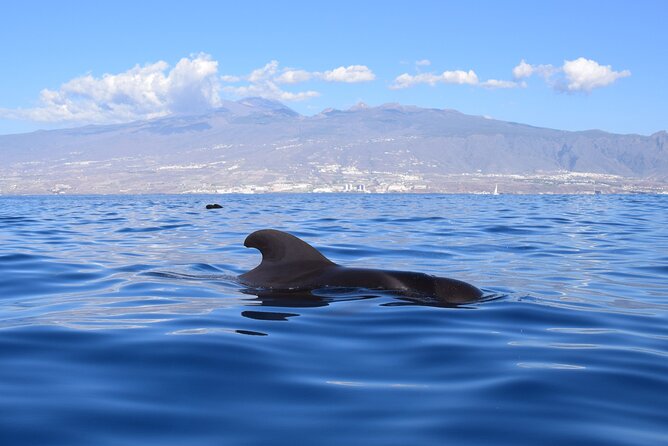
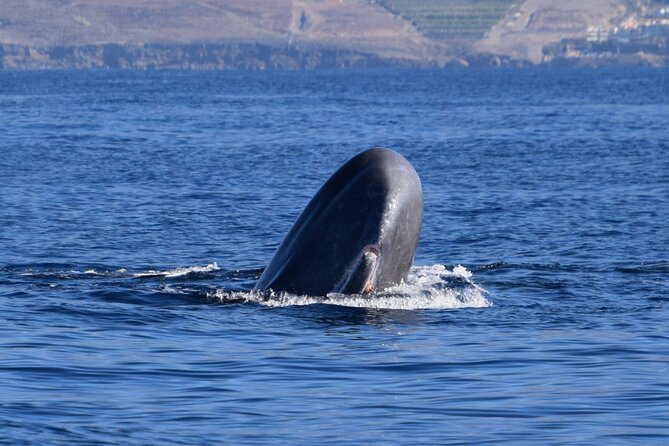
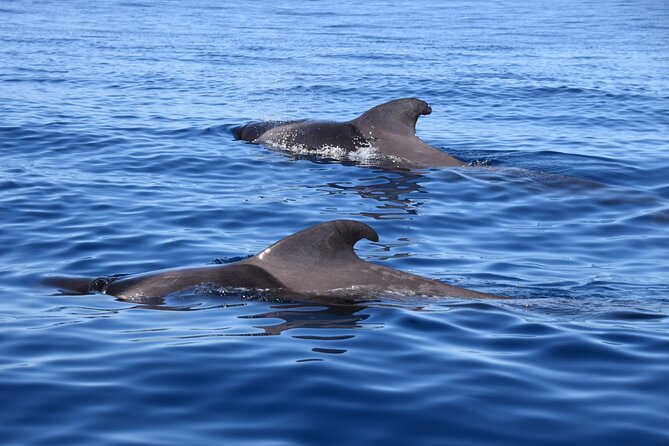
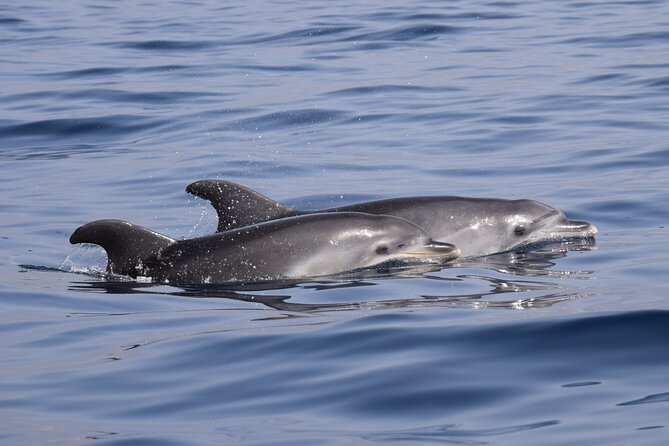
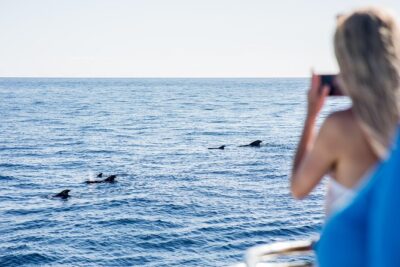
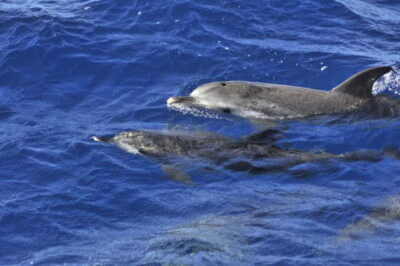
The most common headline wildlife here is pilot whales and dolphins. People repeatedly describe seeing pilot whale pods at close range, including groups with mothers and young calves. That kind of sighting is extra special because calves often bring a different rhythm to the pod, with more surface time and more milling around.
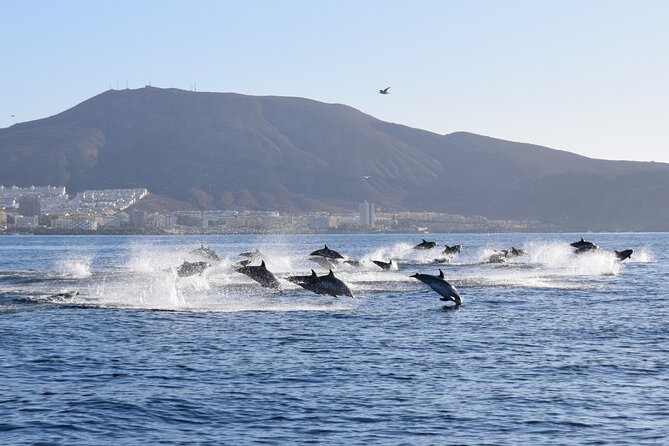
You can also see bottlenose dolphins, and there are reports of Cory’s shearwater birds in the mix. Birds are a nice bonus because they often reveal that the area has active marine life, even when the whales take a bit to surface.
A turtle sighting happens sometimes too. One review mentions a leatherback turtle, and another describes a turtle rescue story shared during the trip. You should not count on any one species every time, but the tour is designed for cetacean searching, and the record of sightings is strong.
If you care about “variety,” this is one of the reasons I like this format. Two hours can be enough to see more than one type of animal, especially when the captain stays flexible and reads the water well.
Eco-friendly practices that show up on the ocean
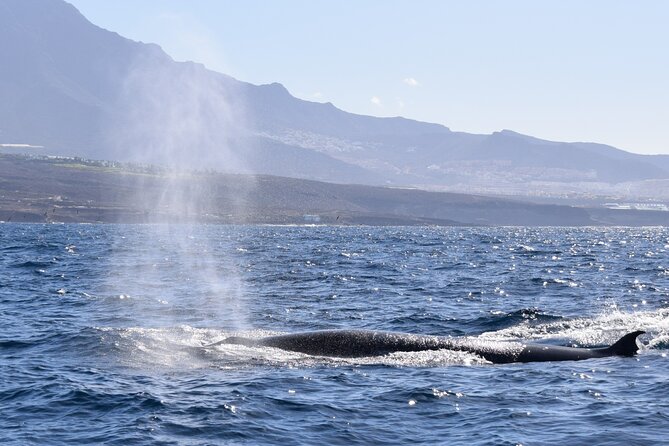
This is an ecological whale watching tour, but the real question is what that means while you are actually on the water. Here, the eco focus comes through in a few concrete ways that people describe in detail.
First, there is respectful distance and approach. The tour is about observing in the animals’ natural habitat, and the pattern people mention is that the captain does not chase. Instead, you get patience, slow movements, and waiting for animals to decide how close they want to be.
Second, the experience includes marine conservation actions. A recurring detail is picking up floating plastic during the cruise. That is not a performance. It is something you notice only because someone stops and handles debris while everyone else is still watching the water.
Third, the whole framework is conservation-driven by operating inside a protected zone (ZEC Teno-Rasca within Natura 2000), plus the Blue Boat authorization. When a tour is grounded in rules and management, your chance of experiencing better behavior on the water improves.
None of that means the ocean is controlled, or that you will definitely see whales. But it does mean you are more likely to be part of a responsible viewing style.
Guide time in English: what you gain beyond spotting
You are offered the tour in English, and that matters more than you might think. Whale watching is not just spotting; it is understanding what you are looking at.
The captain’s role is to explain what you are likely to see, where you are going, and how whale behavior works. People also mention that the captain was energetic and encouraging, which is especially helpful if you are traveling with kids who have short attention spans.
One thing I appreciate from the reported experiences is the balance: you get enough explanation to make the sightings meaningful, but the trip does not turn into a lecture. When the whales surface, that is the moment, and you feel like the boat is built around the animals, not around keeping the group entertained.
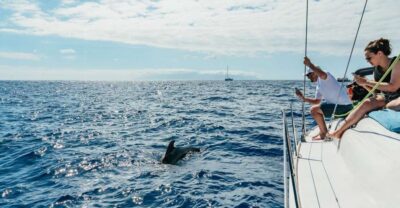
If you are the type who loves photos, small boat proximity helps. You may get good viewpoints without fighting for position the way you sometimes do on larger vessels.
Comfort and limits: safety, seasickness, and the 130-kilo rule
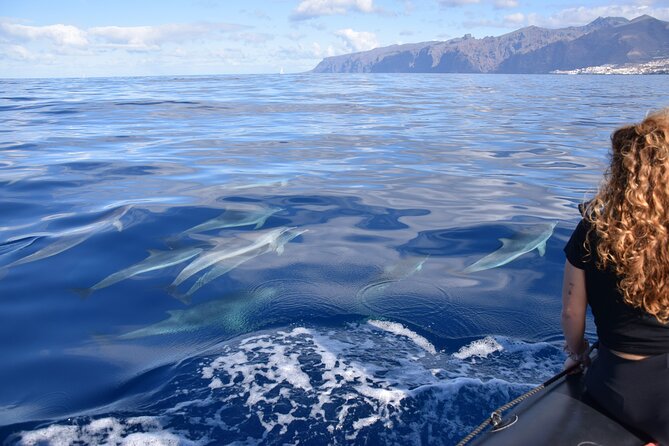
This tour is “most travelers can participate,” and it is described as near public transportation, with service animals allowed. But there are two details you should take seriously.
1) Weather requirement
The experience requires good weather. If conditions are poor, you will be offered a different date or a full refund. That is a fair trade for a whale-watching trip, because safety and wildlife impacts go together.
2) Weight limit of 130 kilos
Because of the boat’s characteristics, there is a passenger cap at 130 kilos. If that applies to you, confirm before booking. This is not about being picky. It is a safety and load limit for the vessel.
Also, remember you are on the water for two hours. If you are prone to seasickness, bring what works for you. Even when the captain is careful, the ocean is the ocean.
The flip side: with a small group and a smaller boat, you tend to feel more secure and “in the scene.” People describe the boat as comfortable and safe, and the max 6 passengers helps with ease of movement and attention.
Same idea, different operator. Our other Whale Watching in Tenerife
- Tenerife: Eco-Yacht Whale and Dolphin Watching and Swimming
- Los Cristianos Respectful No-Chase Whale and Dolphin Safari
- Costa Adeje: Whale & Dolphin Eco-Cruise with Snacks & Drinks
- Los Gigantes: Dolphin & Whale Watching Cruise with Swim Stop
- Costa Adeje: Whale Watching Catamaran Tour with Drinks
- Tenerife: Whale & Dolphin Watching with Drinks and Snacks
- No chase Whale & Dolphin tour putting Marine Life first – we care
- Whale Watching Eco-Adventure from Costa Adeje
Price in context: what $78.64 buys you
At $78.64 per person for about two hours, this sits in the mid to upper range for Tenerife whale watching. So the value question is fair.
Here is what you are paying for, in practical terms:
- A small-group experience, max 6, which changes how close and how calm the viewing feels
- A captain and team with long experience in cetacean observation
- Time in a protected marine zone (ZEC Teno-Rasca within Natura 2000)
- An eco-minded approach that includes non-chasing observation and plastic pick-up while out at sea
- An English-speaking format, which improves the experience even if the sighting is brief
If your priority is seeing pilot whales and dolphins in a wildlife-respecting way, the small boat angle can make the price feel more justified. If you only care about checking a box and do not mind crowded viewing, a cheaper large-boat option may sound tempting. But for most people, the difference between 40 people on one vessel and 6 people on a smaller boat shows up immediately in comfort and the viewing experience.
Also, note the timing. The tour is often booked around two weeks in advance on average. If you are visiting during busier periods, I would not wait until the last moment.
Who should book this whale watching trip?
This is a great fit if you want:
- Close, calm watching rather than rushed chasing
- A responsible, conservation-minded style on the water
- Better odds of good viewing with a max of 6 people
- English commentary that actually helps you understand behavior
It is also a nice option for families. There are mentions of trips that felt fun for parents with small kids, mainly because the captain keeps the experience engaging and focused.
You might choose something else if:
- You need something guaranteed regardless of weather, since this one depends on good conditions
- The 130-kilo weight limit applies and you need an alternative vessel or tour option
- You dislike boats and water time, even for two hours
Should you book Bonadea II Ecological Whale Watching?
My take: if you are choosing between “cheap and busy” versus “small, protected, and wildlife-respecting,” this booking leans toward the second option. The strongest reason to book is the combination of small-group size and an approach that people consistently describe as respectful, quiet, and conservation-focused.
If you want pilot whales and dolphins, and you value real ocean viewing in the Teno-Rasca protected area, you are in the right place. Just go in with the right mindset: wildlife is wild. Your best strategy is to be flexible on weather, show up ready to look when the captain calls your attention, and treat it as an observation outing, not an interaction request.
FAQ
How long is Bonadea II Ecological Whale Watching?
The tour lasts about 2 hours.
Where is the meeting point in Tenerife?
You meet at Av. de Colón, 4, 38660 Costa Adeje, Santa Cruz de Tenerife, Spain, and the activity ends back at the meeting point.
How many people are allowed on the boat?
This activity has a maximum of 6 travelers.
Is the tour offered in English?
Yes, the tour is offered in English.
Is there a weight limit for passengers?
Yes. Due to the characteristics of the boat, passengers over 130 kilos cannot be carried.
What kinds of marine animals does the tour focus on?
The tour aims to show dolphins, whales, and other marine fauna in their natural habitat.
Is the tour tied to a protected area?
Yes. The activity is carried out in the Special Conservation Zone (ZEC) Teno-Rasca marine strip, integrated into the Natura 2000 Network.
What is the cancellation policy?
You can cancel for free up to 24 hours in advance for a full refund. If you cancel less than 24 hours before the start time, the amount you paid is not refunded. The experience also requires good weather, and if it is canceled due to poor weather, you are offered a different date or a full refund.
Keep browsing Whale Watching in Tenerife
- Tenerife: Eco-Yacht Whale and Dolphin Watching and Swimming
★ 4.7 · 15,619 reviews - Los Cristianos Respectful No-Chase Whale and Dolphin Safari
★ 4.6 · 12,782 reviews - Costa Adeje: Whale & Dolphin Eco-Cruise with Snacks & Drinks
★ 4.6 · 5,096 reviews - Los Gigantes: Dolphin & Whale Watching Cruise with Swim Stop
★ 4.7 · 4,539 reviews - Costa Adeje: Whale Watching Catamaran Tour with Drinks
★ 4.7 · 3,653 reviews
More 2-Hour Experiences from the Tenerife notebook
- 2h Viking Cruise Whales & Dolphins Watching
★ 5.0 · 596 reviews - Most Famous Catamaran in Tenerife Island (2 hours and 3 hours tours)
★ 4.5 · 313 reviews
Fresh off the desk: recent Tenerife experiences we have written up

Whale Watching, side by side.
 ★ 4.7Tenerife: Eco-Yacht Whale and Dolphin Watching and SwimmingFrom $1315,619 reviews
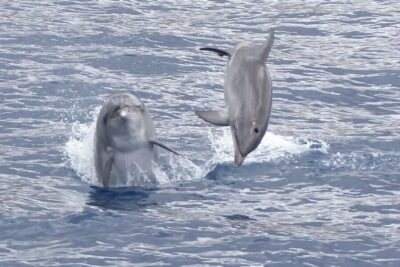 ★ 4.6Los Cristianos Respectful No-Chase Whale and Dolphin SafariFrom $2912,782 reviews
 ★ 4.6Costa Adeje: Whale & Dolphin Eco-Cruise with Snacks & DrinksFrom $525,096 reviews
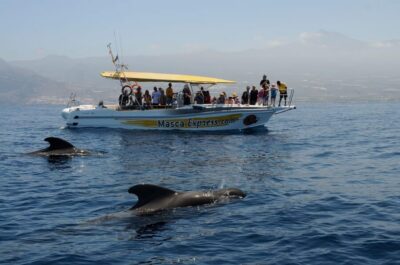 ★ 4.7Los Gigantes: Dolphin & Whale Watching Cruise with Swim StopFrom $334,539 reviews
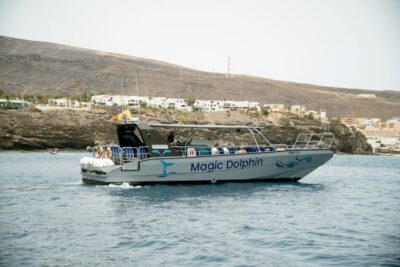 ★ 4.1Morro Jable: Dolphin & Whale Watching Cruise, Drinks & SwimFrom $584,158 reviews
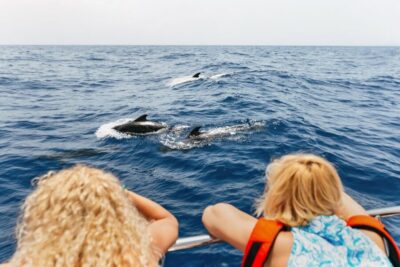 ★ 4.7Costa Adeje: Whale Watching Catamaran Tour with DrinksFrom $413,653 reviews
 ★ 4.6From Morro Jable: Dolphin and Whale Watching and SnorkellingFrom $593,111 reviews
 ★ 4.4Tenerife: Whale & Dolphin Watching with Drinks and SnacksFrom $772,929 reviews
This tour also sits in