
Reviewed · BILBAO RIVERSIDE AND GUGGENHEIM VISITS
Walking Tour in Bilbao
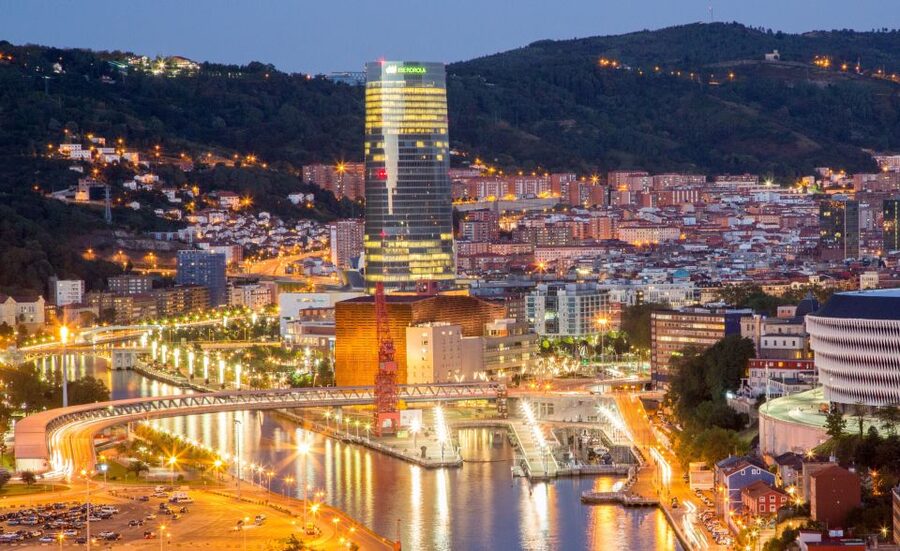
Bilbao hits different when you walk it. This 2-hour small-group stroll connects the city’s old soul to its modern makeover, with stops that make Basque culture feel real fast. You start in Casco Viejo, then move through the Ensanche, and end near the big contemporary icons.
What I like most is the focus on specific local landmarks you can picture later, and the way the guide brings the Basque angle into everyday life. Even the reviews highlight how guides like Beatriz, José, Miguel, Adur, and Victoria make the story human, not textbook.
One thing to consider: you’re moving for the full two hours, and rain gear isn’t included. If the weather is rough, you’ll want to be ready so the walk stays fun instead of slippery.
In This Review
- Key Tour Takeaways at a Glance
- Entering Arriaga Theater, Then Getting Your Bearings Fast
- Casco Viejo and the Seven Streets: The Old City at Human Speed
- What to watch for (and why it’s worth it)
- San Antón and Santiago Cathedral: Why These Buildings Matter
- La Ribera Market: Bilbao’s Everyday Heart
- If you want to make this stop pay off
- From Old Town to Ensanche: The 19th-Century Bilbao Boom
- Zubizuri Bridge and the Guggenheim Area: Bilbao’s Modern Turn
- The Guide Factor: Stories, Humor, and Basque Culture That Stick
- Price, Timing, and Value for 2 Hours
- What to Bring (and What Might Bug You)
- Who Should Book This Bilbao Walk?
- Should You Book? A Quick Decision Guide
- FAQ
- How long is the Walking Tour in Bilbao?
- What does the tour cost?
- Where do I meet the guide?
- What areas of Bilbao will I see?
- What’s included in the tour price?
- What is not included?
- What languages are available?
- Is there a minimum group size?
Key Tour Takeaways at a Glance
- Small group (max 10) keeps questions easy and the pace comfortable
- Casco Viejo highlights include the Seven Streets, San Antón, Santiago Cathedral, and La Ribera Market
- Ensanche portion explains the 19th-century urban boom you’d otherwise miss
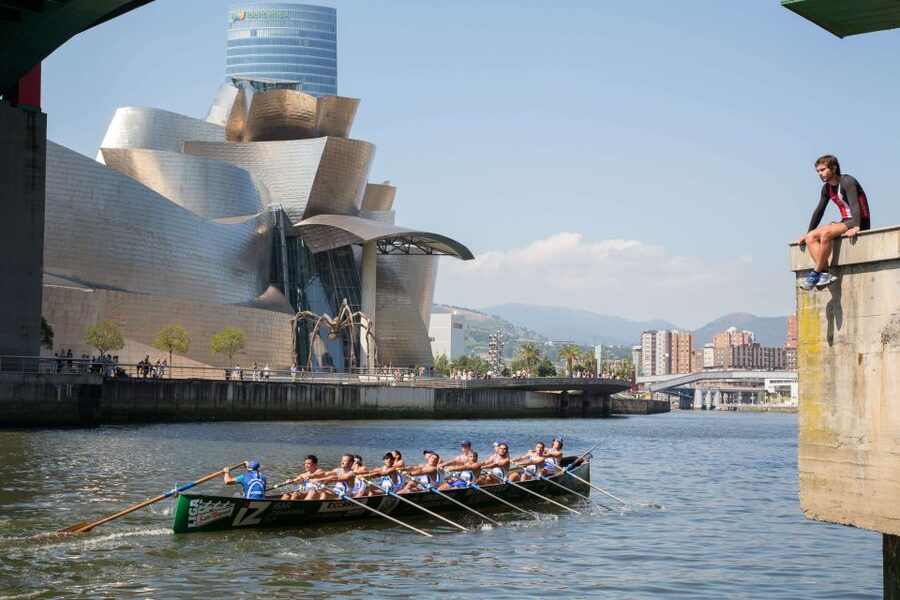
- Contemporary Bilbao finishes near Zubizuri Bridge and the Guggenheim area
- Solo travelers welcome (check availability) for a friendly intro to the city
Entering Arriaga Theater, Then Getting Your Bearings Fast
Meet your guide at the front of the Arriaga Theater. That spot is practical, central, and easy to find once you’ve oriented yourself to the city center. From there, you’re not sent on a random shuffle of streets. The walk has a clear logic, from historic Bilbao outward to the city’s newer identity.
This kind of tour works best on day one, or anytime you’ve got a tight schedule. You get a spine for the city, meaning you’ll know where you are and what you’re looking at when you return later on your own. And because it’s limited to 10 people, the group stays manageable even when you stop to talk about an alley, a church facade, or the way the river shaped the city.
If you’re used to fast group tours, this one feels calmer. Still, it is a walking tour, so wear real shoes. You’ll cover several neighborhoods in two hours, so don’t plan big breaks for coffee in the middle.
Casco Viejo and the Seven Streets: The Old City at Human Speed
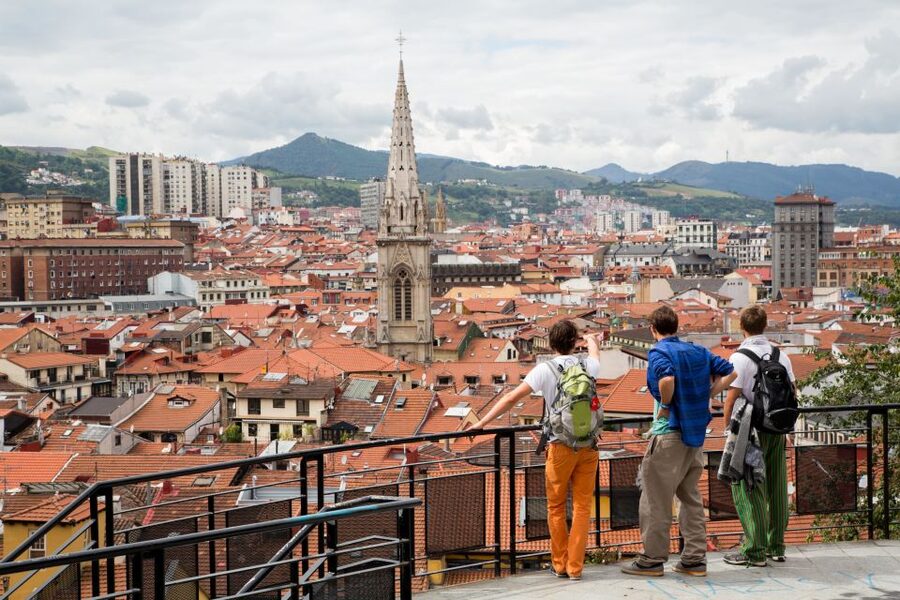
Your starting point in the historic center matters. The Casco Viejo area is where Bilbao’s character shows up in layers, and the tour is built to help you read those layers. You begin with the Seven Streets, a concept that captures how this old part of town grew and how people moved before the city sprawled.
This is also where you’ll feel the Basque side of Bilbao. Guides often steer the conversation toward how language, local identity, and history show up in everyday places. In the reviews, that focus comes through again and again, especially with guides like Beatriz and Adur, who explain how Basque culture isn’t just a theme, it’s part of how the city thinks.
As you walk, you’ll get small “look closer” moments. A street width or a corner viewpoint might seem ordinary until the guide connects it to trade, faith, or politics. That’s the value of having a local interpreter of the city, not just someone reading a brochure.
Our remaining Bilbao Riverside and Guggenheim Visits notes, in case one suits you better





What to watch for (and why it’s worth it)
- How the streets bend and cluster, which helps explain why Bilbao developed the way it did
- Religious buildings not as static monuments, but as anchors of community life
- The tone of the architecture, because it changes as you move toward newer Bilbao
San Antón and Santiago Cathedral: Why These Buildings Matter
The tour includes stops at the Church of San Antón and Santiago Cathedral. These aren’t just “pretty stops.” They give you a feel for what mattered when Bilbao was still defining itself.
San Antón is especially useful for first-timers because it helps explain the old city’s rhythm and the way landmarks functioned as meeting points. Santiago Cathedral adds another layer. It shows how Bilbao’s civic and spiritual life stayed interwoven, even as the city’s economy pushed it toward modernization.
The best guides handle this in a way that sticks. Based on what people say, the more effective moments aren’t long speeches. They’re the short, specific stories, told with humor or energy, that make a place feel connected to real people.
If you’re the type who loves architecture, take a slow moment at each church. Don’t just snap photos and move on. Look at the facade details and notice how the streets frame them. The guide’s context will make your photos make sense later.
La Ribera Market: Bilbao’s Everyday Heart
One of the most concrete highlights is La Ribera Market. Markets like this are where a city’s identity is practical, not performative. Even if you don’t buy anything, just seeing how the market operates tells you a lot about Bilbao’s relationship with food, trade, and local routine.
This stop is also great for orientation. After the market, it becomes easier to understand what you’re seeing in the rest of the city center. You’ll get a sense for the human side of Bilbao, not only the monumental.
In the reviews, a frequent theme is that guides share useful local tips, especially around where to eat afterward. That fits this market stop perfectly. You’re being shown the city’s “why,” then later you can turn it into “where do I go.”
If you want to make this stop pay off
- Use it as your reset moment to ask the guide for food or drink suggestions
- Keep an eye on what locals seem drawn to, even from a distance
- Don’t rush if you spot something that looks interesting to you
From Old Town to Ensanche: The 19th-Century Bilbao Boom
After Casco Viejo, the walk moves into the Ensanche, Bilbao’s neighborhood shaped by the big 19th-century urban transformation. This is where the city starts looking broader and more planned, and where you can see how industrial and financial growth changed the layout.
You’ll notice the shift in feel. Old streets give way to more structured streetscapes. The guide helps connect that shift to the historical reason the city expanded the way it did. It’s the difference between a city that grew organically and one that was designed to handle growth.
If you’re a history fan, you’ll like this part because it explains the “how did we get here” behind the architecture. If you’re not, it still works, because it’s visual. The area gives you an instant comparison to Casco Viejo, so you can feel the timeline in your feet.
One practical tip: take a few minutes to look up while you’re walking. Ensanche streets tend to reward that habit. The facades often tell the story of prosperity and civic ambition.
Our remaining Walking Tours notes from Bilbao, in case one suits you better
Zubizuri Bridge and the Guggenheim Area: Bilbao’s Modern Turn
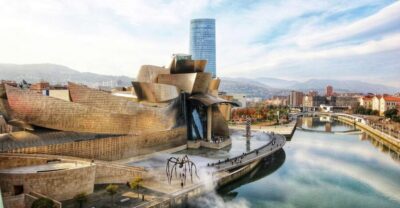
The walk ends in contemporary Bilbao, with icons like Zubizuri Bridge and the area near the Guggenheim Museum. Even if you’re not going inside a museum, this finish point gives you the big-picture contrast you came for.
Zubizuri Bridge is a strong visual marker for modern Bilbao. It signals change in style, design, and confidence. The Guggenheim area, even from outside, functions like a cultural magnet. It helps explain how the city used a bold cultural project to rebrand itself and attract global attention.
What makes this ending work well is the sequence. You’ve already walked through older Bilbao’s logic, then through the Ensanche’s growth story. Now you can see how the city’s priorities evolved over time.
If you’re thinking ahead about your own day plan, this is a good moment to ask: should you circle back for a museum visit, or keep your energy for neighborhoods and viewpoints? A good guide will help you choose based on your interests and time.
The Guide Factor: Stories, Humor, and Basque Culture That Stick
The tour’s biggest strength is the local guide. In the reviews, the same pattern shows up: guides are not only giving facts, they’re giving context and personality. You’ll see names like Beatriz, José, Miguel, Adur, and Victoria, and the consistent praise is about how they explain the evolution of Bilbao in a way that feels understandable.
Many visitors also highlight the Basque language angle. That matters more than it sounds. Even if you don’t speak Basque, hearing how it fits into identity helps you understand what you’re seeing, hearing, and reading in the city. It stops Bilbao from feeling like a generic Spanish destination and turns it into something with its own voice.
Also, pace matters. People repeatedly say the tour moves at an excellent speed and stays interactive. Guides ask what you care about, then adjust. That’s not just “nice.” It’s how you get value, especially in a short, two-hour format.
Finally, the best guides pass along practical food and drink direction. One review mentions José sharing a list of restaurant and visit recommendations, and another describes help even when plans got complicated. That kind of follow-up makes the walk more than sightseeing. It becomes the start of your trip.
Price, Timing, and Value for 2 Hours
The price is listed at $41 per person for two hours, and it’s one of those deals that can be very good if you’re using the tour to plan the rest of your Bilbao time. You’re paying for a guided route through multiple neighborhoods and a local storyteller who can connect the dots.
Value isn’t only about cost per minute. It’s also about what you’d otherwise miss if you walked the same route alone. A guide helps you understand:
- why certain streets and buildings matter
- what economic forces shaped the city
- how Basque culture shows up in daily life
- where to go next for food and sights
This tour also has a small-group format, capped at 10 participants. That’s important because it keeps the experience from feeling like a queue. You’ll get answers, not just announcements.
Timing-wise, two hours is long enough to feel like you did something meaningful, but short enough that you can still build the rest of your day. If you want a lighter schedule, this works well paired with a museum hour later, or tapas time soon after.
What to Bring (and What Might Bug You)
This is an easy walking tour in the sense that it doesn’t require special skills, and it’s designed for a wide range of visitors. It is wheelchair accessible, and it’s offered with live guides in Spanish and English.
But you should plan for comfort. Since rain clothes are not included, bring a jacket if the forecast looks iffy. One review describes the tour continuing enthusiastically during rain, but you still don’t want to suffer through it if you can prevent it.
Also, wear shoes you trust. Two hours in a city center can mean uneven pavement and lots of turning corners.
If you prefer to wander without structure, you might find a walking tour slightly directive. The flip side is you get a map in your head quickly. For most first-timers, that’s exactly what they need.
Who Should Book This Bilbao Walk?
I think this tour is a strong match if you:
- want a first-time Bilbao intro without wasting time
- like mixing history, culture, and modern city design
- enjoy Basque culture and language connections
- want food and sightseeing guidance you can use right away
- are traveling solo and want a friendly group setting (availability can vary)
It may not be the best fit if you already know Bilbao well and mostly want museum time or deep dives into one neighborhood. This tour is built to connect key areas, not to spend half a day in one place.
Should You Book? A Quick Decision Guide
Yes, book this walking tour if you want to get your bearings fast and understand why Bilbao looks the way it does today. Two hours plus a strong local guide is a smart way to start, especially at $41 when you’re gaining context for the whole city.
Skip it or choose a different style if you hate walking tours or you need long stops for slow museum browsing. Also, bring your own rain plan, since rain clothes aren’t included.
If you do book it, go in with two priorities: one cultural interest (Basque language, history, architecture) and one practical goal (where to eat or what to see next). Guides like Beatriz, José, Miguel, Adur, and Victoria are the type who will respond to those cues.
FAQ
How long is the Walking Tour in Bilbao?
The tour duration is 2 hours.
What does the tour cost?
The price is $41 per person.
Where do I meet the guide?
Meet your guide in front of the Arriaga Theater main entrance.
What areas of Bilbao will I see?
You’ll walk through Casco Viejo (including the Seven Streets, Church of San Antón, Santiago Cathedral, and La Ribera Market), the Ensanche, and the contemporary area with Zubizuri Bridge and the Guggenheim museum area.
What’s included in the tour price?
Included are the guided walking tour of several emblematic areas of Bilbao, a local guide, and a small group format.
What is not included?
Rain clothes are not included, and there is no hotel pick up or drop off.
What languages are available?
The live tour guide is available in Spanish and English.
Is there a minimum group size?
Yes. If the minimum group size of 2 people is not reached, the tour will be canceled and you’ll be offered an alternative date or a full refund.
Our other Walking Tours across Bilbao
- Bilbao Walking Small Group Tour
★ 5.0 · 203 reviews
Tours: the rest of our Bilbao write-ups
- Bilbao: 1- or 2-Hour Sightseeing Boat Tour
★ 4.2 · 1,723 reviews - Bilbao: San Mamés Museum and Stadium Tour
★ 4.8 · 1,464 reviews - Bilbao: Gaztelugatxe, Bermeo, Mundaka, Gernika, & Wine Tour
★ 4.5 · 1,407 reviews - From Bilbao: Gaztelugatxe, Gernika, and Mundaka Group Tour
★ 4.8 · 1,112 reviews - The Award-Winning Bilbao Food Tour & Wine Pairing by Basque Local
★ 5.0 · 967 reviews
Our other Bilbao Riverside and Guggenheim Visits, side by side
- Bilbao: 1- or 2-Hour Sightseeing Boat Tour
★ 4.2 · 1,723 reviews - Bilbao: San Mamés Museum and Stadium Tour
★ 4.8 · 1,464 reviews - Bilbao: Gaztelugatxe, Bermeo, Mundaka, Gernika, & Wine Tour
★ 4.5 · 1,407 reviews - From Bilbao: Gaztelugatxe, Gernika, and Mundaka Group Tour
★ 4.8 · 1,112 reviews - The Award-Winning Bilbao Food Tour & Wine Pairing by Basque Local
★ 5.0 · 967 reviews
Fresh off the desk: recent Bilbao experiences we have written up

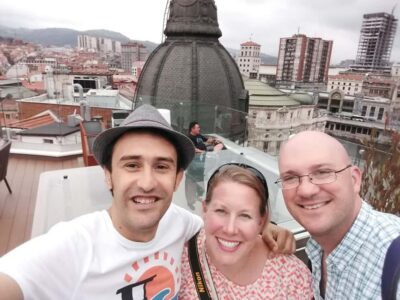

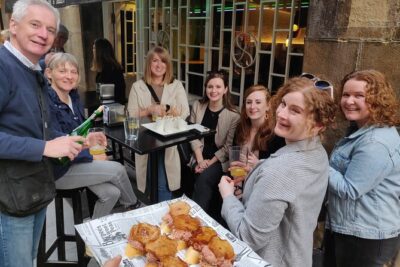
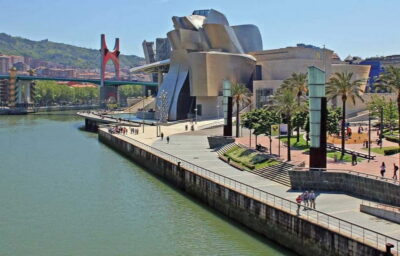


Bilbao Riverside and Guggenheim Visits, side by side.
 ★ 4.2Bilbao: 1- or 2-Hour Sightseeing Boat TourFrom $161,723 reviews
 ★ 4.8Bilbao: San Mamés Museum and Stadium TourFrom $191,464 reviews
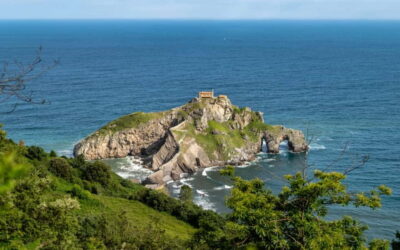 ★ 4.5Bilbao: Gaztelugatxe, Bermeo, Mundaka, Gernika, & Wine TourFrom $481,407 reviews
 ★ 4.8From Bilbao: Gaztelugatxe, Gernika, and Mundaka Group TourFrom $531,112 reviews
 ★ 5.0The Award-Winning Bilbao Food Tour & Wine Pairing by Basque LocalFrom $126967 reviews
 ★ 5.0Gaztelugatxe, Mundaka and Gernika Tour from BilbaoFrom $83706 reviews
 ★ 4.6From Bilbao: Biarritz, Saint Jean de Luz, San Sebastian TourFrom $82662 reviews
 ★ 4.8Bilbao: Guided Highlights Small Group or Private E-Bike TourFrom $58608 reviews
This tour also sits in