
Reviewed · LAS VENTAS BULLRING VISITS
Visita Entre Toros y Caballos
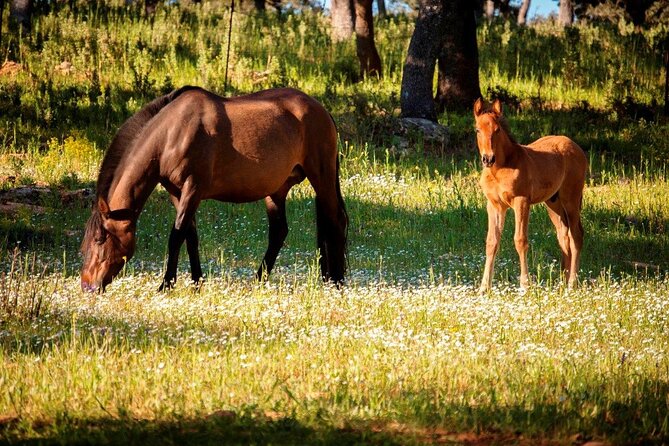
Bulls and horses run free in the wild hills. This is a hands-on ranch visit at Reservatauro Ronda, where you learn how fighting bulls and Andalusian horses are raised in a UNESCO Biosphere Reserve setting.
I love how much you get to see, not just stand and look. The pastures are spacious and you can spot animals at different stages of selection and development, with the centenary holm oaks doing their part in the scenery. I also really like the bullfighting training element, because you get to step into the mood of the practice ring and try the tools of the trade, the capote (pink cape) and muleta (red cape).
One caution: even though English is offered, you should be ready for the possibility of an audio-based setup rather than a live English-speaking guide, especially if groups get mixed.
In This Review
- Key things you will notice right away
- What makes Reservatauro Ronda special, beyond the animal photos
- Stop 1: Reservatauro Ronda and the working facilities route
- The testing bullring, where selection happens
- Centenary holm oaks and the Biosphere Reserve pastures
- Stables and the Andalusian horses in daily life
- The bullfighting practice ring, capote and muleta moment
- Touring the ranch grounds by truck trailer
- The terrace stop and the calm after the action
- Price and value at about $36.16 per person
- Guides and the quality of explanations, from Desiree to Frida
- Is this tour for you? Best-fit travelers
- Booking checklist before you commit
- Should you book Visita Entre Toros y Caballos at Reservatauro Ronda?
- FAQ
- What is the duration of Visita Entre Toros y Caballos?
- Where does the tour take place?
- How much does it cost?
- What is included in the price?
- What language options are available?
- What time does the tour start?
- How big are the groups?
- Do they use a mobile ticket?
- Are service animals allowed?
- What is the cancellation policy?
- Is the experience suitable for most travelers?
Key things you will notice right away
- A real working ranch: you are touring the facilities where selection and training happen
- UNESCO Biosphere Reserve vibes: oak-studded pastures and mountain-view terrace time
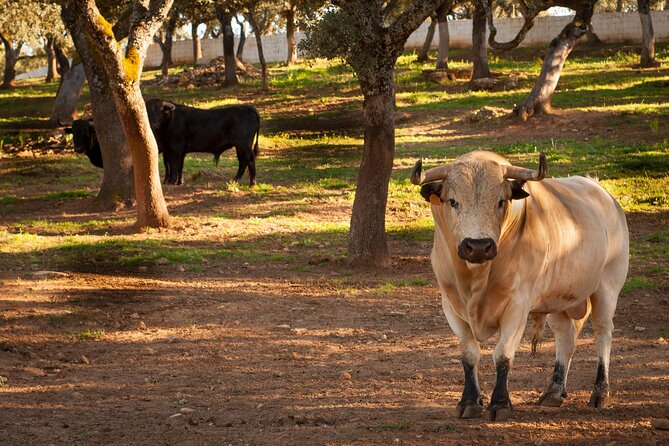
- Bulls across their stages: you can observe how selection and development differ by age and role
- Training ring hands-on moment: you may practice a pass or two with the capote and muleta
- Small group size: capped at 15 people, which helps your questions get answered
- A long-enough loop: it can feel more like a grounds tour than a quick stop, thanks to ranch-wide driving
What makes Reservatauro Ronda special, beyond the animal photos
Most animal visits are, well, animal visits. You walk, you look, you go. Here, the point is different. Reservatauro Ronda is a working breeding ranch, and the whole visit is built around how fighting bulls and Andalusian horses live and develop on the property.
The ranch sits near Ronda in a protected natural area, with oak-studded Mediterranean pastures. That matters because you are not just touring cages or display pens. You are seeing animals in open space, with a clear sense of how the ranch functions day to day.
Also, the visit treats bullfighting as a cultural craft, not a spectator show. You learn how the animals are prepared and how the training ring works. It is educational, and it is also practical, since you get hands-on with capote and muleta in the practice ring.
Stop 1: Reservatauro Ronda and the working facilities route
Your day starts at Reservatauro Ronda near Ronda, and the visit begins with an intro to the ranch environment and its facilities. Even before you get out on the wider pastures, you get the big picture: this is where the fighting bull breeding process happens.
Expect a guide-led walk that helps you orient quickly. You will be shown areas tied to selection and direct work with animals, and you will get to see the training-related spaces that bullfighters use as part of daily practice.
Then you move into the central highlight zone, the testing bullring and the surrounding ranch workings. This part is important because it explains how the ranch decides which cattle move forward. You are not just seeing bulls in fields. You are seeing how breeding and selection are organized on a live property.
Other Las Ventas Bullring Visits we sat down and reviewed
The testing bullring, where selection happens
The testing bullring is the kind of place that makes the phrase working ranch feel real. It is where cattle are selected, meaning this is not a decorative arena. You are learning about the logic behind bull selection, and how the ranch manages animals as they go through different stages.
What I like about this segment is that it connects directly to what you will see later out on the farm. When you tour pens, practice areas, and the open pastures, the earlier explanation helps you understand why some animals look different or are kept in different sections.
One practical tip: listen closely here. If you miss the guide’s explanation of selection, the rest of the tour turns into scenery. If you catch it, the entire ranch loop starts making sense like a system.
Centenary holm oaks and the Biosphere Reserve pastures
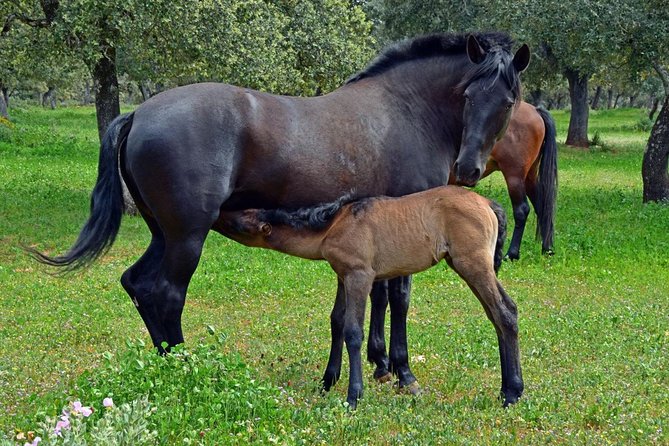
After the bullring and facilities, you head out for the open-air portion of the ranch experience. The property is described as a large working farm, around 500 acres, with long views and a real sense of being in the hills.
A standout detail is the focus on the oak landscape. You will pass through areas marked by centenary holm oaks. You also stay within a UNESCO Biosphere Reserve concept, so the tour is tied to a protected environment rather than random farmland.
As you move around, you can observe bulls and horses roaming the pastures. The guide shows you what you are looking at and explains how animals are grouped by role and development stage. This is where animal lovers tend to get genuinely excited, because you can often see more variety than just a single herd in one corner.
Stables and the Andalusian horses in daily life
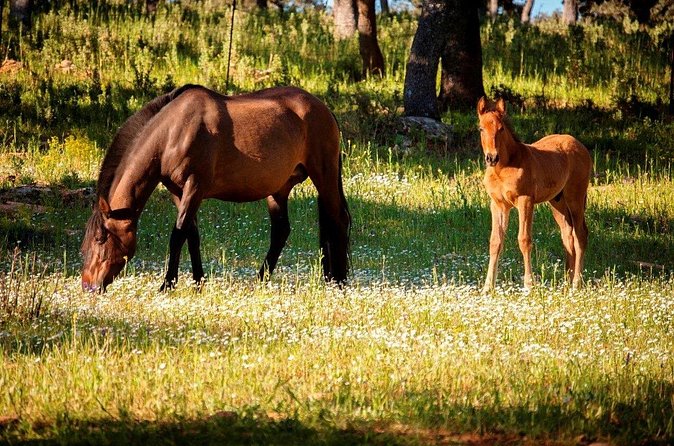
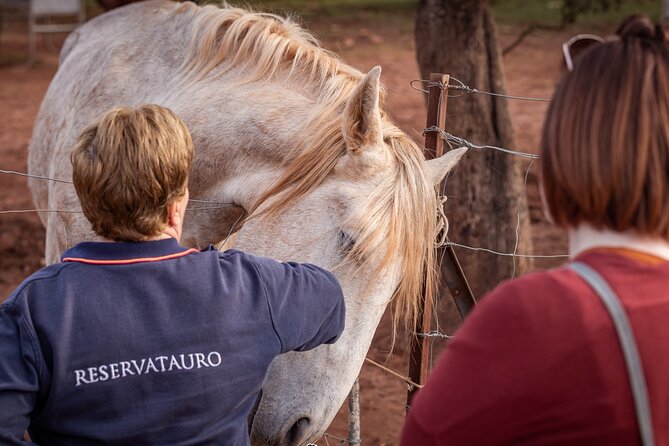
The tour includes time connected to the horses in the stables. The Andalusian horse is part of the ranch story, and you are not only hearing about them in passing. You get to meet the horses where they are kept and see how the ranch environment supports their daily routine.
This segment is a nice balance if you are not sure how you feel about the bullfighting theme. Even if you came for the bulls, you can leave with a stronger appreciation for the horses as a central part of the Andalusian tradition tied to the ranch.
Also, horses tend to be calmer in the viewing zones, so this can be the “exhale” part of the tour. The pace shifts from selection and training spaces to day-to-day care and stabling life.
The bullfighting practice ring, capote and muleta moment
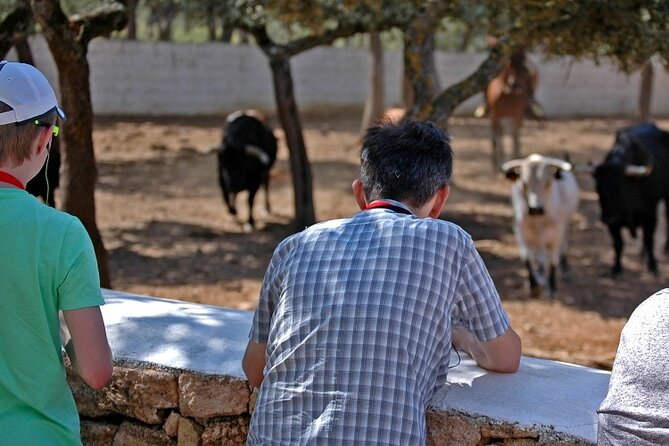
Now for the part that turns a ranch tour into something you remember. The experience takes you to the bullfighting training ring, where the bullfighter trains daily. Instead of treating this as an abstract lesson, the tour gives you the chance to handle the tools.
You learn what the capote is, the pink cape, and what the muleta is, the red cape. Then you may practice a pass or two yourself.
This is genuinely useful, even if you have zero bullfighting background. You learn what the objects are for, how they feel in your hands, and how training works as a skill rather than pure spectacle.
Quick self-check before you go: if you expect nonstop performances and big arena demos, you might feel underwhelmed. If you came for education plus a hands-on taste, this is a strong match.
Touring the ranch grounds by truck trailer
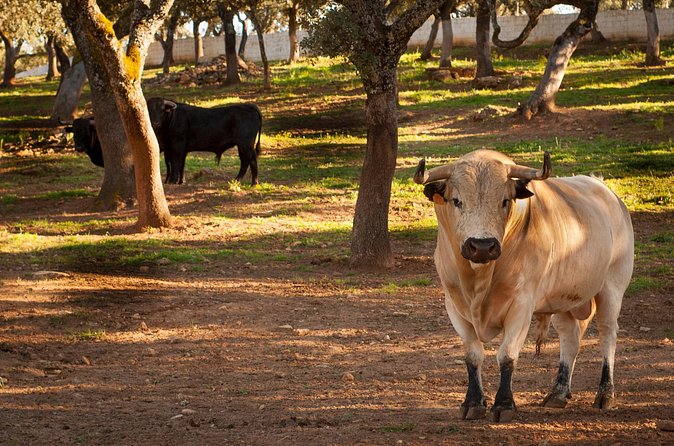
Because the ranch is large, you are likely to get transported across different sections during the visit. There is a segment that uses a truck towing a passenger trailer, taking you to multiple areas of the farm.
This matters for comfort and time. You do not have to walk every inch of the property. It also keeps the tour structured, so you see breeding and development areas without losing the thread.
One note on timing: the official duration is about 1 hour 10 minutes, but you should plan as if it might run longer in real life. Ranch tours often expand when your guide is answering questions and when your group stops to look.
- Málaga: Alcazaba and Roman Theatre Guided Tour With Entry
- Malaga: Teatro Flamenco Malaga Live Flamenco Show
- From Málaga: Ronda+Setenil de las Bodegas with Little Train
- From Malaga: Granada Full-Day Trip with Alhambra
- Málaga: Sunset Catamaran Trip
- From Málaga: Caminito del Rey Day Trip & Guided Tour
- From Malaga: Ronda and Setenil Guided Tour Day Trip
- Malaga: City Sightseeing Hop-On Hop-Off Bus Tour
The terrace stop and the calm after the action
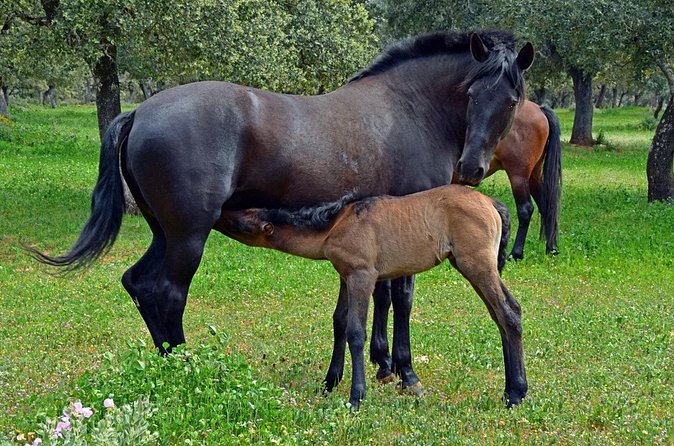
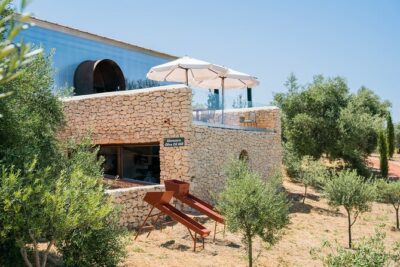
After you have been through training spaces, pastures, and stables, the tour includes time to relax on a mountain-view terrace. It is a good payoff moment. You can sit, look out, and digest the experience with fewer moving parts.
It also gives you an informal chance to ask final questions. Guides often keep going as long as people want to learn, and the terrace is a natural place for that relaxed back-and-forth.
Price and value at about $36.16 per person
At $36.16 per person, this is not an impulse-free “just because” purchase, but it also is not outrageously expensive for what you get. The admission ticket is included, and the tour is built around entry to the ranch and access to the key facilities.
Here is what you are paying for, in plain terms:
- Entry into a working breeding ranch, not a simple zoo-style walkthrough
- Guided explanation of selection and training spaces
- Open-pasture viewing of bulls and horses in different stages
- A practice ring interaction with capote and muleta
Where value can wobble is in the language experience. If you get a live English-speaking guide, the value jumps. If your group leans on audio or mixed-language setups, you may feel like parts of the story are harder to follow. If language is your top priority, it is worth asking what your group language plan looks like.
Guides and the quality of explanations, from Desiree to Frida
The success of this kind of ranch tour rides heavily on the guide. The ranch has staff who clearly enjoy teaching, and the names that show up across English, French, and German language experiences include Desiree and Frida. You also see guides like Paloma, Lara, and Paqui mentioned for being dynamic and answer-focused.
What you want to look for, no matter who guides your group, is someone who can answer follow-up questions. In this setting, questions come easily. Why are some bulls grouped differently? How does the training ring relate to breeding? How do horses fit into the overall ranch rhythm?
If you get a guide like those named above, you should feel comfortable asking. And because the group size is kept to a maximum of 15, you are more likely to get a real answer instead of a quick nod.
Is this tour for you? Best-fit travelers
This experience works best if you like:
- Animal life with context, meaning you want to know how animals are raised, not just where they are standing
- Spanish traditions and training culture, especially if you find the bullfighting world interesting as a craft and history of practice
- Hands-on moments, where you are not only watching, you are trying the capote and muleta
It may not be your best match if:
- You want a pure show with lots of performance, because the experience leans toward guided education and ranch viewing
- You need guaranteed live English interpretation, because mixed groups can sometimes affect how much direct language you hear
Booking checklist before you commit
To get the best match for your expectations, I suggest you do three quick checks:
- Confirm what language support you will get for your specific time slot, since English can sometimes mean audio rather than a live guide.
- Wear shoes you can trust, because ranch paths and facility areas can be uneven.
- Bring your curiosity about selection and training, because that is where the tour really turns from seeing animals into understanding the system.
Should you book Visita Entre Toros y Caballos at Reservatauro Ronda?
Yes, I think it is a good booking if you want an authentic working-ranch experience near Ronda, with more than just a casual animal view. The combination of UNESCO Biosphere Reserve pastures, the testing bullring explanation, and the capote and muleta practice makes it feel like a real education, not a quick stop.
I would skip it only if you strongly dislike the bullfighting breeding and training context, or if you know you need a fully live English guide for every moment. If language is a concern, ask before you go. If not, you are likely to leave with both stories and clearer perspective on how the ranch operates.
FAQ
What is the duration of Visita Entre Toros y Caballos?
The tour is listed at about 1 hour 10 minutes.
Where does the tour take place?
It takes place in Malaga, Spain, at Reservatauro Ronda near Ronda.
How much does it cost?
The price is $36.16 per person.
What is included in the price?
Admission to Reservatauro Ronda is included.
What language options are available?
The experience is offered in English.
What time does the tour start?
The start time is 12:00 pm.
How big are the groups?
The tour has a maximum of 15 travelers per booking, and it requires a minimum of 2 people.
Do they use a mobile ticket?
Yes, the tour uses a mobile ticket.
Are service animals allowed?
Yes, service animals are allowed.
What is the cancellation policy?
You can cancel for free up to 24 hours in advance for a full refund.
Is the experience suitable for most travelers?
Most travelers can participate.
More Las Ventas Bullring Visits from the notebook
- Malaga: Gibralfaro Castle, Bullring and Port Segway Tour
★ 4.8 · 298 reviews - Malaga: Tour of Malagueta Bullring & Immersive Exhibition
★ 4.7 · 271 reviews
Fresh off the desk: recent Malaga experiences we have written up


Las Ventas Bullring Visits, side by side.
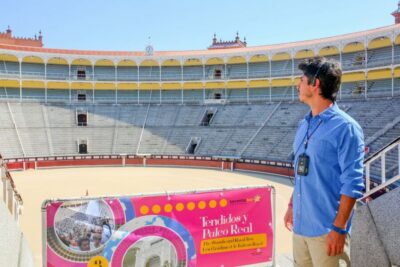 ★ 4.6Madrid: Las Ventas Bullring Tour with Audio GuideFrom $183,154 reviews
 ★ 4.6Seville: Bullring Guided Tour with a Skip-the-Line TicketFrom $321,626 reviews
 ★ 3.9From Costa del Sol: Ronda Village Tour w/ Maestranza TicketFrom $78478 reviews
 ★ 4.6Alicante: Bullring and Bullfighting Museum Entry TicketFrom $14326 reviews
 ★ 4.8Malaga: Gibralfaro Castle, Bullring and Port Segway TourFrom $42298 reviews
 ★ 4.5Audio Guided Tour of the Bullring of Las Ventas in MadridFrom $19290 reviews
 ★ 4.7Malaga: Tour of Malagueta Bullring & Immersive ExhibitionFrom $16271 reviews
 ★ 5.0VIP visit to the Las Ventas Bullring in MadridFrom $48178 reviews
This tour also sits in