
Reviewed · TOLEDO WALLED-CITY EXCURSIONS
Guided Walking Tour of Immortal Toledo
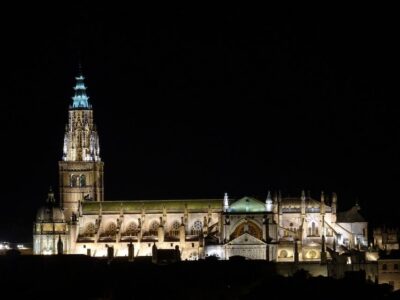
Toledo shifts after dark in the best way. This guided night walk brings you through quieter corners, convent-adjacent streets, and story-heavy stops that explain what made Renaissance and Baroque Toledo so intense.
I love two things most: the way the guide keeps the pace conversational (not a lecture), and the choice to mix art, faith, and fear, from San Ildefonso’s legends to Inquisition-era life and death.
One consideration: it is a nighttime, street-level walk and some stops are external viewing, so you will be looking at buildings and landmarks from the outside rather than doing lots of indoor museum time.
In This Review
- Key highlights you should care about
- Why Toledo at night changes the whole experience
- Start to finish: the simple route that actually makes sense
- Stop 1: Mozarabic community life and the Cofradía de la Cáridad
- Stop 2: San Ildefonso, a relic theft, and the power of legends
- Stop 3: San Pedro Mártir, Casa de Mesa, and San Román (today’s Visigoth Councils Museum)
- Stop 4: El Greco’s first Spain stop and the two original Cretan works
- Stop 5: A charming little square where legend does the talking
- Stop 6: Viewpoints, gates, and walls, finishing with a big sky payoff
- What you are really paying for: value at $13.90
- Tips to get the most from a night walk in Toledo
- Who this tour is best for
- Should you book this Immortal Toledo night walk?
- FAQ
- How long is the Immortal Toledo guided walking tour?
- Where does the tour start and end?
- How much does the tour cost?
- Is the ticket digital?
- How far in advance should I book?
- What group size should I expect?
- Do I need good weather for this experience?
- Are service animals allowed?
- Is there free cancellation?
- Is the tour near public transportation?
Key highlights you should care about
- Night-focused route that leans into Toledo’s quieter mood, with convent-area streets and dark-sky atmosphere
- Story mix that connects Mozarabic community life, relic legends, and Inquisition-era institutions and epidemics
- Art stop with El Greco context at the first place he painted in Spain, with original Cretan works still preserved
- High-ground views from one of Toledo’s highest points, plus an ending viewpoint near the Mirador del Azor
- Small group feel with a maximum of 30 people and a live guide who talks with you
- Mobile ticket and a simple 2-hour format, good for getting a lot of Toledo in without a full day commitment
Why Toledo at night changes the whole experience
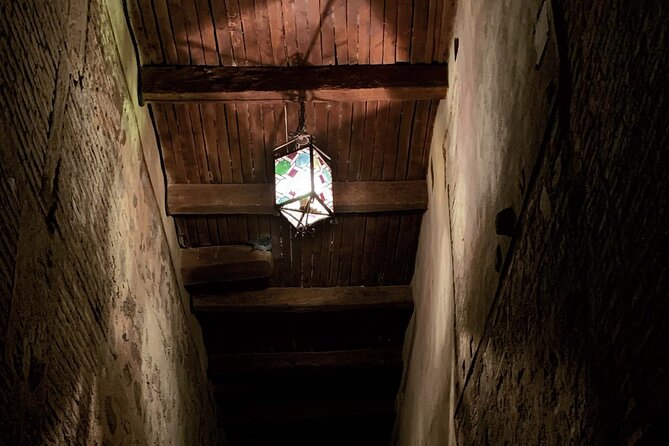
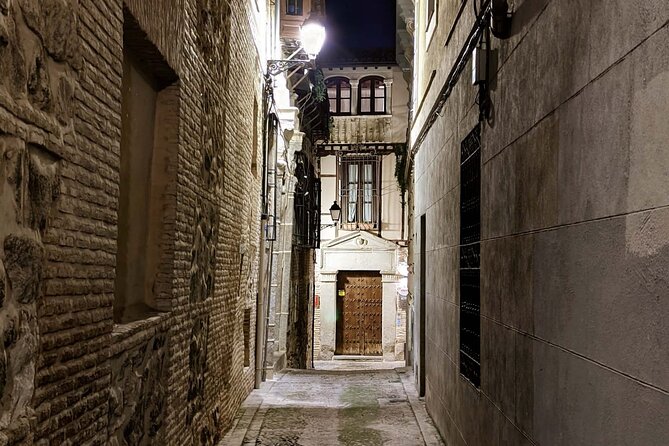
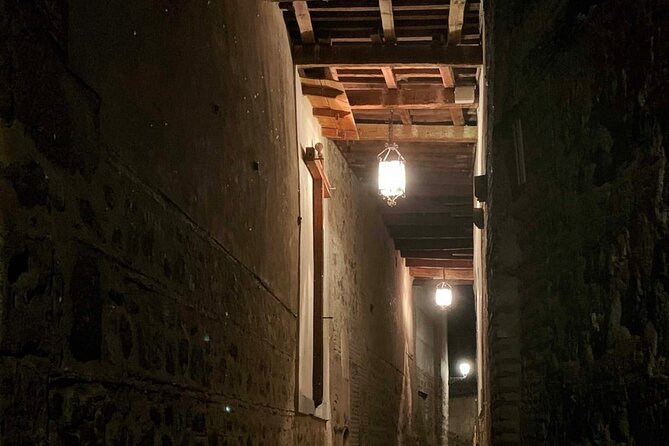
There is a reason so many cities feel different after sunset, but Toledo goes further. As the day cools off and the streets quiet down, the stonework looks older, and the alleys feel narrower, like the city is narrowing around its own secrets. This tour is built for that mood. You are not just walking from point A to point B, you are watching Toledo become the Toledo people mythologize.
The stories are the other half of the magic. You will hear about the darker side of the city’s past, including the Holy Inquisition and its secret jail, plus institutions and hospitals, executions, and epidemics. You will also hear about relics and the way religious communities held tight to meaning in unstable times. The guide also layers in a 19th-century romantic lens, so the same streets can be read two ways, as real places and as the kind of settings writers loved.
And yes, the route is timed so you catch Toledo’s best lighting and calmer pace. That matters. In daytime, you can end up dodging buses, tours, and tour groups trying to sprint between viewpoints. At night, the crowd pressure eases, so it is easier to slow down and actually take in what you are seeing.
Start to finish: the simple route that actually makes sense
The walk begins at Plaza de Zocodover, a practical central spot where it is easy to orient yourself. That is a big deal, because Toledo’s streets twist and rise, and you do not want to start your evening figuring out the map. You end at Mirador del Azor, about five minutes from the Plaza de Zocodover area. That viewpoint finish is a clever choice, because it gives you a payoff once you have already walked through the stories and neighborhoods.
The tour runs around 2 hours. That is enough time to feel like you covered ground, but short enough that you are not exhausted before the best views. The group size tops out at 30, so you are not getting swallowed by a huge crowd where the guide cannot keep track of you.
You also get a mobile ticket, which is convenient when you are trying to keep your evening light and simple. And since service animals are allowed and the tour is listed as suitable for most travelers, it tends to work for a wide range of ages and comfort levels, as long as you are okay with nighttime walking on city streets.
My practical tip: wear shoes you trust. Toledo’s charm includes uneven pavement in places, and night makes you want sure footing.
Reviewed and rated alongside this one, further Toledo Walled-City Excursions





Stop 1: Mozarabic community life and the Cofradía de la Cáridad
Your first big theme is the Mozarabic community and the Cofradía de la Cáridad, described as the oldest cofradía in Spain. That sets the tone right away: Toledo is not only a Christian fortress of later centuries. It also carries layered identity, older communities, and religious networks shaped by many influences.
What I like about starting with this is how it gives you a lens for the rest of the walk. When you understand there were structured social and religious groups behind everyday life, later stories about hospitals, institutions, and epidemics stop feeling like random grim facts. They connect to real support systems and organized roles inside the city.
This opening stop also works as a warm-up. Even if you only remember a couple of names, you are going to recognize the pattern the guide keeps using. The walk keeps translating Toledo’s stones into human systems: who cared for whom, who governed communal life, and how faith and charity mixed in practical ways.
Stop 2: San Ildefonso, a relic theft, and the power of legends
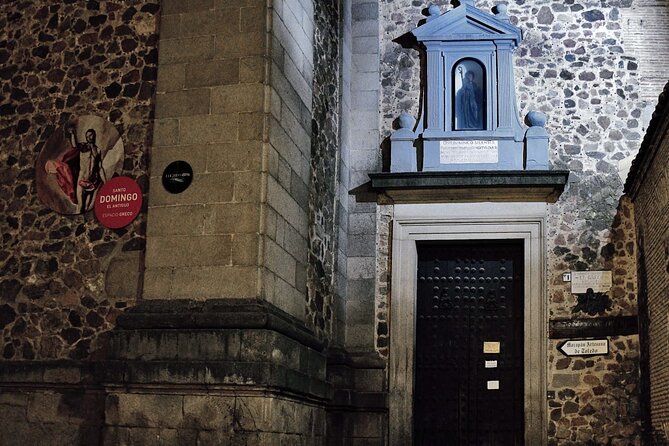
Next, you shift toward San Ildefonso, Toledo’s patron, and the incredible story of an alleged relic theft in the 17th century. This is an external visit, so you are not chasing tickets into a building, you are absorbing the story tied to a place.
Why this stop lands well on a night walk is simple: legends feel more alive in the dark. The tour uses that atmosphere to show you how relics were not just spiritual objects. They were also cultural anchors, identity markers, and symbols that could trigger rumors, conflict, and drama.
The relic theft theme also helps you understand the broader point of the tour. Toledo’s past is full of moments where the stakes are high and the information is incomplete. People believed, institutions acted, and the city’s reputation grew. Hearing that through a specific patron story makes the rest of the topics, including the Inquisition and its secret jail, feel like part of one longer narrative rather than a list of separate eras.
Practical note: since this is outside-focused, keep your eyes up on façades and street-level details. The guide tends to point out what to notice, so you get more value if you stay engaged from the start.
Stop 3: San Pedro Mártir, Casa de Mesa, and San Román (today’s Visigoth Councils Museum)
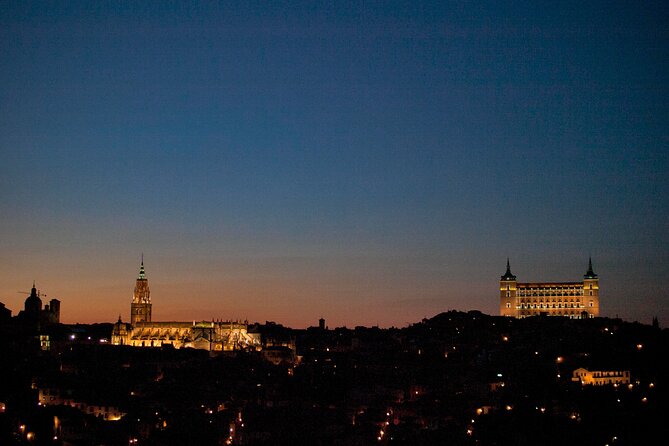
As the route climbs, you hit one of Toledo’s higher points. Here you can see the front of the Convent of San Pedro Mártir, the Casa de Mesa, and the old Church of San Román, which is now the Visigoth Councils Museum.
This is one of the stops that makes the evening feel like more than a story walk. You get architecture and city layout. From higher ground, Toledo’s look changes. Streets compress. Rooftops stack. The city feels layered, almost built in chapters.
What I like is that this stop bridges different historical “readings” of Toledo:
- Convent life and later religious power
- The Civil and residential presence suggested by places like Casa de Mesa
- Visigoth-era significance connected to what San Román is today
Even if you do not know Toledo’s timelines, you will start noticing that the city’s stones keep switching time periods depending on which building you are looking at.
One drawback to keep in mind: if you are hoping for lots of interior time, this walk is mainly about seeing from outside at specific moments. It is still worthwhile, but set your expectations. Plan to use this evening for storytelling and orientation, then do daytime museum stops on your own.
Stop 4: El Greco’s first Spain stop and the two original Cretan works
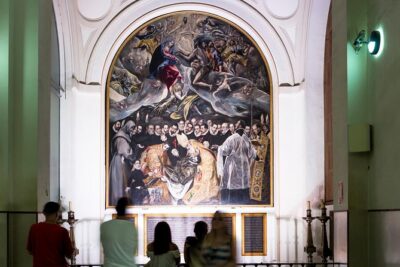
Now for art. You will hear about the first place for which El Greco painted in Spain, and you will learn that two original Cretan originals are still preserved there. This is also listed as an external visit, but it is a powerful one because it ties a specific location to a specific artistic turning point.
El Greco is one of those artists people talk about constantly, but night helps you see him differently. His work often feels intense and spiritual and dramatic. On a walk like this, you are already in the mood for drama and symbolism, so the art story clicks.
This is a good stop if you like art but do not want to spend the whole day in galleries. You get a clear, location-based entry point into who El Greco was and why Toledo mattered for him.
If you want to make this stop pay off even more later, do this before bed: when you return to your room, pick one El Greco painting you liked the most today, and ask yourself if it matches what the guide described about Toledo’s atmosphere. That tiny habit turns a quick art story into a memory you keep.
Stop 5: A charming little square where legend does the talking
After art, the walk slows into atmosphere again. You will see the outside of a charming little square where history and legend are found.
Squares like this are the reason a guided night walk works at all. In daylight, you might walk straight past them, thinking they are just pretty corners. At night, a square becomes a stage. The guide’s job is to explain what happened there, or what stories grew around it, and suddenly the space feels intentional.
This is also where you start to appreciate the tour’s structure. It does not keep hitting the same emotional tone. You move from saints and relic stories to convent-era settings, then to art, then to legend in a more human scale. The result is a walk that feels varied instead of monotonous.
- City Sightseeing Toledo Hop-On Hop-Off Bus Tour
- Toledo: Cathedral Tour with a Local Guide
- Toledo Private Tour with Local Guide. Pick up in Madrid optional
- From Madrid: Toledo Tour with Wine Tasting and 3 Monuments
- From Madrid: Toledo & Jewish Quarter Half-Day Tour
- English Tour “TOLEDO ALL IN ONE”
- Toledo and its 7 Monuments: Tourist Bracelet + Guided Visit
- Private tour in Toledo with train station pick-up and panoramic taxi tour
Stop 6: Viewpoints, gates, and walls, finishing with a big sky payoff
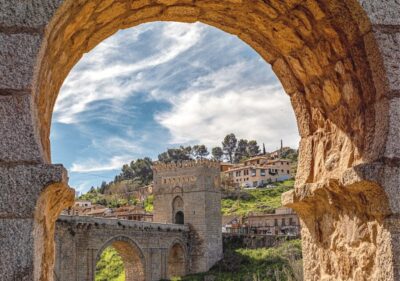
The evening closes with views and defensive geometry. You will see an enchanting view of the Toledo district, plus some of its gates and walls, and you end at the Mirador del Azor viewpoint.
This is the practical payoff stop. Once you have heard about secret jails, hospitals, epidemics, executions, relics, and artistic footsteps, you will start looking at the city differently. Walls feel less like “architecture” and more like answers to threats. Gates feel less like “old doors” and more like controlled moments of entry and exit. Even the high-ground placement you walked to earlier starts making sense.
And the viewpoint matters because it gives your brain a reset. You can look down, orient yourself, and realize you really did connect the dots tonight. It also sets you up well if you plan to come back tomorrow to explore specific areas.
My suggestion: take a few slow minutes at the end. Do not just snap a photo and rush out. Let your eyes adjust, then look for the route you walked and the shapes the guide described earlier.
What you are really paying for: value at $13.90
At $13.90 per person for about 2 hours, this is good value if your goal is orientation plus story. You are not paying for a long museum day or for expensive admissions. You are paying for someone to connect places into a narrative so you understand what you are seeing, even when you are outside looking in.
The maximum group size of 30 also matters here. A smaller group makes it easier for the guide to keep conversation going and keep people together, which shows up in the overall feel of the walk.
The biggest value is guide quality. People frequently mention guides like Alberto and Lara for excellent knowledge and real conversation. That is not a small detail. A storytelling walk only works if the guide can hold attention, move you through streets at an easy pace, and adapt to the group without turning everything into a script.
If you like history but hate lectures, this style tends to fit.
Tips to get the most from a night walk in Toledo
To make this kind of evening go smoothly, I recommend a few basics:
- Bring layers. Even if the day was warm, evenings can cool off quickly.
- Stick with comfortable shoes. You want grip and stability on stone and uneven streets.
- If you plan to take photos, remember that night photos often need steady hands. Give your camera time to focus.
- Keep your phone charged. You have a mobile ticket, and maps are useful for making sense of where you ended.
- Keep expectations realistic about interiors. Some stops are outside viewing by design, so use the walk for context, then choose daytime sights if you want deeper museum time.
Who this tour is best for
This experience is a strong match if you:
- Want a first look at Toledo that feels personal and story-driven
- Like a mix of art, religion, and dramatic historical themes
- Prefer walking tours at night because the city feels calmer and easier to enjoy
It is also a good fit for couples, solo travelers, and small groups who want a guided thread through Toledo without committing to a full day.
If you dislike darker themes or heavy topics like the Inquisition and epidemics, you might want to read your own comfort level carefully before booking. The tour is clearly designed to cover those topics, even though it does so through the lens of places and stories.
Should you book this Immortal Toledo night walk?
I think you should book if you want Toledo’s nighttime personality, not just daytime highlights. The price is reasonable for a guided two-hour experience, the route makes sense for orientation, and the storytelling format is built to keep you engaged from Zocodover to the Mirador del Azor.
Skip it or wait if you only want indoor museum time, or if nighttime walking makes you uneasy. Also remember that the experience depends on good weather, so plan to check conditions and have a flexible mindset.
If you are coming to Toledo for the first time, or you want a second visit with a totally different mood, this is one of the best ways to get the city’s darker romance, its saints and stories, and those high views, all in one go.
FAQ
How long is the Immortal Toledo guided walking tour?
The tour lasts about 2 hours.
Where does the tour start and end?
It starts at Plaza de Zocodover in Toledo and ends at Mirador del Azor, about five minutes from Plaza de Zocodover.
How much does the tour cost?
The price is $13.90 per person.
Is the ticket digital?
Yes, you receive a mobile ticket.
How far in advance should I book?
On average, this is booked about 24 days in advance.
What group size should I expect?
The tour has a maximum of 30 travelers.
Do I need good weather for this experience?
Yes. The experience requires good weather, and if it is canceled due to poor weather you will be offered a different date or a full refund.
Are service animals allowed?
Yes, service animals are allowed.
Is there free cancellation?
Yes, you can cancel for a full refund if you cancel up to 24 hours in advance.
Is the tour near public transportation?
Yes, it is listed as near public transportation.
Tours: the rest of our Toledo write-ups
- Toledo Private Tour with Licensed Local Guide
★ 5.0 · 884 reviews - Toledo: City Sightseeing Hop-On Hop-Off Bus Tour & Extras
★ 4.3 · 683 reviews - Madrid: Full-Day Guided Tour of Toledo with Cathedral Visit
★ 4.6 · 647 reviews - Night Guided Tour of Magical Toledo
★ 4.5 · 459 reviews - City Sightseeing Toledo Hop-On Hop-Off Bus Tour
★ 4.5 · 439 reviews
Toledo Walled-City Excursions: the rest of our write-ups
- Toledo Private Tour with Licensed Local Guide
★ 5.0 · 884 reviews - Toledo: City Sightseeing Hop-On Hop-Off Bus Tour & Extras
★ 4.3 · 683 reviews - Madrid: Full-Day Guided Tour of Toledo with Cathedral Visit
★ 4.6 · 647 reviews - Toledo: Tourist Bracelet with Entry to 7 Attractions
★ 4.3 · 597 reviews - Night Guided Tour of Magical Toledo
★ 4.5 · 459 reviews
Fresh off the desk: recent Toledo experiences we have written up




Toledo Walled-City Excursions, side by side.
 ★ 5.0Three Cities in One Day: Segovia, Avila and Toledo from MadridFrom $1268,402 reviews
 ★ 4.7Madrid: Segovia and Toledo Tour, Alcazar, and CathedralFrom $487,797 reviews
 ★ 5.0Toledo Tour from Madrid: Cathedral, Synagogue & St. Tome’s ChurchFrom $816,784 reviews
 ★ 4.5Toledo Half or Full Day Tour with Optional Lunch from MadridFrom $645,807 reviews
 ★ 4.1From Madrid: Guided Day Trip to Toledo by BusFrom $405,280 reviews
 ★ 4.6Madrid: Toledo & Segovia Full Day Guided Tour with AlcázarFrom $454,394 reviews
 ★ 4.3From Madrid: Toledo Guided Day TripFrom $323,501 reviews
 ★ 5.0Toledo Tour & Vineyard Walk with Wine Tasting from MadridFrom $1332,546 reviews
This tour also sits in