
Reviewed · TUK-TUKS
Barcelona Expert Tour with Local Guide in Eco Tuk Tuk Private
Barcelona in miniature, with big-city payoff. This private eco tuk-tuk tour strings together the city’s most famous sights with photo stops and a driver-guide who helps you connect the dots fast, without the usual hassle of getting around.
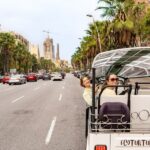
I like two things most. First, the tour is built for time: it starts without queues or waiting, so you spend more daylight actually seeing Barcelona. Second, the vehicle is 100% electric and they provide blankets and protective layers when weather turns.
One thing to consider: you cannot change the stops. It runs on a fixed route with set photo moments, and the 60-minute option does not include a stop in Montjuïc, so it is more of a highlights drive than a sit-and-stare tour.
In This Review
- Key highlights to look for
- Why this Barcelona eco tuk-tuk tour is a smart intro
- Getting on board: meeting point and how the route starts
- The value of your guide-driver: more than facts, it is context
- The Eixample spine: Sagrada Familia, La Pedrera, and Casa Batlló
- Bullring, hospital, and other Modernisme picks on the way
- Plaza Catalunya and Plaza de España: the city’s big crossroads
- Montjuïc: the best payoff is the viewpoint moment
- Old Port, Barceloneta, and the Olympic Port for sea-level contrast
- Ciutadella Park and Arc de Triomf: a calm reset between sights
- Price per person: what $28.67 buys you in real day value
- Tour timing: matching the length to what you want to see
- Weather and comfort: blankets matter in Barcelona
- Who should book this tour, and who should not
- Should you book the Barcelona Expert Tour in an eco tuk-tuk?
- FAQ
- How long is the Barcelona expert eco tuk-tuk tour?
- Does the 60-minute option include a stop at Montjuïc?
- Are admission tickets included?
- Is this tour private?
- Is the tuk-tuk electric?
- Where is the meeting point in Barcelona?
- Are pets allowed?
- Can I cancel for a full refund?
- What are the age limits?
Key highlights to look for
- Gaudí trio energy, Sagrada Familia plus Casa Milà (La Pedrera) and Casa Batlló vibes from key vantage points
- Queue-free start, designed to reduce waiting so you keep moving through the neighborhoods
- Electric eco comfort, with rain and wind layers included
- Montjuïc time, a short stop on the longer options, with free admission noted
- Port and beach variety, Old Port, Barceloneta, and the Olympic Port depending on tour length
Why this Barcelona eco tuk-tuk tour is a smart intro
If you are trying to get your bearings in Barcelona, a tuk-tuk beats the usual “bus-and-legs” approach. You get an aerial-ish view down streets, you glide between districts, and you can actually look at buildings instead of watching your feet. It is especially useful if you want architecture, but you also want to feel the city moving around you.
This is also the kind of tour that works for mixed groups. The vehicle is described as suitable for older people, and drivers help with getting on if needed. That matters in a city where some viewpoints require stairs or long walks. You also do not have to line up for the big-ticket stops in the same way, because the tour is set up to start without queues or waiting.
And yes, this is a “drive with guidance” style experience. So instead of trying to cram in museum plans, you get a guided sweep, plus photo stops at pre-selected points. That gives you an instantly useful map in your head for what you want to return to later.
Getting on board: meeting point and how the route starts
The meeting point is at Carrer de Casp, 13, in the Eixample district. The exact pickup location is where the lift access to the Interparking Novedades car park is, at street level, opposite the entrance of the ME Barcelona hotel. The key tip is simple: wait in front of the entrance elevator at street level, then your driver-guide will come to you.
This is private, meaning only your group is in the vehicle. Legally, each tuk-tuk is capped at 4 passengers. That keeps the ride comfortable and also means your guide can tailor the pace to your group’s needs, at least within the route constraints.
One operational detail that affects your day: the itinerary may shift if streets close or if demonstrations run that day. And if you are delayed, the activity time may be reduced. If the delay goes beyond 15 minutes and you do not get started, the tour can be cancelled with no refund. So if you are planning this as your first big activity, give yourself buffer time to arrive on foot from your hotel.
Undecided so far? The rest of our Private coverage in Barcelona

The value of your guide-driver: more than facts, it is context
The tour is sold as an expert companion guide driver. In practice, the best guides do two jobs at once: they explain what you are seeing, then they connect it to how Barcelona developed. That is what makes the architecture stops feel meaningful instead of just pretty.
When the guide is on their game, you get that “oh, that’s why it looks like that” feeling. In past experiences shared for this tour, people named Roger, Marco, Diana, Marti, Miquel, Victor, Raoul, Amanda, Nacho, Aina, Simone, and Gian Luca stood out for being clear, friendly, and at ease explaining what makes each stop important. I would treat that as a strong sign that the operator invests in guide training, not just vehicle logistics.
A realistic caution, based on how this format works: if you expect lots of modern daily-life storytelling or neighborhood texture beyond the landmarks, you might find you want more walking time later. Some folks feel the emphasis lands heavily on architecture in the shorter tour lengths. The good news is, the route is built around iconic modernism and major city anchors, so you still get a clean overview. Just know what you are booking: this is not a “only the local everyday stuff” tour.
The Eixample spine: Sagrada Familia, La Pedrera, and Casa Batlló
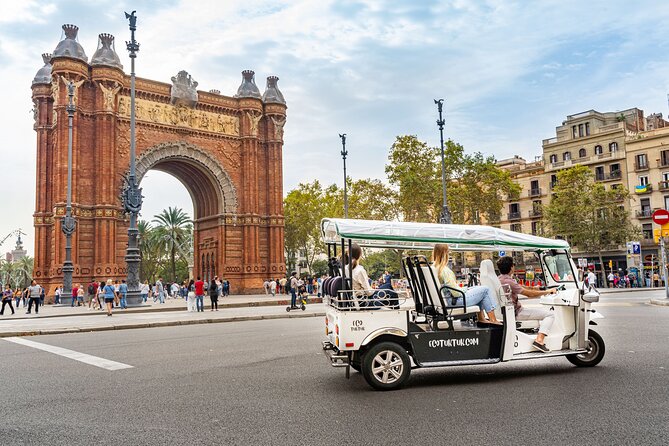
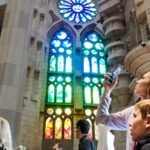
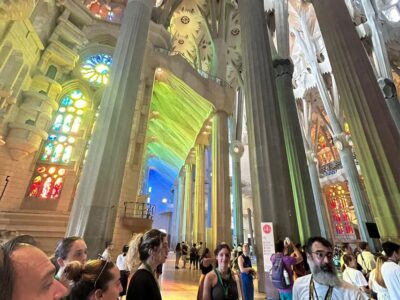
Your route is designed so you hit the Barcelona most people come for: Gaudí. The Sagrada Familia is the headline, described as Gaudí’s masterpiece and an ongoing Catholic basilica started in 1882. Even if you do not go deep inside, the big takeaway is how the design reads like a forest of lines and forms. From the outside, look for how the structure feels simultaneously organic and engineered. That mix is very Gaudí.
Next comes Casa Milà, also called La Pedrera. It was built between 1906 and 1910 and later declared a UNESCO World Heritage Site in 1994. The exterior is often described like quarry stone, and that is the point. It makes the building feel like it is alive and slowly reshaping itself. If you are planning photos, this is one of the places where your guide’s photo-stop timing matters because you want angles that show the façade without the street getting in the way.
The route also includes stops for the Batlló family home designed by Gaudí in the early 20th century, in the Ensanche area. This one is famous for the way it grabs your eyes while you are walking down Passeig de Gràcia. The practical advantage of hitting it by tuk-tuk is you see it from a moving perspective first, then you can decide if you want a dedicated interior visit later.
One tip for all three: come with a quick “what to look for” list in your phone. It helps you stay present when the tour is moving fast. Write three words for each site, like lines, stone, and shapes. When your guide points things out, your brain catches them faster.
Bullring, hospital, and other Modernisme picks on the way
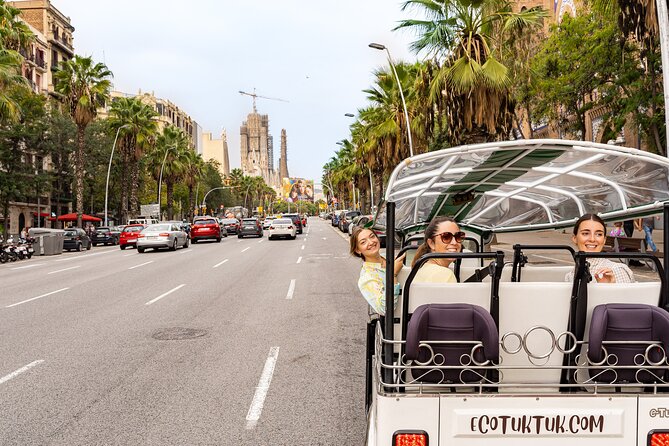
Not every highlight is Gaudí. The tour also loops through other important Barcelona landmarks that help you understand the broader modernism story.
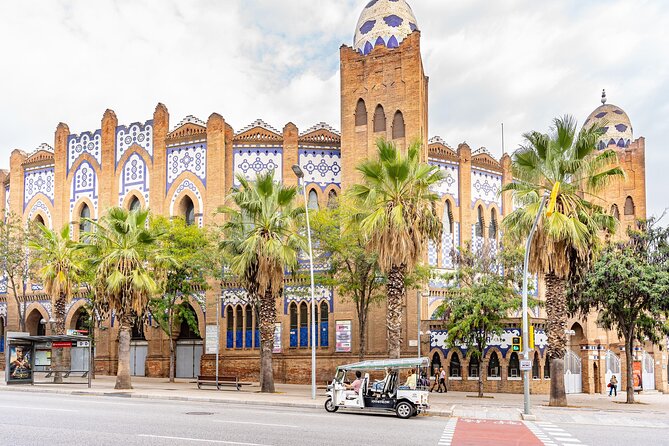
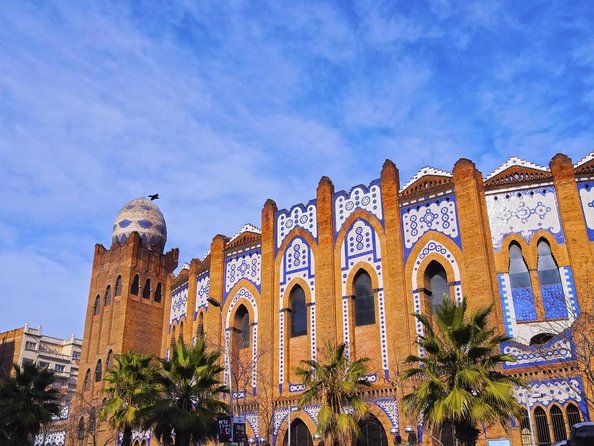
Plaza Monumental de Barcelona is a bullring inaugurated in 1914 under the name Plaza de El Sport and renamed in 1916 to its current title. If bullfighting is not your thing, that is fine. Use it as a way to see how Barcelona handled major public entertainment spaces in the early 20th century.
Then there is the Hospital de la Santa Cruz y San Pablo, part of a building complex designed by Lluís Domènech i Montaner, a key representative of Catalan modernism. Domènech i Montaner’s work can feel different from Gaudí’s, more about architectural rhythm and institutional grandeur. Even a quick viewpoint helps you recognize that Barcelona’s modernism was not one style, it was a whole era with multiple voices.
These stops work best as “texture.” They keep the tour from being only one architect’s universe. And if you are a design nerd, you’ll likely enjoy how the guide explains why one façade feels one way and another feels different.
Plaza Catalunya and Plaza de España: the city’s big crossroads
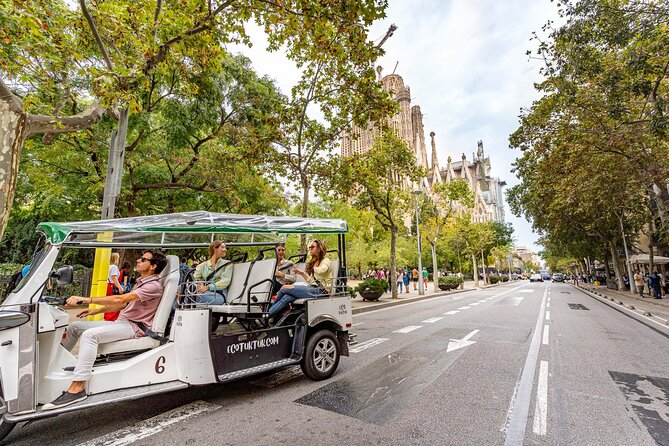
After the modernism cluster, the tour reaches the anchor points that stitch Barcelona together.
Plaza Catalunya is described as the link between Ciutat Vella and the Ensanche district, and a convergence point for major streets and public transport. If you are planning your self-guided days after this tour, this square matters because it is your hub. When you understand where it sits, it becomes easier to plan routes to neighborhoods that feel far apart on a map.
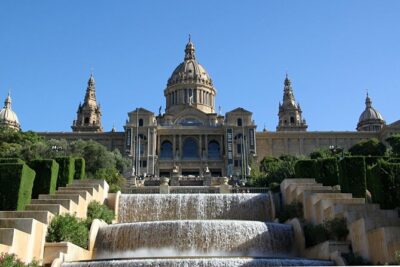
Plaza de España is another anchor. It was built for the International Exhibition of 1929, with projects credited to Josep Puig i Cadafalch and Guillem Busquets, and completion by Antoni Darder. This is where the city shifts from “historic squares” to a more exhibition-era planning style. Use it as a reference point for heading toward bigger sights and for understanding how Barcelona staged the modern world in the early 1900s.
Montjuïc: the best payoff is the viewpoint moment
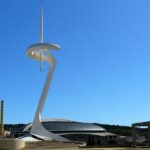
Montjuïc is the mountain of Barcelona, listed at 177 meters above sea level, in the Sants-Montjuïc district. The tour notes that on the 120-minute option you stop in Montjuïc, with a 10-minute stop and admission ticket marked as free.
For me, this is the most valuable “short stop” on the whole route. Why? Because it changes your angle on the city. You see how different districts relate to each other, and you get a breather from street-level architecture. Even 10 minutes can help you decide what to explore on foot later, whether that is viewpoints, museums, or simply better photos.
There is an important timing note: the 60-minute tour does not stop. So if Montjuïc is on your must-do list, pick 120 minutes or longer. The data also says longer tours may add more time in other areas like the Olympic Port and Pedralbes.
- Barcelona: Casa Batlló Entry with Self-Audioguide Tour
- Barcelona: 24 or 48-Hour Hop-On Hop-Off Bus Tour
- Barcelona: Park Guell Guided Tour with Skip The Line Entry
- Barcelona in 1 Day: Sagrada Familia, Park Guell,Old Town & Pickup
- Barcelona: City Sightseeing Hop-On Hop-Off Bus Tour
- Fast Track Sagrada Familia Guided Tour
- Montserrat Half-Day Tour with Tapas and Gourmet Wines
- Barcelona: Montserrat Tour with Cog-Wheel & Black Madonna
Old Port, Barceloneta, and the Olympic Port for sea-level contrast

If you want your Barcelona day to include more than buildings, the port section is where you get it.
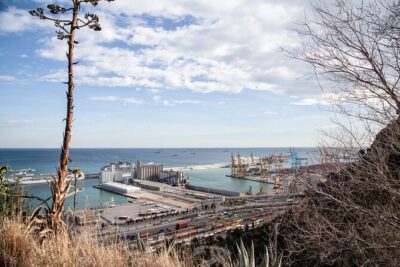
The Old Port is described as the oldest part of the Port of Barcelona, with more than two thousand years of tradition. It is separated from the sea by a breakwater, and it has a history as a popular leisure area. When the tour brings you through here, you are getting a sense of Barcelona as a working city, not only an architecture city.
Barceloneta beach is the oldest and most famous beach in the city, remodeled before the 1992 Olympic Games. It sits in the La Barceloneta neighborhood. This is a good stop for orientation. Even if you do not swim, you can understand the coastline layout and where people gather.
Then the Olympic Port sits in front of the Olympic Village, between Barceloneta and Nova Icària. The description also notes it is managed by the municipal company Barcelona de Serveis Municipals for the city council. This section gives you a modern planning contrast to the Old Port, and the big visual difference is how “event Barcelona” shows up in the coastline.
Ciutadella Park and Arc de Triomf: a calm reset between sights
Toward the end of the sweeping highlights, you get two classic city-moment anchors.
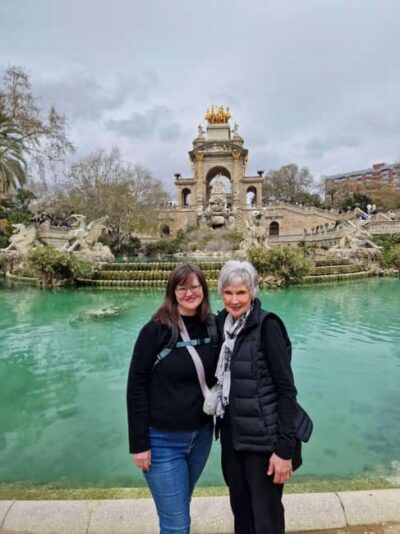
Ciutadella Park is in the Ciutat Vella district. It is described as having been for many years the only public park in Barcelona, traced on the former grounds of the Citadel fortress. It is named because the park was planned in the image of the Luxembourg Garden in Paris. Even if you only get a quick photo pause, you get a sense of how Barcelona turned former fortification space into public green.
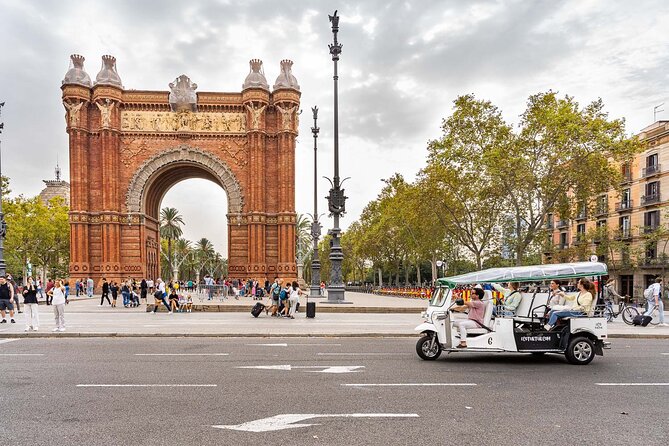
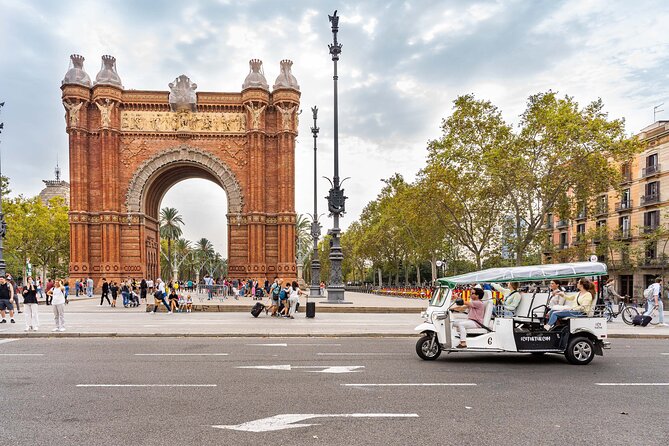
Arc de Triomf is the other big landmark in this cluster, located where major avenues meet near the Ronda de San Pedro. It was designed by architect José Vilaseca as the main entrance to the Barcelona Universal Exhibition of 1888. This arc is a clean visual marker for the city’s exhibition history. It is also useful as a way to place the timeline of Barcelona, from late 1800s international events to the 1929 exhibition and then later the Olympics era that shaped areas like the Olympic Port.
Price per person: what $28.67 buys you in real day value
At $28.67 per person, this tour lands in a reasonable zone for what you get. Here is the value math that matters in Barcelona:
You are paying for an expert guide-driver, a private vehicle for your group, and a route that compresses multiple major sights into a short timeframe. If you tried to do this on your own with taxis plus timed walking, you would likely spend more in both money and time, and you would lose the guiding context that helps you choose where to return.
That said, this is not a ticket bundle in the way a museum pass is. The included list does not clearly state that admission tickets for every major site are covered, except it specifically notes Montjuïc admission ticket free for the stop. So treat it as a guided, organized sightseeing route with some photo stops, not a full “skip-the-line entry to every interior” guarantee across all attractions.
If you are the kind of traveler who loves first-night orientation, architecture focus, and saving walking energy, it is a strong value. If you mostly want epic viewpoints and long photo time at just one or two places, you may feel the fixed photo-stop style is too fast. In that case, consider longer self-guided time on Passeig de Gràcia or near Sagrada Familia after the tour.
Tour timing: matching the length to what you want to see
The tour runs in duration options of about 1 to 4 hours. The key detail is how stops work.
- The 60-minute tour does not stop, so it is more of a drive-through highlights overview.
- The 120-minute tour includes a stop in Montjuïc.
- The 180- and 240-minute tours also add stops for areas including the Olympic Port and Pedralbes.
So pick your time based on your goals. If you want a quick overview and you plan to book your own visits afterward, a shorter tour makes sense. If Montjuïc and the sea are must-dos, go longer. The vehicle is best used as a connector, and the longer durations add more variety and more “place-based” pauses.
Weather and comfort: blankets matter in Barcelona
Barcelona weather can surprise you. This tour runs in rain or heat, with cancellation only under extreme conditions. Good news: they provide blankets and protective layers against rain and wind to help you stay comfortable during the ride and stops.
That is not a luxury detail. On a tuk-tuk, you are closer to the elements than in a normal bus. Comfort tech like this can be the difference between enjoying the ride and rushing through it.
Who should book this tour, and who should not
This tour is a great fit if you:
- Want an easy intro to Barcelona that saves walking energy
- Care about Gaudí landmarks and modernism context
- Have limited time and want to figure out what to revisit
- Are traveling as a family group or with someone who needs slower pacing, since drivers help with getting on
It might not be the best fit if you:
- Expect a customizable itinerary with lots of flexibility
- Want long stops for interior visits at every major site
- Mostly want views at high vantage points for extended time, since photo stops are pre-selected and the shorter tour options may feel drive-heavy
Should you book the Barcelona Expert Tour in an eco tuk-tuk?
Yes, I would book it if you want a high-efficiency, low-stress way to see Barcelona highlights with real guidance and less time in transit. The biggest strength is the format itself: private electric tuk-tuk, set photo stops, and a queue-free start approach that respects your time.
Choose the duration based on your priorities. If you care most about the Gaudí cluster on Passeig de Gràcia, the shorter option can work as a primer. If you want viewpoints plus sea-level variety, step up to the longer tours so you actually get the Montjuïc and port moments.
If you are the type of traveler who hates fixed itineraries, take the “no modifications” rule seriously. This tour is designed to run its route, and that is part of the value. For everyone else, it is a fun, practical way to build your Barcelona plan in just a few hours.
FAQ
How long is the Barcelona expert eco tuk-tuk tour?
The tour runs for about 1 to 4 hours, depending on the selected duration.
Does the 60-minute option include a stop at Montjuïc?
No. The info provided says the 60-minute tour does not stop. The stop in Montjuïc is noted for the 120-minute tour.
Are admission tickets included?
The only admission detail explicitly stated is that Montjuïc has free admission ticket for the stop. Admission for other sites is not listed in the provided information, so you may want to confirm what is included for each stop.
Is this tour private?
Yes. It is a private tour, and only your group participates.
Is the tuk-tuk electric?
Yes. The vehicle is described as 100% electric and sustainable.
Where is the meeting point in Barcelona?
Meet at Carrer de Casp, 13, Eixample, 08010 Barcelona. The pickup is at the street level lift access to Interparking Novedades, opposite the entrance of the ME Barcelona hotel.
Are pets allowed?
No. Pets are not allowed for security reasons.
Can I cancel for a full refund?
Yes. Free cancellation is allowed up to 24 hours in advance for a full refund.
What are the age limits?
The minimum age is two years. Babies are not allowed.
Tuk-Tuks worth comparing before you book in Barcelona
- Tour Welcome Barcelona with Local Guide in Eco Tuk Tuk Private
★ 5.0 · 1,882 reviews - Barcelona: Private City Tour by Eco Tuk Tuk
★ 4.9 · 1,339 reviews
Further Private we have reviewed in Barcelona
- Montserrat Monastery Small Group or Private Tour Hotel pick-up
★ 5.0 · 5,144 reviews - Tour Welcome Barcelona with Local Guide in Eco Tuk Tuk Private
★ 5.0 · 1,882 reviews - Barcelona Private Tour by Sidecar Motorcycle
★ 5.0 · 1,750 reviews - Barcelona Helicopter, Sailboat & Old Town Private Walking Tour
★ 5.0 · 1,395 reviews - Barcelona: Private City Tour by Eco Tuk Tuk
★ 4.9 · 1,339 reviews
Tours: the rest of our Barcelona write-ups
- Barcelona: Casa Batlló Entry with Self-Audioguide Tour
★ 4.7 · 25,359 reviews - Barcelona: 24 or 48-Hour Hop-On Hop-Off Bus Tour
★ 4.4 · 20,872 reviews - Barcelona: Park Guell Guided Tour with Skip The Line Entry
★ 4.7 · 17,563 reviews - Barcelona: Sagrada Familia Skip-the-Line Entry Ticket & Tour
★ 4.8 · 12,789 reviews - Barcelona: FC Barcelona Museum “Barça Immersive Tour” Ticket
★ 4.4 · 10,944 reviews
Fresh off the desk: recent Barcelona experiences we have written up



Tuk-Tuks, side by side.
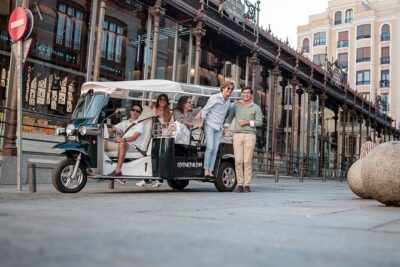 ★ 5.0Madrid Welcome Tour with Local Guide in Eco Tuk Tuk PrivateFrom $282,936 reviews
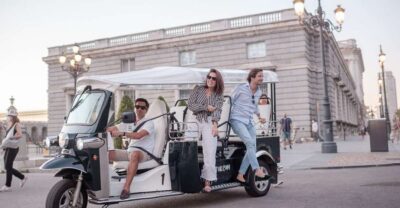 ★ 4.9Madrid: Private City Tour by Eco Tuk TukFrom $612,876 reviews
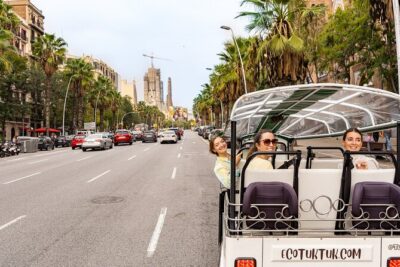 ★ 5.0Tour Welcome Barcelona with Local Guide in Eco Tuk Tuk PrivateFrom $281,882 reviews
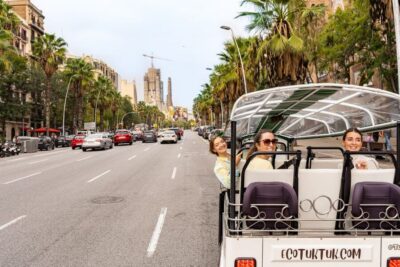 ★ 4.9Barcelona: Private City Tour by Eco Tuk TukFrom $331,339 reviews
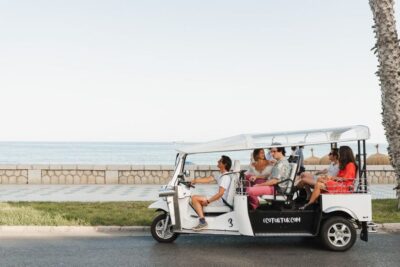 ★ 4.9Malaga: Private City Tour by Eco Tuk TukFrom $281,319 reviews
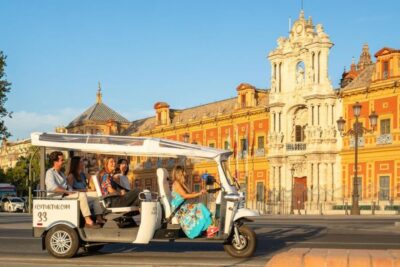 ★ 4.8Seville: Private City Tour by Eco Tuk TukFrom $33963 reviews
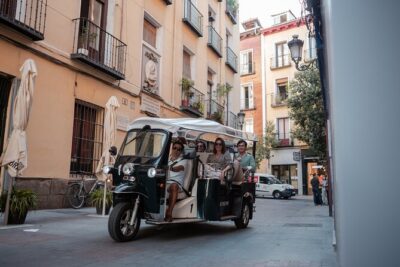 ★ 5.0Madrid Historical Tour with Local Guide in Eco Tuk Tuk PrivateFrom $28876 reviews
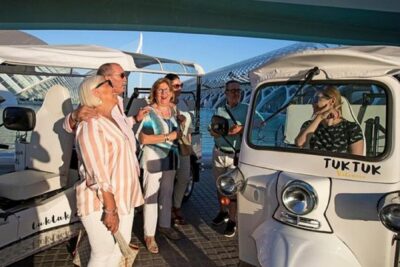 ★ 4.8Valencia: Complete Tuk-Tuk Tour Around the CityFrom $47793 reviews
This tour also sits in