
Reviewed · ALICANTE AND THE COSTA BLANCA
Alicante: Paella and Sangría Workshop with Market Visit
Paella starts in the market. This 3.5-hour Alicante workshop takes you through Central Market shopping with your guide, then cooks paella and makes sangria with a local chef in a real neighborhood spot.
I love the ingredient hunt, where you pick the best items for your class while you learn what to look for at the stalls. I also like the choice factor, you can go seafood, meat, or vegetarian for your own paella, and you’ll get the recipe to take home.
One thing to consider: it happens in a working venue that locals use after work, so the vibe is practical, not staged for tourists, and you’ll be on your feet more than you might expect.
In This Review
- Key takeaways before you go
- Central Market first: finding the ingredients that make Alicante paella taste right
- Meeting Federico (Fred) at the Market entrance, and how the workshop runs
- Tapas and sangria prep: what you do before the paella pan goes on
- Choose your paella flavor: seafood, meat, or vegetarian
- In the pan: how this class makes paella feel doable at home
- What you actually eat and drink (and why it’s a good setup)
- Value check: is $56 for 3.5 hours actually fair?
- Who this workshop suits best, and who should think twice
- Should you book the Alicante paella and sangria workshop?
- FAQ
- How long is the paella and sangria workshop in Alicante?
- Where do we meet for the Central Market visit?
- What languages are available during the workshop?
- Can I choose the paella type?
- What is included in the price?
- Do I get a recipe to take home?
- Is the workshop wheelchair accessible?
- Can I cancel, and is there a pay-later option?
Key takeaways before you go
- Central Market first, then cooking so your food starts with real choices, not pre-packed ingredients
- A local chef-led class with an assistant, plus a guide who translates between English and Spanish
- Choose your paella style (seafood, meat, or vegetarian), then learn how to cook your own
- Sangria is part of the hands-on work, not just something poured for you
- You eat a proper set of tapas and appetizers along the way, including salted fish tomato salad
- You’ll leave with the paella recipe, which turns the experience into a repeatable skill
Central Market first: finding the ingredients that make Alicante paella taste right
The best part of this experience is the order of operations. You start at Alicante’s Central Market, not at a restaurant that feels like a classroom. That means your paella decisions begin with real shopping, and you get to see what the city’s Mediterranean food culture looks like up close.
Your guide walks you through the market and helps you select ingredients for the flavor path you choose. You’re not just grabbing things off a list. You learn the logic behind what goes into the dish, like why certain proteins and vegetables matter for the final taste, and how fresh produce changes the whole outcome.
This is also where you get your first taste of local rhythm. You’ll see stall owners working, shoppers making choices fast, and that steady market energy that helps you understand why Spanish food so often starts with what’s in season and what’s actually good.
If you’re picky about flavor, this part matters. If you cook at home, it matters even more, because you’ll understand what to prioritize next time instead of copying an exact grocery list.
Meeting Federico (Fred) at the Market entrance, and how the workshop runs
You meet your guide at the Central Market entrance. Look for the black T-shirt with white letters that identifies the paella and sangria workshop. One of the most common guides is Federico, often called Fred, and the key theme of the sessions is clear communication paired with relaxed teaching.
The guide covers ingredient origins and what to look for at the stalls. In the cooking portion, that same person typically keeps the class moving and helps translate between English and Spanish so you can follow step-by-step without guessing.
That mix is useful. Paella instruction is detail-heavy, and sangria has a few small choices that affect taste. A translator who knows the food side helps you avoid the classic problem of “I understood the instructions, but not the why.”
The workshop timing is built around a 3.5-hour flow. It moves from market to kitchen, then into eating, with enough structure that you’re not left waiting around. You’ll also come back to the meeting point when it ends, which keeps the day from turning into a transportation puzzle.
If this one is booked out, these Alicante and the Costa Blanca come close





Tapas and sangria prep: what you do before the paella pan goes on
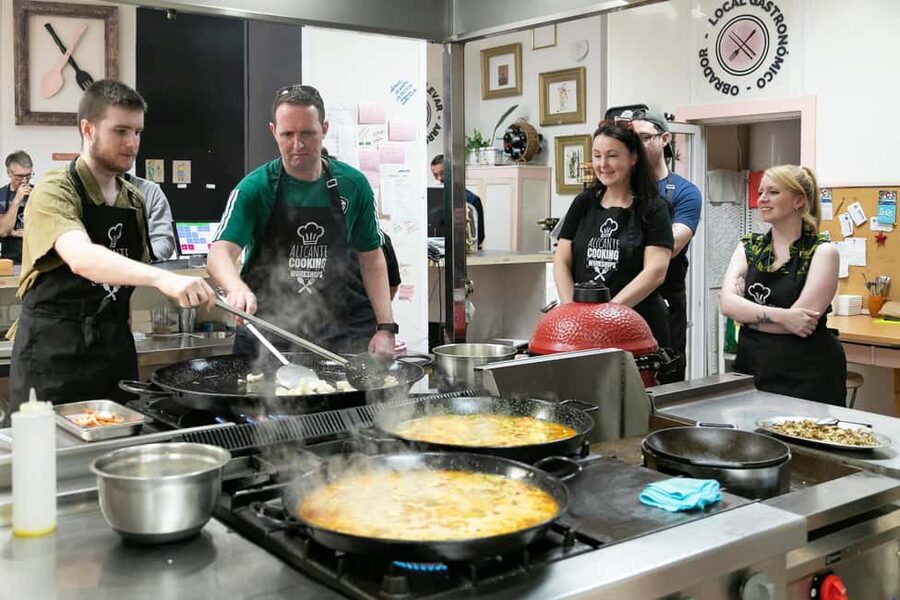
After the market stop, the group heads to the cooking location, described as a local venue open to the public. That detail is more than just atmosphere. It affects the pacing, because you’re cooking in a place that works like a real restaurant, not a demo studio set up just for visitors.
Before the main event, you’ll enjoy traditional tapas and appetizers. The menu is classic and specific: Iberian ham, tomato salad with salted fish, cold local sausages, plus olives and crisps. You also get bottled water, and there’s beer and soft drinks available.
This isn’t filler food. It’s a smart warm-up. Tapas set the stage for the flavor profile you’re aiming for in your paella, especially the salty, Mediterranean notes you’ll see again in the seafood and salted-fish components.
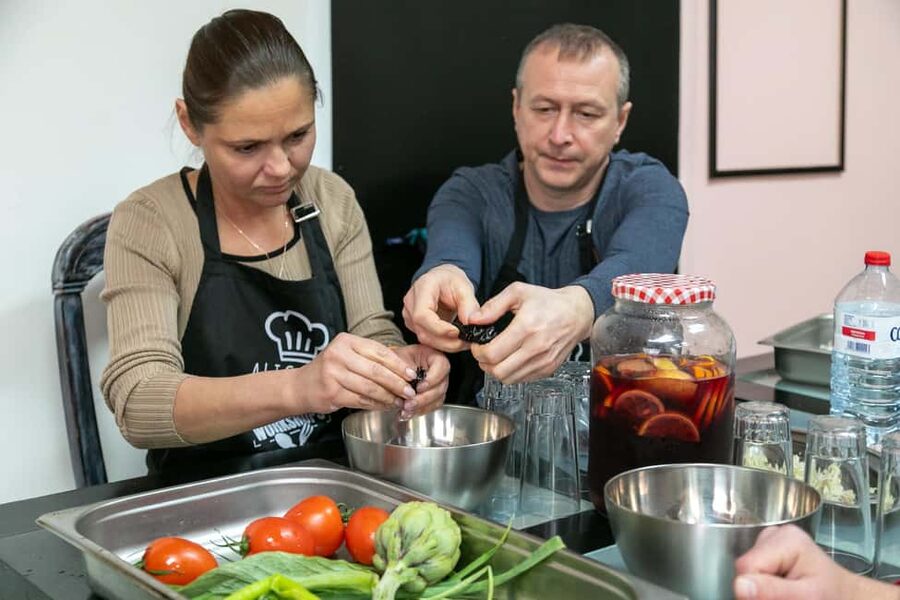
Then comes sangria, and this is where you move from eating to doing. You learn how to make sangria, not just how to assemble it. The class includes sangria as part of the experience, and depending on the session, you’ll be guided through mixing and balancing the drink.
A practical tip: sangria is forgiving, but balance is not magic. If you pay attention during the prep, you’ll get the method you can recreate when you’re hosting friends later.
Choose your paella flavor: seafood, meat, or vegetarian
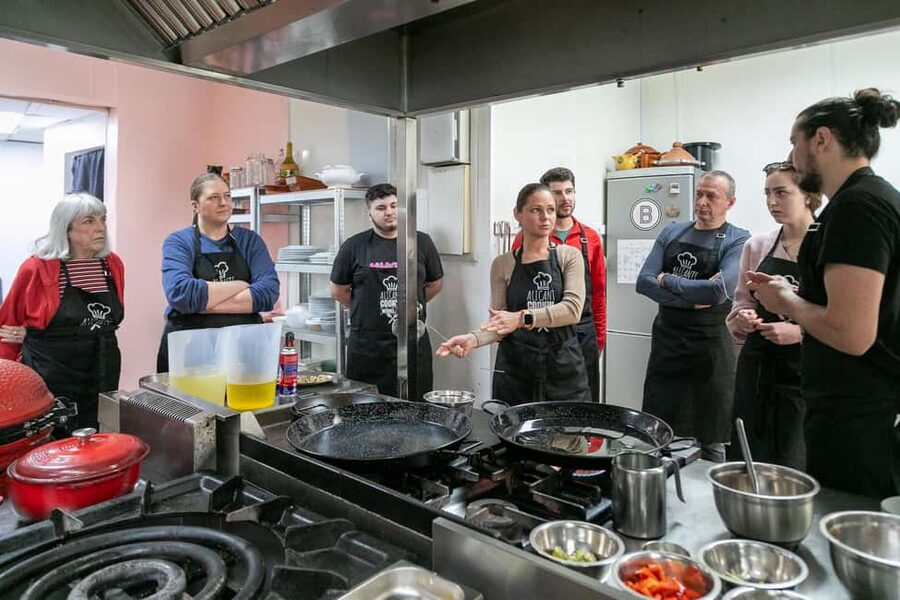
Here’s the decision you’ll actually remember. You can select your paella style ahead of time: seafood, meat, or vegetarian. That choice changes more than the final look. It affects what you pay attention to while cooking, how the pan develops flavor, and what tastes should lead.
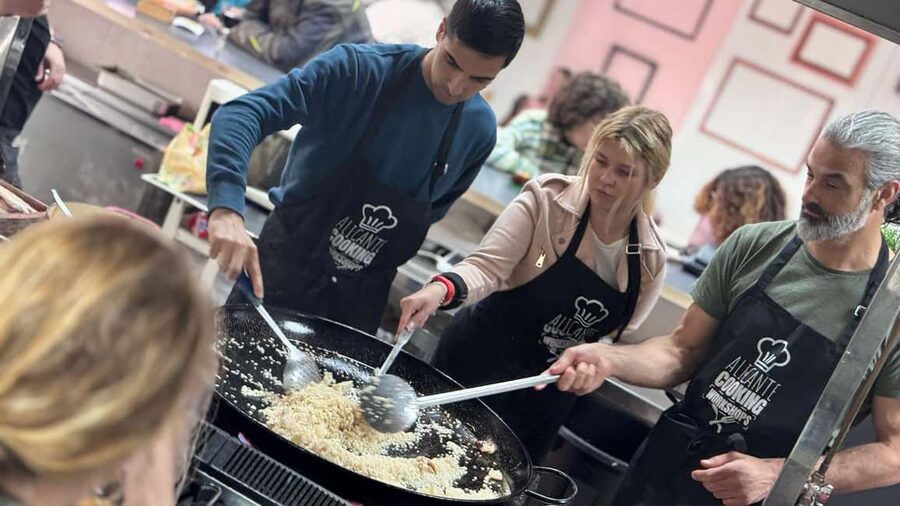
In an Alicante paella workshop format like this, the goal is to help you cook your own dish. You’ll learn the art of making the paella, guided by the local chef and assistant, with support from the guide/translator.
The most valuable part is learning the method. Anyone can follow a recipe with the same ingredients, but paella is sensitive to process. The class approach helps you understand how to execute the steps consistently, not just how to reproduce a one-time meal.
And yes, you’ll also get to taste what you make. After you cook, you’ll sit down with your group and enjoy your homemade paella along with the sangria and the tapas spread.
One more small but meaningful detail: the recipe is included, so you can recreate your chosen style later without relying on memory.
In the pan: how this class makes paella feel doable at home
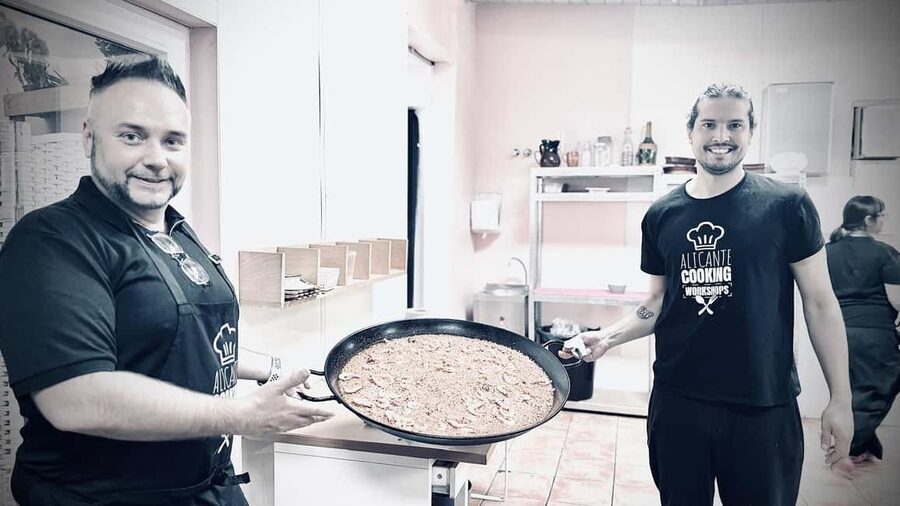
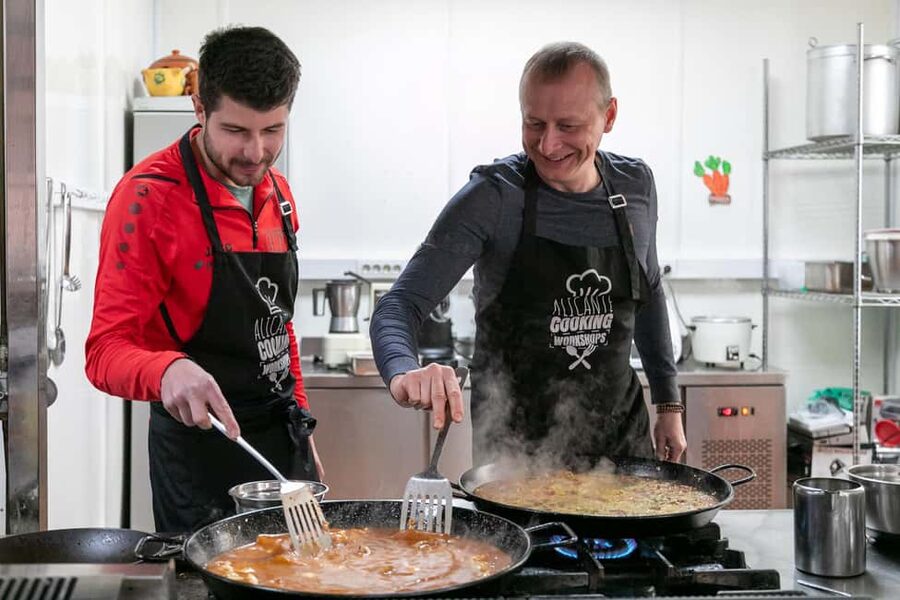
I like workshops that build real confidence. This one is set up to do that by keeping the cooking hands-on and step-by-step, with a chef leading the process and an assistant helping keep everything on track.
You’re not just watching. You’re preparing and learning as you go. That matters because paella technique is hard to “learn by looking.” Things like heat control and timing feel abstract until you’re standing at the counter and doing the step yourself.
When the instructor is also the chef, you tend to get practical tips, like what to watch for as ingredients cook and how the pan’s flavor develops. In past sessions led by Federico, the teaching style is described as patient and structured, with time to answer questions. That combination is rare and it makes a difference if you’re a beginner.
Also, there’s a social payoff. You spend the time cooking and then the time eating in a friendly local setting with other people. It feels like a long lunch with work done up front, not a rushed activity where everyone races to the finish line.
What you actually eat and drink (and why it’s a good setup)
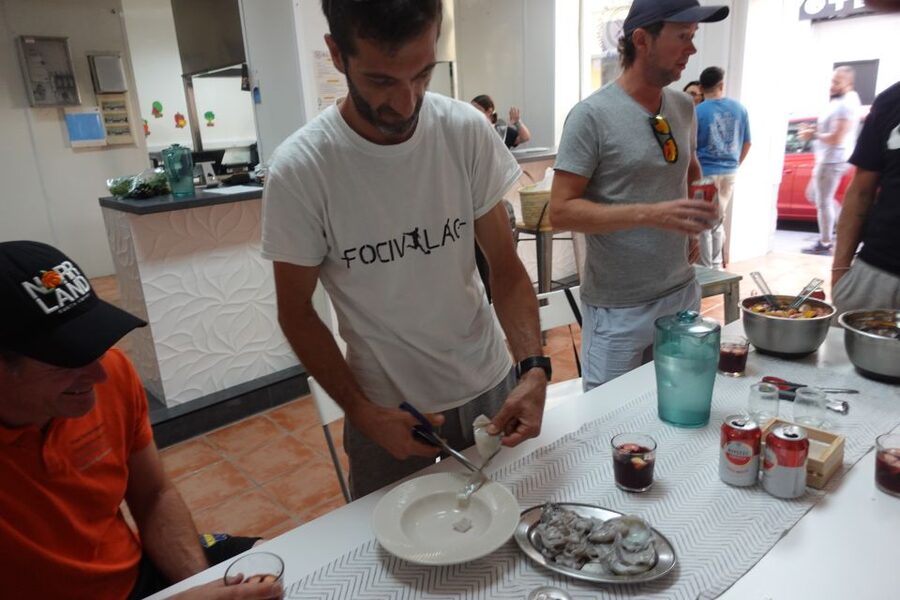
Food workshops can fall into two traps: either you get a light snack with a short cooking demo, or you get a big meal with no real teaching. This setup hits the middle.
You get tapas before the main cook, plus sangria and drinks. The included set is clearly laid out. Here’s what that means in real life:
- Salted fish tomato salad ties the meal to Alicante flavor patterns, not generic Spanish “tapas night” food
- Iberian ham adds the salty richness you’ll likely miss if you only focus on paella
- Local sausages, olives, and crisps keep it varied, so your appetite is satisfied but not overwhelmed
Then you finish with the paella you cooked. That final eating moment is part of the value. You’re tasting the result of the method you learned, which is how you actually lock in technique.
You also have sangria as the matching drink. Since you help make it, you’re not just drinking. You’re connecting taste to process, and that makes it easier to remember what you did.
Value check: is $56 for 3.5 hours actually fair?
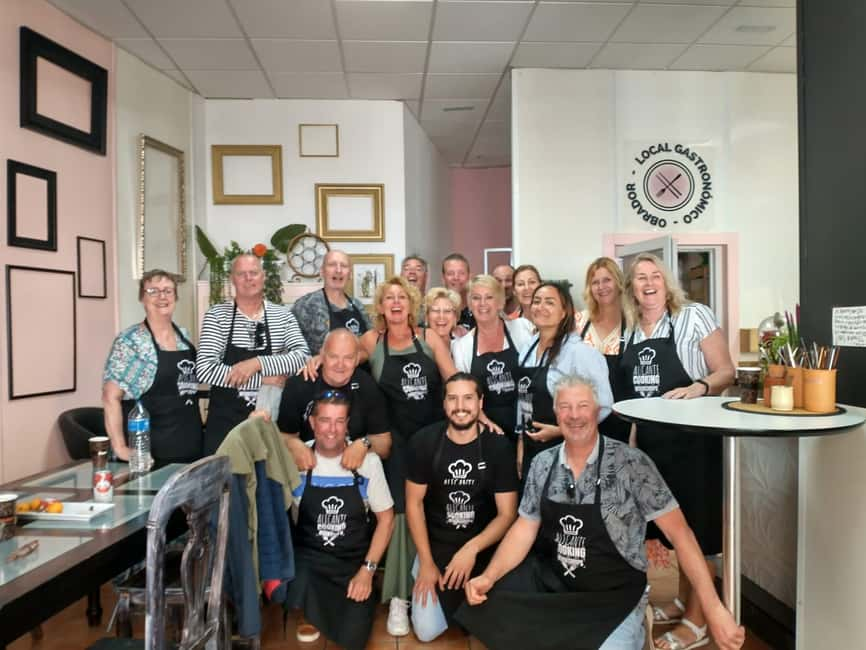
For $56 per person, you’re paying for more than a meal. You’re paying for a full format: market visit, a chef-led cooking workshop, sangria instruction and drinking time, tapas and appetizers, and drinks.
Let’s break down why that can feel like good value:
- Central Market time is not free. Guides who explain what to buy and how to choose ingredients add real cost and real usefulness
- Chef instruction costs money by itself. Here, you’re getting hands-on teaching for paella plus sangria
- Food volume matters. Tapas include several items, and then you eat the paella you made
- Take-home recipe turns the experience into a skill, not just a one-day memory
At this price point, the “gotcha” to watch for is whether you feel rushed or whether the class is more showroom than workshop. Based on how the experience is described, the sessions are structured so you have time, and participants are involved, not left watching the whole time.
If you want to cook while you’re on vacation, not just eat, this pricing makes more sense.
Reviewed and rated alongside this one, further Paella Pans and Market Cookery
Who this workshop suits best, and who should think twice
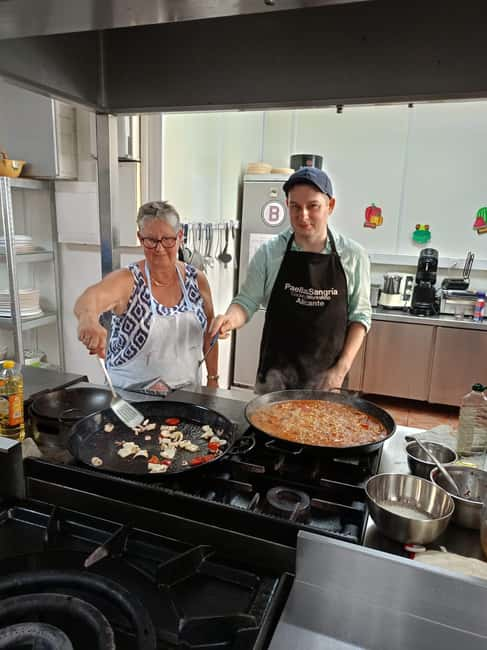
This experience fits best if you fall into one of these categories:
- You want to understand Alicante food by starting at the Central Market
- You’re interested in real cooking instruction, paella and sangria, not just tasting
- You like meeting other people while you cook and then share a meal
It can be less ideal if you prefer very quiet experiences or minimal walking. The market part puts you in busy aisles, and the venue is described as a real local space open to the public, so don’t expect a perfectly controlled environment.
If you’re traveling with mobility concerns, double-check how the group moves from market to kitchen. The information you have says the workshop is wheelchair accessible, but as with any market-to-restaurant plan, some situations can be more practical than comfortable.
Also, bring the basics: comfortable shoes and comfortable clothes. You’ll be standing and moving, so plan for that.
Should you book the Alicante paella and sangria workshop?
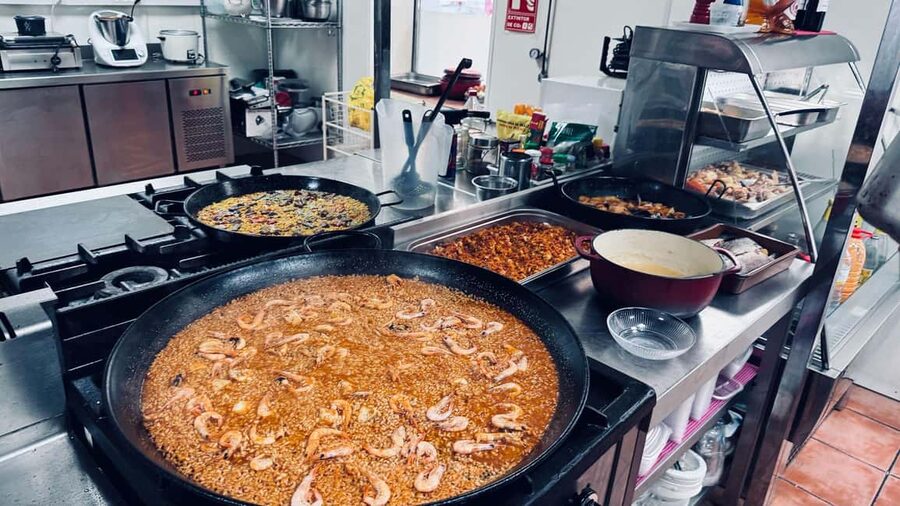
I think this is a strong book for first-time visitors who want more than a restaurant meal. If you want to learn how Alicante flavors come together, starting at Central Market and ending with the paella you cooked, this format is a very practical choice.
Book it if you:
- want hands-on cooking with a chef and translator support
- care about choosing your paella style (seafood, meat, or vegetarian)
- like tapas plus sangria as part of the same food story
- want a recipe to use at home
Skip it if you:
- want a low-effort sit-down-only activity
- dislike market walking in crowded areas
- are looking for a highly polished, tourist-only restaurant setting
If your goal is to eat well and learn something you can repeat, this workshop in Alicante hits the sweet spot.
FAQ
How long is the paella and sangria workshop in Alicante?
The workshop lasts about 3.5 hours.
Where do we meet for the Central Market visit?
Meet your guide at the entrance of the Central Market. The guide wears a black T-shirt with white text for the Paella and Sangria cooking workshop.
What languages are available during the workshop?
The live guide offers English and Spanish.
Can I choose the paella type?
Yes. You can choose seafood, meat, or vegetarian paella.
What is included in the price?
Included are the Central Market visit, the cooking workshop, sangria, tapas (including Iberian ham, tomato salad with salted fish, cold local sausages, olives, and crisps), bottled water, and beer and soft drinks.
Do I get a recipe to take home?
Yes, you can take the paella recipe home.
Is the workshop wheelchair accessible?
Yes, the activity is listed as wheelchair accessible.
Can I cancel, and is there a pay-later option?
You can reserve now and pay later, and you can cancel up to 24 hours in advance for a full refund.
Further Shopping Tours we have reviewed in Alicante
- Alicante Paella Cooking Class, Tapas, Drinks and Market
★ 4.9 · 301 reviews - Paella & Sangria Class with Tapas and Market Visit
★ 5.0 · 122 reviews
Paella Pans and Market Cookery: the rest of our write-ups
- Alicante Paella Cooking Class, Tapas, Drinks and Marketplace
★ 5.0 · 349 reviews - Alicante Paella Cooking Class, Tapas, Drinks and Market
★ 4.9 · 301 reviews - Paella & Sangria Class with Tapas and Market Visit
★ 5.0 · 122 reviews
Alicante and the Costa Blanca we rated next
- From Alicante: Roundtrip to Tabarca Island
★ 4.3 · 3,992 reviews - Alicante: Secret Flavors Food Tour
★ 4.8 · 1,514 reviews - Alicante: 2-Hour Late Afternoon Catamaran Cruise
★ 4.5 · 1,265 reviews - From Alicante: Guadalest, Altea & ticket in Algar Waterfalls
★ 4.7 · 1,027 reviews - Alicante: Seven Secrets of Alicante Discovery Tour
★ 4.8 · 956 reviews
Fresh off the desk: recent Alicante experiences we have written up




Alicante and the Costa Blanca, side by side.
 ★ 4.3From Alicante: Roundtrip to Tabarca IslandFrom $283,992 reviews
 ★ 4.8Alicante: Secret Flavors Food TourFrom $341,514 reviews
 ★ 4.5Alicante: 2-Hour Late Afternoon Catamaran CruiseFrom $381,265 reviews
 ★ 4.7From Alicante: Guadalest, Altea & ticket in Algar WaterfallsFrom $441,027 reviews
 ★ 4.8Alicante: Seven Secrets of Alicante Discovery TourFrom $34956 reviews
 ★ 4.6Alicante: 3-Hour Coastal Catamaran CruiseFrom $50953 reviews
 ★ 4.7From Alicante/Benidorm: Guadalest & Algar Waterfalls TourFrom $53912 reviews
 ★ 4.7Alicante: 6-Hour Catamaran Cruise to Tabarca IslandFrom $85879 reviews