
Reviewed · TARRAGONA, SITGES AND PORTAVENTURA
Tarragona: Roman Heritage Guided Walking Tour
Roman Tarragona rewards fast eyes and good shoes. This guided walk strings together Roman walls, the Circus vaults, and the sea-side amphitheater with clear, official commentary and a short, useful 3D stop.
I especially like that you get a real sense of how the city worked, not just a list of monuments. The guide explains why this hill and route mattered for the peninsula, then ties Roman structures into today’s streets and squares. One thing to keep in mind: it’s only a 2-hour experience, so there’s less time for lingering photos once the group starts moving.
In This Review
- Key things to notice before you go
- Two hours in Tarragona, and why it works
- Arriving at Itinere, next to the Roman walls
- The Roman walls, plus the hill-choice story
- The historic center: Roman remains under today’s streets
- Circus vaults and the feeling of chariot-race spectacle
- The audiovisual 3D exhibit before the amphitheater
- Amphitheater by the sea: gladiators, beast hunts, and views
- Price and value: what $17 covers, and what it doesn’t
- Languages, guide style, and how to get the most out of it
- What to bring, and what to leave behind
- Who this walking tour is best for
- Should you book the Tarragona Roman Heritage Guided Walking Tour?
- FAQ
- How long is the Tarragona Roman Heritage Guided Walking Tour?
- Where is the meeting point?
- What does the tour cost?
- What is included with the tour?
- Which languages is the live guide available in?
- Is the tour wheelchair accessible?
- What should I bring?
- Is luggage allowed on the tour?
Key things to notice before you go
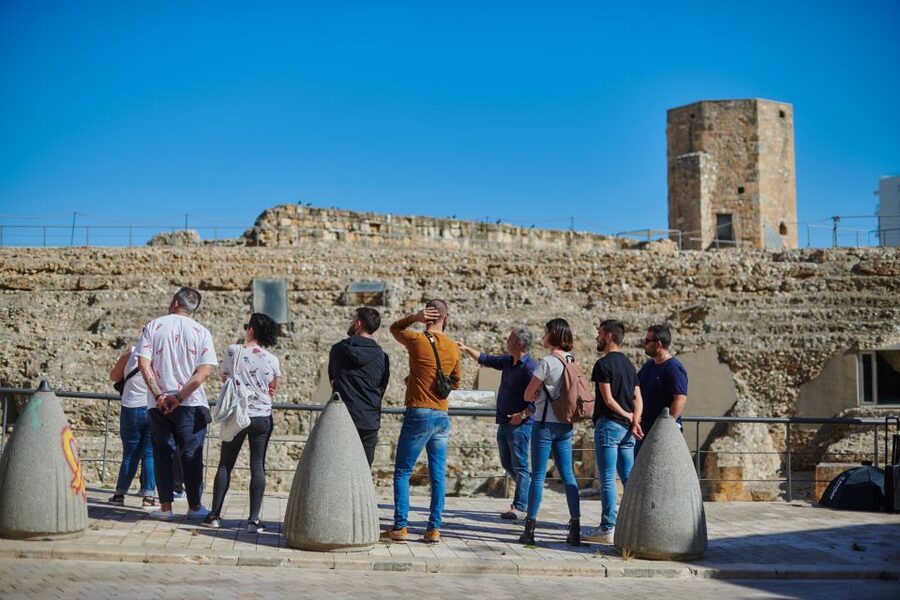
- Old Roman walls outside Italy: The route starts with the city walls that date to the Roman era, with context on why the location mattered.
- Circus entrance for chariot-race imagination: You’ll visit the Circus vaults so you can picture the spectacle, not just read about it.
- A city model that makes streets click: Expect a model of historic Tarragona to help you connect buildings to their original functions.
- 3D audiovisual stop near the transition points: The exhibit gives you a quick mental map before you head to the amphitheater by the sea.
- Amphitheater views that land even when you skim: You’ll get the strong visual moment of the theater and its setting.
Two hours in Tarragona, and why it works
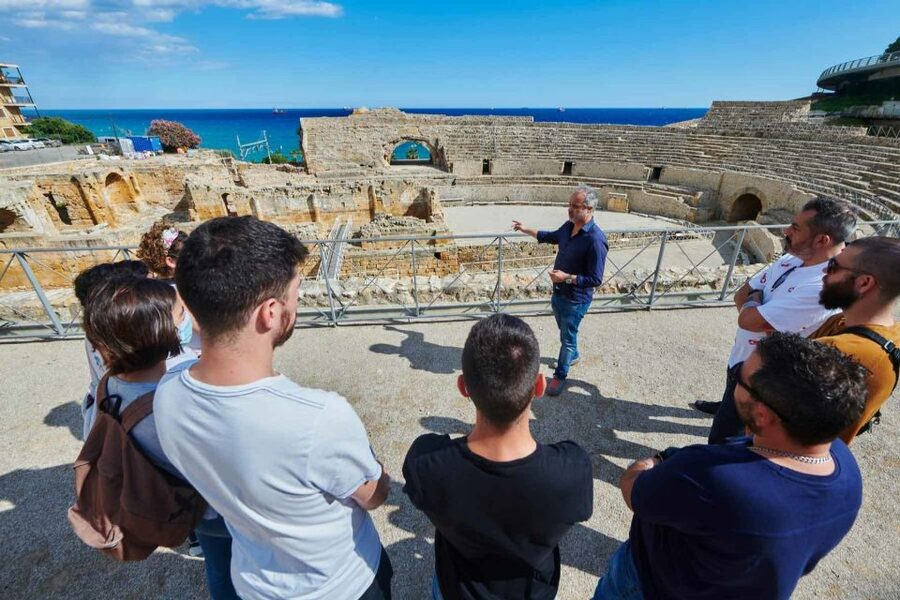
This tour is built for people who want the big Roman highlights without turning the day into a research project. At 2 hours, it’s short enough to fit between beach time and lunch, but long enough that the guide can give you a sequence: Roman setting first, then urban fabric, then performance spaces.
You’ll cover the main Roman sights on foot, and the tour keeps moving with purpose. That matters in Tarragona because the city center is walkable and layered. You can easily miss the Roman parts if you’re just wandering, especially when modern houses and streets sit on top of older foundations.
The value angle is simple. For around $17 per person, you are buying interpretation, not just access. The ticket includes a guided walk, and it includes an entrance to the Circus. The rest is storytelling, plus a 3D audiovisual exhibit that helps your brain store what you see in the right order.
Arriving at Itinere, next to the Roman walls
Your meeting point is the Itinere office, located next to the Roman walls. Plan to arrive about 10 minutes early, mainly so you can get oriented before the group files out.
This is the kind of start that helps you get bearings fast. Tarragona’s Roman walls are not just background scenery. They are the tour’s anchor, and knowing where you start makes the rest feel more connected.
Also, the tour is listed as wheelchair accessible, so the route is set up for mobility needs. Still, you should expect walking on city paths and surfaces, because it is a walking tour, not a bus loop.
Tip: if you’re sensitive to crowds, arrive early and scope where you’ll stand for photos. The group tends to cluster at key viewpoints, especially near the amphitheater.
Different budget or pace in mind? Here is the rest of our Tarragona shortlist.

The Roman walls, plus the hill-choice story
The tour begins with Roman history right by the Roman walls, described as the oldest Roman walls outside Italy. That detail is more than trivia. It signals that Tarragona was taken seriously in the Roman plan, not treated as an afterthought.
You’ll learn why the Romans chose this hill by the Mediterranean as the gateway to Rome for the whole peninsula. In practical terms, that means the position made movement easier. Ships and travel along the coast connected Tarragona to larger routes, and the hill gave a strong defensive and administrative advantage.
As you walk, pay attention to how the walls shape the city. Even if you are not a Roman architecture nerd, the guide’s explanation gives you a way to read the landscape. You start seeing why the city developed where it did, instead of only seeing stone and angles.
If you’re thinking, Okay, but will this be dry, history-wise? It shouldn’t be. The goal here is understanding, not a lecture. One segment uses a large city model later, and this early context sets up that model so it doesn’t feel like random reconstructions.
The historic center: Roman remains under today’s streets
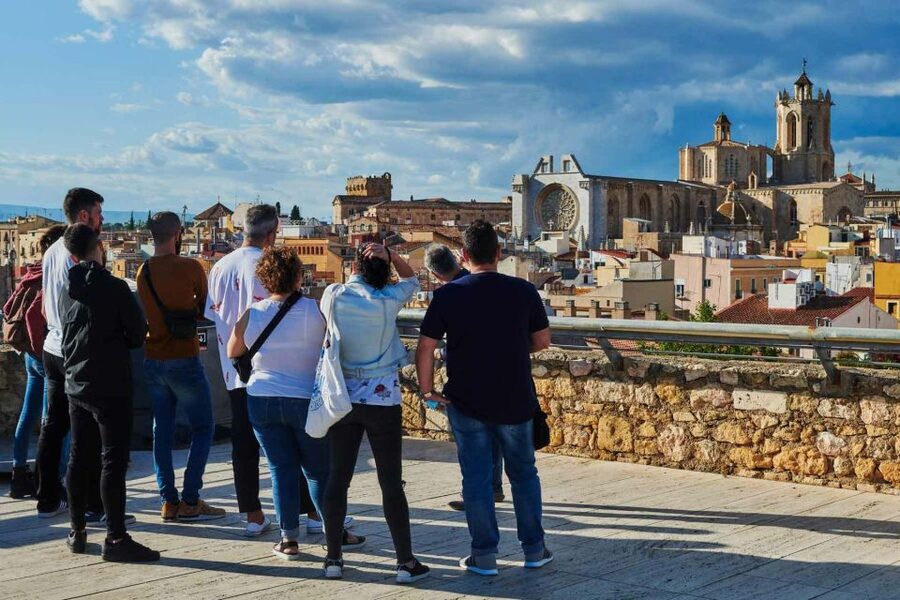
After the wall area, you head into Tarragona’s historic center, where Roman monuments and everyday life overlap. This is where the tour becomes more than scenery.
You’ll see how Roman structures are intertwined with today’s houses, streets, and squares. The guide uses a large city model to describe how Tarragona used to look, then explains the functions of key buildings.
That model approach is a big deal for value. Without it, Roman cities can feel like a pile of ruins. With it, you can understand the purpose of what you’re looking at. For example, you start to connect performance and civic spaces to the urban layout, and you understand why certain areas get attention.
One small drawback to accept: the center can get busy, and groups naturally move at a set pace. If you want long, slow wandering, you might feel rushed. But if you’re okay with a “watch, listen, look, move” rhythm, you’ll come away with a coherent mental map.
Circus vaults and the feeling of chariot-race spectacle
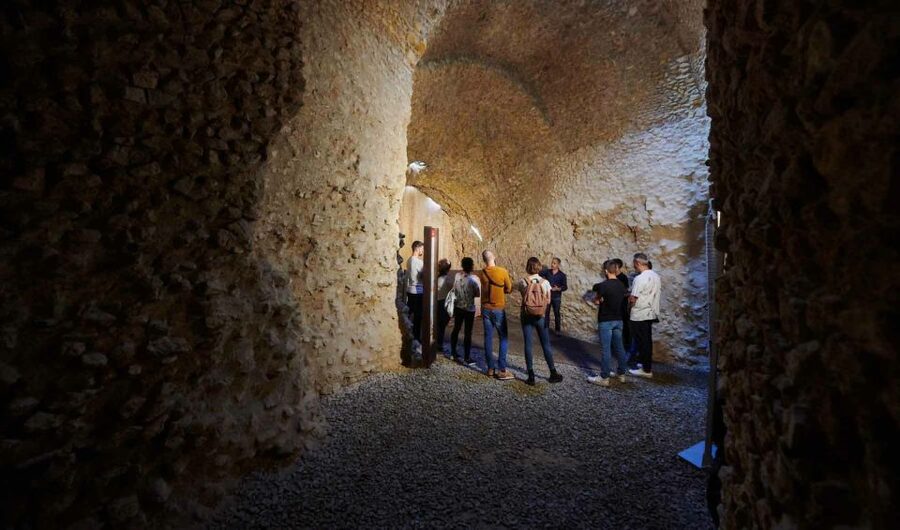
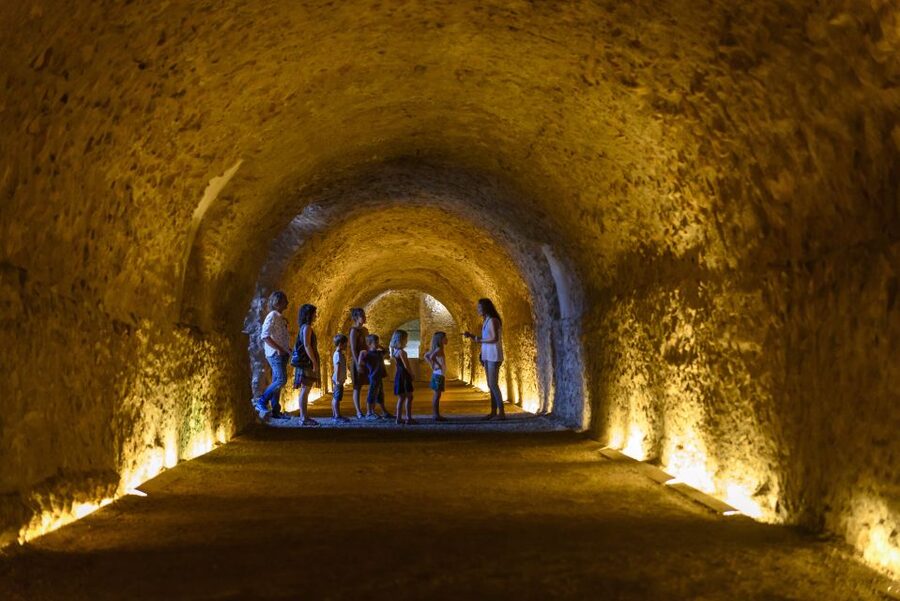
Next comes one of the most fun parts for people who like drama and motion: the Circus vaults. You get entrance included to the Circus, and the guide helps you relive the excitement of chariot races.
This is where you should use your imagination, but in a guided way. You are not standing in a museum with perfect reconstructions. You’re seeing parts of the structure and hearing how the Circus functioned as a major entertainment venue.
If you’re the type who likes to picture scenes while you read about history, this stop will land. The tour doesn’t just name the place. It connects the space to what happened there, which helps you appreciate the scale and the design.
You’ll likely find this section energizing because it breaks the walking pattern with a clear theme: spectacle. And it also serves as a bridge, because after the Circus, you move toward another performance site, the amphitheater.
The audiovisual 3D exhibit before the amphitheater
Before you reach the amphitheater by the sea, you watch an audiovisual exhibit with 3D images. Think of this as your warm-up. It’s designed to help you visualize what you’re about to see, especially if the amphitheater ruins or angles are not obvious at first glance.
This kind of stop matters. Amphitheaters can be confusing if you only see the outside. With the 3D visuals, you’re less likely to get stuck staring at stone and wondering what parts were used for what.
It also helps with energy management. The exhibit gives your brain a break from walking while still staying in “tour mode.” When you step outside again, the sea air and the amphitheater views feel more rewarding.
If you prefer to learn with your eyes as well as your ears, this segment is a plus. Several visitors highlighted that the video element works well, especially because it makes the story easier to follow.
Amphitheater by the sea: gladiators, beast hunts, and views
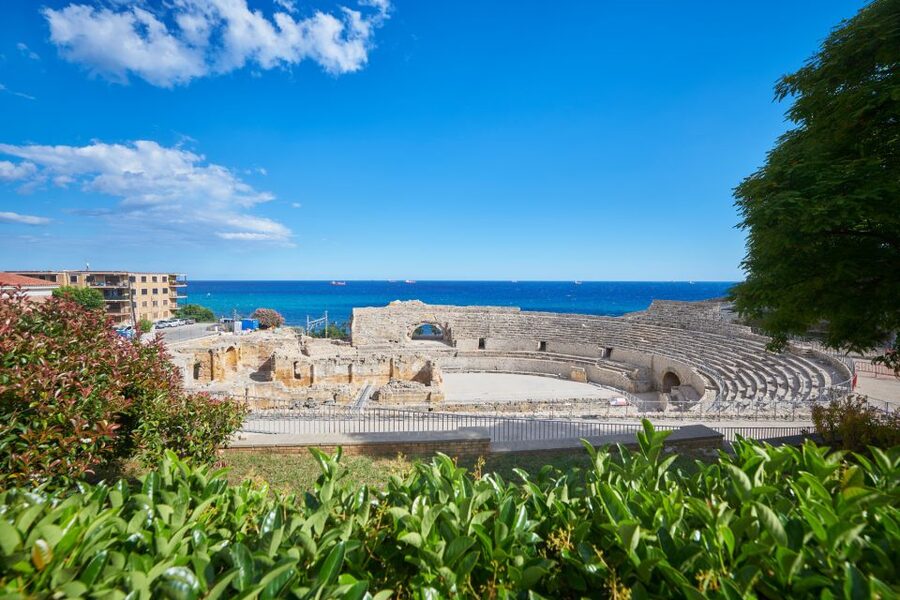
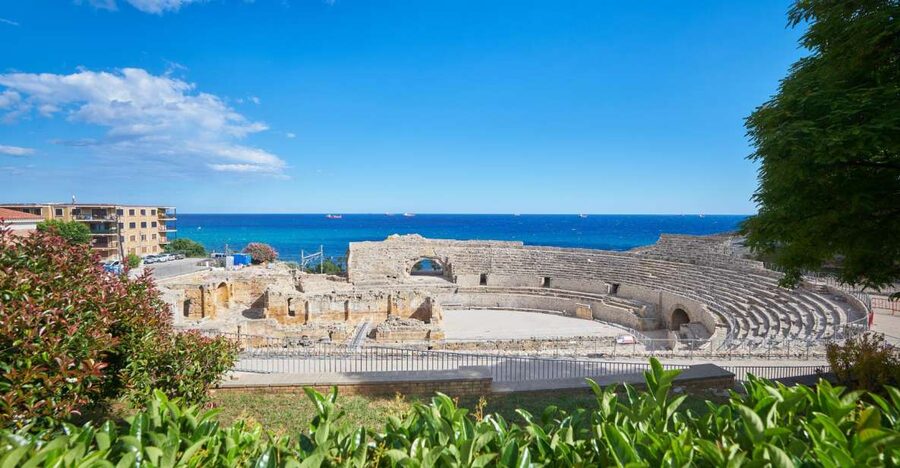
The finale is the amphitheater located by the sea. This is the moment where Tarragona’s Roman story turns scenic, because the setting does half the work for you.
The guide explains gladiator fights and beast hunting that took place here in ancient times. Then you get a look at the amazing history of the stadium to this day. That phrase to this day is important. It frames the amphitheater not as a dead relic, but as a surviving structure that still anchors the city visually and culturally.
When you’re standing in the right spot, the amphitheater and the sea combine into a powerful image. Even if you’re not into Roman entertainment, you can appreciate the human logic: a big public spectacle space next to a dramatic horizon.
Practical note: this is also where groups tend to line up for photos. If you want clean pictures, aim for moments when the guide finishes speaking and the crowd shifts. And if it’s windy, keep your phone steady. The sea has strong opinions.
Price and value: what $17 covers, and what it doesn’t
At about $17 per person for a 2-hour guided walking tour, the value comes from three things:
- a live official city guide,
- entrance to the Circus,
- and a structured route that stops you from wandering blindly.
If you tried to replicate this on your own, you’d likely spend time figuring out what to see first, and you might miss the connections between sites. Tarragona’s Roman layer can be easy to overlook when you’re focused on streets, cafés, and the coastline. The guide’s job is to make those connections for you.
Is it expensive? Not really, especially because you get an entrance included. Is it perfect? No, because time is limited. If your goal is to spend an extra hour reading, sketching, or taking detailed photos, you may feel the pace.
Also, group tours trade intimacy for efficiency. A high rating helps, but pacing is still pacing. If the group is large or loud, you might have to concentrate harder to follow every thread of explanation.
The good news: the key highlights are clear, and the stop sequence makes it easier to remember what you saw afterward.
Languages, guide style, and how to get the most out of it
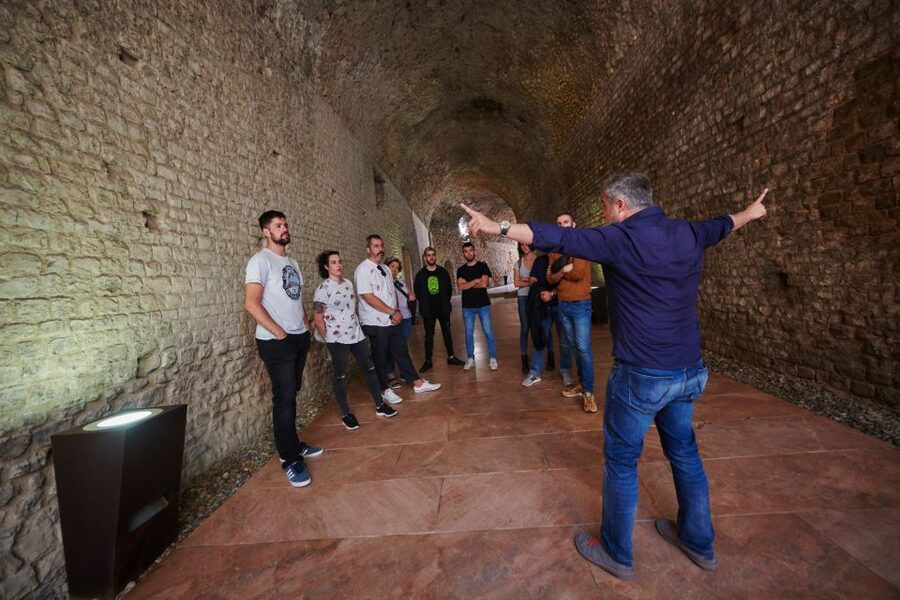
The tour is conducted in Catalan and Spanish with a live guide. If you’re comfortable with either, you’ll have an easier time catching all the details and transitions.
From the guide feedback that comes through the experience, one name shows up often: Adrià. People respond to his explanations as clear and understandable, and they also mention the video segment in a positive way. That’s a hint that the tour is designed to be accessible, not just fact-heavy.
Still, here’s how you can get the most out of any group walking tour:
- Stand where you can hear the guide, even if it means giving up the best photo angle for a minute.
- Expect some noise in the center and near viewpoints. Bring patience, not frustration.
- If you want deeper reading, use your notes after. The tour gives you the map, and you can fill in details later at your own pace.
What to bring, and what to leave behind
Comfort matters most here. Bring comfortable shoes. Tarragona is walkable, but the surfaces around historic sites are not always perfectly smooth.
The tour also notes that luggage or large bags are not allowed. So travel light for this one. If you’re coming straight from a train or staying in a hotel, make sure your bag situation is easy to manage before you head out.
If you’re visiting in cooler or rainy weather, you might consider a light layer. One recent experience noted the tour was handled properly under intense rain, which suggests the route can still operate even when skies turn.
Who this walking tour is best for
This tour is ideal if you want Roman Tarragona in a compact package. You’ll be happiest if:
- you like guided context, not just self-guided ruins hopping,
- you want a coherent story linking the walls, the Circus, and the amphitheater,
- and you enjoy practical explanations that turn stone into something you can picture.
It’s also a good fit for first-timers to Tarragona. The route gives you a starting framework, so your later roaming feels more purposeful.
If you are the kind of person who wants to linger for long periods at every stop, this might feel short. But if you prefer efficient sightseeing with strong visual moments, it’s a solid match.
Should you book the Tarragona Roman Heritage Guided Walking Tour?
Book it if you want the Roman wall to amphitheater story told in one smooth walk, with entrance to the Circus and a 3D exhibit that helps you understand what you’re seeing. For around $17, it’s a strong value when you factor in guided interpretation.
Skip it or reconsider if you need lots of free time at monuments or you dislike group pacing. The 2-hour structure is efficient, but it does not cater to slow travel styles.
My practical call: if Tarragona is on your short list and you want the Roman highlights without guesswork, this tour is an easy yes. Arrive early, wear good shoes, listen closely near the model and the video, then let the amphitheater by the sea be your payoff.
FAQ
How long is the Tarragona Roman Heritage Guided Walking Tour?
The tour lasts 2 hours.
Where is the meeting point?
Meet at the Itinere office next to the Roman walls, and arrive 10 minutes before the start time.
What does the tour cost?
The price is $17 per person.
What is included with the tour?
It includes a guided tour of Tarragona and entrance to the Circus.
Which languages is the live guide available in?
The tour is guided in Catalan and Spanish.
Is the tour wheelchair accessible?
Yes, the tour is listed as wheelchair accessible.
What should I bring?
Bring comfortable shoes.
Is luggage allowed on the tour?
Luggage or large bags are not allowed.
Fresh off the desk: recent Tarragona experiences we have written up

Tarragona, Sitges and PortAventura, side by side.
 ★ 4.4Cambrils: Costa Daurada Sail Catamaran CruiseFrom $121,765 reviews
 ★ 3.9Salou: PortAventura Caribe Aquatic Park 1-Day TicketFrom $371,320 reviews
 ★ 5.0Tarragona and Sitges Tour with Small Group and Hotel Pick UpFrom $1201,211 reviews
 ★ 4.5Cambrils: Catamaran Cruise with Drinks and BBQ Lunch OptionFrom $35935 reviews
 ★ 4.7From Salou/Cambrils: Speedboat TourFrom $45876 reviews
 ★ 4.4From Salou: Full Day Barcelona Panoramic Tour with Free TimeFrom $56718 reviews
 ★ 4.8Salou: Off-Road Guided Quad Safari with Hotel PickupFrom $102602 reviews
 ★ 3.9PortAventura and Ferrari Land: Full-Day Trip from BarcelonaFrom $93559 reviews