
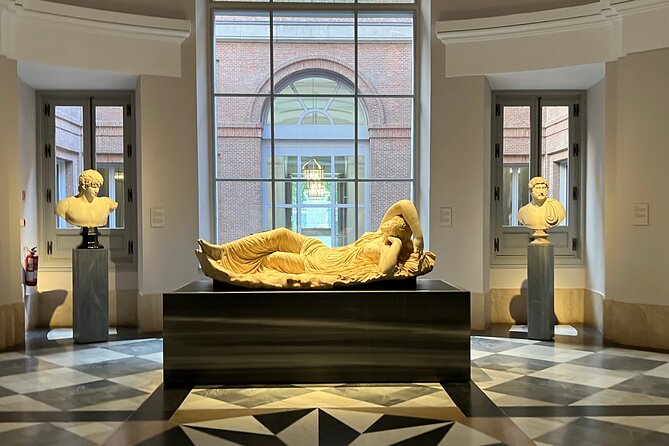
Reviewed · PRADO AND MADRID ART MUSEUMS
Prado Museum Small Group Tour Skip the Line 7 People Max
Art without the line is my kind of plan. This Prado Museum small-group tour (max 7) gets you in with skip-the-line priority, so you spend your Madrid hours on paintings, not snaking queues. I like the 7-person cap, because you can ask questions and actually hear the answers.
A good guide turns old frames into real context. The tour focuses on symbolism and historical context, with a route that points you toward major names like Hieronymus Bosch, El Greco, Titian, Peter Paul Rubens, Diego Velázquez, and Francisco Goya. You may tour with a guide like Monroe, who tends to run in English and sprinkle in Spanish when helpful.
The tradeoff is time. In about 1 hour 30 minutes, you’ll hit the Prado’s highlights, not the entire museum of roughly 7,600 paintings. If you want to linger in a single room, plan to add extra time on your own afterward.
In This Review
- Key Things to Know Before You Go
- Prado Skip-the-Line, Small Group: Why This Format Fits Madrid
- Meeting at the Monument to Goya, Then Getting Oriented Fast
- What Skip-the-Line Actually Buys You at the Prado
- How the 90-Minute Prado Route Works in a Museum of Thousands
- The Prado’s Big Names: What You’ll See and How to Look
- Hieronymus Bosch and the Art of Strange Symbolism
- El Greco and the Drama of Form
- Titian and the Texture of Color
- Peter Paul Rubens and Motion That Feels Real
- Diego Velázquez and Seeing Like a Court Painter
- Francisco Goya and the Edge of Modern Feeling
- Monroe and the Art of Explaining What You Can Actually See
- Price and Value: Is $50 a Good Deal for the Prado?
- Timing Tips: When to Book for a Smoother Experience
- Who This Tour Suits Best (and Who Might Want Something Else)
- Should You Book This Prado Museum Small Group Tour?
- FAQ
- How long is the Prado Museum Small Group Tour?
- Does the price include admission?
- What is the maximum group size?
- What language is the tour offered in?
- Where do we meet for the tour?
- What if the weather is bad, or I need to cancel?
Key Things to Know Before You Go
- Priority admission saves you from the worst parts of Prado queueing
- Small group (7 max) means real back-and-forth, not a lecture from afar
- Monroe-style storytelling helps you read details, not just admire them
- Highlight route covers Bosch, El Greco, Titian, Rubens, Velázquez, and Goya
- English tour with the option of occasional Spanish support
- You can stay after the guided portion to explore at your own pace
Prado Skip-the-Line, Small Group: Why This Format Fits Madrid
The Prado is world-famous, and it also has the long-line reputation to match. The smartest move is to arrive with a plan that gets you inside fast and keeps you moving through the museum’s biggest hits. That’s exactly what a skip-the-line, small-group tour is designed to do.
With a maximum of 7 people, you get the best kind of museum experience: guided, but not stuck in a crowd. You’ll get time to ask questions as you go, and you won’t feel like a number in a conveyor belt.
One more thing I appreciate is that the tour isn’t trying to teach everything. It’s designed to give you a strong Prado foundation, so when you wander afterward, you recognize what you’re seeing.
Meeting at the Monument to Goya, Then Getting Oriented Fast
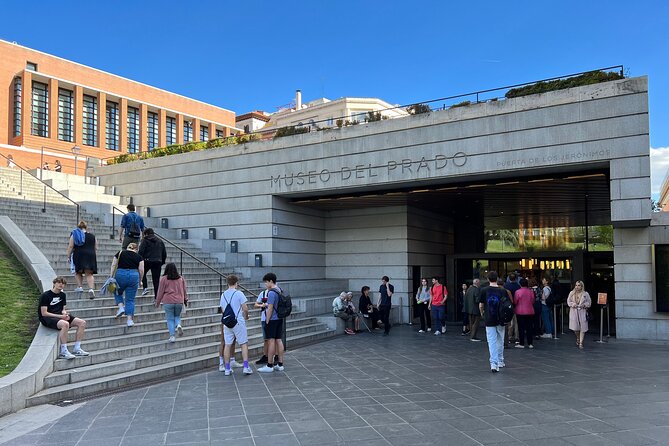
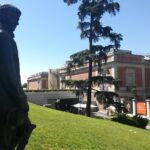
Your tour starts at the Monument to Goya (C. de Felipe IV, s/n, Retiro, 28014 Madrid). The location is easy to find, and it keeps you near public transportation, which matters in a city like Madrid where you can lose time just getting between sites.
From that meeting point, you’ll head into the museum with a guide, so you’re not wasting your first Prado minutes figuring out where to go next. That matters because the building is big and the collection is deep. Even if you love art, getting oriented is half the battle.
The tour ends back at the meeting point, which is a nice simple loop for planning the rest of your afternoon.
More of the same shelf: our Prado and Madrid Art Museums write-ups



What Skip-the-Line Actually Buys You at the Prado
This is not just a ticket gimmick. Priority admission is buying you time and energy. At the Prado, time is everything, because you could spend a large chunk of your trip staring at a line that doesn’t feel like part of Madrid at all.
A guided highlights route plus skip-the-line access tends to work best for first-time visitors and time-limited travelers. You still get the thrill of walking into a major museum, but you don’t lose your momentum at the entrance.
Also, since the Prado holds around 7,600 paintings, any visit that includes long waiting plus self-navigation can turn into a stressful “just get something done” plan. This tour helps you keep it calm and focused.
How the 90-Minute Prado Route Works in a Museum of Thousands
This tour runs about 1 hour 30 minutes, and you’ll spend it inside the Prado with a professional guide. In that time, the goal is selective coverage: you’ll see major works and key artists rather than trying to cover the museum floor by floor.
Here’s how I’d think about it for your planning. If you’re the type who likes to read labels and follow your curiosity, a 90-minute guided highlights tour can feel like the “best-of” version. You’ll still get a lot, but you’ll likely want to add extra time after the tour if you want a slower, deeper look.
If you’re visiting with teens, friends who are not hardcore art fans, or anyone who gets overwhelmed in huge museums, this format tends to click. A guide helps you decide what to focus on, and you get a reason to look beyond the obvious.
The Prado’s Big Names: What You’ll See and How to Look
This tour is built around a memorable lineup of artists: Hieronymus Bosch, El Greco, Titian, Peter Paul Rubens, Diego Velázquez, and Francisco Goya. Even when you’re not a specialist, this roster is useful. It gives you a sense of how styles, symbols, and power shifted over time in Spanish and European painting.
Hieronymus Bosch and the Art of Strange Symbolism
Bosch is famous for unsettling, imaginative scenes. During a highlights route, your guide typically helps you notice recurring patterns and interpret the symbolism instead of treating the work like a set of random weird images.
What to do with that: slow down for the details your guide points out. Bosch rewards the kind of looking where you circle back to spot what you missed the first time.
El Greco and the Drama of Form
El Greco’s work often feels dramatic even when the subject is simple. In a guided setting, you’ll usually get context for why the style looks the way it does, and how that style connects to the era’s beliefs and artistic tastes.
What to do with that: don’t just glance. Look at the way figures stretch and the emotional mood the painting sets. Let the guide’s context do its job.
Reviewed and rated alongside this one, further Museums in Madrid
- Royal Palace & Prado Museum Skip the Line Guided Tour
- Madrid: Sweet Space Museum Entry Ticket
- Madrid: Prado Museum Ticket with In-App Audio Guide
- Prado Museum Guided Tour with Skip-the-Line Ticket
- Madrid: Wax Museum Entry Ticket
- Prado Museum Guided Tour with Skip the Line Ticket in Madrid
- Madrid: Prado Museum Guided Tour
- Madrid: Reina Sofía Museum Guided Tour
Titian and the Texture of Color
Titian is a key name for anyone who wants to understand why European painting became so emotionally powerful through color and paint handling. In a tour like this, the guide will generally point out what makes the work feel alive compared with more rigid styles.
What to do with that: pay attention to skin tones, drapery, and how light seems to sit on surfaces. Those details are where the experience becomes more than just “pretty painting.”
Peter Paul Rubens and Motion That Feels Real
Rubens is all about energy. A good guide helps you connect the drama in the painting to why it was made for certain audiences, and what the composition is trying to communicate.
What to do with that: trace the movement through the scene, even if you don’t know the myth or story. The composition will tell you a lot.
Diego Velázquez and Seeing Like a Court Painter
Velázquez is famous for subtlety and observation. When you learn the context, his images can shift from “wow, skill” to “wow, meaning.” A guide helps you read what’s going on beneath the surface, especially when the painting includes portraits, symbolism, or social hints.
What to do with that: look at what the painting chooses to emphasize and what it leaves ambiguous. That’s often the difference between a quick glance and a real connection.
Francisco Goya and the Edge of Modern Feeling
Goya tends to be the artist people remember most. In a highlights tour, you’ll get a focused look at why Goya’s themes can feel intense and why his approach changed what painting could express.
What to do with that: watch for contrasts, mood shifts, and the way emotion is carried through figures and setting. Goya is where your guide’s symbolism talk usually pays off fast.
Monroe and the Art of Explaining What You Can Actually See
A huge part of the value here is the guide. The most consistently praised guides, including Monroe, are described as engaging and fun, with enough humor to keep a serious museum from feeling stiff.
But what really matters is the explanation style. The best guides don’t just recite facts. They point out details that you would likely miss on your own, then connect those details to the historical context or symbolism behind the work. That helps you understand art as a communication tool, not just a beautiful object behind glass.
Also, Monroe is mentioned as taking questions and adjusting when the group has interest in a different artwork. That flexibility can change your experience from “see the highlights” to “understand the highlights.”
One practical tip if you want maximum value: come with one or two questions in mind. Even simple ones like why a scene looks the way it does, or what a symbol might refer to, can lead to great moments in the tour.
Price and Value: Is $50 a Good Deal for the Prado?
At $50 per person, this isn’t a budget tour. But it’s also not trying to be. You’re paying for three things that add up quickly at a museum like the Prado:
- Priority admission, so you spend less time waiting.
- A professional guide, who helps you interpret what you see.
- A small-group format, which tends to make your time feel more personal and less rushed.
If you were to visit on your own, you could absolutely get into the Prado and wander. But the Prado’s scale makes “self-guided success” harder. Without guidance, you might miss what’s most important, or you might end up overwhelmed and leave feeling like you barely scratched the surface.
For first-timers, or anyone who wants to hit the major works without doing museum math, this price often feels fair because it reduces uncertainty. You’re not gambling on how well you’ll manage time in a massive building.
And if you’re visiting with people who have mixed interests, the guided highlights can be the bridge that keeps everyone engaged.
Timing Tips: When to Book for a Smoother Experience
Your tour duration is about 1 hour 30 minutes, so it fits nicely before or after other Madrid plans. The guidance you’ll get is most useful when your brain is fresh and you’re not rushing to catch the next train.
One tip from common scheduling preferences: a morning start, like the 10:00 am tour, is often a smart choice. Weekdays also tend to be easier for enjoying the museum without as much pressure. That doesn’t mean weekends are a bad idea, it just means you’ll likely appreciate the calm more.
If you can, book ahead. This tour is typically reserved about 26 days in advance on average, so earlier planning helps you get your preferred time slot.
Who This Tour Suits Best (and Who Might Want Something Else)
This tour is ideal for you if:
- You want a great first visit to the Prado without getting lost in the scale.
- You enjoy art history basics with practical context, symbolism, and clear explanations.
- You like asking questions and getting answers in real time.
- You want a small group experience rather than a crowded, fixed script.
You might want a different approach if:
- You need lots of uninterrupted time in a single gallery.
- You want to see a huge percentage of the 7,600 works and plan to stay for many hours.
- You’re completely fine doing the Prado at your own pace with no guidance.
Still, even if you’re an experienced museum wanderer, a highlights tour can work well as a “set your eyes right” strategy. You leave better prepared for self-guided time afterward.
Should You Book This Prado Museum Small Group Tour?
Yes, if your goal is to experience the Prado’s main masterpieces with a guide and avoid the worst of waiting. The small group size, priority admission, and strong focus on context make this a practical way to get real value out of a museum that can easily overwhelm.
Book it especially if you’re going as a first-time Prado visitor, or if you want something structured but not rigid. You get the big-name artists you came for, plus a guide who helps you understand what you’re looking at.
One last thought: plan a little extra time after the tour. Even if 90 minutes is a lot, the Prado is the kind of place where you’ll want to return to certain paintings once you know what to notice.
FAQ
How long is the Prado Museum Small Group Tour?
It runs about 1 hour 30 minutes.
Does the price include admission?
Yes. The Prado skip-the-line ticket is included.
What is the maximum group size?
The tour has a maximum of 7 travelers.
What language is the tour offered in?
The tour is offered in English.
Where do we meet for the tour?
You meet at the Monument to Goya, C. de Felipe IV, s/n, Retiro, 28014 Madrid, Spain. The tour ends back at the meeting point.
What if the weather is bad, or I need to cancel?
You can cancel for a full refund up to 24 hours before the experience starts. If the experience is canceled due to poor weather, you’ll be offered a different date or a full refund. The experience may also be canceled if a minimum number of travelers is not met.
Museums: the rest of our Madrid write-ups
- Madrid: Prado Museum Entry Ticket
★ 4.6 · 17,509 reviews - Madrid: Reina Sofía Museum Entrance Ticket
★ 4.5 · 6,889 reviews - Madrid: Small Group of Prado Museum Tour & Optional Tapas
★ 4.6 · 2,437 reviews - Madrid: Prado Museum Guided Tour with Skip-the-Line Ticket
★ 4.5 · 2,018 reviews - Madrid: Prado Museum Guided Tour With Fast Access
★ 4.8 · 1,785 reviews
Tours: the rest of our Madrid write-ups
- Madrid: Tour Bernabéu Entry Ticket
★ 4.5 · 21,573 reviews - Madrid: Panoramic Route City Tour
★ 4.1 · 12,259 reviews - Avila & Segovia Tour with Tickets to Monuments from Madrid
★ 5.0 · 9,762 reviews - Madrid: Segovia and Toledo Tour, Alcazar, and Cathedral
★ 4.7 · 7,797 reviews - Madrid: Royal Palace Expert Guided Tour with Skip-the-Line
★ 4.7 · 6,986 reviews
Prado and Madrid Art Museums worth comparing before you book
- Madrid: Prado Museum Entry Ticket
★ 4.6 · 17,509 reviews - Madrid: Reina Sofía Museum Entrance Ticket
★ 4.5 · 6,889 reviews - Madrid: Small Group of Prado Museum Tour & Optional Tapas
★ 4.6 · 2,437 reviews - Madrid: Prado Museum Guided Tour with Skip-the-Line Ticket
★ 4.5 · 2,018 reviews - Madrid: Prado Museum Guided Tour With Fast Access
★ 4.8 · 1,785 reviews
Fresh off the desk: recent Madrid experiences we have written up








Prado and Madrid Art Museums, side by side.
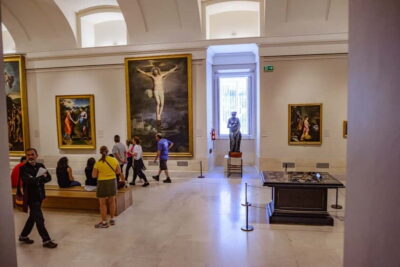 ★ 4.6Madrid: Prado Museum Entry TicketFrom $2117,509 reviews
 ★ 4.5Madrid: Reina Sofía Museum Entrance TicketFrom $146,889 reviews
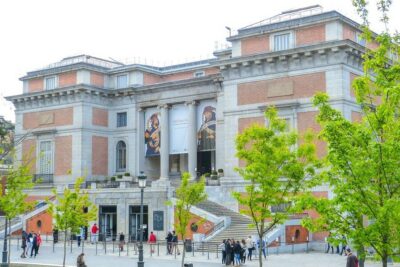 ★ 4.6Madrid: Small Group of Prado Museum Tour & Optional TapasFrom $532,437 reviews
 ★ 4.5Madrid: Prado Museum Guided Tour with Skip-the-Line TicketFrom $462,018 reviews
 ★ 4.8Madrid: Prado Museum Guided Tour With Fast AccessFrom $281,785 reviews
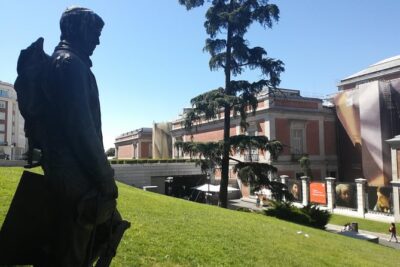 ★ 5.0Prado Museum Small Group Tour with Skip the Line TicketFrom $541,738 reviews
 ★ 4.5Royal Palace & Prado Museum Skip the Line Guided TourFrom $821,347 reviews
 ★ 3.6Madrid: Prado Museum Ticket with In-App Audio GuideFrom $351,154 reviews
This tour also sits in