
Reviewed · TAPAS AND PINTXOS TOURS
Madrid: Highlights Bike Tour with Optional E-Bike or Tapas
Madrid feels big, but this loop makes it manageable. In just 3 hours, you glide past royal landmarks, major plazas, and key art sights using cycle paths and pedestrian zones, so you spend less time dodging traffic and more time looking around. I especially like the mix of landmark storytelling and practical cycling, and I also like that you can add 3 pinchos and a drink at the end for a built-in food plan. One possible drawback: it’s a real ride, about 11 km total, and the tour expects moderate fitness and some city-bike comfort.
A big plus for families and first-time visitors is the flexible bike setup. You get a quality 7-gear city bicycle, plus a helmet, child seats (up to 22 kg), and even e-bikes if you pick the option, which helps if hills or pace feel like a concern. The day runs with photo stops and guided chunks that keep the pace fun rather than frantic, and guides like Juan, Gabriel, and David are repeatedly praised for turning landmarks into stories you actually remember. Consider this if you hate crowds on popular dates, since busy streets can mean more pedestrians around plazas.
In This Review
- Key highlights you will feel right away
- Why this 3-hour Madrid bike loop works so well
- Bikes, safety gear, and the fitness level reality check
- Starting near Calle de Santiago and how the ride is organized
- Plaza de Oriente, the Royal Palace area, and Almudena Cathedral stories
- Plaza de la Villa and Mercado de San Miguel: old Madrid meets real life
- Plaza Mayor and Plaza de Santa Ana: where the tour slows just enough
- CaixaForum Madrid and the Prado Museum zone: art and grandeur close together
- Retiro Park: the longer break that makes the whole day feel easier
- Alcala Gate, Plaza de Cibeles, and Puerta del Sol: big views, quick hits
- Tapas option: 3 pinchos and a drink as your built-in payoff
- Guides like Juan, Gabriel, and David make the facts stick
- Is it worth the $33 price tag? My value take
- Who should book this Tim Bikes Madrid highlight tour, and who should skip it
- Should you book it?
- FAQ
- Is this tour suitable for kids?
- How long is the bike tour?
- How far do you ride?
- Do I need e-bike experience?
- What bikes and equipment are provided?
- Is tapas included?
- Where does the tour start and end?
- How do bike paths and traffic work?
- What languages are the guides?
- Can I request a private group?
Key highlights you will feel right away
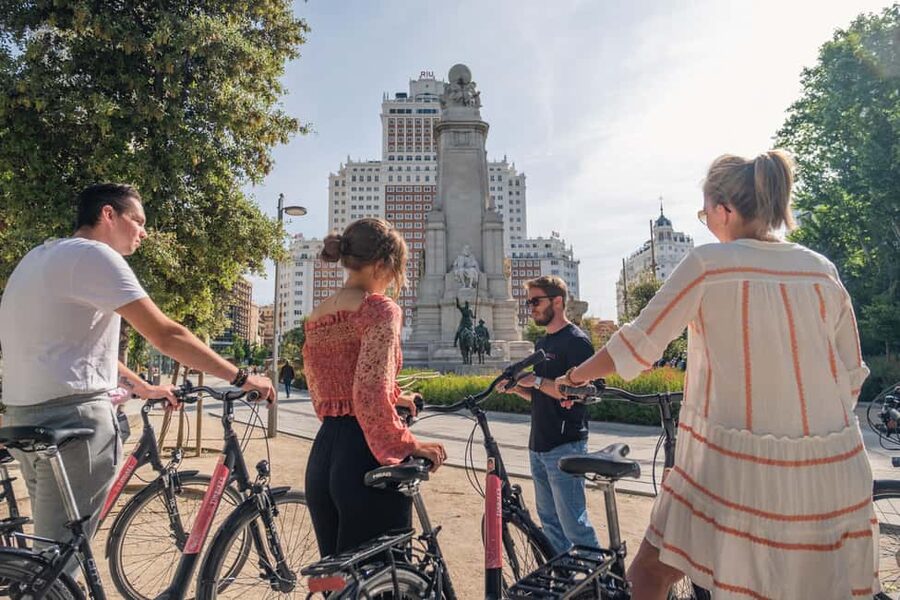
- City-friendly route: cycle paths, pedestrian zones, and parks keep the riding smoother than typical sightseeing routes
- Story stops, not just photos: you get short guided segments tied to places like Plaza de Oriente and the Royal Palace
- Classic Madrid in 3 hours: plazas, monuments, markets, museums, and the big viewpoints all show up on one ride
- Retiro Park with real breathing space: a longer stop gives you time to relax and look around
- Optional tapas ending: choose the tapas add-on for 3 pinchos plus a drink, plus practical eatery tips
Why this 3-hour Madrid bike loop works so well
If you only have one day in Madrid, this kind of tour is a smart shortcut. You cover a lot of ground without needing to line up multiple tickets or plan a complicated transit route. The tour is built around a loop through central areas where bikes can actually move, which matters when you want to see plazas and monuments without spending half your time stuck behind buses or taxis.
I also like the pacing. You get a structured ride with repeated photo stops and guided explanations. That means you are not just “moving past” landmarks. You get quick context, then you have a moment to look, take pictures, and reset before the next segment.
One more reason it works: the stops line up well with how Madrid is experienced. The city is all about contrasts. Royal Spain shows up right next to markets, then museums, then broad viewpoints, then leafy space in Retiro. Riding keeps the whole day connected, instead of turning it into disconnected bus stops.
Bikes, safety gear, and the fitness level reality check
This is not a slow, flat promenade. It is a guided bike tour for people who can handle a moderate ride in a city setting. The total distance is about 11 km (around 6.8 miles), and the route includes hills. Some guides specifically get mentioned as being great at keeping everyone safe, but you still want to be comfortable riding through real streets and crowds.
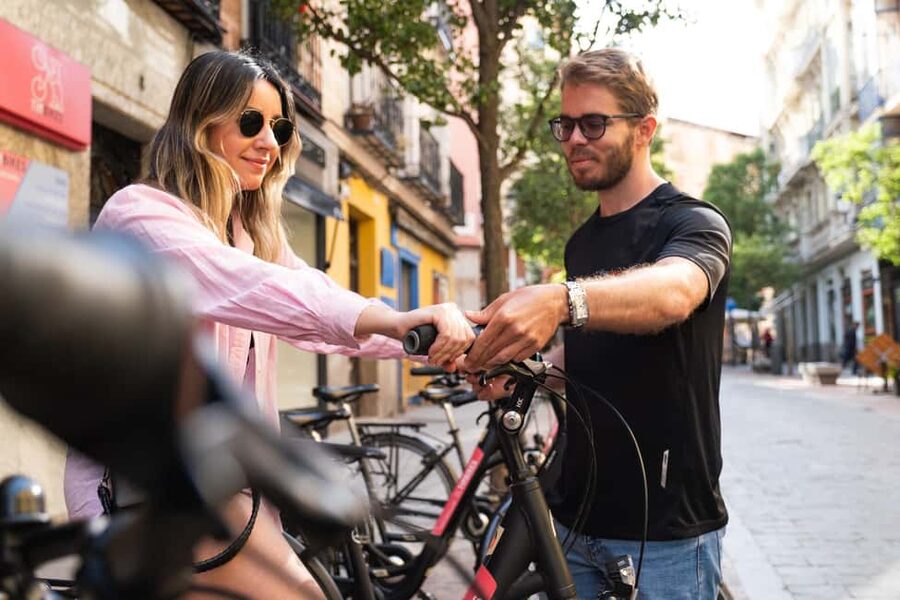
Good news on comfort: you get a 7-gear city bicycle, which helps when the route goes up and down. You also get a helmet, and there is baby-carrier support mentioned, plus storage for luggage and lockers. That last bit helps if you are not traveling light.
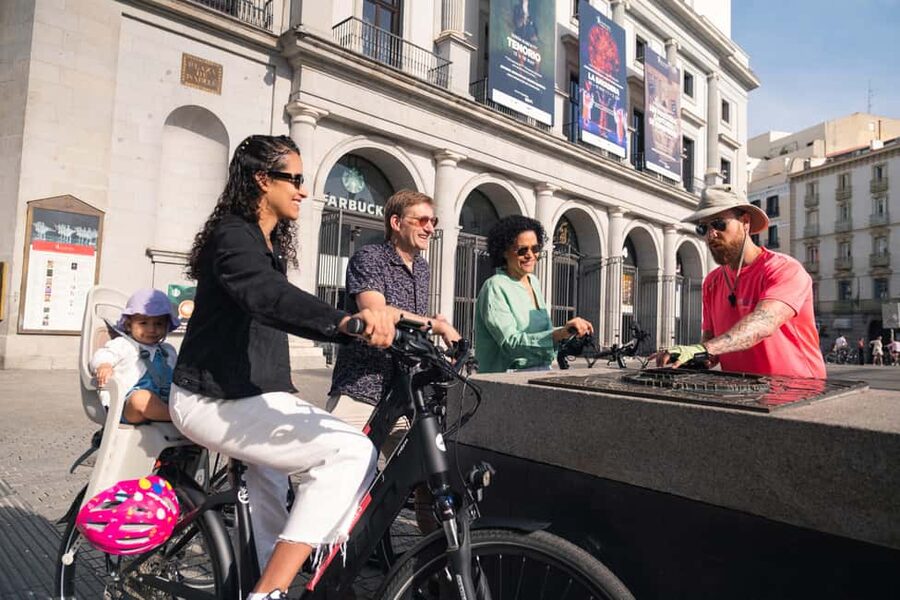
Children are welcome from age 7 on a regular bike. There are child seats available up to 22 kg, which is a big deal if you have younger kids but still want them in the group. E-bikes are available as an option, and for minors there is a height guideline noted (minimum 1.50 m). So if your child is close to that threshold, it’s worth checking before you assume you will all ride the regular bike.
If you are deciding between regular bike and e-bike, think about your “comfort, not speed” level. Multiple guide notes point to the fact that hills can make e-bikes feel like the easier choice. You do not need to be an athlete, but you do need to be willing to pedal.
Starting near Calle de Santiago and how the ride is organized
Your start point can vary depending on your booked option, and the tour begins and ends back at the meeting point. In practice, the options listed include Calle de Santiago, 8. That matters because it sets you up in a central area, close enough to landmarks that you do not waste the whole tour on transfers.
The route is designed to reduce stressful navigation. You cycle on cycle paths, in pedestrian zones, and through parks. That means you spend more time focusing on sights and less time reading traffic. Also, the tour includes a short safety explanation at the beginning. It is quick, but it sets expectations for how the group rides, turns, and handles stops.
Expect photo stops too. Some stops are “photo stop, visit, guided tour” and others are shorter chunks. In other words, you are not always locked into standing around. You’ll get just enough time at each place to see it, then you move.
Plaza de Oriente, the Royal Palace area, and Almudena Cathedral stories
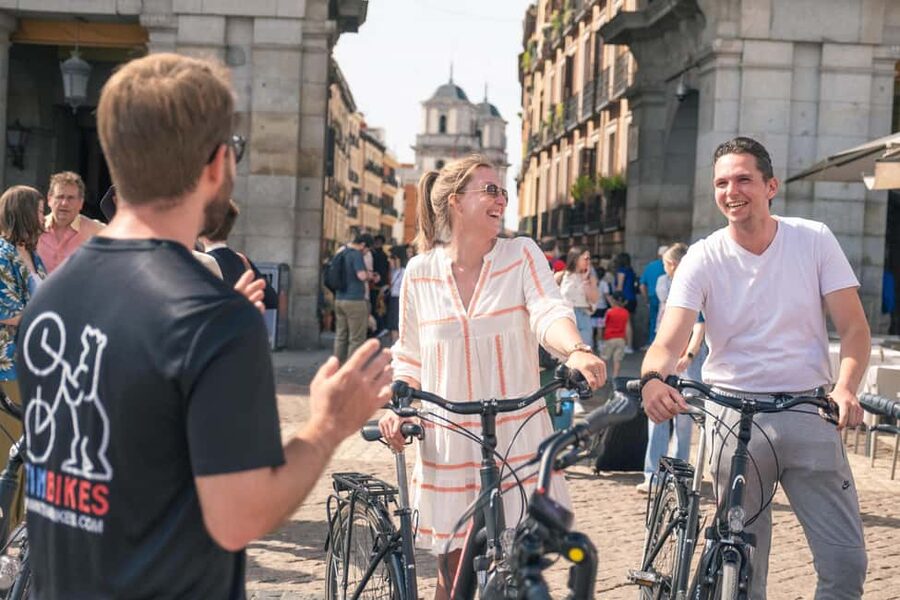
The early part of the tour is a strong way to orient yourself. You start at Plaza de Oriente, a classic royal setting where the big buildings and broad squares immediately tell you where you are in Madrid’s power-and-history map.
From there, you move toward the Royal Palace of Madrid. The tour includes a photo stop and a short guided segment. You’ll hear stories connected to the place and the surrounding royal landscape.
Then comes Almudena Cathedral, again with both photo and guided time. These early stops are not meant to overwhelm you. They act like a framework for everything you’ll see later. Once you understand what the Royal Palace area represents, it’s easier to appreciate why the later plazas feel so formal and why Madrid’s central streets feel deliberately planned.
A detail worth watching for: the guide also weaves in the creation story of the statue of Filip IV, plus context around the Royal Palace, the Cathedral, and the San Nicolas Church. Even if you are not a museum person, you’ll likely enjoy how those bits connect the city’s religious and royal identity.
Plaza de la Villa and Mercado de San Miguel: old Madrid meets real life
Next you head to Plaza de la Villa, with a photo stop and guided time. This is one of those “stop and look up” locations. You get to absorb some of the oldest buildings in the city, and the setting makes it easier to understand how Madrid’s old center shaped today’s layout.
After that, you reach Mercado de San Miguel. This stop is described as a bustling market moment. For me, markets are where a city tour becomes more than sightseeing. You catch the mood, the motion, and the lived-in side of Madrid. Even if you are not buying food at that exact moment (since meals are only included with the tapas option), you still get that sense of place.
Plaza de la Villa also helps break the emotional rhythm of royal architecture. It shifts you from “ceremony” to “daily life,” and it sets up the next big step: the major central squares.
Plaza Mayor and Plaza de Santa Ana: where the tour slows just enough
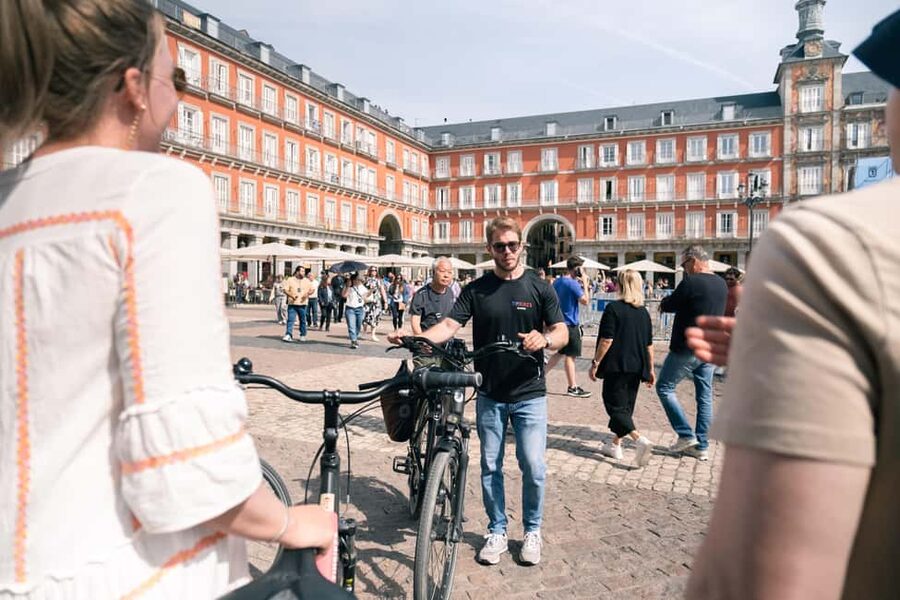
You pass through Plaza Mayor, which is one of Madrid’s most famous squares for a reason: it’s visually dramatic and it’s easy to orient from. You get a photo stop and guided time here, around 15 minutes.
Then it is on to Plaza de Santa Ana, also with guided time. Santa Ana has a different feel than Plaza Mayor. It’s more street-life and people energy. This is the point in the tour where you start noticing how Madrid’s neighborhoods overlap. The group ride helps you cross these zones quickly, but the stops are spaced so you still absorb what each square “does” socially.
If you are a photographer, these square stops are where you’ll likely spend the most time adjusting your shots. I like that the tour gives time without turning it into a long walk between attractions. You keep moving, but you also keep looking.
CaixaForum Madrid and the Prado Museum zone: art and grandeur close together
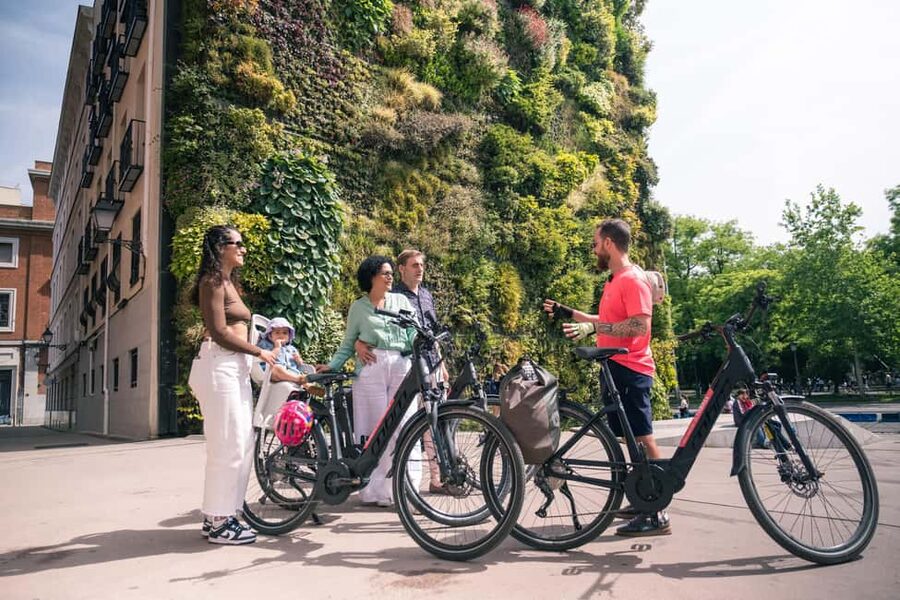
Now you hit the CaixaForum Madrid area. The tour specifically calls out the living wall of CaixaForum. This is a visual detail that you would probably notice on your own, but you may miss the story behind it without a guide. That’s the value of this tour: it helps you see what you are already looking at, with context attached.
Next comes the Museo del Prado stop. You’ll have a photo stop and guided time. The Prado is huge, so you are not “doing the museum” in three hours. Instead, the tour uses it as a landmark anchor, so you leave with a clearer mental map of where the museum district sits in relation to everything else you’ve already seen.
For many people, this is the sweet spot. You get the big names and the “I’ve seen this on postcards” effect, but the timing stays realistic. You are not paying for a long indoor visit. You are paying for orientation plus short, memorable explanations at key points.
Retiro Park: the longer break that makes the whole day feel easier
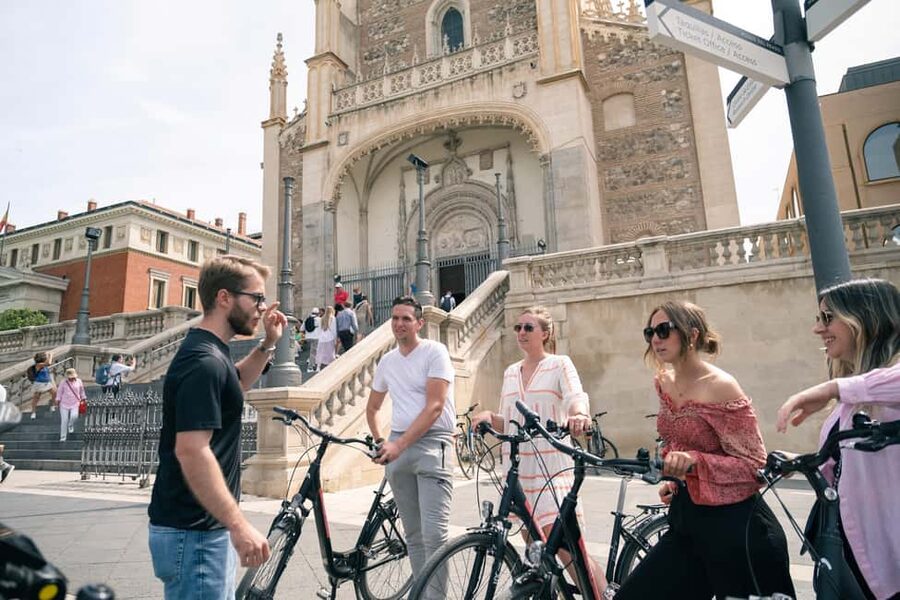
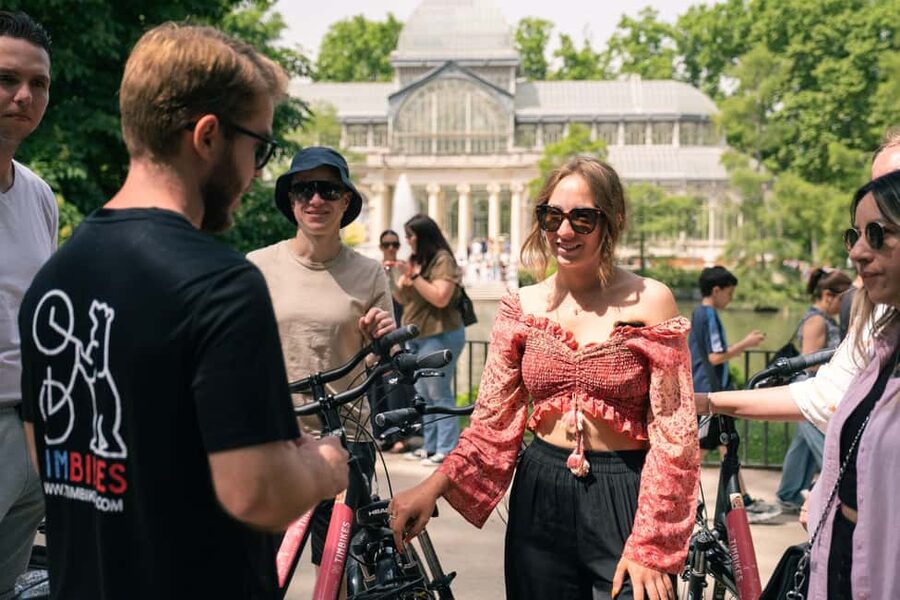
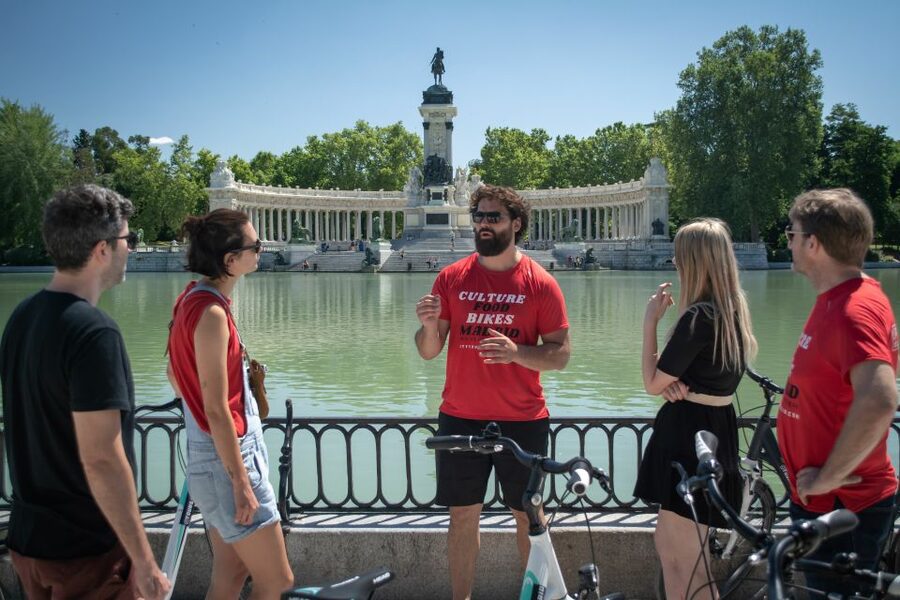
Then you reach Retiro Park, with the longest guided time listed at about 30 minutes. This is a smart inclusion. After a stretch of plazas and architecture, Retiro gives your body and your brain a rest.
Even if you don’t plan to go deep into the park’s interior, the stop is long enough to notice the shift from hardscape city center to green open space. It also helps with pacing. Riders who might feel a little tired get a natural reset point before the tour moves back into monument territory.
One note to keep in mind: there can be renovations or construction at times. That kind of thing can affect where you ride within the park, but the tour is built to keep you moving safely and stay on the core sightseeing track.
Alcala Gate, Plaza de Cibeles, and Puerta del Sol: big views, quick hits
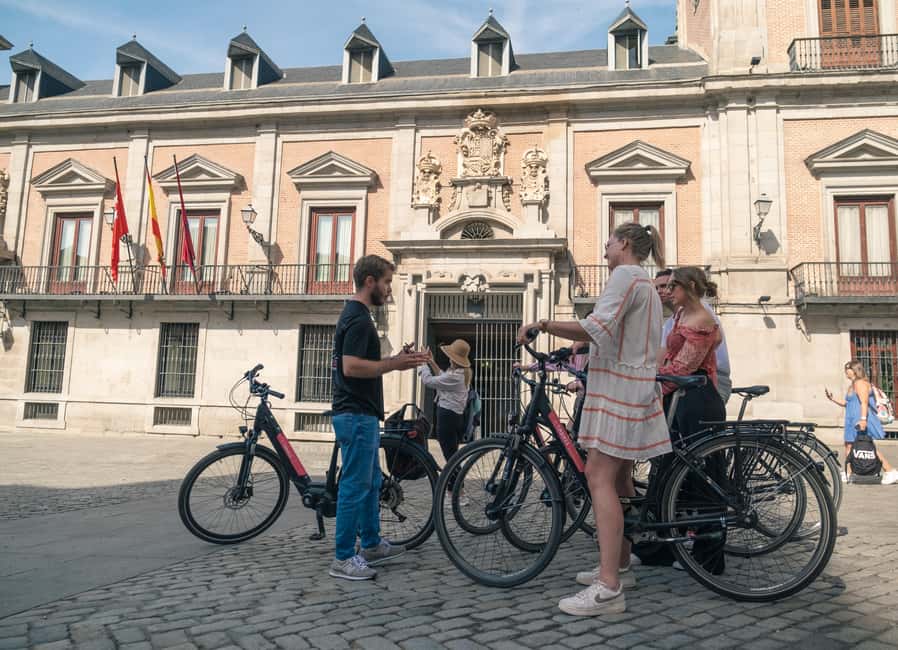
From Retiro, the route moves toward the grand city landmarks.
You have a stop at Alcala Gate, again with photo and guided time. Then you reach Plaza de Cibeles, which is another “look up and take it in” moment, with guided time to help you connect the space to Madrid’s identity.
Finally, you end up at Puerta del Sol. This is one of the most central points in Spain’s capital, and the tour gives it about 15 minutes with photo and guided time. It’s a strong way to cap the ride because Sol is where Madrid feels most like the city’s heartbeat.
If you plan to keep exploring after the bike tour, this is the part that pays off. You leave with a mental compass pointing you toward the next streets you want to walk, eat, or browse.
Tapas option: 3 pinchos and a drink as your built-in payoff
Here’s the part I like most if you are food-motivated: you can add the tapas ending. With the tapas option, you get 3 pinchos and a drink.
The tour also includes guidance about where to go after the bike ride. That matters because tapas culture is local and you will get better results when you know where to aim. One repeated favorite mentioned in guide feedback is cod as part of the pinchos experience. Even if your tastes run toward other flavors, it’s useful to know that the tapas selection tends to include classic, satisfying options.
This is not an all-you-can-eat situation. It’s a “taste and steer” setup. You get enough to feel rewarded at the end of the ride, then you can continue on with your own evening plan using the guide’s recommendations.
Also, many people note that you get a map overview of where you visited. That kind of thing is small, but it helps you remember what you saw and where it was, which makes the rest of your trip smoother.
Guides like Juan, Gabriel, and David make the facts stick
The bike itself gets the job done, but the guide is what turns the route into something you carry home. Many high ratings highlight guides like Juan, Gabriel, David, and Alejandro for a mix of clear storytelling and good group energy.
A pattern shows up in the praise: guides don’t just rattle off dates. They connect landmarks to Madrid’s identity and they keep it interactive. You can feel the difference between a tour that recites facts and one that makes you understand why a statue, a palace, or a square matters.
Safety also gets credit. Names like Gabriel and Juan come up with notes about keeping everyone safe and making sure the pace works. That is especially important on a city-bike day, where pedestrians and crowding can make navigation trickier.
If you want to get oriented fast and still feel like you learned something real, this is the kind of tour that rewards paying attention.
Is it worth the $33 price tag? My value take
At around $33 per person for a 3-hour guided bike tour, this is strong value if you want to cover multiple headline areas in one go. You are paying for three things at once:
- A guided route that uses bike-friendly paths and avoids traffic navigation stress
- A quality bike setup, with helmet and storage support included
- Optional tapas that adds a real food payoff without you planning it from scratch
If you are comparing it to a full day of walking plus transit plus separate attractions, the price feels easier to justify. The tour is built to fit a short itinerary and deliver orientation plus stories without dragging on.
If you hate cycling, then the value collapses, because the entire experience is built around pedaling. But if you can comfortably ride in a city for a few hours, you’re getting a lot of sightseeing per hour.
Who should book this Tim Bikes Madrid highlight tour, and who should skip it
I’d put this tour at the top of the list for:
- First-time visitors who want major Madrid highlights without planning a complex route
- People who like history stories but do not want a long museum day
- Families with kids age 7 and up who can handle a moderate ride
- Anyone who wants optional tapas as part of the plan
I’d skip it or switch to an e-bike option if:
- Hills make you nervous and you prefer minimal effort
- You have very limited city-biking experience
- Your group wants mostly slow walking and no riding
It also fits well as a “morning or early afternoon” activity. Seeing Puerta del Sol and Plaza Mayor early helps you navigate the rest of your trip on foot later.
Should you book it?
Book this tour if you want a practical, high-sightings overview of Madrid center that still feels personal thanks to guide storytelling. Choose the e-bike if you want an easier ride over hills or if your comfort level with city cycling is still growing. If tapas is your thing, add it, because the end of the tour is designed to connect sightseeing energy with real food choices.
Don’t book it if biking stresses you out. For a city like Madrid, you will get more from the tour if you feel relaxed behind the handlebars.
FAQ
Is this tour suitable for kids?
Children must be 7 or older. Child seats are available up to 22 kg, and electric bikes are available for minors with a minimum height of 1.50 meters.
How long is the bike tour?
The duration is 3 hours.
How far do you ride?
It is listed as a 6.8-mile (11 km) bike tour.
Do I need e-bike experience?
The tour requires some experience with biking in the city, and it is described as moderate fitness level.
What bikes and equipment are provided?
You get a 7-gear good quality city bicycle, plus a helmet and baby carrier. Storage for luggage and lockers are included.
Is tapas included?
Tapas are included only if you choose the tapas option. That option includes 3 pinchos and a drink.
Where does the tour start and end?
It starts at a meeting point that may vary depending on the option booked, and it ends back at the meeting point.
How do bike paths and traffic work?
The tour is designed to use convenient cycle paths, pedestrian zones, and parks so you do not have to navigate typical traffic.
What languages are the guides?
Guides are available in Dutch, English, French, Spanish, and Portuguese.
Can I request a private group?
Yes, a private group option is available.
If you want, tell me your dates and whether you are doing regular bikes or e-bikes, and I can help you plan what to pair this with for the rest of your Madrid day.
Tapas and Pintxos Tours, side by side.
 ★ 5.0Montserrat Half-Day Tour with Tapas and Gourmet WinesFrom $557,359 reviews
 ★ 5.0Montserrat & Cogwheel Train, Gourmet Wine Tasting & Tapas/LunchFrom $816,290 reviews
 ★ 5.0Barcelona Tapas and Wine Experience Small-Group Walking TourFrom $835,804 reviews
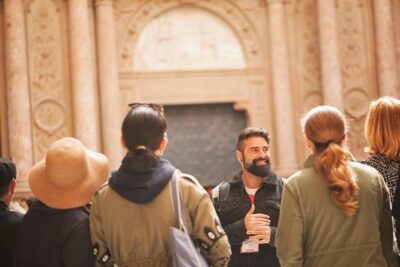 ★ 5.0Montserrat with Black Madonna & Medieval Winery with Tapas/LunchFrom $655,209 reviews
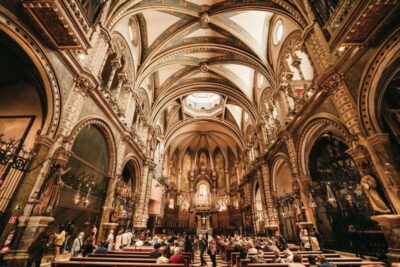 ★ 4.8Barcelona: Montserrat and Winery Tour with Tapas or LunchFrom $614,695 reviews
 ★ 4.8Barcelona: Tapas Walking Tour with Food, Wine, and HistoryFrom $784,261 reviews
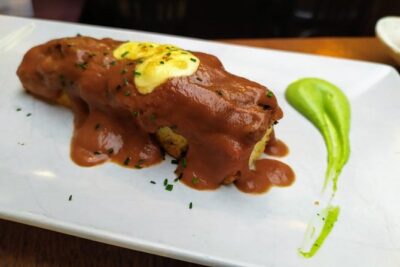 ★ 5.0Sevilla Food Tour: Tapas, Wine, History & TraditionsFrom $833,468 reviews
 ★ 5.0Valencia Old Town Tour with Wine & Tapas in 11th Century Historic MonumentFrom $963,234 reviews
This tour also sits in