
Reviewed · GAUDÍ HOUSES AND MODERNISTA BARCELONA
Barcelona: Sant Pau Recinte Modernista Entry Ticket
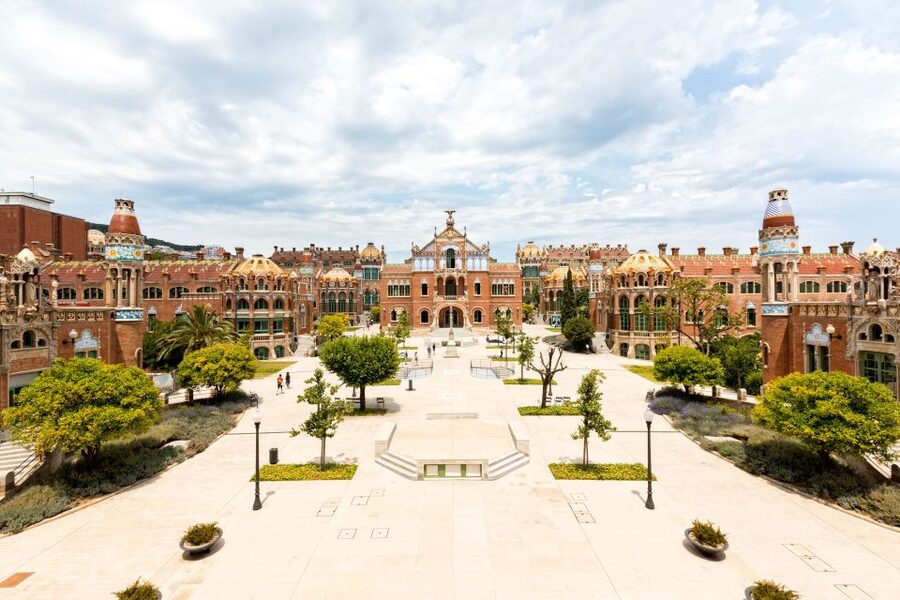
Sant Pau in Barcelona is a hospital that looks like art. You’ll explore the world’s largest Art Nouveau complex and move through its gardens, pavilions, and underground passageways. Lluís Domènech i Montaner’s architecture is the big draw for me, and I also love how the site turns into something peaceful and walkable instead of a typical checklist. The main drawback: you get an entry ticket, not a guided tour, so you’ll want to go in with a little curiosity (and maybe an audio option if it’s available).
The basics are simple: it’s a self-guided visit on a ticket with a typical 1.5-hour pace, and the complex was built as a “garden city” hospital from 1905 to 1930. It was used as a public hospital for about a century, then it reopened in refurbished form. One practical consideration is that signage can leave gaps, so plan to slow down and look up, especially around mosaics and stained glass.
In This Review
- Key Things You’ll Notice Right Away
- Why Sant Pau Feels Different Than Other Barcelona Tickets
- The 1.5-Hour Reality Check, and How to Pace Yourself
- What This Place Actually Is, Garden City to Hospital
- Entering the Complex: Start Here, Then Follow the Design
- Pavilions and Courtyards: Where the Beauty Actually Works
- Underground Passageways, Stained Glass, and Mosaics
- Hospital Rooms and Medical Instruments: A Not-So-Pretty Side of Care
- Sant Pau Today: From Hospital to Knowledge Campus
- Practical Tips: Tickets, Timing, and Getting Around
- Value and price
- When to go
- Transport and navigation
- What to bring
- Should You Get an Audio Guide or Go Self-Guided?
- Who This Ticket Is Best For
- Quick Notes on Rules and Visitor Groups
- Should You Book This Sant Pau Ticket?
- FAQ
- How long is the Sant Pau Recinte Modernista entry ticket?
- Where is the meeting point for this ticket?
- Is a guided tour included?
- Can I cancel my booking?
- Can I book and pay later?
- Is Sant Pau wheelchair accessible?
- Are children allowed?
- Are pets allowed?
- Is there free access for seniors?
Key Things You’ll Notice Right Away
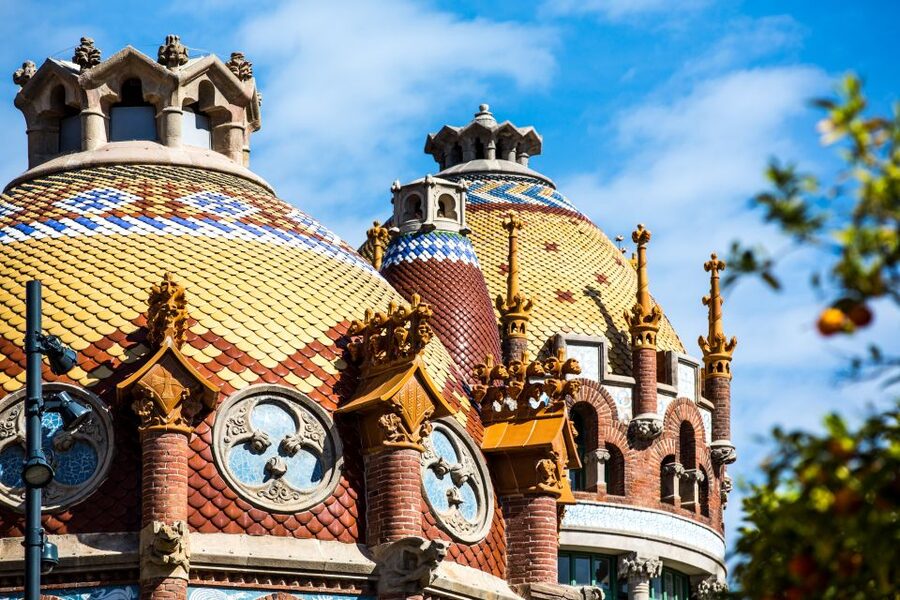
- Art Nouveau at hospital scale: pavilions, courtyards, and ornament that feel unusually human-sized.
- Garden city layout: fresh air and open spaces are part of the original concept.
- Underground passageways: you get more than one way to connect buildings, with decorative details along routes.
- Big detail rewards: look up for stained glass, sculptures, and mosaics.
- Built for hygiene and care: this wasn’t decoration-first, it was health-first design.
- A campus with modern purpose: today it also hosts international organizations on the site.
Why Sant Pau Feels Different Than Other Barcelona Tickets
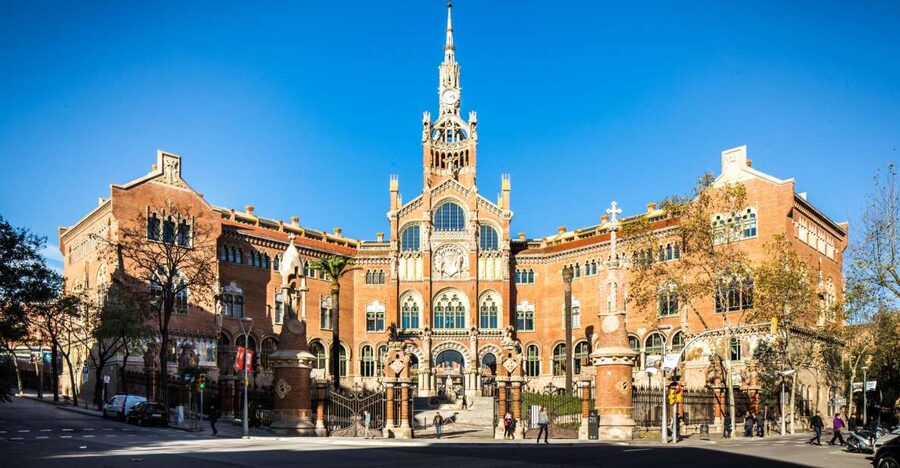
Most Barcelona sights shout. Sant Pau whispers, then floods you with detail.
Part of what makes this ticket special is the scale of the idea. This complex was designed as a medical environment that also cared about recovery. You’re walking through a former hospital designed around light, ventilation, and gardens, not a sterile maze. The architecture does not just look pretty. It teaches you how early 20th-century healthcare thinking linked well-being with surroundings.
And yes, it’s gorgeous. You’ll see Art Nouveau motifs across renovated pavilions, plus decorative elements like sculptures, stained glass, and mosaics. The reviews I’ve read emphasize the same point over and over: you can spend time just noticing, and you’re never rushed into a single photo spot.
The other big reason I like this experience is how forgiving it is. There’s no strict “group herding” vibe in the ticket-only format. You can move at your pace, take breaks outdoors, and stop when something catches your eye.
The 1.5-Hour Reality Check, and How to Pace Yourself
The ticket is designed for a visit of about 1.5 hours, but your actual time will depend on how detail-focused you are.
If you rush, you’ll still get the core concept: gardens, pavilions, and connecting passageways. If you slow down, you’ll likely find yourself lingering in courtyards and hunting down mosaic work on building sides. The reviews mention doing exactly that, including taking time to walk around the exterior fronts to spot mural mosaics you might otherwise miss.
Here’s a practical way to pace it:
- Start with a broad loop to get your bearings and see how the pavilions relate.
- Spend your next phase on the “look up” areas where stained glass and sculptural details concentrate.
- Finish with the indoor hospital-room and medical-instrument displays, then relax outside for a breather.
That “breather” matters. People call the site calm and cool compared to the city heat, and that makes a big difference in summer or midday visits.
If this one is booked out, these Gaudi Houses and Modernista Barcelona come close





What This Place Actually Is, Garden City to Hospital
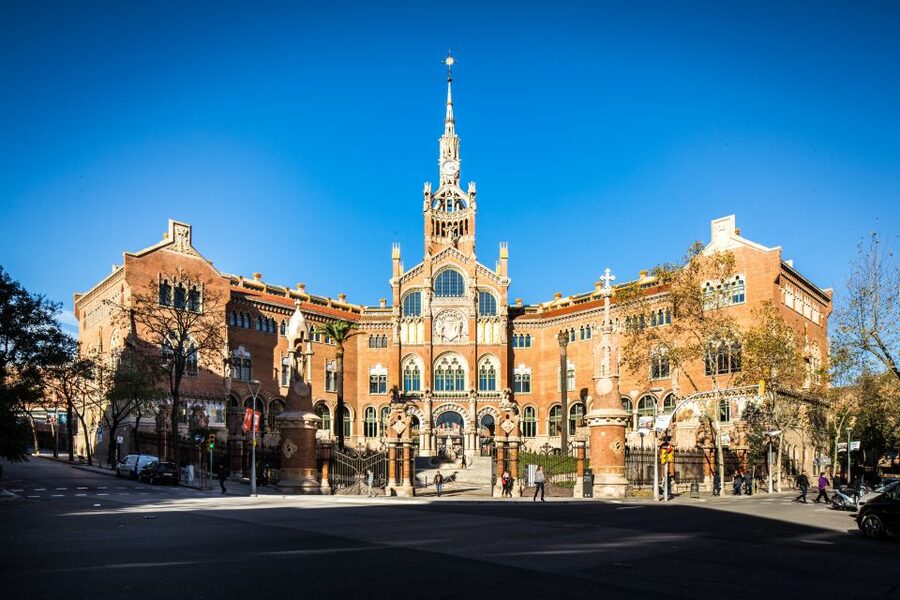
Sant Pau Recinte Modernista is not just an Art Nouveau building. It’s a whole project built around a healthcare philosophy.
The complex was built between 1905 and 1930 by architect Lluís Domènech i Montaner. It was created as a “garden city” to nurse the sick. Later, it became a public hospital for about a century. Now it’s refurbished to its former splendor and opened for visitors again.
The story starts with a real problem. In the late 19th century, Barcelona’s old Hospital de la Santa Creu in the El Raval neighborhood needed to move because it had become too small. The new site was inspired by breakthroughs in health and hygiene, and it carried the institution’s long association with charity, welfare, and healthcare advances.
So when you’re walking between pavilions and pausing in garden spaces, you’re seeing design choices that were meant to improve patient care. That’s a large part of the emotional impact many people describe. It helps the architecture feel grounded, even when the ornament is wildly artistic.
Entering the Complex: Start Here, Then Follow the Design
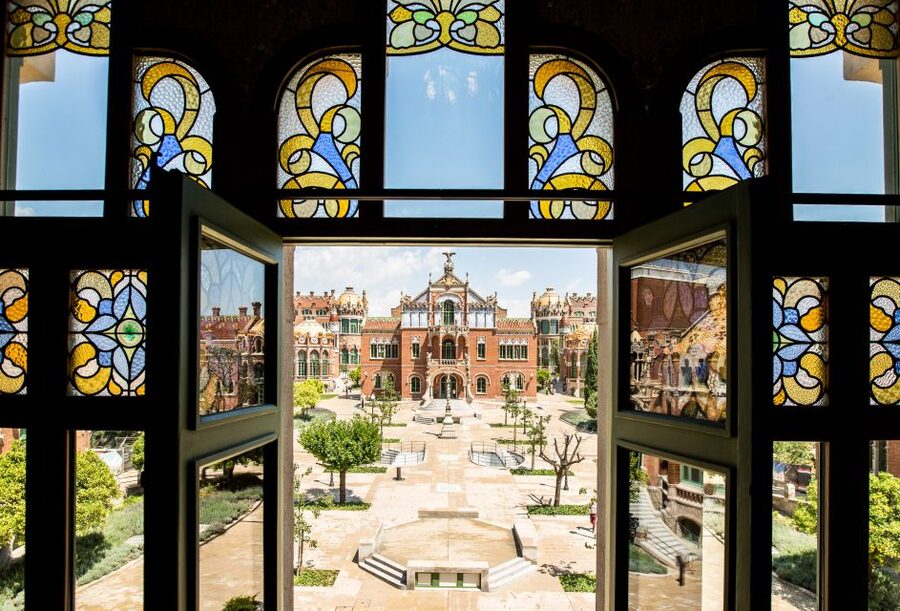
Your meeting point is listed as Calle Sant Antoni Maria Claret, 167, 08025 Barcelona. From there, you’ll be directed to the entry experience for Sant Pau Recinte Modernista as part of this ticket.
Since this is an entry ticket, not a guided tour, your “itinerary” is essentially the site route you choose. That also means you should be alert to the flow between buildings. The complex connects pavilions with underground passageways, and that changes how the visit feels. You’re not just walking around the perimeter. You’re moving through a connected system.
Plan to treat the first 15 to 20 minutes as orientation time:
- Look for how courtyards open and how paths connect pavilions.
- Notice where indoor displays are placed versus where outdoor ornament is most concentrated.
- Use the passageways to link buildings efficiently, instead of backtracking.
One of the most useful review-based tips is that there are tunnels connected to each building. If you ignore that and only walk surface paths, you’ll miss a major part of the experience.
Pavilions and Courtyards: Where the Beauty Actually Works
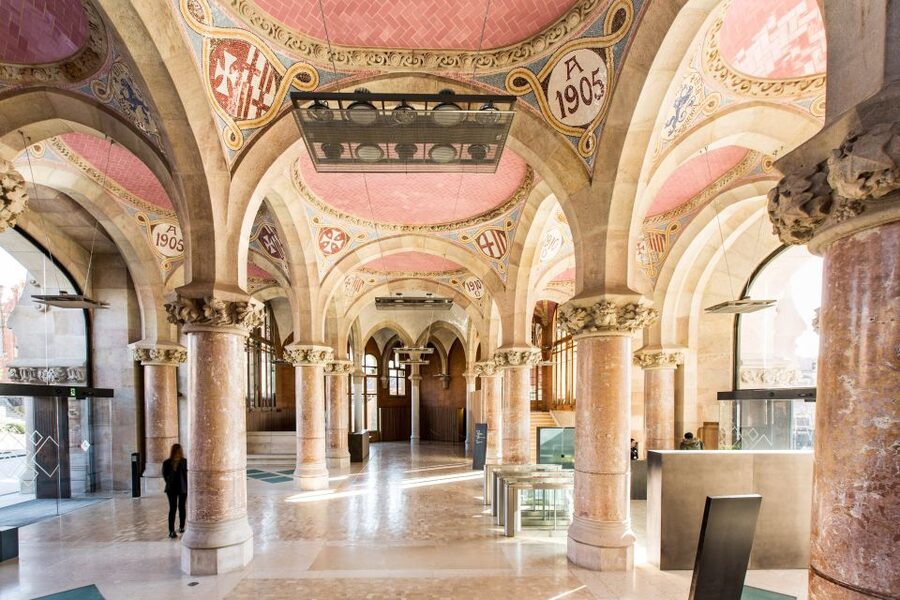
This is the heart of the ticket. Sant Pau is organized as multiple pavilions set in gardens. The buildings are connected through passageways, and the courtyards act like breathing rooms.
The pavilions are where Art Nouveau becomes functional. In many tourist sites, ornate decoration is separate from daily use. Here, ornament is integrated into a healthcare setting that was designed for movement, air, and light. When you stand in courtyards and then move into another pavilion, the architecture feels like it’s responding to human needs, not just artistic whims.
A couple details you should actively look for:
- Sculptural elements, especially in areas that feel like gateways.
- Decorative surfaces that can be easy to miss if you keep your eyes straight ahead.
- Garden edges and transitional spaces where you can pause without blocking other visitors.
Also, if you like photo breaks or simply want a place to sit quietly, you’ll appreciate the outdoor space. Reviews mention spacious areas to relax and even picnic-style breaks. Just keep an eye on what’s allowed on site.
Underground Passageways, Stained Glass, and Mosaics

This complex earns its “largest” reputation partly because it gives you multiple ways to experience the same design language.
The passageways are key. They connect pavilions and, along the way, showcase sculptures, stained glass, and mosaics. When those elements are in your line of sight during transitions, the visit becomes more than a set of separate stops. It becomes a walk through a connected artistic program.
If you want the best odds of seeing the decorative work:
- Slow down at intersections and corners in passageway segments.
- Look upward and not only at floor-level guide rails.
- Do a quick second pass outside of your main loop if you’re time-flexible.
One review tip stands out: remember to look up. That’s the kind of advice that sounds generic until you realize how much the eye-level ceiling and window work matters here.
Hospital Rooms and Medical Instruments: A Not-So-Pretty Side of Care
Yes, Sant Pau is beautiful. But it’s also about treatment, not just aesthetics.
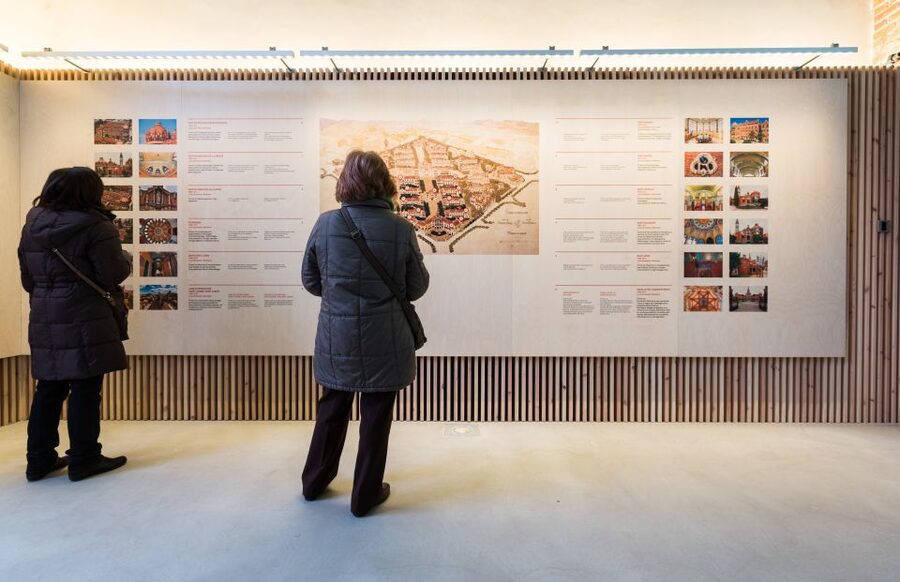
Inside the complex, you can see exhibition-style material connected to the hospital’s operation. Reviews mention displays of medical instruments from the time period and a hospital room set up as it was when the hospital opened in 1932.
This is the point where the site becomes more than an architecture stop. The concept of the hospital is often described as careful, forward-thinking, and even moving. If you have a healthcare, science, or caregiving background, you may spot parallels between patient care, nursing roles, and how institutions organized work. Even without that background, the displays give context to why the pavilions and layout mattered.
If you’re short on time, don’t just sprint to the most decorated exteriors. Spend a little time with the indoor materials too, because that is where the “why” of the design comes into focus.
Reviewed and rated alongside this one, further Tickets in Barcelona
- Barcelona: Sagrada Familia Entry Ticket with Audio Guide
- Barcelona: Park Güell Admission Ticket
- Barcelona Aquarium: Entry Ticket
- Barcelona: Sagrada Familia Skip-the-Line Entry Ticket & Tour
- Park Guell Guided Tour with Skip the Line Ticket
- Park Guell and Sagrada Familia Tour with Skip the Line Tickets
- Barcelona: Sagrada Família Skip the Line Tour & Entry Ticket
- Casa Batllo Admission Ticket with Intelligent Audio Guide
Sant Pau Today: From Hospital to Knowledge Campus
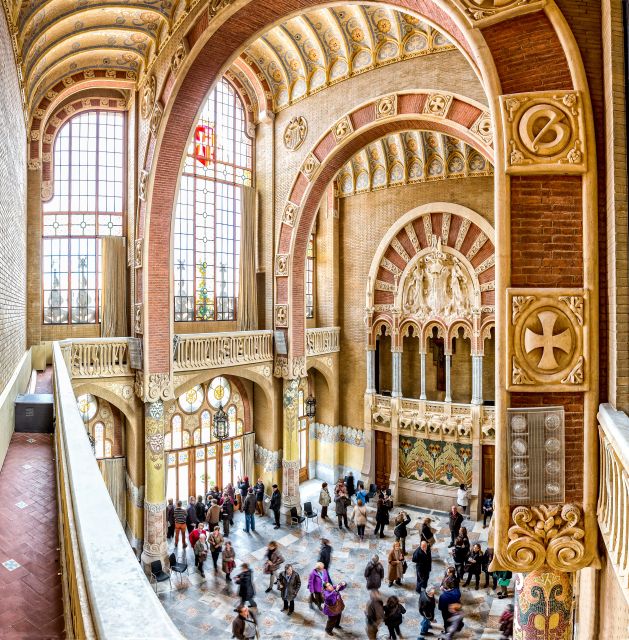
Here’s something that’s easy to miss if you only think of Sant Pau as a museum.
The complex has been refurbished and now functions as a knowledge campus. The information provided for visitors highlights that it hosts international organizations, including:
- European Forest Institute
- Casa Àsia
- Global University Network for Innovation
- United Nations University Institute on Globalization, Culture, and Mobility
So part of your experience is watching how a heritage site stays useful. You’re not only comparing old and new design styles. You’re seeing how the building continues to support work and learning.
In practical terms, it can also help you choose where you want to linger. Areas with current institutional presence often feel calmer, and they can give you a better sense of how the complex is still lived-in, even if you’re there as a visitor.
Practical Tips: Tickets, Timing, and Getting Around
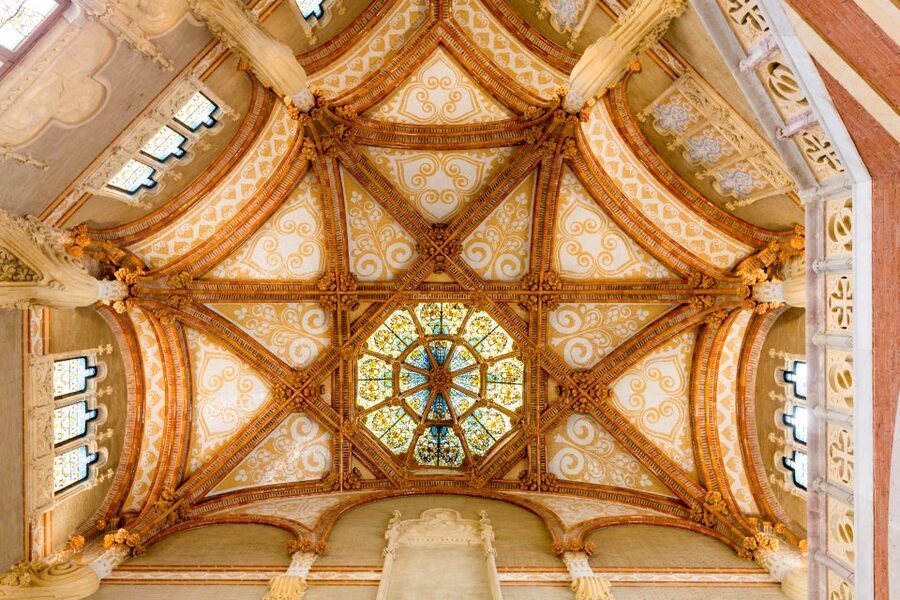
Value and price
The price is listed at $21 per person, and that’s a fair figure for what you get: a large Art Nouveau complex, gardens, renovated pavilions, and multiple categories of decorative and interpretive elements.
You don’t need to pay extra for a guided group experience here because the entry format lets you explore. The trade-off is that you’ll be doing more of the interpretation yourself.
If you enjoy architecture and design details, this ticket is strong value. If you only want broad highlights in 45 minutes, it may feel like a lot of walking for the cost.
When to go
Nothing beats good timing at a complex this size.
One practical pattern from the reviews: arriving early can make the visit feel quieter, with fewer people and more space to slow down. If you’re planning your day around other big Barcelona sites, you may like fitting Sant Pau in as a calmer, less chaotic contrast.
Transport and navigation
A metro station nearby is mentioned in reviews, including a direct route to the airport. If your phone mapping sends you somewhere strange, don’t panic. At least one visitor reports SatNav routing errors to a wrong area. Double-check the address you’re using and give yourself a little time.
What to bring
You’ll be on your feet and you’ll likely want to look for decorative details. Wear comfortable shoes. If you’re visiting in warm weather, plan for shade breaks in courtyards and garden zones.
Lockers are mentioned in reviews, and that can be helpful if you’re traveling with carry-on bags or you want to move light.
Should You Get an Audio Guide or Go Self-Guided?
This ticket does not include a guided tour. That means your experience depends on how you want to interpret what you see.
The reviews I’ve read repeatedly praise added explanation through audio or video. Some visitors say an audio guide would have helped them more, while others mention an explanation video and the value of reading printed materials at a calm pace.
So my advice is simple:
- If you like to understand what you’re seeing as you go, look for any onsite audio option or supplementary materials.
- If you prefer to wander and just absorb the design, self-guided is still very workable, especially if you keep stopping to read panels.
Either way, go in with a mindset of noticing. This is not the kind of monument where one view sums it up.
Who This Ticket Is Best For
You’ll probably love this ticket if:
- You care about Art Nouveau and want to see it at full complex scale.
- You like slow wandering in gardens and courtyards, not just a rushed highlights loop.
- You have an interest in healthcare history and design.
- You want a calmer alternative to Barcelona’s bigger, more crowded icons.
You might be less thrilled if:
- You only want a quick hit of the most famous Barcelona landmarks.
- You get bored with self-guided interpretation and prefer a live guide to fill in context.
Also, if you enjoy detailed photo walking, Sant Pau is a great subject. The mix of architecture, stained glass, mosaics, and underground connections gives you lots of angles, and the “look up” details reward time.
Quick Notes on Rules and Visitor Groups
A few practical points are listed for this site:
- Pets are not allowed.
- Smoking is not allowed.
- Alcohol and drugs are not allowed.
Visitor discounts or free access rules are also specified:
- On the first Sunday of the month, visitors over 65 years old can enjoy free access.
- Children 11 and under are permitted. There is free admission for participants under age 12, but a parent or guardian must be present.
Wheelchair accessibility is noted, and the site is described as wheelchair accessible.
Should You Book This Sant Pau Ticket?
Yes, you should book if you want an architecture and design experience that also has real human purpose behind it. For $21, you’re getting a big, walkable complex with gardens, renovated Art Nouveau pavilions, and indoor displays tied to the hospital’s operational history.
If you’re the type who enjoys reading, looking closely, and taking your time, the ticket-only format will feel freeing rather than limiting. If you prefer guided storytelling, you can still make it work, but plan to use any onsite interpretation tools available to you.
If you have only a day for Barcelona highlights, I’d still put Sant Pau high on your list, especially if you want a break from the usual crowds and a chance to see how Barcelona’s Modernisme reached far beyond church façades.
FAQ
How long is the Sant Pau Recinte Modernista entry ticket?
The activity is listed as lasting 1 day, with a 1.5-hour visit experience.
Where is the meeting point for this ticket?
The meeting point listed is Calle Sant Antoni Maria Claret, 167, 08025 Barcelona.
Is a guided tour included?
No. The ticket includes the entrance fee, but guided tour is not included.
Can I cancel my booking?
Yes, free cancellation is available up to 24 hours in advance for a full refund.
Can I book and pay later?
Yes. Reserve now & pay later is offered, so you can book without paying today.
Is Sant Pau wheelchair accessible?
Yes. The activity is marked as wheelchair accessible.
Are children allowed?
Children 11 and under are permitted. There is free admission for participants under age 12, but a parent or guardian must be present.
Are pets allowed?
No, pets are not allowed.
Is there free access for seniors?
Yes. On the first Sunday of the month, visitors over 65 years old can enjoy free access.
Tickets: the rest of our Barcelona write-ups
- Barcelona: Sagrada Familia Entry Ticket with Audio Guide
★ 4.6 · 105,312 reviews - Barcelona: Park Güell Admission Ticket
★ 4.4 · 76,534 reviews - Barcelona Aquarium: Entry Ticket
★ 4.3 · 13,335 reviews - Barcelona: Sagrada Familia Skip-the-Line Entry Ticket & Tour
★ 4.8 · 12,789 reviews - Barcelona: FC Barcelona Museum “Barça Immersive Tour” Ticket
★ 4.4 · 10,944 reviews
Gaudi Houses and Modernista Barcelona we rated next
- Barcelona: Casa Batlló Entry with Self-Audioguide Tour
★ 4.7 · 25,359 reviews - Barcelona: Park Güell and Gaudí House Museum Entry Ticket
★ 4.5 · 6,326 reviews - Barcelona: La Pedrera Night Experience
★ 4.4 · 4,633 reviews - Barcelona: Palau de la Música Self-Guided Tour
★ 4.6 · 3,603 reviews - Barcelona: Palau de la Música Guided Tour
★ 4.7 · 3,273 reviews
Fresh off the desk: recent Barcelona experiences we have written up







Gaudí Houses and Modernista Barcelona, side by side.
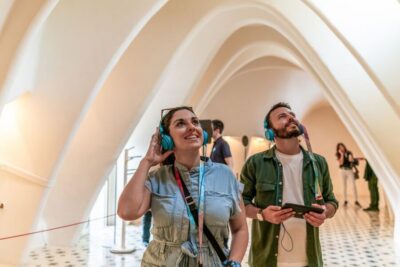 ★ 4.7Barcelona: Casa Batlló Entry with Self-Audioguide TourFrom $3425,359 reviews
 ★ 4.5Barcelona: Park Güell and Gaudí House Museum Entry TicketFrom $336,326 reviews
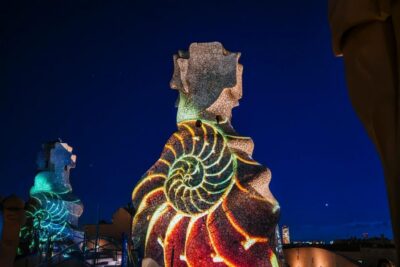 ★ 4.4Barcelona: La Pedrera Night ExperienceFrom $474,633 reviews
 ★ 4.6Barcelona: Palau de la Música Self-Guided TourFrom $213,603 reviews
 ★ 4.7Barcelona: Gaudi’s Casa Vicens Skip-the-Line Entrance TicketFrom $243,449 reviews
 ★ 4.7Barcelona: Palau de la Música Guided TourFrom $283,273 reviews
 ★ 4.5Casa Batllo Admission Ticket with Intelligent Audio GuideFrom $543,168 reviews
 ★ 4.5Sagrada Familia & Gaudi Tour Private or Small Group with TicketsFrom $901,188 reviews
This tour also sits in